
Business
Hints, Answers and Full Breakdown for Puzzle #1013 on March 20, 2026


The New York Times’ popular word-association game Connections delivered another brain-teasing challenge on Friday, March 20, 2026, with Puzzle No. 1013 featuring a mix of everyday terms, cultural references and clever misdirections that tested players’ pattern recognition and lateral thinking.

Released at midnight Eastern time as part of the daily rotation on nytimes.com and the NYT Games app, today’s puzzle drew praise and frustration in equal measure from the online community for its balanced difficulty and thematic variety. Solvers had to group 16 seemingly unrelated words into four themed categories of four words each, with yellow as the easiest and purple as the trickiest.
The 16 words in today’s grid were: ALARM, CONCERN, RATTLE, SHAKE, BOARDWALK, CHANCE, LUXURY, PARKING, FATE, FURY, MUSE, SIREN, CARTON, NOODLE, ROLL, TIMER.
As with every Connections puzzle, the goal is to identify the common threads without using more than four mistakes. Players receive color-coded feedback: yellow for the simplest category, green next, then blue, and purple for the most obscure.
### Hints for Today’s Puzzle
Before diving into the full answers — which contain spoilers — here are progressive hints to guide solvers who want to crack it on their own:
– **Yellow (easiest):** These words all relate to causing unease or disturbance, often in a physical or emotional sense.
– **Green:** Think classic board game real estate and random events — items you’d find listed on a familiar property-trading board.
– **Blue:** These evoke figures from ancient Greek stories, often tied to destiny, emotion, inspiration or allure.
– **Purple (hardest):** These complete the phrase “egg _____” — a common compound word or expression involving the word “egg.”
Many players reported starting with the yellow group, as words like “shake” and “rattle” immediately suggested agitation or fear. The purple category proved elusive for some, relying on idiomatic English phrases rather than literal meanings.
### Full Answers and Category Breakdown
Here are the complete groupings for Connections #1013 on March 20, 2026:
**Yellow: Disturb**
ALARM, CONCERN, RATTLE, SHAKE
This category captured synonyms for causing worry, fear or physical vibration. “Shake” and “rattle” evoke both literal trembling and figurative unease, while “alarm” and “concern” lean emotional. Solvers noted this as the most straightforward, often solved first.
**Green: Words on a Monopoly Board**
BOARDWALK, CHANCE, LUXURY, PARKING
A nod to the iconic Parker Brothers (now Hasbro) game, these are direct spaces or cards: Boardwalk (the priciest property), Chance (the card deck), Luxury Tax (a space), and Parking (Free Parking, the beloved rest spot). The category rewarded pop-culture knowledge of the classic American board game, with many players calling it a satisfying “aha” moment.
**Blue: Figure in Greek Myth**
FATE, FURY, MUSE, SIREN
Drawing from classical mythology, these represent archetypal beings: the Fates (who spin destiny), a Fury (vengeful deity), a Muse (inspirational goddess), and a Siren (seductive sea creature). The category highlighted how Connections often weaves in literary or historical references, challenging players beyond everyday vocabulary.
**Purple: Egg _____**
CARTON, NOODLE, ROLL, TIMER
The trickiest group completed familiar phrases: egg carton (packaging), egg noodle (pasta type), egg roll (appetizer), and egg timer (kitchen tool). This required thinking in compound words or set expressions, a hallmark of purple categories that often stump even seasoned players.
### Player Reactions and Difficulty Assessment
On forums like Reddit’s r/NYTConnections, users shared mixed experiences. Many achieved perfect solves in under a minute once yellow and green clicked, while others lost attempts to misfires like grouping “shake” with “roll” or “siren” with “alarm.”
“This one felt fair but sneaky — the Monopoly group was a giveaway, but egg phrases took forever,” one commenter wrote. Another praised the Greek myth tie-in: “Loved the blue category; reminded me of high school classics.”
Data from community trackers suggests average solve times hovered around 4-6 minutes, with a moderate mistake rate. The puzzle earned a difficulty rating of about 3.2 out of 5 from aggregate player votes, placing it in the middle range for recent entries.
### How Connections Works and Tips for Success
Created by the New York Times Games team and launched in 2023, Connections has grown into one of the most popular daily brain games alongside Wordle and the Mini Crossword. Players see a 4×4 grid of words and must submit groups of four that share a hidden connection. Correct groups vanish in their assigned color; four mistakes end the game.
Strategies include:
– Scan for obvious synonyms or themes first (yellow often falls quickly).
– Look for proper nouns, brands or cultural references.
– Consider multiple meanings — words can fit literal, slang or idiomatic senses.
– Avoid forcing groups; sometimes stepping away reveals connections.
Today’s puzzle exemplified the game’s appeal: accessible yet layered, rewarding both quick pattern spotting and deeper cultural knowledge.
For those who missed it or want to compare, the official archive on nytimes.com allows replaying past puzzles (subscription required for full access). The next Connections drops at midnight ET on March 21.
As the game approaches its third anniversary, its daily ritual continues to unite word lovers worldwide in a shared moment of mental gymnastics.

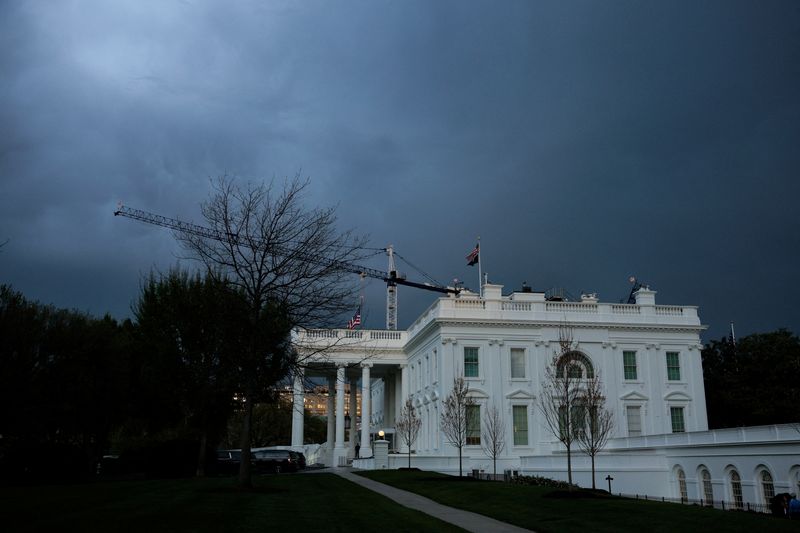

White House warned staff not to place market bets amid Iran war, WSJ reports

RBC Capital raises Nuvation Bio stock price target on glioma potential

World oil prices plunged Thursday as a U.S.-brokered two-week ceasefire between the United States, Israel and Iran triggered a sharp unwinding of geopolitical risk premiums, sending Brent crude below $100 a barrel for the first time in weeks after it had spiked above $110 amid fears over disruptions in the Strait of Hormuz.
Brent crude futures fell as much as 15% in early trading before paring some losses to trade around $96.84 per barrel by midday in London on April 9. West Texas Intermediate crude dropped similarly, hovering near $97 per barrel. The dramatic reversal followed President Donald Trump’s announcement of the conditional truce, which includes Iran’s commitment to reopen the critical shipping chokepoint that carries about one-fifth of global oil supplies.
The ceasefire, described as fragile and conditional on de-escalation steps including resumed tanker traffic through the Strait of Hormuz, provided immediate relief to energy markets that had been on edge for weeks. Oil had surged dramatically in March and early April as tensions escalated, with Brent briefly topping $111 and WTI crossing $112 — levels not seen in nearly four years — amid reports of attacks, blockades and supply concerns in the Persian Gulf.
Analysts described Thursday’s move as one of the largest single-day drops since the early days of the COVID-19 pandemic, reflecting the rapid removal of a “panic premium” that had built up as traders priced in potential prolonged disruptions. However, prices remained well above pre-conflict levels of around $70-$80 per barrel, signaling that underlying risks and a baseline risk premium persist even as immediate fears subside.
The volatility underscores oil’s sensitivity to Middle East geopolitics. The Strait of Hormuz had faced effective disruptions or heightened threats, prompting rerouting of tankers, insurance spikes and temporary shut-ins of production in the region. Saudi Arabia and other Gulf producers reportedly set record premiums for their flagship crudes as buyers scrambled for alternative supplies. U.S. oil premiums also hit records as global markets hunted for barrels.
OPEC+ responded to the earlier tensions with measured production adjustments. In March, the group of eight key members — including Saudi Arabia, Russia, Iraq and the UAE — agreed to increase output by 206,000 barrels per day starting in April, gradually unwinding some voluntary cuts from 2023. The move aimed at market stability amid low inventories and steady economic signals, even as conflict risks loomed. Earlier in the year, the alliance had paused further hikes during the first quarter due to seasonal factors.
With the ceasefire news, attention shifted quickly to fundamentals. The International Energy Agency and U.S. Energy Information Administration have projected global oil supply growth outpacing demand in 2026, with non-OPEC+ producers — led by the United States, Brazil and Guyana — adding significant volumes. World oil supply is forecast to rise by roughly 2.4 million to 2.5 million barrels per day this year, potentially building surpluses once Hormuz flows normalize.
Demand growth forecasts have been tempered. The IEA sees global consumption rising by only about 640,000 to 930,000 barrels per day in 2026, down from prior estimates, partly due to higher prices curbing usage in March and April along with economic uncertainties. The EIA similarly lowered its 2026 demand growth projection to around 0.6 million barrels per day. Non-OECD countries, particularly in Asia, are expected to drive nearly all the incremental demand.
Longer-term outlooks from analysts like J.P. Morgan point to Brent averaging around $60 per barrel later in 2026 once surpluses materialize and any conflict-related disruptions fully unwind. Goldman Sachs had raised its near-term forecast amid the Hormuz risks but sees easing later in the year. S&P Global Ratings adjusted its 2026 assumptions higher to $75 WTI and $80 Brent to account for prolonged flows issues, though the ceasefire could alter that trajectory.
U.S. shale production remains a key buffer. Output has stayed resilient, with forecasts for record levels around 13.6 million barrels per day. American producers benefit from higher prices but also stand ready to ramp up as geopolitics stabilize.
Gasoline and diesel prices at the pump, which had climbed in response to crude spikes, are expected to ease in coming weeks if the truce holds, though the lag in retail adjustments means drivers may not feel immediate relief. Broader market reactions were positive, with global stocks surging on reduced uncertainty and lower input costs for energy-intensive industries.
Still, caution dominates. The two-week ceasefire is short-term and conditional, with reports of cracks emerging over issues like Lebanon and ongoing tanker navigation challenges. Any resumption of hostilities could quickly reverse Thursday’s losses and send prices spiking again. Analysts warn that full normalization of Hormuz traffic could take time even under a sustained peace, as shipping schedules, insurance and confidence rebuild slowly.
OPEC+ faces a delicate balancing act. The group has signaled willingness to adjust output further based on market conditions, but sustained high prices could encourage more non-OPEC supply while curbing demand. Saudi Arabia, as de facto leader, has historically stepped in with cuts or increases to prevent extreme volatility.
For consumers and businesses worldwide, the wild swings highlight energy’s vulnerability. Airlines canceled flights in the region, chemical and fertilizer producers faced higher costs, and industries dependent on stable fuel prices braced for pass-through effects. Renewable energy advocates noted that prolonged high oil prices could accelerate the shift away from fossils, though the current drop may temper that momentum in the short run.
Thursday’s trading reflected choppy conditions as investors weighed relief against lingering risks. Brent settled around the mid-$90s after the initial plunge, while WTI showed similar patterns. Volume was elevated as hedge funds and speculators adjusted positions rapidly.
Looking ahead, the next OPEC+ meeting in June will be closely watched for any signals on further production unwinding. In the meantime, traders will monitor on-the-ground developments in the Gulf, satellite data on tanker movements and inventory reports from the EIA and others.
The episode serves as a reminder of oil’s dual nature as both a physical commodity tied to supply-demand balances and a financial asset heavily influenced by geopolitics and sentiment. Even with the ceasefire providing breathing room, structural factors — rising non-OPEC supply, moderating demand growth amid efficiency gains and the energy transition — suggest downward pressure on prices over the medium term.
For now, the market has exhaled. Whether the relief proves temporary or marks the start of a sustained de-escalation will determine if oil returns to the $60-$80 trading range many forecasters envision for late 2026 or remains elevated by persistent uncertainties.

MarineMax: These Waters Aren't Smooth Enough For My Liking

Form DEF 14A TransAct Technologies Incorporated For: 9 April
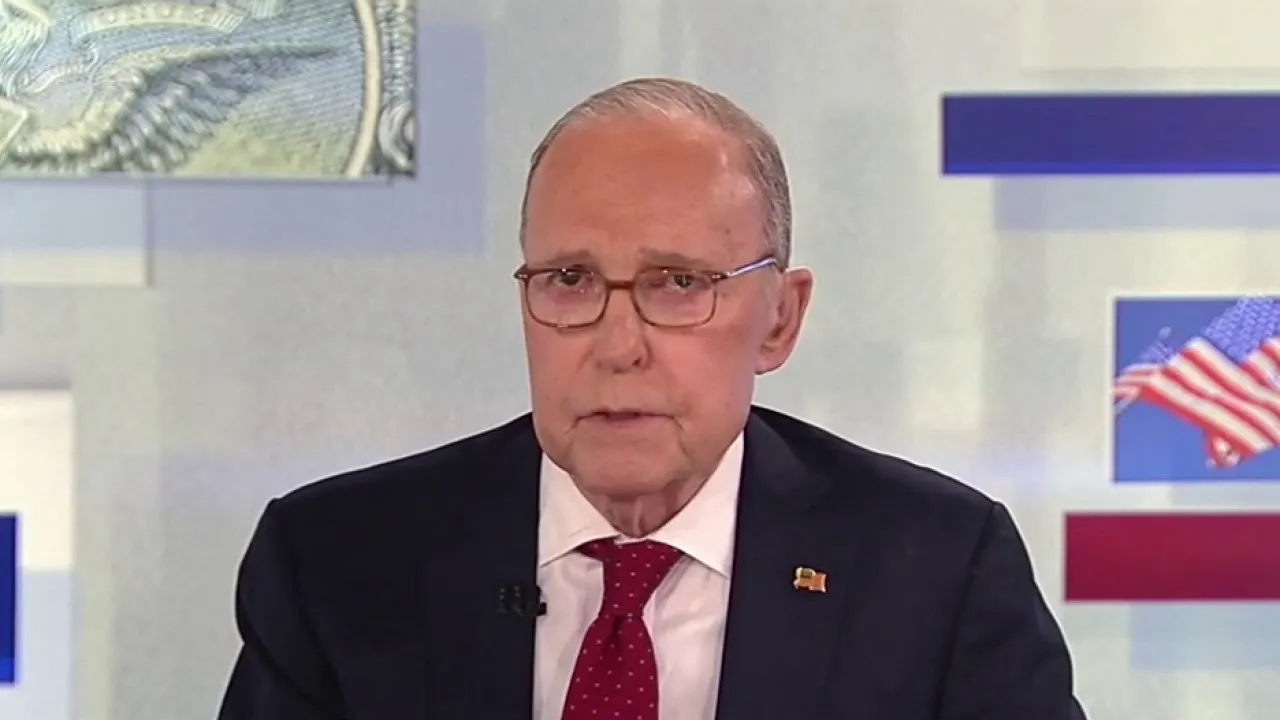
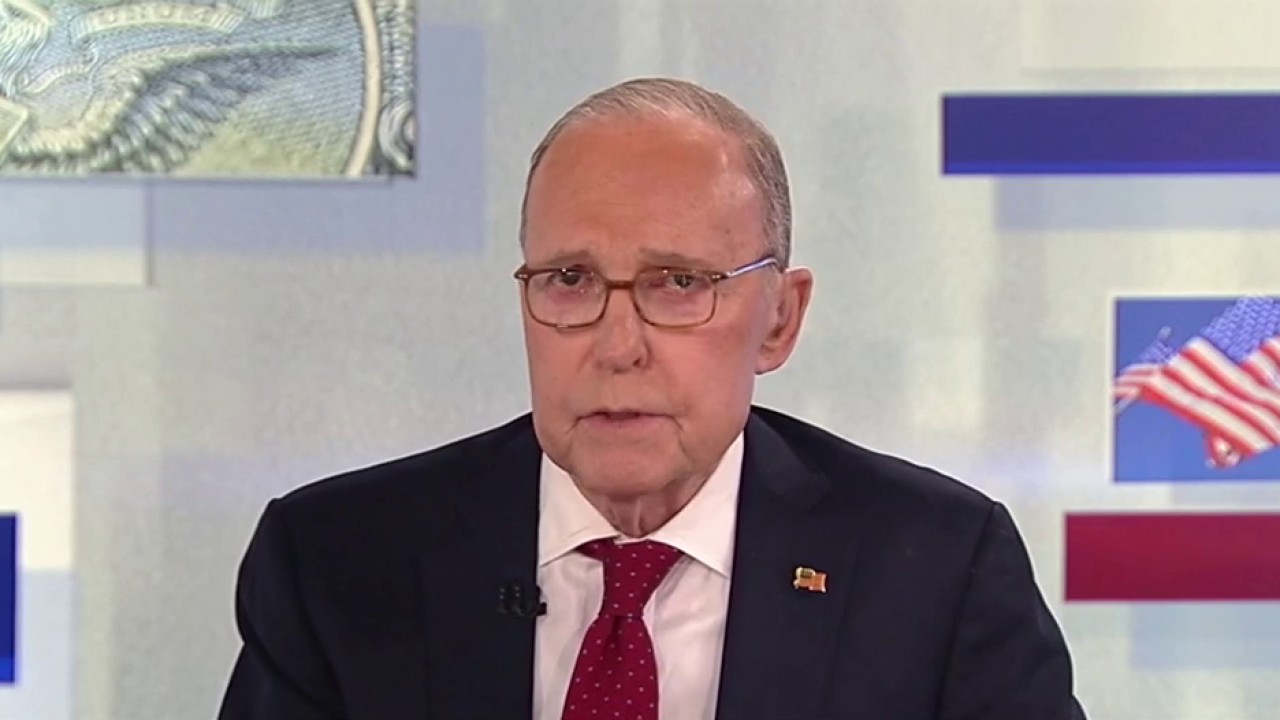
FOX Business host Larry Kudlow discusses the state of the American economy under the Trump administration on ‘Kudlow.’
Let’s take a break from the war and follow up on an important economic story, and that is the continued mobility of the great American middle class. There’s a lot more prosperity here than left-wing populist tax-and-spend Democrats would have anyone believe.
Scott Winship of the American Enterprise Institute has a new study showing how the core middle class and lower incomes have been shrinking, because of a boom in the upper middle class. Dual income households have nearly tripled since 1979 to 31 percent from 10 percent, reaching $326,000 a year. The so-called core middle class at just over $100,000 has basically dropped only slightly to 31 percent from 35 percent. In the lower middle class, and poorer incomes, have fallen a bit. I’m going to label this and simplify this near 50-year middle class prosperity period as the relatively low tax rate supply side era. Bookended by President Reagan and President Trump.
Family incomes have been rising across the entire spectrum, especially among women. And other studies show that individual mobility going to the top fifth of earners from people in the bottom fifth has also increased by roughly 50 percent. In other words, a rising tide lifts all boats..
National Economic Council director Kevin Hassett lauds President Donald Trump’s State of the Union address on ‘Kudlow.’
Democrats love to bash supply-side economics as trickle-down. Or hollowing out the middle class, but the data show it’s not true. What’s more, as my pal Steve Moore writes, Trump tax cuts 2.0 are uniquely designed to help the middle class through tax-free tips, overtime, and Social Security. Add to that the Trump accounts which help newborns own a piece of the rock and accumulate wealth no matter who they are or where they’re from, or what color their skin.
Trump tax cuts 1.0 during his first term disproportionately benefited middle-class blue-collar type wage earners because of the positive impact of lower business taxes. The same is true for Trump 2.0, with its 100 percent immediate cost expensing, and reciprocal fair trade that is channeling a factory building boom, that will be an enormous booster shock to working folks.
Meanwhile, the top 1 percent of income earners pay more than 40 percent of the tax burden, and if you add in state and local taxes from the big blue states like New York, California, and lately Washington State, the most successful earners will be paying half or more of the tax burden. Americans know they are overtaxed. And they also know that more and more of that money is being spent fraudulently in those very same big blue states that overtax in the first place. The GOP can beat history and win the midterms, if they just go out and make the sale.


I’m a passionate investor with a strong foundation in fundamental analysis and a keen eye for identifying undervalued companies with long-term growth potential. My investment approach is a blend of value investing principles and a focus on long-term growth. I believe in buying quality companies at a discount to their intrinsic value and holding them for the long haul, allowing them to compound their earnings and shareholder returns.
Analyst’s Disclosure: I/we have no stock, option or similar derivative position in any of the companies mentioned, and no plans to initiate any such positions within the next 72 hours. I wrote this article myself, and it expresses my own opinions. I am not receiving compensation for it (other than from Seeking Alpha). I have no business relationship with any company whose stock is mentioned in this article.
Seeking Alpha’s Disclosure: Past performance is no guarantee of future results. No recommendation or advice is being given as to whether any investment is suitable for a particular investor. Any views or opinions expressed above may not reflect those of Seeking Alpha as a whole. Seeking Alpha is not a licensed securities dealer, broker or US investment adviser or investment bank. Our analysts are third party authors that include both professional investors and individual investors who may not be licensed or certified by any institute or regulatory body.


Trapping Value is a team of analysts with over 40 years of combined experience generating options income while also focusing on capital preservation. They run the investing group Conservative Income Portfolio in partnership with Preferred Stock Trader. The investing group features two income-generating portfolios and a bond ladder.
Trapping Value provides Covered Calls, and Preferred Stock Trader covers Fixed Income. The Covered Calls Portfolio is designed to provide lower volatility income investing with a focus on capital preservation. The fixed income portfolio focuses on buying securities with high income potential and heavy undervaluation relative to comparatives. Learn more.
Analyst’s Disclosure: I/we have no stock, option or similar derivative position in any of the companies mentioned, and no plans to initiate any such positions within the next 72 hours. I wrote this article myself, and it expresses my own opinions. I am not receiving compensation for it (other than from Seeking Alpha). I have no business relationship with any company whose stock is mentioned in this article.
We long positions in TIPS and real return bonds via different Canadian instruments.
Seeking Alpha’s Disclosure: Past performance is no guarantee of future results. No recommendation or advice is being given as to whether any investment is suitable for a particular investor. Any views or opinions expressed above may not reflect those of Seeking Alpha as a whole. Seeking Alpha is not a licensed securities dealer, broker or US investment adviser or investment bank. Our analysts are third party authors that include both professional investors and individual investors who may not be licensed or certified by any institute or regulatory body.
Raymond James initiates Milestone Pharmaceuticals stock coverage with Strong Buy

AMRO’s flagship AREO 2026 report projects steady regional growth for ASEAN+3 while warning that the Middle East conflict has significantly increased downside risks through energy supply disruptions.
Key Details:
- Regional growth is forecast at 4.0% in both 2026 and 2027, following stronger-than-expected expansion of 4.3% in 2025.
- The Middle East conflict has raised energy prices, pushing headline inflation from 0.9% in 2025 to a projected 1.4–1.5% in 2026–2027.
- The region is considered better positioned than in previous energy shocks due to improved energy efficiency, lower oil dependency, and available policy space.
- A prolonged conflict could spread disruptions beyond energy markets to industrial inputs, logistics, food prices, tourism, and remittances.
- Structurally, ASEAN+3 has shifted toward intraregional demand — now accounting for 28% of global final demand — with US-bound value-added exports falling from ~one-third to 20%.
- Policymakers are urged to maintain financial stability, act decisively against sustained inflation, and provide targeted fiscal support without fuelling inflation.
Why It Matters:
ASEAN+3’s growing regional integration and economic resilience provide a strong foundation, but sustained policy vigilance and deeper regional cooperation will be critical to navigating ongoing global shocks.
Chapter 1: Macroeconomic Prospects and Challenges
ASEAN+3 delivered a stronger-than-expected performance in 2025 despite the most significant shift in global trade policy in decades. Economic activity remained well-supported by firm domestic demand, robust export performance, continued investment, and strengthening intraregional linkages.
Near-term risks (Chapter 1):
- Ongoing conflict in the Middle East and energy supply disruptions (especially via the Strait of Hormuz).
- Shifting U.S. trade policies and volatile technology demand.
- Financial market volatility adding downside pressure.
- Policymakers’ central challenge: preserving policy flexibility.
Looking ahead, the balance of risks is tilted to the downside, with uncertainty remaining elevated. Trade policy shifts and technology demand have each become sources of two-sided risk. The conflict in the Middle East and the disruption to energy supply through the Strait of Hormuz pose a significant near-term risk to both growth and inflation, while financial market volatility adds further downside pressure.
The region nonetheless enters 2026 from a position of relative strength. Growth outperformed expectations in 2025, inflation remained low, and most economies retain meaningful fiscal and monetary space. Preserving policy flexibility remains the central near-term challenge for policymakers across the region.
Source : ASEAN+3 Regional Economic Outlook 2026 – ASEAN+3 Macroeconomic Research Office – AMRO ASIA
Other People are Reading
Continue Reading
Which Is Fastest, Cheapest, and Safest?

Meghan Markle’s Hollywood Comeback Claim Triggers Deals

Disgusted I’m A Celebrity fans express fury over David Haye’s behaviour


-

 Business7 days ago
No Jackpot Winner and $194 Million Prize Rolls Over
-

 Fashion6 days ago
Weekend Open Thread: Spanx – Corporette.com
-

 Business4 days ago
Three Gulf funds agree to back Paramount’s $81 billion takeover of Warner, WSJ reports
-

 Business6 days ago
Expert Picks for Every Need
-

 Sports5 days ago
India men’s 4x400m and mixed 4x100m relay teams register big progress | Other Sports News
-

 Tech2 days ago
How Long Can You Drive With Expired Registration? What Florida Law Says
-
Business5 days ago
No Jackpot Winner, Prize to Climb to $231 Million
-

 Fashion3 days ago
Massimo Dutti Offers Inspiration for Your Summer Mood Board
-
Politics6 days ago
Wings Over Scotland | The quality of mercy
-

 Fashion2 days ago
Let’s Discuss: DEI in 2026
-

 Business5 days ago
Akebia Therapeutics, Inc. (AKBA) Discusses Pipeline Progress and Strategic Focus on Kidney Disease Treatments at R&D Day – Slideshow
-

 Fashion7 days ago
Statement Sunglasses: The Accessory Shaping Modern Fashion
-

 Crypto World1 day ago
Bitcoin recovers as US and Iran Agree a Ceasefire Deal
-

 Politics7 days ago
East Jerusalem Palestinian families eviction orders
-

 Politics7 days ago
Why so many children are now classified as ‘disabled’
-

 Fashion7 days ago
For Love & Lemons’ Spring 2026 Line is for the Romantics
-

 Politics7 days ago
Nuclear rockets, moon bases and NASA’s Mars plan
-
 Tech7 days ago
The Threadless Ball Screw Never Took Off, But Don’t Write It Off
-
 Business7 days ago
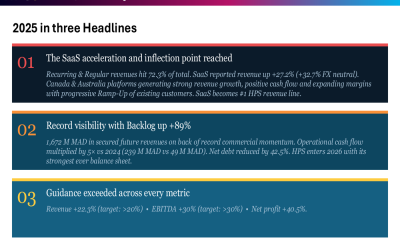
HPS FY 2025 slides: SaaS inflection drives 22% revenue growth
-

 Fashion6 days ago
Tory Burch’s Spring 2026 Campaign Goes on a Getaway
You must be logged in to post a comment Login