Business
Honesty box ‘helps us thank our generous community’

Kevin PeacheyCost of living correspondent

 BBC
BBCHonesty boxes are boosting fundraising efforts and offer something back for community support, enthusiasts say, as social media fuels their revival.
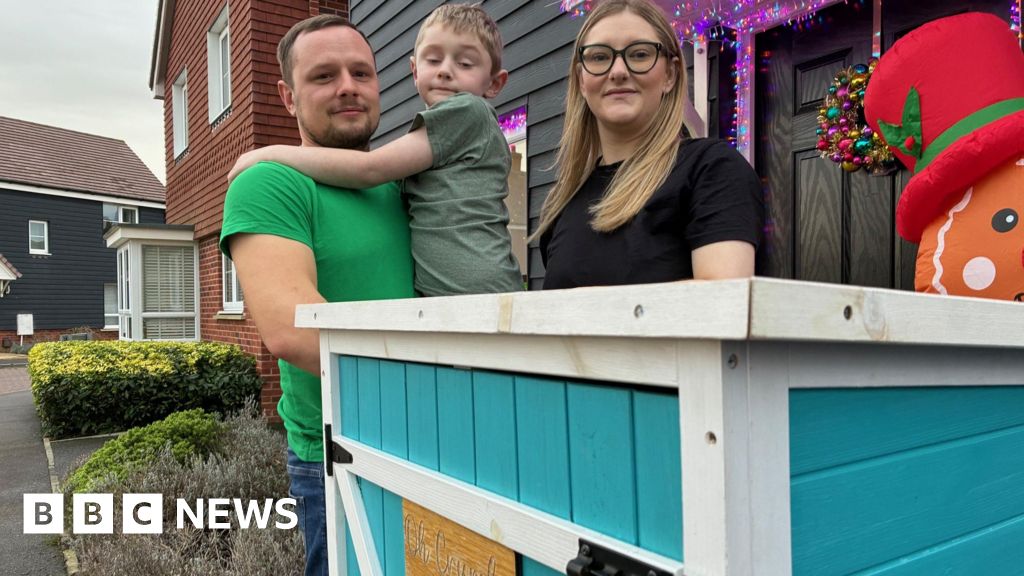
Laura and Tom Winter, from Langley in Maidstone, Kent, are raising money so they can finance a suitable and safe home with their son Evan who has Duchenne muscular dystrophy.
The life-limiting condition will eventually leave him reliant on a wheelchair and in need of specialist home adaptations, so the family are raising money pound by pound, bake sale by bake sale.
Laura stays up late to bake once a month, so they can fill their honesty box – or bake shed – in order to raise money, and awareness.
“The bake shed allows us to give something back to our community,” Laura said. “It feels less like we are just ask, ask, asking for people to donate. It gives them something nice to eat.”
Honesty boxes are traditionally found on rural roadsides, offering local produce in return for a few coins dropped into a cash collection box.
But home bakers, in particular, have given them a modern twist. Boxes now often include a QR code to allow people to pay online, and social media is awash with pictures and videos of the boxes and the treats inside.
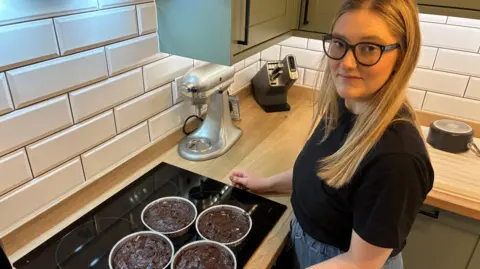
That has been embraced by the Winter family who are selling Laura’s Christmas creations outside their home this weekend.
Laura’s baking began when she made daughter Amelie’s first birthday cake. Now, nine years on, it is part of their fundraising efforts after receiving Evan’s devastating diagnosis.
He is a happy seven-year-old boy who loves Lego and dinosaurs. But his condition brings weakness to his muscles and eventually paralysis as it works up his body.
That will mean, as he gets older, their home will need to be on a single level, and have a wet room, hoists and be suitable for a wheelchair. They have been told their current home is unsuitable, will be unsafe, and cannot be adapted appropriately.
“The kind of house that he needs is ridiculously expensive. We are just normal working people, we don’t have the affordability for a bungalow that is half a million pounds,” said Laura.
“So we crunched some numbers and figured that the best way to keep him safe for as long as we are lucky enough to have him is to build a home.”
So, they are seeking help for the £150,000 needed for a plot of land, before they borrow to build a home.
 Laura Winter
As well as raising money for a home, the family also want to their efforts to help other families in a similar situation, and raise awareness of Duchenne muscular dystrophy.
Evan is also staying jolly, having joked that he would soon be going really fast in his wheelchair, which he currently uses at school.
‘Most people are honest’
Laura said that the community had been generous, sometimes overpaying for items in the sale to boost their donation.
Not too far away at Ridley Court Farm, near Wrotham, there is a supersized honesty box – actually, a shed – and they too say customers are honest when paying for produce.
Ridley’s Little Hut started during Covid, when the farm was throwing away milk, so it allowed people to come in, buy produce and leave without any close contact.
Now, it also sells eggs, cheese, soup, local honey and even homemade cards and trinkets.
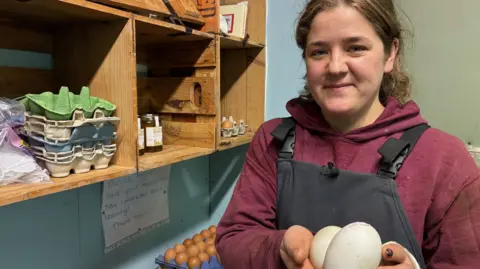
Farmer Beth Mellish said that people used a cash pot to pay and get change, and wrote down their purchases in a visitors’ book.
But, in a nod to how honesty boxes have adapted, there is also a card machine that allows people to enter what they have bought and pay.
Half of UK adults now pay for things by tapping their phone, according to the latest data from banking trade body, UK Finance.
Many shoppers now only go out with a phone and carry coins less.
So casual payments, such as charity donations, honesty boxes, crafts stalls and rewarding buskers, are increasingly made digitally.
Whichever way they pay, and whether it is a small business running it, or for fundraising efforts like the Winter family’s, many still believe that honesty is the best policy.