
Business
How Professional Translation Services Drive International Business Growth


Ask most British businesses about their plans for international expansion, and you’ll hear about fundraising strategies, supply chain logistics, partnership deals, and regulatory hurdles.
Translation, if it comes up at all, is usually an afterthought. But in reality, for companies serious about breaking into global markets, language is often the first real challenge and the first real opportunity.
Expanding internationally isn’t just a matter of shipping products or setting up offices in new cities. It’s about establishing trust. And trust doesn’t translate automatically. It only develops when your customers, partners, and employees can interact with your brand in their own language, without confusion or friction.
That’s why professional translation services shouldn’t be treated as a minor operational expense. They’re a strategic investment that can make or break your success abroad.
The Cost of Being Misunderstood
The UK remains one of the world’s most outward-facing economies. According to data from the Department for Business and Trade, British firms continue to expand exports across Europe, North America, and Asia. At the same time, global digital marketplaces allow SMEs to reach customers far beyond domestic borders.
The Word Point, a business translation provider which Google rates among the top 5% of translation companies for customer reviews, emphasizes that entering a new market with poorly translated content can do more damage than good. A marketing campaign that works in London may fall flat in another country if translated without cultural adaptation. A contract mistranslated by automated tools can lead to legal ambiguity. A product manual that lacks clarity can increase liability.
Translationreport.com has repeatedly highlighted in its reports how translation quality directly affects market credibility and customer confidence. When businesses invest in professional human translation combined with AI-driven efficiencies, they reduce risk and strengthen brand authority. For companies serious about growth, translation is not optional but foundational.
Translation as Market Strategy
The term business translation service often sounds transactional, as if it refers merely to document conversion. In reality, it sits at the intersection of branding, compliance, HR, finance, and sales.
Consider marketing first. When companies localise websites, landing pages, and ad campaigns properly, they are not simply replacing English words with foreign equivalents. They are adapting tone, idioms, and cultural references. This is where human expertise becomes irreplaceable. AI tools can accelerate initial drafts, but strategic localisation demands professionals who understand audience psychology.
Natalie Basuik, an expert in the translation industry, has often emphasised that “language is not just communication but positioning.” A mistranslated slogan doesn’t just look clumsy, it signals a lack of commitment to the market.
For SMEs entering European or Asian markets, partnering with what many consider the best translation service means working with linguists who understand regional variations, industry terminology, and consumer behaviour.
Financial Documents: Where Precision Protects Profit
When businesses expand to new countries, paperwork multiplies. Contracts, shareholder agreements, tax filings, and investor reports must often be translated accurately and, in many cases, certified.
Financial documents translation demands a particular level of expertise. Terminology must align with local accounting standards. Regulatory language must reflect jurisdictional nuance. A single mistranslated clause in a financial agreement can result in disputes or compliance failures.
Unlike casual content, financial documentation leaves no room for approximation. Human translators with subject-matter knowledge, sometimes working in tandem with AI-powered terminology management systems, ensure consistency and accuracy in complex documentation. In high-stakes financial environments, precision is a legal safeguard for any business.
HR: The Hidden Engine of International Growth
Global expansion doesn’t only involve customers and partners. It involves people. As British companies hire internationally or establish overseas subsidiaries, internal communication becomes critical. This is where HR materials translation takes center stage.
Employee contracts, codes of conduct, compliance policies, and onboarding materials — these are not documents where ambiguity is acceptable. Misinterpretation can lead to internal disputes, legal risk, or cultural misalignment. Among the most sensitive documents are employee handbooks translation projects. An employee handbook defines workplace culture, expectations, grievance procedures, and ethical standards. If poorly translated, it can create confusion about rights and obligations.
Professional human translators ensure clarity, tone alignment, and legal accuracy. AI tools can assist in maintaining consistency across large document sets, but oversight from experienced linguists remains essential. For growing companies, HR translation protects organizational cohesion of the workforce.
Marketing Materials: Language as Brand Capital
Marketing materials translation goes beyond technical accuracy. It touches brand identity. When launching a product in Spain or South Korea, for example, cultural resonance matters as much as grammatical correctness. Calls to action must feel natural. Brand values must translate authentically. A Professional translation service understands localisation strategy, adjusting imagery references, humour, and even colour symbolism where necessary.
Brands that invest in thoughtful localisation often see stronger engagement rates and lower bounce rates on multilingual websites. While exact performance metrics vary by industry, digital marketing research consistently demonstrates that consumers are far more likely to purchase from websites in their native language. For British businesses seeking to stand out globally, language becomes a differentiator.
Choosing the Right Translation Partner
When a business begins searching for a translation provider, the options can feel overwhelming. Hundreds of agencies claim to be the best, each promising accuracy, speed, and competitive pricing. So how do you separate substance from marketing noise? The answer lies in asking the right questions and understanding what truly matters when your brand’s credibility is on the line.
Industry Expertise: Does Your Translator Speak Your Language?
Before committing to a provider, ask for evidence of their experience in your sector. Have they worked with similar companies? Can they provide case studies or references? Do their translators have subject-matter expertise, or are they generalists trying to cover everything? The answers will tell you whether they truly understand your business, or whether you’re just another job in the queue.
Human-Led Quality Assurance: Who’s Actually Reading Your Content?
Machine translation, no matter how advanced, still struggles with tone, context, idiomatic expressions, and cultural nuance. It can produce technically correct sentences that feel off, miss subtle implications, or inadvertently offend. Only a skilled human editor can catch these issues and ensure the final text reads naturally, sounds professional, and reflects your brand’s voice.
Certification Capabilities: Can They Handle Official Documents?
If your business operates in highly regulated industries or frequently deals with cross-border legal matters, certification capabilities should be non-negotiable. Before choosing a provider, confirm that they can produce certified translations that meet the specific requirements of the countries and institutions you’re working with. Some jurisdictions require sworn translators registered with government bodies; others accept certifications from qualified professional translators. A good provider will know the difference and guide you accordingly.
Data Security: Can You Trust Them with Sensitive Information?
When you hand over documents for translation, you’re also handing over trust. That’s why data security should be a core consideration when choosing a provider. Do they have clear confidentiality agreements in place? Are their file handling practices secure? Do they comply with data protection regulations like GDPR? Are their translators bound by non-disclosure agreements?
Scalability: Can They Grow with You?
As your business expands into new markets and your translation needs increase, can your provider scale effectively to meet demand? The right partner should be able to handle larger volumes across multiple languages without sacrificing quality, consistency, or turnaround times. Whether you’re launching in three countries this year or ten countries next year, you need a translation service with the infrastructure, talent pool, and project management capabilities to support your growth without becoming a bottleneck.
Choosing the right translation partner isn’t about finding the cheapest option or the flashiest website. It’s about finding a provider who understands your industry, maintains quality standards, can handle the legal and regulatory complexities of certified translation, and treats your confidential information with the seriousness it deserves. Ask the hard questions, demand transparency, check the reviews. And remember, when it comes to translation, you’re not just buying a service, you’re choosing a partner who will represent your business in languages and markets you may not fully understand yourself. Choose wisely.


Traders were wrestling with conflicting signals about a potential winding down of the war that began over a month ago, with the U.S.-Israeli military strikes on Iran.
The S&P 500 posted a gain in the holiday-shortened week, snapping a five-week streak of losses. The benchmark index earlier in the week closed its worst-performing quarter since 2022, weighed down since late February by the war and the resulting surge in energy prices.
“It’s going to be hard to get the market’s attention off the Middle East, oil prices and the risks that have emerged,” said Matthew Miskin, co-chief investment strategist at Manulife John Hancock Investments. “The markets have been so myopically focused on geopolitical risk and … how all this is going to shake out.”
Stocks have stumbled this year, with concerns about artificial-intelligence disruption and private credit weakness compounding uncertainty over the Middle East conflict. The S&P 500 was last down nearly 6% from its late-January all-time high.

The war’s impact on oil supplies and energy prices remained the focal point for investors, especially the status of the Strait of Hormuz, a critical Middle East oil-shipping channel where traffic has stalled. U.S. crude topped $110 a barrel on Thursday after the commodity earlier in the week settled above $100 a barrel for the first time since 2022.
“The market is pricing off oil,” said Doug Huber, deputy chief investment officer at Wealth Enhancement Group. “Inflation expectations, bond markets — everything is stuck to this concept of what oil is doing.”
CPI TO JUMP, HIGH PRICES AT THE PUMP
Next week’s consumer price index, a closely watched inflation gauge, stands as an early test of the war’s energy shock. With U.S. crude jumping some 90% since the start of the year, the U.S. average gasoline price rose above $4 a gallon this week for the first time in more than three years.
“We think the first stage of oil price pass-through will have arrived in March via motor fuel,” BNP Paribas said in a note previewing the CPI report.
The March CPI report, due on April 10, is expected to have climbed 0.9% on a monthly basis, according to a Reuters poll as of Thursday. Excluding energy as well as food prices, the “core” CPI level is expected to have risen 0.3%.
Miskin said he would look for “ripple effects” across other goods and services stemming from the war and energy-price surge, while adding that the March report may be too soon to see any broader inflationary impact.
“You’re just trying to get as much real-time data as you can to formulate where the inflation and economic growth trends are going,” Miskin said.
Q1 RESULTS LOOM, WITH BIG PROFIT HOPES
War-driven inflation worries have led markets to largely rule out interest rate cuts this year, after such cuts had been a key underpinning for many bullish stock outlooks.
“The market already has inflation on the brain,” said Patrick Ryan, chief investment strategist at Madison Investments. If CPI were to “surprise with a much higher print, that could also be something that the market would take negatively.”
Next week also brings the release of another inflation measure, the personal consumption expenditures price index, but that PCE data will cover February, a period largely before the war took hold. An updated read of fourth-quarter U.S. economic growth is also due, while investors will also analyze Wednesday’s release of the minutes from the Federal Reserve’s March meeting for any clues about the future path of rates.
The start of earnings season also will start grabbing Wall Street’s attention, with investors counting on a broadly strong corporate profit outlook to support U.S. stocks this year. Delta Air Lines and beverage maker Constellation Brands are among those due to report next week.
Those reports will offer a taste of the first-quarter reporting season, which kicks off the following week. S&P 500 companies overall are expected to post a 14.4% rise in first-quarter earnings from the year-earlier period, according to LSEG IBES.
“The Q1 earnings season beginning in mid-April should show that underlying earnings growth is still strengthening and broadening,” Deutsche Bank equity strategists said in a note.

KKR: Still A Growth Story Despite Credit Fears


With combined experience of covering technology companies on Wall Street and working in Silicon Valley, and serving as an outside adviser to several seed-round startups, Gary Alexander has exposure to many of the themes shaping the industry today. He has been a regular contributor on Seeking Alpha since 2017. He has been quoted in many web publications and his articles are syndicated to company pages in popular trading apps like Robinhood.
Analyst’s Disclosure: I/we have a beneficial long position in the shares of DV either through stock ownership, options, or other derivatives. I wrote this article myself, and it expresses my own opinions. I am not receiving compensation for it (other than from Seeking Alpha). I have no business relationship with any company whose stock is mentioned in this article.
Seeking Alpha’s Disclosure: Past performance is no guarantee of future results. No recommendation or advice is being given as to whether any investment is suitable for a particular investor. Any views or opinions expressed above may not reflect those of Seeking Alpha as a whole. Seeking Alpha is not a licensed securities dealer, broker or US investment adviser or investment bank. Our analysts are third party authors that include both professional investors and individual investors who may not be licensed or certified by any institute or regulatory body.

Form 13D/A TripAdvisor For: 3 April
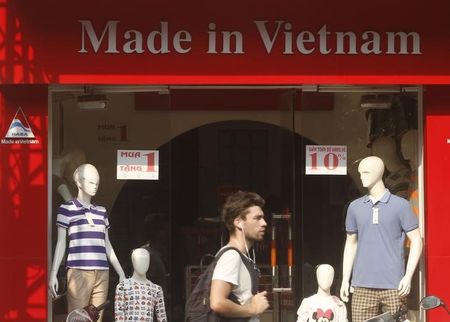
Vietnam’s Q1 growth cools as Middle East energy shock drives $3.6B trade deficit


I have been involved in the financial world for over 25 years with experience as an advisor, teacher, and writer. I am a full believer in the free-market system and that financial markets are efficient with most stocks reflecting their real current value. The best opportunities for profits on individual stocks come from stocks that are less-widely followed by the average investor or from stocks that may not accurately reflect the opportunities that currently exist in their markets.
Analyst’s Disclosure: I/we have no stock, option or similar derivative position in any of the companies mentioned, and no plans to initiate any such positions within the next 72 hours. I wrote this article myself, and it expresses my own opinions. I am not receiving compensation for it (other than from Seeking Alpha). I have no business relationship with any company whose stock is mentioned in this article.
Seeking Alpha’s Disclosure: Past performance is no guarantee of future results. No recommendation or advice is being given as to whether any investment is suitable for a particular investor. Any views or opinions expressed above may not reflect those of Seeking Alpha as a whole. Seeking Alpha is not a licensed securities dealer, broker or US investment adviser or investment bank. Our analysts are third party authors that include both professional investors and individual investors who may not be licensed or certified by any institute or regulatory body.

Cited by Barron’s as one of the top financial websites to visit on the weekend, Financial Sense (www.financialsense.com) provides educational resources to the broad public audience through a daily podcast, editorials, current news and resource links on salient financial market issues. Begun in 1985 as a local talk radio program, Financial Sense Newshour (www.financialsense.com/financial-sense-newshour) is a weekly webcast with host Jim Puplava and top financial thinkers. Writing staff of Financial Sense includes: Jim Puplava, Chris Puplava, Ryan Puplava, and Cris Sheridan.

Jobs Growth Remains Modest

Why the eurozone growth hit may be more severe this time


Trump administration can’t make colleges provide race-related data, judge rules

GloRilla Reacts To Pregnancy Rumors At Recent Basketball Game

Bitcoin ETFs to surpass gold ETFs in size
Wall Street Week Ahead: Inflation in focus for markets jostled by Middle East war signals


-

 NewsBeat1 day ago
Steven Gerrard disagrees with Gary Neville over ‘shock’ Chelsea and Arsenal claim | Football
-

 Business1 day ago
No Jackpot Winner and $194 Million Prize Rolls Over
-
Entertainment5 days ago
Fans slam 'heartbreaking' Barbie Dream Fest convention debacle with 'cardboard cutout' experience
-

 Fashion10 hours ago
Weekend Open Thread: Spanx – Corporette.com
-

 Crypto World2 days ago
Gold Price Prediction: Worst Month in 17 Years fo Save Haven Rock
-

 Tech5 days ago
The Pixel 10a doesn’t have a camera bump, and it’s great
-
 Entertainment6 days ago
Lana Del Rey Celebrates Her Husband’s 51st Birthday In New Post
-
Crypto World4 days ago
Dems press CFTC, ethics board on prediction-market insider trades
-

 Tech5 days ago
Avatar Legends: The Fighting Game comes out in July and it looks pretty slick
-

 Sports3 days ago
Tallest college basketball player ever, standing at 7-foot-9, entering transfer portal
-

 Tech4 days ago
EE TV is using AI to help you find something to watch
-

 Fashion6 days ago
Amazon Sundays: Soft Spring Layers
-

 Business2 days ago
Login and Checkout Issues Spark Merchant Frustration
-

 Tech6 days ago
Elon Musk’s last co-founder reportedly leaves xAI
-

 Tech4 days ago
How to back up your iPhone & iPad to your Mac before something goes wrong
-

 Tech5 days ago
Apple will hide your email address from apps and websites, but not cops
-

 Politics4 days ago
Should Trump Be Scared Strait?
-

 Crypto World4 days ago
U.S. rule change may open trillions in 401(k) funds to crypto
-

 Tech4 days ago
Flipsnack and the shift toward motion-first business content with living visuals
-

 Fashion5 days ago
The Best Spring Trends of 2026
You must be logged in to post a comment Login