Business
HSBC on IndiGo: No structural damage, no de-rating. Here’s all you need to know

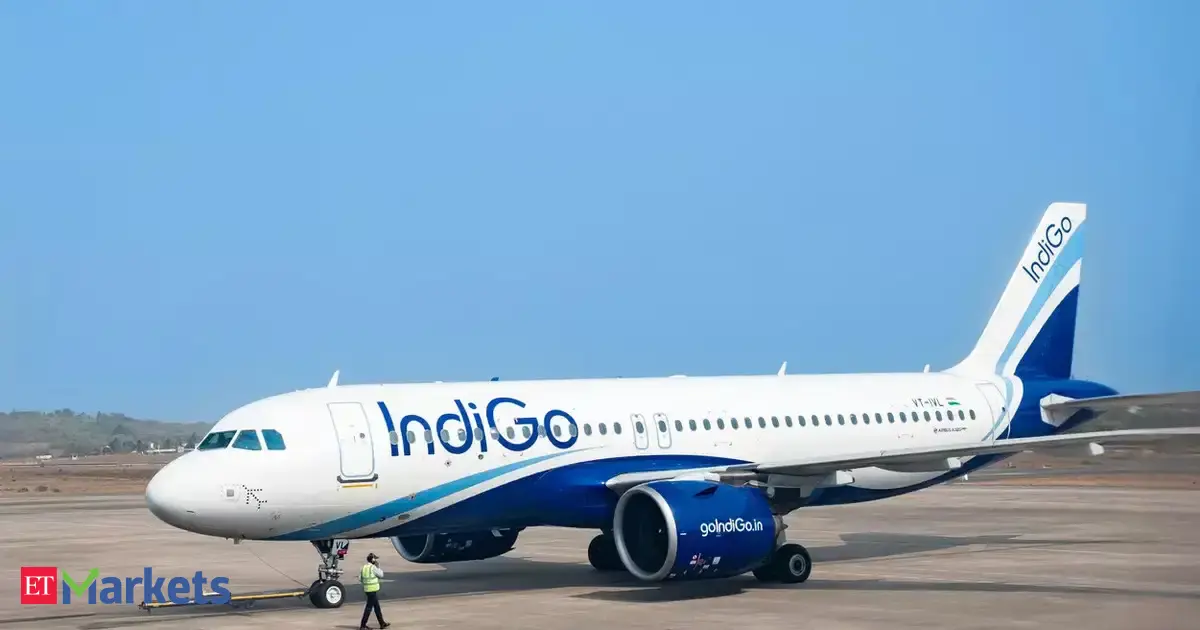
HSBC has lowered its target price for InterGlobe Aviation, the parent of IndiGo, to Rs 5,977 from Rs 6,920, reflecting fresh cost pressures, cancellations and forex effects. But the house has kept its ‘Buy’ rating firmly in place. It argued that despite the past week’s turmoil, which included cancellations, operational gridlock and reputational stumbles, IndiGo’s competitive footing remains intact.
HSBC said that IndiGo faces “strong headwinds from mass cancellations, some permanent cost burden and also some reputational damage.” However, the analysts added that “given its continued cost advantage and muted capacity growth at its peers, we don’t see any structural damage for Indigo.” The brokerage also noted that it doesn’t expect multiples to de-rate “since its competitive position remains solid.”
The caution is not without math. HSBC estimates IndiGo has cancelled 11,000 flights this fiscal, resulting in Rs 12–14 billion in lost revenue and Rs 3–5 billion in profit. FY26 and FY27 EBITDA estimates have been trimmed by 4% and 5%, respectively.
New pilot-duty rules hit hardest

The biggest blow, HSBC said, is the new Flight Duty Time Limitations (FDTL) imposed by India’s Directorate General of Civil Aviation. The rules, harsher than those in the U.S. and Europe, extend weekly pilot rest, restrict night landings, broaden the definition of nighttime, and limit night duty frequency.
IndiGo, because of its high aircraft utilisation and ultra-lean cost structure, has taken the sharpest hit. According to HSBC, the airline has cancelled almost 4,500 flights in the last few days alone in response to the norms. The analysts also flagged that some of the pain may have been “partly due to mismanagement in earlier pilot recruitment,” given IndiGo’s rapid expansion.
HSBC calculated that IndiGo may need to hire significantly more pilots, pushing staff costs up by Rs 450 million–Rs 900 million, or roughly 1% of unit cost per ASK.
The bank also warned of “temporary reputational damage, especially internationally,” at a time when IndiGo is trying to elevate its global brand with new long-haul flights.
Could the government cap IndiGo’s market share?
As the airline’s market dominance grows, some investors have speculated whether the government might cap IndiGo’s share at 50%. HSBC called that improbable. With Air India not growing and SpiceJet and Akasa adding only a few planes, IndiGo is the only carrier taking delivery of about 50 aircraft annually. Any cap, HSBC argued, would distort capacity and hurt the broader aviation market.
IndiGo’s operational slide
InterGlobe Aviation shares have fallen nearly 17% in eight days, sliding from 5,917 on November 27 to around 4,913 on Tuesday after the FDTL-triggered meltdown.
The numbers behind the turbulence are extraordinary. IndiGo cancelled over 1,000 flights in a single day, a record in Indian aviation, and more than 2,000 flights in the past week, citing revised FDTL rules, technical glitches and winter-schedule adjustments. The airline told regulators it was “realistically not possible” to isolate a single cause. Its formal explanation, signed by the CEO and COO, was submitted to the DGCA on December 8 at 18:01 hours.
The DGCA said IndiGo took a “drastic measure” on December 5 by rebooting its network, mass cancellations intended to reposition aircraft and crew and ease congestion. The regulator is still examining the airline’s response and has said enforcement action may follow.
Signs of stability return for IndiGo?
Despite the blowout, IndiGo has begun stabilising operations. The carrier operated more than 1,800 flights on Monday, with on-time performance improving to 91%, up from about 75% a day earlier. A total of 562 flights were cancelled in one day across major metros, with 150 in Bengaluru alone.
The airline said it has processed Rs 827 crore in refunds through December 15 and arranged more than 9,500 hotel rooms, 10,000 cabs and buses, and delivered over 4,500 bags to affected passengers.
HSBC’s central message is that while IndiGo’s week-long crisis has exposed vulnerabilities, in scheduling, staffing and regulatory preparedness, despite that the carrier’s long-term thesis still holds. Its cost advantage remains unmatched, peers are not expanding aggressively, and network depth is still a moat.
Also read | IndiGo crisis: Global pilots warn India’s rest rule exemption for IndiGo raises safety concerns
(Disclaimer: Recommendations, suggestions, views and opinions given by the experts are their own. These do not represent the views of the Economic Times)