
Business
If fans couldn’t afford kits they wouldn’t pay


 Castore
The co-founder of premium sportswear firm Castore has defended the price of replica football kits.
Tom Beahon, who set up the company with his brother Phil in 2015, maintains that if fans could not afford to buy the official merchandise then the market would force prices down.
Half of the clubs in the Premier League charge £85 for a full-price basic adult men’s shirt with prices at the other 10 clubs starting from £60.
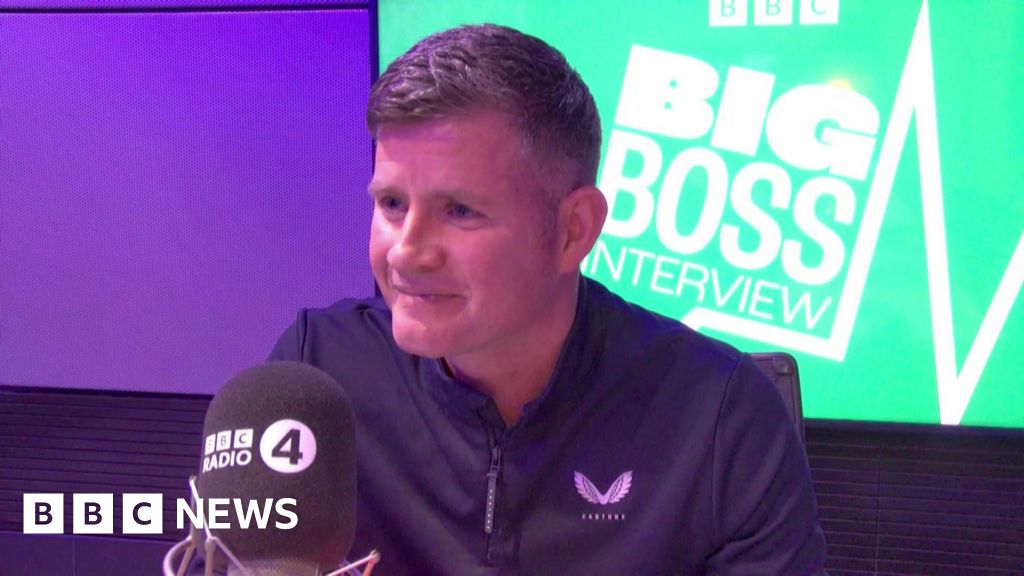
In an interview with the BBC’s Big Boss Interview podcast, Beahon said: “We live in a capitalist society, if people couldn’t afford it, those prices wouldn’t be charged.”
Beahon pushed back against the idea that brands were inflating prices arbitrarily, arguing that higher costs reflect inflation, rising material prices and unprecedented global investment in elite sport.
“I think there’s a couple of drivers of it. All markets are driven by competitive dynamics,” said Beahon, who is from Liverpool.
“That is the nature of capitalism.
“So if the price of a fabric goes up, if tariffs go up, if it becomes more expensive to manufacture a jersey in China, Vietnam, Laos or Cambodia, if the price goes up on the input side, the price generally goes up on the output, what the customer pays.
“That is economics 101 so there’s that element of it.
“There is then a second element.
“We’ve all seen significant investment come into sports, football in particular, the Premier League in particular.
“When that investment comes in, it’s logical those investors over time, might not be one year, might be a decade, but over time they will demand a return on their investment.”
 PA Media
Castore, which is based in Manchester, makes kits for football clubs including Everton, Burnley, Rangers and Preston North End.
Beahon said the firm was responding to affordability concerns through entry-level product ranges designed to keep official kits within reach.
When questioned over the rising number of people buying counterfeit kits, Beahon said this was not a concern for him.
“I mean, do I spend too much of my time thinking about counterfeit products? No, I do not,” he said.
“Technology is evolving all the time.
“So I don’t think we’re a million miles away from a world where there are microchips in these shirts that show that they’re authentic.
“There’ll be a lot of additional engagement that clubs can have with their fans through those microchips and different digital solutions.”
You can listen to the interview in full on BBC Sounds.



