
Business
Indian farmers turn to ‘magical’ butterfly pea flower

Priti GuptaTechnology Reporter

 Impex
Impex“Until a few years ago, the butterfly pea flower was just another climbing plant in my village,” says Nilam Brahma who lives in Anthaigwlao, a village in the northeastern Indian state of Assam.
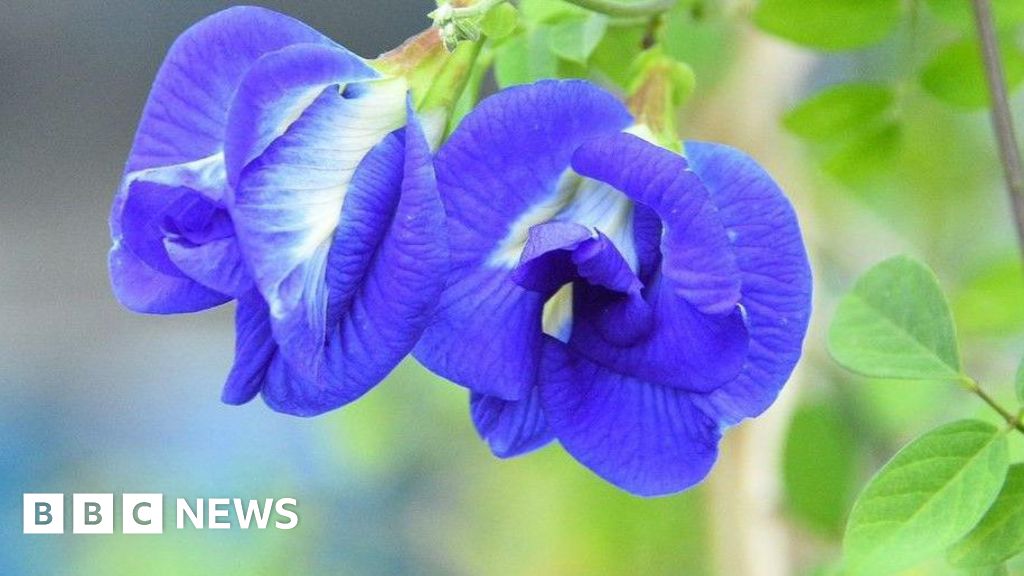
Butterfly pea, also known as aparajita in India, grows as a vine and has a striking blue flower.
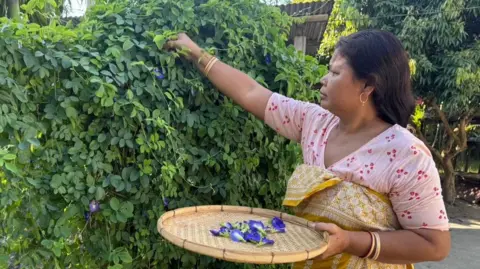
Around two years ago, Brahma heard that local women were making money selling the flowers, which can be made into tea, or a blue dye.
She decided to join them.
“The results surprised even me. The first time I earned $50 (£37) from selling dried flowers, I felt a shock. It made me believe I could control my own future,” she says.
The experiment led to a small business.
“I applied for a small loan and invested in solar dryers. The machines helped me dry flowers faster, preserve their colour, and meet the quality standards demanded by buyers.”
 Phungjwa Brahma
Thailand and Indonesia have been the leading growers and consumers of butterfly pea flowers. But there’s growing global demand for the flower, which is attracting entrepreneurs in India.
“The global demand for natural colourants is exploding,” explains Varshika Reddy, the founder of THS Impex, which exports natural dyes and additives.
Behind that demand is consumer appetite for natural ingredients and tighter controls in the US and Europe on synthetic food dyes.
In 2021, the US Food and Drug Administration (FDA) approved butterfly pea flower as a food additive.
However, in 2022 the European Food Safety Authority (EFSA) raised safety concerns about using the flower.
Both the EU and the UK classify butterfly pea flower as a “novel” food, meaning it still needs approval for widespread use.
Nevertheless, Indian entrepreneurs still see potential and want to develop India’s market.
“The crop is still seen as a backyard ornamental or medicinal plant rather than a commercial commodity,” says Reddy. “There is no structured market awareness, no government classification, and no standard pricing mechanism, making farmers uncertain about returns.”
She is working with farmers to raise production standards.
“We work with a dedicated cluster of farmers and their families in Uttar Pradesh, including a significant number of women farmers.
“We have established formal contracts… we provide comprehensive agronomy support, including guidance on best farming practices, irrigation management, and crop-specific techniques,” she says.
 Getty Images
Others in India have spotted the commercial opportunity.
“When you infuse the flower in hot water, it turns blue, and when you squeeze lemon into it, it turns purple. That felt magical,” says Nitesh Singh, who is based just outside Delhi.
Like Reddy, he thought that the flower had much more potential in India.
“It was here for thousands of years, but nobody knew it could become clean, healthy food,” adds Singh.
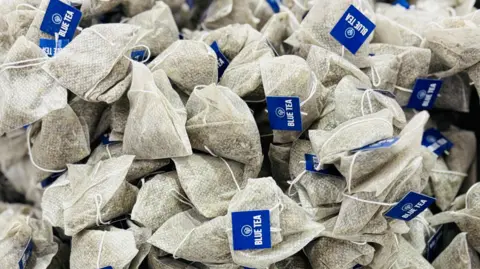
So, in 2018 he founded Blue Tea, hoping to grow an Indian brand, with Indian butterfly peas. To start with, it did not go well.
“Initially, we had to import because we couldn’t find good quality flowers in India. The flowers here had fewer petals, and once sun-dried, nothing would remain. We needed a flower with more pigment, more petals, to retain colour after drying.”
Over the past seven years, Singh has been working with farmers to raise the quantity and quality.
Having started with five farmers, he now works with 600 across the country.
“Training and quality control are the biggest challenges,” he says.
Plucking the flowers is a key part of the process. It’s a job that is predominantly done by women.
“Their hands are softer, and they instinctively know how to pluck delicate flowers without damaging the plant. So, women are trained in how to identify the flower for plucking,” says Singh.
Once harvested, the flowers have to be dried, which also has to be done with care.
“Temperature control is extremely important for drying this flower – one mistake and you lose its value,” he says.
Farmers do some of the drying before the flowers arrive at Blue Tea, where the moisture is checked and further drying is done.
“We use very mild temperatures for a longer time. If the heat is too high, the flower burns and you lose its medicinal quality and colour,” says Singh.
 Blue Tea
As well as the eye-catching colour, there is some evidence that butterfly pea flowers have health benefits. But more research needs to be done.
“When we began reviewing literature, we realised hardly any studies had focused on butterfly pea, despite its strong functional and herbal properties. Most of the available research involved rats and mice,” says V Supriya, assistant professor, Sri Ramachandra Institute of Higher Education and Research in Chennai.
She ran a small study on people who were pre-diabetic, and found that those who consumed tea made with butterfly pea flowers, showed better sugar control, than those that didn’t.
“Butterfly pea was largely overlooked. But with evidence now emerging – especially from human trials – its health benefits may make it very popular,” says Supriya.
 Pushpal Biswas
Pushpal Biswas owns a small farm in west Bengal, and was introduced to butterfly pea by Blue Tea.
“I used to grow rice and vegetables. But many a time I was not able to sell my produce and faced loses,” he says.
But everything has changed over the past seven years, thanks to the new crop.
“It’s an easy growing crop,” he says about butterfly pea.
“With scientific methods, my production jumped from 50kg to 80kg. With the money I made I took more land on lease. My land capacity increased, my production increased, and slowly, my income increased too.”
For some Indian communities, the flower has made a real impact.
“In the last few years, many people from nearby villages have joined us in this cultivation,” says Biswas.
“This isn’t just farming anymore — it has become a network, a community, a business family.”



