
Business
Investor angst turns to earnings after trade clouds clear


Earnings growth has lagged for months, the rupee has weakened, and foreign investors have treated India as a source of funding to chase artificial intelligence-driven rallies in China, Taiwan and South Korea. Adding to the gloom, Indian tech heavyweights such as Tata Consultancy Services Ltd. and Infosys Ltd. have been swept up in a global software selloff, as Anthropic’s latest AI advances threaten to disrupt traditional outsourcing business models.
“India will continue to be seen as a funding market, at least for now,” said Vivek Dhawan, a fund manager at Candriam NV. “In terms of earnings growth recovery, where we see weakness is on the software services side.”
 Bloomberg
Earnings for the MSCI India Index are projected to grow about 8.3% over the next year, trailing regional peers, according to data compiled by Bloomberg. That compares with forecast growth of roughly 16% for China, about 108% for South Korea and close to 30% for Taiwan.

The index trades at about 22 times forward earnings estimates, in-line with its long-term average. Relative to other emerging markets, however, India still trades at a premium.
The valuations are less attractive, “accounting for the growth trajectory and scope for earnings recovery, which is likely to stay selective rather than broad based,” said Ecaterina Bigos, chief investment officer Asia ex-Japan, at BNP Paribas Asset Management’s at AXA IM. The balance “points to a cautious optimism on Indian equities, with focus on strategic areas of growth for now.”
BloombergThe sentiment underscores one of the most challenging periods since India emerged as a favorite among global investors betting on the world’s fastest-growing major economy and its vast domestic market. Persistent geopolitical risks and pockets of economic slowdown have dulled the appeal of Indian equities since the start of 2025.
The result was India’s worst underperformance versus emerging markets in decades last year. Foreign investors pulled a record $19 billion from local stocks even as economic growth outpaced rivals. Over the past 12 months, the MSCI India Index has gained 8%, with dollar returns eroded by rupee weakness. In contrast, the MSCI Emerging Markets Index has surged almost 38%.
To be sure, there are signs of tentative improvement. Indian equities are on track for a second straight week of foreign inflows — a streak not seen since October.
“The tariffs were hurting Indian exporters and, more importantly, significantly hurting the rupee,” said Ashish Chugh, head of global emerging-market equities at Loomis, Sayles & Co. “That created a negative feedback loop — rupee weakness led to foreigners selling equities, which led to more rupee weakness. The trade deal stops that loop and, in my view, reverses it.”
US President Donald Trump signed an executive order to eliminate a punitive 25% tariff on Indian goods imposed for the country’s purchase of Russian oil. A joint statement by both the countries showed that a so-called “reciprocal” duty on Indian goods was also cut to 18% from 25%.
The new rate offers significant relief to Indian exporters after they were tariffed at 50%, among the highest in Asia. The South Asian nation also agreed to purchase $500 billion worth of American products over five years including aircrafts, graphics processing units and energy, while promising to reduce non-tariff barriers for US companies.
BloombergThe rupee now looks undervalued, with India’s real effective exchange rate near a decade low, according to Chugh. He expects macroeconomic fundamentals to remain supportive, with earnings accelerating next year after a period of subdued profit growth.
More bullish investors argue that the trade deals, combined with the recent state budget, could ignite a major rally.
“Now’s the time to buy India,” said James Thom, senior investment director of Asian equities at Aberdeen Investments, who said his Asia ex-Japan equity portfolio has been consistently overweight India. “Quality companies are well positioned for the next cycle.”
Markets initially welcomed the tariff truce, with the US cutting its levy on Indian goods to 18% from 25% — lower than for most Asian peers — while scrapping an additional 25% punitive duty linked to purchases of Russian oil. Indian stocks jumped the most in eight months after US President announced the deal, while the rupee gained 1.1% against the dollar. The longer-term impact, however, remains uncertain.
While the agreement acts as a “booster of confidence,” it does not necessarily change his view on GDP growth outlook over the next 12 months or that for equity earnings, Sanjay Mookim, JPMorgan Chase & Co.’s India strategist said in an interview with Bloomberg Television on Friday.


Construction of more than $30 billion of rail linking the North West to Perth and Queensland could unlock Australia’s stranded critical minerals assets, a key resources lobby group argues.
Business
Is Kuwait International Airport Open Today? Airport Still Remains Closed Due To Drone Attacks

KUWAIT CITY — Kuwait International Airport did not open or resume normal operations on Monday as regional conflict continued to disrupt aviation in the Gulf nation, with repeated Iranian-linked drone strikes damaging critical infrastructure including radar systems and fuel facilities.

As of March 30, 2026, the airport stayed closed to regular commercial passenger and most cargo flights, according to official statements and flight tracking data. No new inauguration or reopening occurred despite earlier speculation and social media rumors about possible partial operations or a new terminal launch. Kuwait’s Directorate General of Civil Aviation has maintained the suspension that began in late February following the escalation of the 2026 Iran-related regional war.
Multiple drone attacks have targeted the airport since early March. Strikes on March 12 and 14 damaged the radar installation, while a later assault hit a fuel tank, sparking a fire with limited material damage and no reported casualties. An earlier incident on Feb. 28 also affected Terminal 1. Officials attributed the attacks to Iran or its proxies, prompting heightened security measures and contingency planning across Gulf aviation hubs.
The closure has stranded thousands of travelers and forced airlines, including national carrier Kuwait Airways and low-cost Jazeera Airways, to suspend or reroute services. Some operations have shifted to alternative airports, such as Qaisumah International Airport in Saudi Arabia, located about 2.5 hours by road from Kuwait. Passengers holding confirmed bookings with Kuwait Airways have been advised to register for repatriation flights followed by land transport, with a previous registration deadline of March 6 for certain groups.
Authorities have urged the public not to travel to the airport and to contact airlines directly for the latest updates. Flight status pages showed no scheduled commercial arrivals or departures as of Monday, with messages indicating suspended services. Emergency protocols and backup systems have allowed limited continuity in some cases, but full commercial operations remain grounded pending safety assessments and repairs.
The disruptions come as Kuwait pushes forward with a massive $5.8 billion modernization program centered on a new Terminal 2. Designed by Foster + Partners and constructed by Turkey’s Limak İnşaat, the futuristic 700,000-square-meter facility aims to boost annual capacity to 25 million passengers and position Kuwait as a regional aviation hub. Construction stood at around 81% complete by late 2025, with civil works targeted for completion by Nov. 30, 2026, followed by testing and trial operations before full passenger services in the final quarter of the year.
No soft opening, trial runs or partial inauguration took place in March despite unverified online claims. Officials have repeatedly clarified that Terminal 2 remains on schedule for late 2026, with focus currently on interior fit-outs, baggage systems, security infrastructure and sustainability features targeting high environmental standards. The project includes advanced design elements such as a tri-wing concrete-shell roof, natural daylight optimization and explosion-resistant facades suited to the region’s conditions.
Existing facilities continue to handle minimal non-commercial activity where possible, but the primary Terminal 1 — originally designed by architect Kenzo Tange and opened in 1979 — along with dedicated terminals for Kuwait Airways and Jazeera Airways, have been impacted by the security situation. A new runway and air traffic control tower opened in 2025 as part of earlier expansion phases, providing some operational resilience.
The broader regional conflict, which intensified with strikes involving Israel, the United States and Iran starting in late February, has ripple effects across Gulf aviation. Neighboring countries have reported heightened alerts, with some airports implementing additional security or temporary adjustments. Kuwait’s Civil Aviation Authority has coordinated with international partners to evaluate damage and restore functionality, though no firm reopening timeline has been announced as of Monday evening.
Travelers affected by cancellations have faced challenges finding alternatives, with road and limited air connections via Saudi Arabia serving as primary options for stranded passengers. Airlines have extended waiver policies for changes and refunds in many cases, while governments have activated repatriation plans for citizens abroad.
Longer-term, the new Terminal 2 project represents Kuwait’s vision for post-conflict aviation growth. Once operational, it is expected to feature state-of-the-art passenger amenities, including spacious lounges, efficient processing systems and capacity for large aircraft such as the Airbus A380. The terminal’s design emphasizes cultural hospitality elements, such as a waterfall feature in the baggage claim area, alongside energy-efficient technologies.
Experts note that successful recovery will depend on stabilizing the security environment, completing infrastructure repairs and rebuilding passenger confidence. The airport’s role as a connector between Europe, Asia and Africa makes its full resumption strategically important for Kuwait’s economy, tourism and business links.
In the meantime, the Public Authority for Civil Aviation continues to monitor the situation closely. Passengers planning travel are encouraged to check official airline websites, the Kuwait Civil Aviation Authority channels and global flight trackers for real-time information. Those with existing bookings should avoid heading to the airport until services resume.
The incident highlights vulnerabilities in regional aviation infrastructure during periods of geopolitical tension. Similar challenges have affected other Gulf airports in recent weeks, prompting calls for enhanced air defense coordination and diversified routing options.
Kuwait International Airport, prior to the current suspension, served as the country’s main gateway with growing international connections. Its modernization drive, including the Terminal 2 expansion, was intended to handle rising passenger volumes and compete with larger hubs in Dubai, Doha and Abu Dhabi.
As repairs and security evaluations proceed, aviation officials emphasize that safety remains the top priority. Contingency measures, including backup radar capabilities where available, help mitigate immediate risks, but full commercial reopening requires comprehensive verification.
For the thousands impacted, the wait continues amid efforts to facilitate safe returns and alternative travel arrangements. Updates from Kuwaiti authorities and airlines will be critical in the coming days as the situation on the ground evolves.
The story remains fluid, with potential developments tied to broader diplomatic and security developments in the Middle East. Travelers and stakeholders are advised to stay informed through verified official sources.

Strategy: Soon A Long, But Not Yet

Starting a business in the Philippines does not always mean competing in overcrowded markets, such as food carts, online reselling, or generic coffee shops. While these businesses can be profitable, they often face intense competition, narrow margins, and high failure rates.
If your goal is to build a sustainable and profitable business, the smarter approach is to enter a low-competition niche with real, proven demand. These are businesses that solve specific problems, serve underserved markets, or offer specialized services that few competitors focus on.
This guide explores low-competition niche business ideas in the Philippines that show strong demand heading into 2026. More importantly, it explains why these niches work, how to validate demand, and what you need to get started.
What Is a Low-Competition Niche Business?
A low-competition niche business focuses on a specific audience, problem, or location that larger businesses often ignore. Instead of trying to serve everyone, you serve a clearly defined group exceptionally well.
Examples include:
- Services designed for a specific profession or industry
- Products tailored to a unique local or cultural need
- B2B services that small businesses urgently need but rarely talk about
In the Philippines, niche businesses work especially well because of:
- Strong local community demand
- Rapid growth of MSMEs and freelancers
- Gaps between digital adoption and traditional practices
How to Identify High-Demand, Low-Competition Niches
Before diving into specific ideas, it helps to understand how these niches were identified:
1. Look for Problems, Not Trends
Trends fade, but problems persist. Businesses that solve recurring problems tend to enjoy stable demand.
2. Focus on B2B and Service-Based Niches
Many Filipino entrepreneurs focus on selling products, leaving service-based and B2B opportunities underserved.
3. Observe Local Gaps
What services do people frequently complain about? What do they struggle to find in their area?
Low-Competition Niche Business Ideas in the Philippines
1. Barangay-Level Business Services (Permits, BIR, Compliance)
Thousands of new small businesses register in the Philippines every year, yet many entrepreneurs are confused by permits, barangay clearances, and BIR compliance.
A niche business that offers end-to-end assistance for business registration and compliance at the local level can thrive.
Why it works:
- High demand from first-time entrepreneurs
- Very few organized service providers
- Repeat income from renewals and updates
Target market: Home-based businesses, freelancers, sari-sari store owners, online sellers
Startup cost: Low (knowledge-based, documentation, local networking)
2. Specialized Digital Services for Local MSMEs
Many Philippine MSMEs are online—but not optimized. They have Facebook pages, outdated websites, or no automation at all.
Instead of offering generic “digital marketing,” focus on a specific service for a specific industry.
Niche examples:
- Google Maps optimization for local shops
- Simple booking systems for clinics and salons
- Inventory tracking setups for small retailers
Why it works:
- Clear ROI for business owners
- Low competition compared to full-service agencies
- Monthly recurring income potential
Startup cost: Very low (skills + basic tools)
3. Localized Delivery and Errand Services
Major delivery apps focus on food and large merchants. There is still strong demand for hyper-local delivery and errand services, especially in residential areas and provinces.
Niche ideas:
- Medicine and pharmacy deliveries for seniors
- Document processing and government errands
- Market-to-home fresh produce delivery
Why it works:
- High trust-based repeat customers
- Minimal competition in specific barangays
- Scalable via riders and scheduling
4. Pet Services Beyond Grooming
Pet ownership in the Philippines is growing rapidly, but most businesses focus only on grooming and pet shops.
Low-competition niches include:
- In-home pet sitting for working professionals
- Pet taxi services to vets and groomers
- Customized meal prep for pets with special diets
Why it works:
- Pet owners are willing to pay for convenience
- Trust-based relationships create loyalty
- Few specialized providers per area
5. Elderly Care Support Services (Non-Medical)
The Philippines has an aging population, yet non-medical elderly support services remain limited.
Niche services include:
- Companion services
- Medication reminders
- Grocery and appointment assistance
Why it works:
- Strong demand from families and OFWs
- Emotion-driven decision making
- Low competition outside major cities
6. Niche Content and Community Platforms
Instead of starting a generic blog or YouTube channel, focus on a specific Filipino niche audience.
Examples:
- Content for OFW families
- Small business accounting tutorials (PH context)
- Local language educational content
Monetization:
- Ads and sponsorships
- Digital products
- Community memberships
How to Validate Demand Before Starting
Before investing time or money, validate your niche:
- Search Facebook groups and forums
- Check Google autocomplete suggestions
- Ask potential customers directly
- Test with a simple landing page or post
If people are already asking questions, complaining, or paying for similar services—even poorly executed ones—you’ve found demand.
The best business opportunities in the Philippines are often hidden in plain sight. Instead of chasing saturated markets, focus on low-competition niches with real problems to solve.
By targeting a specific audience, offering specialized solutions, and validating demand early, you significantly increase your chances of building a profitable and long-lasting business in 2026 and beyond.
Remember: you don’t need to be the biggest—just the most relevant.

Business News Philippines was launched in October 2015 as a portal for readers to learn more about operating a business in the Philippines.

UK retail sales slipped for the first time in three months in February, underlining the fragility of consumer spending even before the latest global energy shock began to take hold.
Data from the Office for National Statistics (ONS) showed sales volumes fell by 0.4 per cent during the month, reversing a 2 per cent increase in January. Although the decline was less severe than analysts had forecast, it signals a loss of momentum in the retail sector at a time when economic conditions were already tightening.
The slowdown came against a backdrop of subdued consumer demand, with supermarkets reporting weaker volumes and poor weather dampening sales of household goods and seasonal items.
Crucially, the figures were compiled before the escalation of the Middle East conflict involving Iran, a development that is expected to push inflation higher and place additional strain on household finances in the months ahead.
Economists warn that rising energy costs, already feeding through into fuel prices and utility bills, are likely to squeeze disposable incomes further, forcing consumers to cut back on discretionary spending.
Retailers are also bracing for increased costs across supply chains, with some, including major high street names, signalling that price rises may become unavoidable if disruption persists.
Despite the monthly fall, the broader trend over the past quarter remains slightly more positive. Sales volumes rose by 0.7 per cent in the three months to February compared with the previous period, supported by stronger online activity and niche categories such as art and collectibles.
However, annual growth slowed to 2.5 per cent, down from 4.5 per cent recorded in January, indicating that the pace of recovery is weakening.
Performance across sectors has been uneven. While categories such as video games, wine and sports supplements have performed relatively well, clothing retailers have struggled, reflecting both seasonal factors and changing consumer priorities.
Analysts say the data highlights a shift in consumer behaviour, with households becoming more selective about their spending.
Rajeev Shaunak of MHA said the figures were “not as bad as feared” but pointed to the sector’s vulnerability to external shocks.
“Households are likely to remain cautious, prioritising essential spending and limiting discretionary purchases,” he said.
Melissa Minkow of CI&T added that shoppers are increasingly taking time to assess value before making purchases, weighing factors such as price, timing and necessity more carefully than in previous years.
Separate data suggests that consumer sentiment has already begun to deteriorate. The GfK consumer confidence index fell to -21 in March, its lowest level in nearly a year, with households expressing growing concern about the wider economic outlook.
Neil Bellamy of GfK said a “ripple of fear” is spreading among consumers as they assess the potential impact of the Middle East conflict on prices and living standards.
The decline in confidence is seen as a leading indicator of future spending patterns, raising concerns that retail demand could weaken further in the coming months.
Economists expect the retail sector to face increasing pressure as the year progresses. Matt Swannell of the EY Item Club said the conflict has already worsened the outlook, while Ashley Webb of Capital Economics suggested the drop in confidence could mark the start of a more pronounced slowdown in household spending.
With inflation expected to rise again and interest rate cuts now less certain, the risk of a “stagflationary” environment, where growth is weak but prices continue to rise, is becoming a central concern.
For retailers, the challenge is balancing rising costs with fragile demand. Passing on higher costs risks further suppressing sales, while absorbing them erodes already tight margins.
The February figures suggest that even before the latest global shocks, the UK retail sector was on shaky ground. With additional pressures now building, the months ahead are likely to test both consumer resilience and the adaptability of businesses across the high street.

Amy Ingham
Amy is a newly qualified journalist specialising in business journalism at Business Matters with responsibility for news content for what is now the UK’s largest print and online source of current business news.

OPINION: Perth needs a drawcard to put it on the map but securing funding is a major issue.
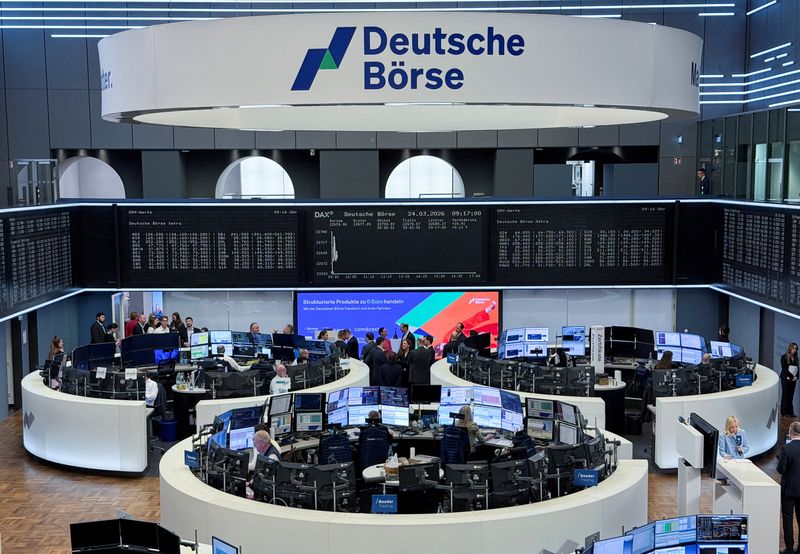

European stocks rise ahead of German inflation data

The listing performance came after the IPO saw only modest traction, closing with an overall subscription of 1.05 times.
Gaurav Garg, Research Analyst at Lemonn Markets Desk, said CMPDI’s weak debut reflects broader caution in the market.
He noted that the stock listed at a discount of around 5-7% despite marginal grey market expectations, pointing to subdued retail participation and only modest subscription levels.
While the stock saw a slight recovery after listing, Garg said the lack of strong demand suggests limited near-term upside. He added that investors may consider using any short-term bounce to exit, while fresh entries should be approached cautiously, with a wait-and-watch approach for price stability and signs of institutional accumulation.
The listing underscores the current trend in primary markets, where even fundamentally strong companies are seeing tempered debut performances amid selective investor appetite and tighter liquidity conditions.
Demand for the Rs 1,842 crore offer for sale was largely driven by institutional investors, with Qualified Institutional Buyers subscribing 3.48 times their quota. In contrast, retail participation remained muted at just 33%, indicating limited broader investor interest.CMPDI operates as a mining consultancy firm, providing services across coal and mineral exploration, mine planning, environmental management and geomatics. The company holds an estimated 61% market share in the coal and mineral consultancy segment in India and works closely with its parent, Coal India.
Financially, the company has delivered strong performance, reporting revenue of Rs 2,178 crore and net profit of Rs 667 crore in FY25, with EBITDA margins exceeding 42%. At the upper price band, the IPO was valued at around 18-21 times earnings, which was considered reasonable given its profitability and asset-light model.
However, the company’s heavy dependence on Coal India and the coal sector continues to be a key overhang, raising concerns around concentration risk and long-term sector dynamics.
(Disclaimer: Recommendations, suggestions, views and opinions given by the experts are their own. These do not represent the views of The Economic Times)
Business
Stock Market Holiday: NSE, BSE shut tomorrow for Mahavir Jayanti; check 12 upcoming holidays

India’s largest commodity exchange, the Multi-Commodity Exchange of India (MCX), will remain shut for trading in the first session (9 am to 5 pm) on Shri Mahavir Jayanti. Trading will resume in the evening session between 5 pm and 11:30 pm, as per the schedule on its website. The National Commodity & Derivatives Exchange Limited (NCDEX), meanwhile, will remain closed for trading tomorrow.
Upcoming market holidays
According to the official holiday calendar, markets will next remain closed on April 3 (Friday) to observe Good Friday. It is important to note that markets are seeing three holidays in less than two weeks. Markets were also shut on March 26 (Thursday) on account of Shri Ram Navami.In total, there are 16 stock market holidays scheduled for 2026, of which four have already passed. After the two holidays this week, trading will be suspended on 10 more occasions over the remaining nine months.
Markets will next remain shut on April 14 (Tuesday) on Dr. Baba Saheb Ambedkar Jayanti. The BSE and NSE will then be closed for trading on May 1 (Maharashtra Day), May 28 (Bakri Id), June 26 (Muharram), September 14 (Ganesh Chaturthi), October 2 (Mahatma Gandhi Jayanti), October 20 (Dussehra), November 10 (Diwali-Balipratipada), November 24 (Prakash Gurpurb Sri Guru Nanak Dev), and December 25 (Christmas).
Earlier last week, Zerodha CEO Nithin Kamath took to X to comment on market holidays amid ongoing global market volatility. “It’s crazy that we live in a time when the entire global financial market seems to be at the whim and fancy of what one person decides to do. He can, and does, do whatever he wants depending on which side of the bed he wakes up on,” Kamath said, in an apparent reference to US President Donald Trump.
His statement comes as markets globally have seen sharp downswings but not equally strong upswings since the war between Iran and the US-Israel bloc began earlier this month, triggering a sharp rally in oil prices.
According to Kamath, the only way to survive as a trader in this market is to make survival the first goal, not making money. “When you’re getting whipsawed out of positions on both sides, and there’s very little you can do in a headline-driven market, the most logical thing is to trade with smaller amounts of capital, reduce the risk in your account significantly, and wait for opportunities where you can actually make money rather than taking undue risk in a highly uncertain, highly volatile environment,” he said.
“Trading is also inherently a lonely activity. And when you’re constantly getting feedback in the form of profit and loss, it takes a mental toll. This was true even when I was actively trading,” he added. So, with a long weekend coming up, Kamath said he can’t think of a better time to take a break, recharge, and come back to the “blinking red and green lights” with a fresh mind.
(Disclaimer: Recommendations, suggestions, views and opinions given by the experts are their own. These do not represent the views of The Economic Times.)

Conversations with WA Police detail the business model for WA’s $200 million illicit drug trade.

Minerals Council pitches freight train plan to unlock North West's next boom

Artelo Biosciences (ARTL) Stock Plunges 23% After $31M Offering Following 600% Surge

The Comeback’s Traitors Scene Was Inspired By Linda’s Ill-Fated Stint


-
 NewsBeat5 days ago
Manchester United reach agreement with Casemiro over contract clause amid transfer speculation
-

 News Videos4 days ago
Parliament publishes latest register of MPs’ financial interests
-

 Sports7 days ago
Gary Kirsten Accuses Pakistan Cricket Board Of ‘Interference’, Mohsin Naqvi Responds
-

 Sports7 days ago
Remo Stars and Kano Pillars Strengthen Survival Hopes in NPFL
-

 NewsBeat3 days ago
The Story hosts event on Durham’s historic registers
-

 Business4 days ago
Instagram, YouTube Found Responsible for Teen’s Mental Health Struggle in Historic Ruling
-

 News Videos7 days ago
Ch 9 Financial Management Part 1 | Detailed One Shot | Class 12 Business Studies Boards 2026
-
 NewsBeat5 days ago
Tesco is selling new Cadbury Dairy Milk bar and people can’t wait to try it
-
 Entertainment7 days ago
Cynthia Bailey Dishes on ‘RHOA’ Season 17, Discusses Kandi
-

 Tech7 days ago
Samsung will soon let you control smart home devices from your car’s dashboard
-
 Entertainment2 days ago
Lana Del Rey Celebrates Her Husband’s 51st Birthday In New Post
-

 Fashion6 days ago
Does It Matter What You Wear When You’re Laid Off and Looking?
-
 NewsBeat7 days ago
Colombian military plane with 110 soldiers onboard crashes following takeoff
-

 Business6 days ago
More women enter wealth management, but few in advisory roles: study
-

 Fashion7 days ago
Fringe Bags for the Season
-

 NewsBeat6 days ago
Entrepreneurs Forum survey reveals optimism in North East
-
 NewsBeat6 days ago
NASA Artemis II Astronauts enter 14-Day quarantine as moon rocket reaches launchpad
-

 Business6 days ago
Late-paying firms face multimillion-pound fines under new crackdown
-

 Politics7 days ago
How Media Platforms Balance Performance and Accessibility in Image Delivery
-

 Crypto World6 days ago
BTC gives up $70,000 level as markets mull higher interest rates
You must be logged in to post a comment Login