
Business
Iran has had protests before. Will this time be different?

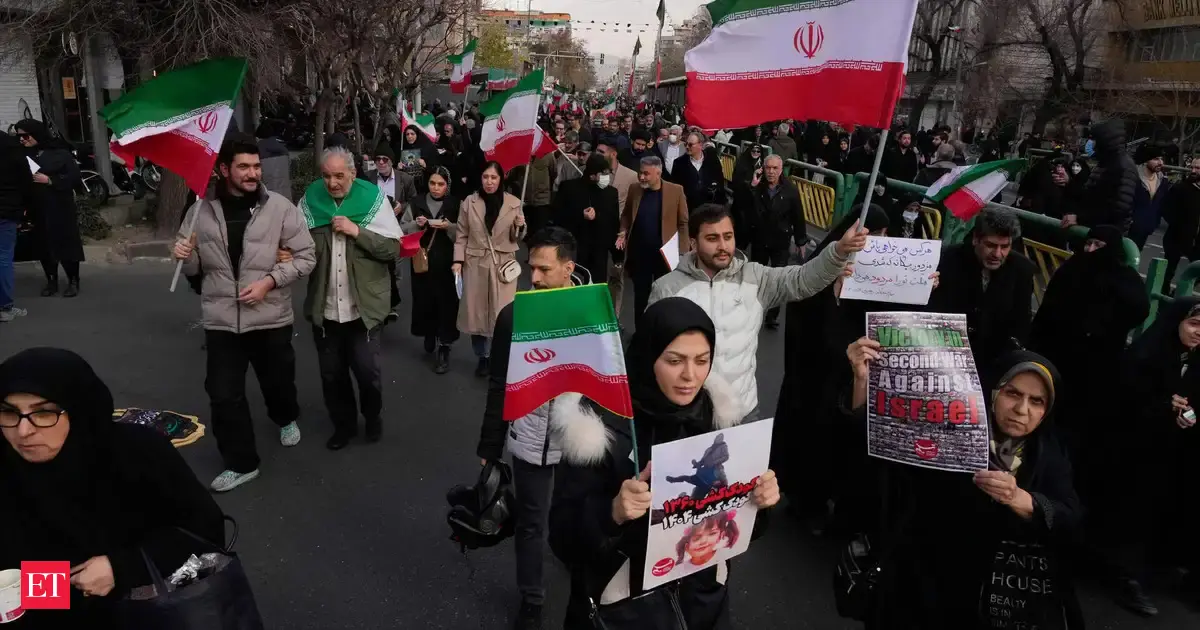
That question is always lurking between the lines of so many mass protest movements. Will real change take place? Or are the protests just a temporary outpouring of public anger?
Usually, it is the latter. But sometimes — Egypt in 2011, Ukraine in 2014, Sudan in 2019, Sri Lanka in 2022 — the big one does arrive. Regimes fall, leaders flee, and something new, though not always better, begins.
That has of course been the question about Iran’s intense protests, which began in late December. For now, it is unanswerable: The only way to know if the big one has arrived is in hindsight.
But it is possible to answer a related question: What is new here? What is true now that wasn’t during previous rounds of public unrest in Iran, such as the mass uprising in 2022 after a young woman was fatally beaten in police custody? The regime managed to survive that time. But what about now?

What’s new about these protests?
Some important things have changed in Iran since 2022. The economy is worse, and runaway inflation has imposed widespread hardships on the population. Iran’s government seems aware that its citizens have real grievances, and promised payments to the population to ease economic hardship. But the amount was so tiny — approximately $7 a month — that the gesture seemed to spur even more anger.
Iran also faces much greater threats from outside. The “Axis of Resistance,” a network of allies and proxy militias that once deterred attacks, has collapsed in Lebanon and Syria. President Donald Trump, who bombed Iran’s nuclear sites along with Israel last summer, is threatening more military strikes.
This week, Iran appeared to backpedal on previous threats to execute protesters, amid fears of U.S. military action, even as it continued its brutal crackdown on demonstrations.
Taken together, these factors point to a regime that is extremely vulnerable, said Daniel Sobelman, a professor at Hebrew University in Jerusalem who studies Iran’s regional deterrence strategy.
Iran has shut down the internet, which has made it difficult to confirm death tolls. But in reports that have managed to get out, eyewitnesses say government forces have opened fire on unarmed protesters. A senior Iranian health ministry official, speaking on the condition of anonymity, told The New York Times that about 3,000 people had been killed across the country since the protests began.
What hasn’t changed?
Regimes usually fracture before they fall. Internal power brokers like the security services can abruptly abandon the government. Without their vital support, the government collapses, to be replaced by something else.
In Iran, there is little sign thus far of such internal fracturing taking place.
“That’s been my key question,” said Mona Tajali, a visiting scholar at Stanford University who studies Iranian politics. “In terms of the security apparatus, we don’t see a very clear fissure as of yet.”
She said that she has seen a handful of videos of lower-level individuals within the government’s Basij militia who have refused to fire on protesters. But thus far, those events seem “anecdotal,” she said — not evidence of any higher-level split or defection from the regime.
And while an order to fire on protesters can sometimes cause security services to defect — it happened in Ukraine in 2014 — when they do carry out mass killings of demonstrators, that can create a powerful incentive to remain loyal to the regime in the aftermath. If the regime falls, after all, the successor government could prosecute those responsible for killing protesters, or leave them vulnerable to vigilante justice.
“We are seeing videos of mass shootings,” Tajali said. “So there’s still a big group, a sizable group that is feeling like ‘we need to stick with the theocracy, this is the best bet.’”
Nor, so far, is there evidence that the protesters are able to wield the kind of economic leverage that can force an autocratic regime to accept major concessions, or leave power. In South Africa, for instance, the anti-apartheid movement was able to leverage the economic elite’s dependence on Black labor with strikes, Elisabeth Wood, a Yale University political scientist, wrote in “Forging Democracy from Below: Insurgent Transitions in South Africa and El Salvador.” That put economic pressure on the Afrikaner elite, who demanded change from those who held political power.
In Iran, bazaar merchants have been at the heart of the recent protests. They are a visible economic sector, and their historical role in the 1979 Islamic Revolution makes their presence highly symbolic. But their economic leverage seems to be limited compared with the oil and gas industry, which so far does not appear to be jeopardized by the protests.
In the end, while mass protests in Iran could still lead to sudden political changes, the bigger question is what will unfold in the medium and long term. The Iranian regime’s brutal crackdown will not solve the underlying grievances behind the demonstrations. The country’s regional vulnerabilities remain. And eventually — whether in days, months, or years — there will be another trigger for further unrest.



