
Business
It wasn’t just a missed call: The currency clash behind the stalled US-India trade deal

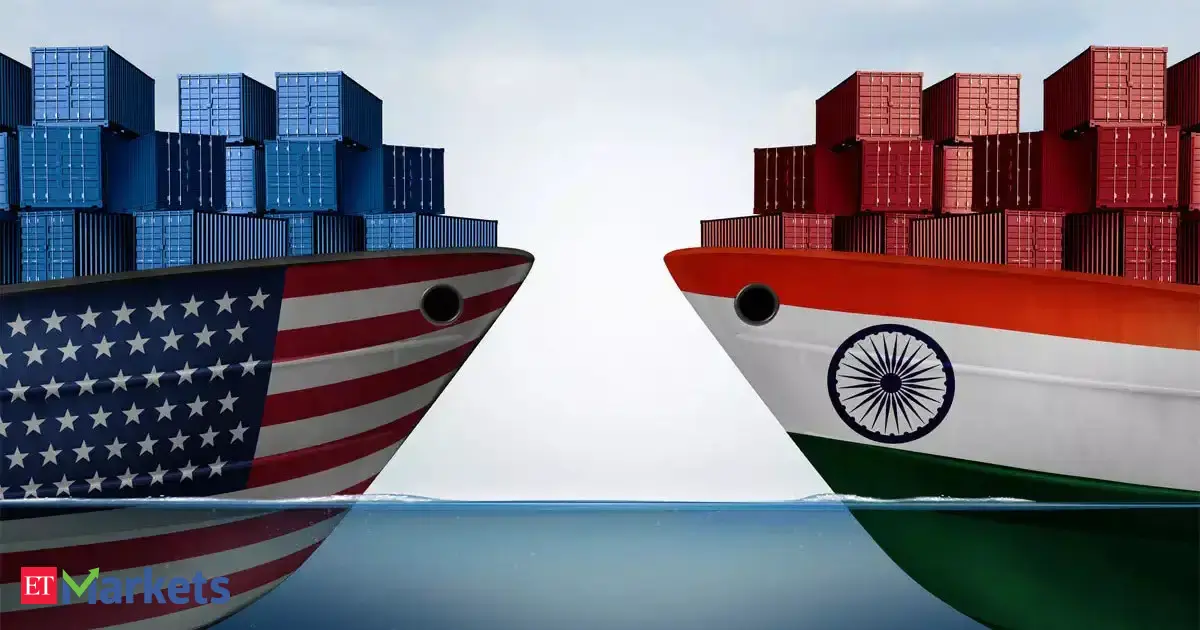
To the casual observer, it painted a picture of bureaucratic hesitation. But to those watching the flow of global capital, the silence on the phone line masked a thunderous shift in the global economic order.
While Washington focused on tariffs and trade deficits, New Delhi quietly engineered a financial mechanism that the United States has historically treated as a red line: the ability to buy oil without the dollar.
A rigorous analysis of regulatory filings, central bank data, and geopolitical signaling reveals that the trade impasse of early 2026 is not about almonds or steel.
It is the first major casualty of the “Petro-Rupee,” a strategy that has placed the world’s oldest democracy and its largest democracy on a collision course over the future of financial sovereignty.

The “Red Line” and the Greenback
To understand the gravity of the rift, one must look past the current headlines to the foundation of American power. Since 1974, when the Nixon administration struck a pact with Saudi Arabia, the global oil trade has been denominated effectively exclusively in U.S. dollars.
This “Petrodollar” system forces nations to hold vast dollar reserves, which are recycled back into U.S. Treasury bonds, financing American deficits and cementing the dollar’s global supremacy. History has been unkind to those who challenge this arrangement. When Saddam Hussein switched Iraqi oil sales to the Euro in 2000, or when Muammar Gaddafi proposed a gold-backed African currency in 2011, the geopolitical consequences were severe.
As former Federal Reserve Chairman Alan Greenspan candidly noted in his memoirs, the Iraq war was “largely about oil”—a resource inseparable from the currency used to buy it.
For decades, this was a line no ally would cross. But in the shifting landscape of 2026, India has done just that.
The Smoking Gun: August 2025
The deterioration of economic relations can be traced precisely to mid-2025. While public attention was fixed on diplomatic pleasantries, the Reserve Bank of India (RBI) was dismantling the “Rupee Trap” that had hindered its trade with Russia in Rupee.
For months, Moscow had been accumulating billions in Indian Rupees from oil sales that it couldn’t spend. Then, on August 12, 2025, the RBI issued a quiet but revolutionary circular. It authorized foreign holders of “Special Rupee Vostro Accounts” (SRVAs) to invest their surplus balances into Indian Government Securities and Treasury Bills.
In a move that alarmed U.S. strategists even more, India and the UAE—two key American partners—began operationalizing a Local Currency Settlement system. The Indian Oil Corporation paid for a million barrels of Abu Dhabi crude in rupees, proving the concept worked.
By 2025, this corridor had deepened, with the UAE pumping $22.84 billion in foreign direct investment into India to balance the currency flows, and the Abu Dhabi Investment Authority setting up shop in Gujarat’s GIFT City.
This was the smoking gun. By allowing Russia to recycle its oil revenue directly into Indian sovereign debt, New Delhi created a closed-loop financial system. Russian oil profits were no longer chasing U.S. Treasuries; they were funding Indian infrastructure. The reaction from Washington was swift. Within weeks, the U.S. imposed tariffs of up to 50 percent on select Indian goods—a punitive strike that signaled the partnership was in jeopardy.
By late 2025, this alternative financial architecture had expanded far beyond a wartime necessity for Russian oil. The RBI had permitted 123 correspondent banks from 30 countries—including the United Kingdom, Germany, Israel, and Singapore—to open 156 Special Rupee accounts. Data from November 2025 showed India importing 7.7 million tonnes of Russian oil in a single month, accounting for 35 percent of its total intake, largely settled outside the dollar system. But the shift wasn’t just with sanctioned states.
The Last Straw: India Takes the Wheel at BRICS
While the “Petro-Rupee” laid the kindling, the spark that finally burned the bridge was India’s bold assumption of leadership within the BRICS currency project. As the host of the 2026 BRICS Summit, New Delhi has moved beyond passive participation to active architecture. The Reserve Bank of India has formally proposed linking the Central Bank Digital Currencies (CBDCs) of member nations—a project dubbed the “BRICS Bridge.”
Building on the 2025 Rio de Janeiro declaration, India is pushing for a proprietary, interoperable payment rail that would allow Russia, China, India, and new members like the UAE to settle trade instantly in digital local currencies, completely bypassing the U.S. banking system.
This is not merely a theoretical exercise; with the RBI actively pilot-testing the e-Rupee’s cross-border capabilities, India is effectively building a “digital SWIFT” immune to Western sanctions. For the Trump administration, this was the final provocation. It wasn’t just evasion; it was replacement.
Conclusion: A Monetary Mutiny
This aggressive push for a parallel financial system became the veritable last straw on the camel’s back for the stalled trade deal. In December 2024, President-elect Trump issued a blunt ultimatum: any move by BRICS nations to create a new currency or back an alternative to the dollar would be met with 100 percent tariffs.
Washington views India’s 2026 agenda not as economic modernization, but as a “monetary mutiny.” The sages who studied the rise and fall of kingdoms would chuckle today, for the lesson is ancient: money is the hard-earned fruit of labor, while currency is merely the paper promise that it still tastes good.
Money—like gold and silver—is the crystallized effort of real work. Currency, however, is its excitable younger cousin: useful for trade, but spoiled the moment rulers discover the printing press.
India has chosen to bear the cost of tariffs rather than surrender the sovereignty of its “crystallized effort.” The trade deal may be officially “stalled” due to a missed phone call, but in reality, it lies buried under the foundation of the new BRICS financial architecture—a foundation India is now actively pouring concrete for better future.
(Manish Bhandari, CIIA, founder of Vallum Capital Advisors, a Portfolio Management firm managing equity investments Based in Mumbai)
(Disclaimer: Recommendations, suggestions, views, and opinions given by experts are their own. These do not represent the views of the Economic Times)



