
Business
Jefferies reiterates Buy on Eli Lilly stock, $1,300 target



As Australia’s cities push skyward amid rapid urban growth and international investment, the Q1 Tower on the Gold Coast remains the nation’s tallest completed building at 323 meters (1,058 feet) in early 2026. Yet ambitious proposals and under-construction projects signal that the country’s skyline is on the cusp of dramatic change, with several supertall towers poised to claim the title in coming years.
The Council on Tall Buildings and Urban Habitat and Wikipedia’s updated tall buildings database confirm that no structure has yet surpassed the Q1, completed in 2005. Australia 108 in Melbourne holds second place at 317 meters (1,039 feet), followed closely by other residential-heavy icons that reflect the country’s preference for high-rise living over pure office space.
Here are the 10 tallest completed buildings in Australia as of March 2026, based on architectural height to the highest point:

- Q1 Tower, Gold Coast — 323 m (1,058 ft), 78 floors. Completed in 2005, this iconic residential tower on Surfers Paradise’s beachfront long held the title of the world’s tallest residential building. Its sleek, sail-like design continues to dominate the Gold Coast skyline and attract tourists to its observation deck.
- Australia 108, Melbourne — 317 m (1,039 ft), 100 floors. Finished in 2020, this mixed-use tower in the Southbank precinct features luxury apartments and a striking crown inspired by Australian flora. It briefly challenged Q1 for supremacy and remains Melbourne’s tallest.
- Eureka Tower, Melbourne — 297 m (975 ft), 92 floors. Opened in 2006, Eureka is known for its bold red and gold facade and Edge experience, a glass cube that extends from the building. It was Australia’s tallest for several years before being overtaken.
- Crown Sydney (One Barangaroo), Sydney — 271 m (890 ft), 75 floors. Completed in recent years, this luxury hotel and casino tower anchors the Barangaroo precinct and offers panoramic harbor views. It represents Sydney’s more restrained approach to height due to heritage protections.
- Brisbane Skytower (or equivalent high-rise; actual rankings place several around 270m range) — Approximately 270 m. Brisbane’s skyline has grown steadily, with recent completions adding to its vertical profile.
Other notable entries in the top 10 typically include Aurora Melbourne Central (around 270m+), Central Park Tower in Perth (253 m), and additional Gold Coast and Melbourne residential towers such as Infinity in Brisbane or Queens Place towers.
Australia’s tall building landscape is dominated by residential and mixed-use developments rather than corporate headquarters, driven by population growth in coastal cities and demand for waterfront living. Melbourne leads the nation with the highest number of buildings over 150 meters, followed by Sydney, Brisbane and the Gold Coast.
While the top 10 remain stable for now, major projects under construction or recently approved could soon rewrite the record books. On the Gold Coast, the Trump Organization partnered with Altus Property Group to announce a 340-meter (approximately 1,100-foot), 91-story Trump International Hotel & Tower in Surfers Paradise. Announced in February 2026, the $1.5 billion project is positioned to become Australia’s tallest upon completion, potentially before the 2032 Brisbane Olympics. The tower would combine luxury hotel rooms and apartments, rising about 15-20 meters above Australia 108.
Even taller proposals exist. One Park Lane, a 101-story residential tower approved on the Gold Coast, is planned to reach nearly 393-400 meters. Construction could begin in 2026, though timelines remain fluid. In Melbourne, Southbank by Beulah Tower 1 (also known as STH BNK) has been approved at 366 meters (1,201 feet) with 102 floors, potentially claiming the crown if built. Other ambitious plans include Green Spine concepts reaching 365 meters and various Sydney and Brisbane proposals exceeding 300 meters.
These developments reflect Australia’s skyscraper race, with Gold Coast, Melbourne, Sydney and Brisbane competing for vertical supremacy. Factors driving the boom include strong migration, tourism recovery, foreign investment and relaxed height restrictions in certain precincts. However, challenges persist: strict planning regulations in heritage-sensitive Sydney, seismic considerations, high construction costs and community concerns over shadow impacts and wind tunnels.
Experts note that Australia’s tallest buildings are relatively modest by global standards. The Q1 would not crack the world’s top 50 tallest structures, where Asian and Middle Eastern supertalls dominate. Still, the country’s focus on livable, residential-focused high-rises sets it apart, emphasizing amenities like infinity pools, observation decks and integrated public spaces.
Perth, Adelaide and other capitals trail the eastern seaboard in height records, though Central Park Tower in Perth stands as Western Australia’s tallest at around 253 meters. Future growth in these cities may accelerate as resource economies and urban densification policies evolve.
The surge in proposals has sparked debate about sustainability. Tall buildings require significant energy for construction and operation, prompting calls for greener designs incorporating solar panels, recycled materials and efficient climate control. Developers increasingly tout “green star” ratings and carbon-neutral ambitions to meet community expectations.
For residents and visitors, these towers offer more than height. Q1’s SkyPoint observation deck provides 360-degree views, while Australia 108 and Eureka feature unique experiences that draw crowds. Crown Sydney has transformed Sydney’s waterfront, and future supertalls promise even more dramatic vantage points.
As of March 2026, no new building has topped the Q1, but the pipeline suggests the record could fall within the next five to seven years. Construction timelines for projects like the Trump Tower and Southbank by Beulah will depend on financing, approvals and market conditions.
Urban planners view the vertical growth positively for reducing urban sprawl and supporting public transport hubs. Yet critics warn of potential overcrowding, strain on infrastructure and the risk of creating “vertical ghettos” if affordability is not addressed.
Australia’s tall building story mirrors its broader evolution — from a low-rise nation to one embracing density in its most vibrant cities. The Q1 Tower, now two decades old, symbolizes the start of that shift, while upcoming giants may define the next chapter.
Whether the Trump Tower, One Park Lane or Southbank by Beulah ultimately claims the title, one thing is clear: Australia’s skylines are getting taller, bolder and more competitive. As these projects advance from drawing board to reality, they will reshape not only city views but also the way Australians live, work and play in an increasingly vertical future.
For now, the Q1 Tower still wears the crown, its elegant form a familiar beacon on the Gold Coast. But with billions in investment and ambitious designs on the horizon, Australia’s tallest building record appears destined to change — perhaps multiple times — before the decade ends.

↗️ Unity Software (U): The gaming-software company lifted its first-quarter revenue guidance, and said it would exit the non-strategic advertising business and divest from its game publishing business. Shares jumped 11% in morning trading.
↗️ Lumentum Holdings (LITE): The laser maker is establishing a new manufacturing plant in North Carolina to produce advanced indium phosphide-based optical devices, which serve as critical components in AI data centers. Shares gained 6%.
↗️ AstraZeneca (UK:AZN): The U.K. drugmaker said a lung-disease drug candidate met the primary goal in two late-stage clinical trials, reducing the rate at which patients’ symptoms worsened. Shares rose 3.5% in London.

In a letter to the Treasury Select Committee, Lloyds apologised and said some compensation had been paid.

Jaguar Land Rover has temporarily halted production on key vehicle lines at its Solihull plant after a disruption in the supply of critical components, in the latest setback for the West Midlands-based automotive group.
The pause, which is expected to last around two weeks and coincides with a previously scheduled Easter shutdown, will affect production of high-value models including the Range Rover and Range Rover Sport.
The company said the stoppage was caused by a “part supply challenge” involving one of its suppliers, adding that it is working closely with the partner to resolve the issue as quickly as possible.
“Due to a part supply challenge with a supplier, we are temporarily pausing production on certain vehicle lines at our Solihull manufacturing facility,” a spokesperson said. “We are working to minimise any impact on our clients or operations.”
The disruption highlights the continued vulnerability of global automotive supply chains, where even a single component shortage can force production lines to stop.
While JLR has not disclosed the specific part involved, the incident underscores the complexity of modern vehicle manufacturing, where just-in-time delivery models leave little margin for error when supply issues arise.
The Solihull plant is one of JLR’s most important manufacturing sites, producing some of its most profitable vehicles, making even short-term stoppages commercially significant.
Despite the production halt, JLR confirmed that employees will continue to attend the site as normal during the shutdown period, suggesting the company is seeking to maintain operational continuity and avoid disruption to its workforce.
The overlap with the planned Easter break is also expected to soften the overall impact on output.
The pause marks the latest challenge for JLR, which has faced a number of operational disruptions in recent years.
In 2025, the company was forced to shut down parts of its IT systems following a major cyberattack, which affected production and operations for several weeks before systems were fully restored.
While production levels had since returned to normal, the latest supply issue highlights how external factors, from cybersecurity threats to supplier reliability, continue to shape the performance of the automotive sector.
The disruption comes at a time when car manufacturers are navigating a complex transition, balancing traditional production with increasing investment in electric vehicles, while also managing cost pressures and supply chain risks.
Industry-wide challenges, including semiconductor shortages in recent years and ongoing geopolitical tensions, have exposed structural weaknesses in supply networks, prompting many manufacturers to rethink sourcing strategies and build greater resilience.
JLR has indicated that it expects the issue to be resolved within weeks, with production resuming shortly thereafter.
However, the incident serves as a reminder that even as the industry moves towards more advanced and electrified vehicles, its dependence on tightly integrated supply chains remains a critical point of vulnerability.
For now, the company’s focus will be on restoring production quickly and ensuring minimal disruption to customers and deliveries, while reinforcing supply chain stability to avoid similar interruptions in the future.

Amy Ingham
Amy is a newly qualified journalist specialising in business journalism at Business Matters with responsibility for news content for what is now the UK’s largest print and online source of current business news.

The guide explains stem cell condition identification procedures through plain language which shows the evaluation process.
The process of getting a stem cell workup creates overwhelming feelings for patients and their loved ones. Medical language can be dense, the tests appear strange and the entire process creates a maze which lacks any visible path. The entire process becomes simpler to navigate after you learn about doctor’s expectations and their reasons for those expectations. The article explains the actual procedures used for stem cell diagnosis and evaluation which prepare you to enter your consultation as an informed person who can ask appropriate questions.
Why Diagnosis Comes First Always
Doctors need to understand your body condition before they can create a treatment plan. Stem cell therapy and transplantation require individual assessment because they do not serve as universal solutions. The process demands exact personalized evaluation because incorrect treatment methods will result in more damage than benefit.
At Liv Hospital, the diagnostic process of medical examination starts with an examination of the patient. Your medical team, which includes hematology and oncology and internal medicine specialists, will investigate your medical history and current symptoms and test results before they make their clinical decisions. The combination of different professional fields in this method creates a distinctive quality that distinguishes a world-class center from other institutions.
“Getting the diagnosis right isn’t just the first step — it’s the most important one. Everything that follows depends on it.”
What Does the Evaluation Actually Involve?
The stem cell diagnosis and evaluation the process develops through multiple distinct phases which connect to each other.
The medical team requires all information from the three stages which build on each other to achieve their complete understanding of your condition.
- Complete Blood Count (CBC): This test serves as the initial examination which doctors order. The test measures red blood cells and white blood cells and platelets to provide initial indications of potential health issues.
- Bone Marrow Biopsy: The procedure provides a thorough examination through which doctors collect a marrow specimen from the hip. Doctors use the specimen to perform microscopic analysis which reveals the state of cellular development and health.
- Genetic & Molecular Testing: Scientists discover gene mutations which occur in sickle cell disease and leukemia cases. The findings establish both the diagnostic process and treatment selection process.
- HLA Typing: Human leukocyte antigen HLA typing enables transplant procedures to identify the most suitable donor match for patients.
- Imaging Studies: Physicians utilize MRI and CT scans to assess potential complications that affect both organ systems and lymphatic systems.
Each step in the process has a specific function. Physicians conduct tests because every result needs to build a complete clinical overview which determines your treatment approach.
Conditions That Require Stem Cell Evaluation
Stem cell evaluation extends its assessment capabilities to multiple diseases and medical conditions. The testing process covers various blood disorders and cancer types which include sickle cell disease and aplastic anemia and myelodysplastic syndromes and leukemia and lymphoma and multiple myeloma. The medical team creates unique diagnostic procedures which address both the specific medical condition and the individual characteristics of each patient.
Prior to any major treatment doctors must evaluate sickle cell disease patients because it serves as the essential assessment step. Physicians conduct organ function tests to assess heart and kidney and lung health because sickle cell disease impacts various body systems throughout a person’s life. The medical team uses their knowledge of the complete disease situation to develop better treatment methods.
Who Is a Candidate for Stem Cell Transplant?
Only some patients with stem cell-related diagnoses will proceed to receive a transplant procedure. Candidacy depends on several factors: the type and stage of the disease, the patient’s age and overall health, the availability of a matched donor, and how the patient has responded to earlier treatments.
The evaluation phase demands its extensive examination because it requires complete assessment. The process requires more than diagnosis confirmation because it needs to create multiple potential future paths which the team will select based on their success probability. The experienced specialists provide explanations of available options which help patients and families make informed decisions.
What Happens After Evaluation?
The medical team will meet with you for evaluation results presentation after they finish their assessment work. This conversation holds vital importance. The discussion will cover result interpretation, available treatment choices, associated risks and advantages, and the anticipated duration of the medical process.
A good medical team will never rush this conversation. The medical team knows that a diagnostic process which includes the terms “stem cell” and “transplant” will have a major effect on a person’s life. Exceptional care requires that medical professionals provide patients with time to process information while answering their questions and listening to their concerns.
The Emotional Side of Diagnosis
The emotional impact of a diagnosis remains unchanged by any medical knowledge that exists. Patients and their family members experience this process because it creates authentic fears and worries and doubts. Your feelings about this situation deserve complete acceptance.
The information-seeking behavior you display at this moment functions as one of your most beneficial activities. Your understanding of your condition enables you to take control of your situation. The shift enables you to take an active role in your medical treatment instead of just accepting medical decisions which has significant importance.
People need to focus on their mental and emotional well-being which becomes essential for their ability to achieve their best life after their diagnosis. Your body develops resilience through challenging times when you practice small habits which include proper sleep and balanced nutrition and light exercise and building strong relationships. Live and Feel serves as an excellent guide for developing healthy habits which support your daily wellness and help you maintain optimal health through all your life challenges.

Patients and their families begin their search for answers during a specific time which follows their diagnosis. They search online at 2 a.m. for information about “stem cell treatment” and “bone marrow transplant” and “is there a cure?” They hope to receive valuable results from their search. This article exists to assist you because you currently find yourself in this situation. By fostering substantial medical breakthroughs, stem cell therapy is a commendable step in contemporary medicine. The treatment does not serve as a universal remedy for all patients because it provides specific medical solutions. The medical field requires practitioners to determine which medical conditions require stem cell treatment because this knowledge will lead to success and effective treatment results.
First, Let’s Talk About What Stem Cells Actually Do
The body uses stem cells as its basic building blocks to create master cells which can develop into all existing cell types. The most important aspect of their function in disease treatment lies in their presence within blood and immune system functions. Bone marrow contains hematopoietic stem cells which generate all the blood components necessary for the body: oxygen-carrying red cells, infection-fighting white cells, and bleeding-control platelets.
Stem cell therapy can restore normal physiological processes in which genetic errors and cancer and immune system failure have been disrupted. At Liv Hospital, this work is conducted by a specialized team which combines their advanced medical knowledge with their dedication to serving patients. The goal of this process extends beyond disease treatment because it aims to bring back the complete identity of the individual.
“Stem cell therapy doesn’t just target a disease. At its best, it gives patients back a life they thought they’d lost.”
The Conditions That Most Commonly Indicate Stem Cell Treatment
Understanding stem cell conditions and indications is essential before any treatment discussion begins. The most established cases which require stem cell treatment show proof of medical necessity through their stem cell procedures.
Sickle cell
Sickle cell disease is a genetic blood disorder which causes the production of misshapen red blood cells that lead to pain and organ damage and result in dangerous health complications. The only treatment, which works as a cure for patients who qualify, requires stem cell transplant procedures.
Leukemia
Blood and bone marrow cancers which include AML, ALL, and CML need transplants after chemotherapy treatment to complete their recovery process because the treatment destroys their cancerous bone marrow.
Aplastic Anemia
Aplastic anemia is a severe medical condition which causes bone marrow to stop producing adequate amounts of blood cells. Stem cell transplant enables normal marrow restoration, which works best for younger patients who have a matched donor.
Thalassemia
Thalassemia is an inherited blood disorder that leads to extreme anemia. Transplantation serves as a permanent solution for beta-thalassemia major patients who need treatment to cure their condition.
Lymphoma
Patients with Hodgkin’s lymphoma and non-Hodgkin’s lymphoma need to receive either autologous or allogeneic stem cell transplantation after their disease has returned or when they show high-risk symptoms.
Multiple Myeloma
Multiple myeloma is a bone marrow condition which impacts plasma cell function. The standard treatment for eligible patients includes autologous stem cell transplant which helps them achieve longer periods of disease remission.
The list includes essential medical conditions which scientists have established as effective for stem cell treatments, but it does not include every possible medical condition. The medical community considers other treatment options which include specific immune deficiency disorders and myelodysplastic syndromes and certain solid tumors as potential treatment paths, which depend on the specific characteristics of each patient.
What Does “Indicate” Actually Mean?
The medical term “indicated” refers to mandatory treatment which requires evidence-based support for implementation. When a condition is described as an indication for stem cell treatment, it means clinical research, long-term data, and specialist consensus align on the fact that this treatment offers meaningful benefit for this type of patient.
This distinction holds critical importance. It distinguishes stem cell therapy from treatments which remain untested and unproven that some companies sell to patients who face dire circumstances. Real stem cell treatment exists because scientific studies have provided evidence-based support through multiple decades of research. The scientific community has established core indications which will receive increasing refinement as research progresses.
Worth knowing: Not every patient with an indicated condition will automatically qualify for a transplant. The process involves evaluating multiple factors which include age, overall health, organ function, disease stage, and donor availability. This is precisely why a thorough evaluation process exists — to match the right treatment to the right patient at the right time.
Autologous vs. Allogeneic: Two Different Approaches
Patients become surprised because they learn that “stem cell transplant” represents multiple procedures which exist in two main types that medical professionals select based on specific conditions.
The autologous transplant method requires hospitals to collect the patient’s stem cells which doctors will keep in storage until they need to reintroduce these cells after high-dose chemotherapy. The medical community applies this method to treat multiple myeloma and certain types of lymphomas. Because patients receive their own cells there exists no possibility for donor rejection to occur.
Allogeneic transplants use stem cells which come from a donor who matches the patient with either a sibling or an unrelated person or with umbilical cord blood. The method treats diseases which start in the patient’s bone marrow such as leukemia and sickle cell disease because these conditions make their own cells unusable. Allogeneic transplant requires more operational steps, but it brings the advantage of graft-versus-tumor effect, which occurs when immune cells from the donor systemically attack remaining malignant cells.
The decision between these two methods requires clinicians to make a delicate decision which begins with proper function assessment and actual diagnosis of the patient condition.
When Is the Right Time to Seek Evaluation?
Patients frequently make their most common mistake when they take their time to begin treatment. The process of evaluating patients gets delayed because people experience either fear or uncertainty or they do not know which direction to proceed. Your condition will become easier to assess when medical professionals start their evaluation process with you at an early stage.
The process of stem cell evaluation starts after you, or your loved ones receive diagnosis for the mentioned conditions and your hematologist suggests transplant possibility. This isn’t a commitment to treatment. The session provides a chance to discuss available solutions while learning about your unique circumstances.
World-class centers evaluate patients comprehensively before making any recommendations. The process begins with bloodwork testing and genetic analysis and organ function assessment and medical history examination. The medical team presents their findings to patients in a way which enables them to make choices about their treatment together with their healthcare team.
A Note on Hope and Realistic Expectations
The author needs to disclose all dangers associated with stem cell therapy because it would be dishonest to write about it without disclosing its dangers. Transplantation functions as an advanced surgical treatment. Patients require education about infection and graft-versus-host disease and extended recovery times because these complications can develop during surgical procedures.
The medical team needs to provide clear information about both the treatment options and the potential dangers that exist in the medical situation. The most effective treatment for patients who experience the mentioned medical conditions needs stem cell transplant as their strongest available option. For some patients this treatment provides their only chance to achieve complete health recovery. The team, together with proper team setup and appropriate assistance, delivers better results which continue to develop every subsequent year. Honest expectations together with genuine hope represent the standard of good medicine practice. The impact of a major medical diagnosis extends beyond physical effects. It affects every aspect of a person’s existence, which includes their vitality, their connections with others and their identity.
The way you live your life becomes equally critical to your medical treatment, which serves as your primary support. Your recovery and ability to bounce back from challenges will increase when you establish daily healthy habits and consume nutritious food and handle your stress and maintain emotional stability. Live and Feel serves as an effective wellness resource that provides practical advice on everyday health because good health serves as a requirement for effective healing.

Motorists are facing higher fuel prices ahead of Easter break due to the conflict in the Middle East, the RAC says.

An seatback on an American Airlines Boeing 737.
Leslie Josephs/CNBC
American Airlines is “seriously considering” bringing back seat-back screens to its narrow-body planes and a decision could be made as early as next month, according to a person familiar with the matter.
It would be part of a major revamp of American’s in-flight entertainment and Wi-Fi for narrow-body aircraft, said the person, who asked not to be named because they were not authorized to talk about the plans publicly.
Part of those plans include discussions with SpaceX’s Starlink and Amazon Leo to potentially provide in-flight Wi-Fi, according to the person.
American is also talking with Amazon about providing content for the seats, which could include Amazon Prime, music and potentially shopping, where customers could use miles for purchases, the person said.
The airline currently has a deal with Apple for customers to stream music and Apple TV+ content.
Amazon Leo declined to comment. SpaceX didn’t immediately respond to a request for comment.
Pressure is mounting on American from rivals such as Delta Air Lines and United Airlines, which account for most of the U.S. airline industry’s profits, and airlines have been increasingly relying on customers willing to pay up for premium seating.

Those two carriers have invested for years in improving customer products with technology such as new in-flight entertainment and other perks.
Meanwhile, American decided to remove seat-back screens from its mainline narrow-body aircraft almost a decade ago to save money on the equipment cost and weight they add to the aircraft. Executives at the time said customers would likely use their own mobile phones, tablets or laptops to stream entertainment.
In recent years, however, rivals have been investing heavily in new cabins and more modern entertainment. American itself is adding more premium seats to both its narrow-body and wide-body planes, which already have screens on them.
In an interview last fall, American’s chief customer officer, Heather Garboden, told CNBC that the airline was warming to the idea of bringing screens back.
“I think of where the technology was a decade ago, and where it can be today, or even a few years from today,” Garboden said at the time. “Hopefully the complexity is less.”
Adding seatback screens to American’s planes would take years and be a costly undertaking. American has more than 790 narrow-body Boeing and Airbus jets, according to the company’s annual filing. It has more than 280 of these jets on order, and seatback screens could debut with deliveries straight from the factory.
Elon Musk‘s SpaceX has made inroads among airlines to provide in-flight Wi-Fi, gaining customers including United, Hawaiian Airlines and Qatar Airways.
United, Delta, Southwest Airlines and American in recent years have followed JetBlue Airways‘ move to offer Wi-Fi for free. Generally, customers must be members of the airline’s loyalty program to receive the complimentary Wi-Fi.


Strong production and robust demand are keeping milk and milk products flowing.

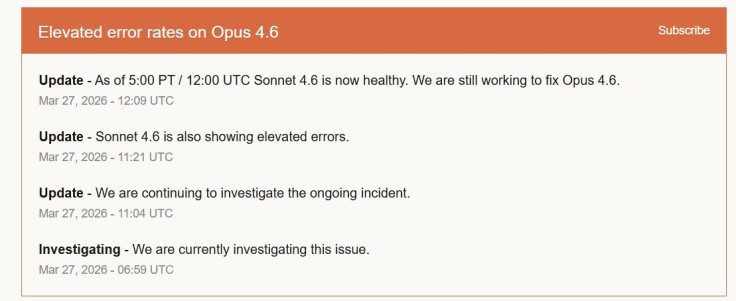
Anthropic’s popular AI assistant Claude experienced another round of service disruptions on Friday, March 27, 2026, with users reporting elevated errors particularly affecting the Opus 4.6 and Sonnet 4.6 models. As of midday UTC, the company’s official status page showed ongoing investigation into connection reset errors and degraded performance across claude.ai and related services, though some components showed signs of recovery.

Downdetector and other outage trackers recorded increased user reports starting around 4:03 AM EDT, with complaints centered on slow responses, failed generations, authentication issues and “service unavailable” messages. While not a complete global outage on the scale of earlier March incidents, the problems disrupted workflows for developers, students and professionals relying on Claude for coding, writing and analysis.
Anthropic’s status.claude.com page posted updates throughout the morning: an initial “Investigating” notice at 11:04 UTC, followed by confirmation of elevated errors on Claude Opus 4.6 and later Sonnet 4.6. By 12:09 UTC, engineers reported Sonnet 4.6 returning to healthy status, but work continued on Opus 4.6. Earlier in the day, elevated connection reset errors were flagged in the Cowork feature.
This latest hiccup adds to a pattern of instability for Claude in March 2026. Previous disruptions included a major outage on March 2 that affected login paths and claude.ai for several hours, another wave of elevated errors around March 11, and partial outages reported on March 25. Users have expressed growing frustration on platforms like Reddit, with some noting repeated impacts on paid Pro and Team subscribers who depend on reliable access for time-sensitive tasks.
What Users Are Experiencing
Affected individuals report a range of symptoms: chats failing to load new responses, models returning generic error messages, slower than usual performance, and occasional session timeouts. The Claude API appears less impacted in some reports, allowing developer integrations to continue functioning at reduced capacity, while the consumer web interface and mobile apps bore the brunt of complaints.
Free-tier users often face stricter rate limits during high-demand periods, exacerbating the sense of disruption. Enterprise and government users accessing Claude for Government have also noted intermittent issues. Social media posts and community forums filled with screenshots of error pages and questions about when service would fully restore.
Why Claude Faces Recurring Issues
Rapid growth in Claude’s user base has strained Anthropic’s infrastructure. The company has released increasingly powerful models, including Opus 4.6 touted for advanced coding and agentic capabilities, drawing heavy demand. High computational requirements for large language models, combined with traffic spikes, can lead to cascading failures in authentication, inference servers or load balancing.
Anthropic has acknowledged the challenges of scaling while maintaining the helpful, harmless and honest principles that define Claude. In statements during prior outages, the company expressed gratitude to users and emphasized efforts to match “incredible demand.” However, repeated incidents have sparked discussions about infrastructure resilience, multi-region redundancy and the trade-offs of pushing frontier AI capabilities.
Unlike some competitors with broader cloud partnerships, Anthropic’s focused approach on safety and constitutional AI may influence its scaling strategy, potentially contributing to occasional bottlenecks during peak loads or model updates.
How to Check Claude Status and Troubleshoot
When suspecting problems:
- Visit https://status.claude.com/ for official real-time updates and incident details.
- Check Downdetector.com/status/claude-ai for user-reported graphs and regional maps.
- Test across devices and networks — try the web version at claude.ai, desktop app or mobile clients.
- For API users, monitor api.anthropic.com status separately.
Basic troubleshooting steps include refreshing the page, logging out and back in, clearing browser cache, switching networks or waiting 15-30 minutes as many issues resolve through backend fixes. Paid users can sometimes access priority support channels during incidents.
Impact on Users and Businesses
For individuals, outages interrupt creative work, research and casual conversations. Developers building on Claude face delayed projects, while businesses using the AI for customer support, content generation or internal tools risk productivity losses. In education, students relying on Claude for tutoring or essay assistance encounter frustration during critical study periods.
Enterprise adoption of Claude has grown rapidly due to its strong performance in coding and reasoning tasks, making reliability a key concern for IT leaders evaluating long-term commitments. Some organizations have begun implementing fallback strategies, such as multi-model setups with alternatives like Grok or open-source options, to mitigate single-point failures.
The March 2026 cluster of disruptions has amplified calls for greater transparency and proactive capacity planning from Anthropic. Community feedback highlights the need for better communication during incidents and potential service credits for affected subscribers.
Broader Context for AI Reliability in 2026
Claude’s issues reflect wider challenges facing frontier AI companies as adoption surges. Major models from OpenAI, Google and others have faced similar outages amid explosive growth. The events underscore the gap between rapid capability advances and the operational maturity required for always-on services.
Anthropic continues investing in safety research and scalable infrastructure while expanding features like Cowork for collaborative tasks. The company’s focus on responsible scaling aims to balance innovation with dependability, but real-world demand often tests those boundaries.
As AI assistants become integral to daily workflows, expectations for near-100% uptime rise. Users increasingly demand not just powerful responses but consistent availability, prompting the industry to prioritize redundancy, monitoring and graceful degradation during stress.
Looking Ahead
As of late March 27, 2026, Anthropic engineers were actively addressing remaining issues with Opus 4.6 while confirming improvements in Sonnet 4.6. Most users should see gradual restoration, though full stability may take additional time. The company typically provides post-incident summaries to explain root causes and preventive measures.
In the meantime, alternatives remain available for those needing immediate AI assistance. Anthropic has not issued a detailed public statement beyond status page updates, consistent with its approach during prior events.
For the latest information, monitor the official status page directly, as situations can evolve quickly. While Claude has demonstrated impressive capabilities when operational, today’s disruptions serve as a reminder of the growing pains in scaling advanced AI systems to millions of users worldwide.
Anthropic’s track record shows quick recovery in most cases, and the team’s focus on safety suggests careful handling of underlying infrastructure. Still, frequent March outages may prompt users and enterprises to diversify their AI toolkit to ensure uninterrupted productivity.
Who was Carolyn Bessette's sister Lauren? Inside the life of the Morgan Stanley exec who also died in the plane crash

Review: Matilda the Musical, Palace Theatre, Manchester

Q1 Tower Still Reigns as Skyscraper Boom


-
 Crypto World7 days ago
NIO (NIO) Stock Plunges 6.5% as Shelf Registration Sparks Dilution Worries
-
 NewsBeat2 days ago
Manchester United reach agreement with Casemiro over contract clause amid transfer speculation
-

 Fashion7 days ago
Weekend Open Thread: Adidas – Corporette.com
-

 Politics7 days ago
Jenni Murray, Long-Serving Woman’s Hour Presenter, Dies Aged 75
-

 Crypto World6 days ago
Best Crypto to Buy Now: Strategy Just Spent $1.57 Billion on Bitcoin During Fear While Early Investors Quietly Enter Pepeto for 150x Potential
-

 Crypto World6 days ago
Bitcoin Price News: Bhutan Sells $72 Million in BTC Under Fiscal Pressure, but the Smart Money Entering Pepeto Sees What the Market Does Not
-

 News Videos2 days ago
Parliament publishes latest register of MPs’ financial interests
-

 Sports4 days ago
Remo Stars and Kano Pillars Strengthen Survival Hopes in NPFL
-

 Sports4 days ago
Gary Kirsten Accuses Pakistan Cricket Board Of ‘Interference’, Mohsin Naqvi Responds
-

 Tech5 days ago
Give Your Phone a Huge (and Free) Upgrade by Switching to Another Keyboard
-

 Business5 days ago
No Winner in March 21 Drawing as Prize Rolls to $133 Million for Next
-

 Sports7 days ago
2026 Kentucky Derby horses, odds, futures, preview, date: Expert who nailed 12 Derby-Oaks Doubles enters picks
-

 Tech5 days ago
AI enters the chat: New Seattle dating app relies on tech to facilitate meaningful human connections
-

 News Videos4 days ago
Ch 9 Financial Management Part 1 | Detailed One Shot | Class 12 Business Studies Boards 2026
-
Business7 days ago
Columbia Sportswear enters $500 million credit agreement with JPMorgan Chase
-

 Tech6 days ago
Today’s NYT Connections Hints, Answers for March 22 #1015
-

 Business18 hours ago
Instagram, YouTube Found Responsible for Teen’s Mental Health Struggle in Historic Ruling
-
 Crypto World7 days ago
Small-cap Russell 2000 enters correction territory
-

 Business5 days ago
Will Duke Basketball Win It All? Duke Basketball Enters Second Round as Third Favorite to Claim NCAA Title
-

 Sports4 days ago
2026 Kentucky Derby horses, odds, futures, preview, date: Expert who hit 12 Derby-Oaks Doubles enters picks
You must be logged in to post a comment Login