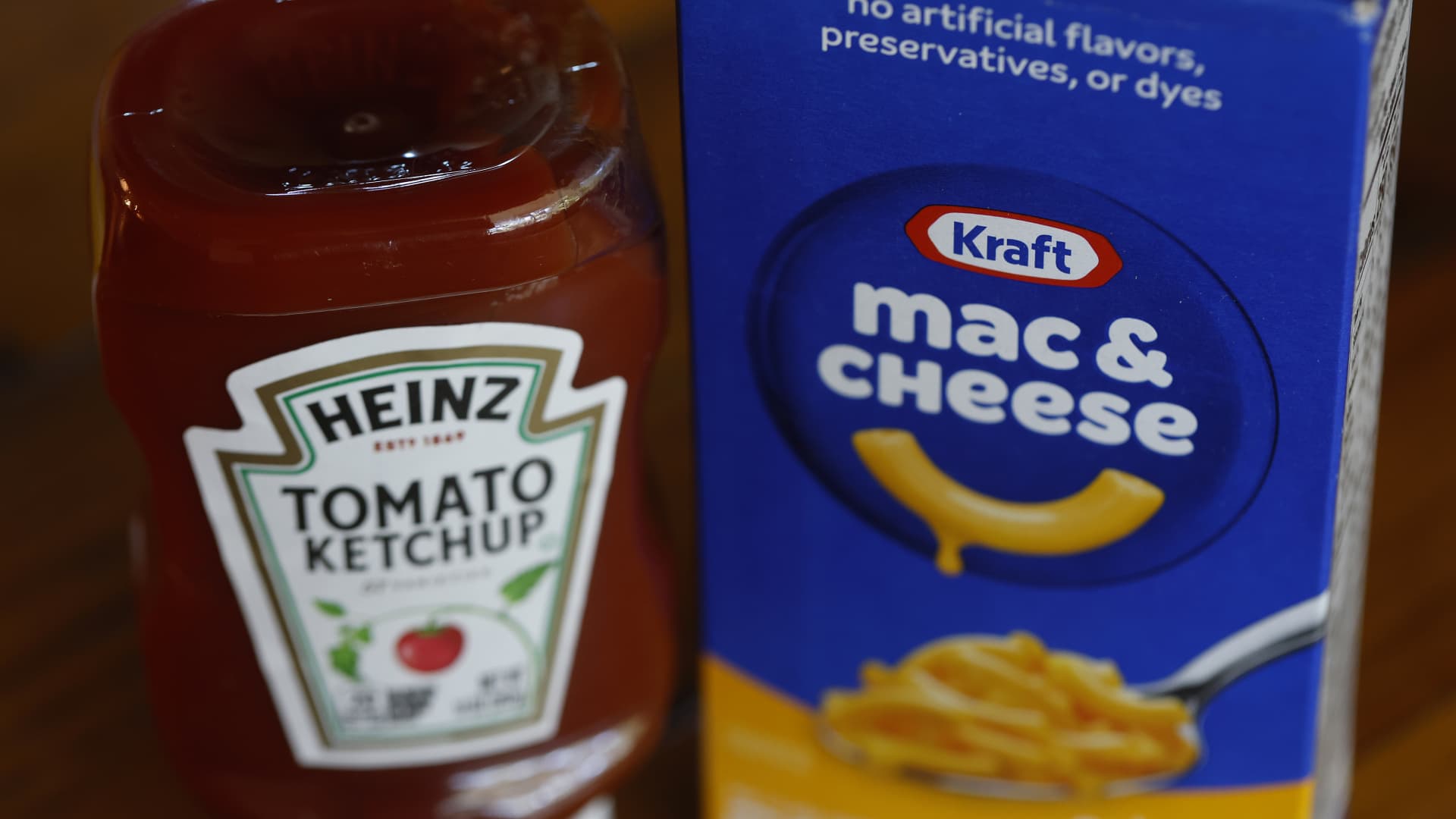
Kraft Heinz announced plans to split into two separately traded companies, reversing its 2015 megamerger, which was orchestrated by billionaire investor Warren Buffett.
As both consumers and regulators push back against ultra-processed foods, the companies that make them have been splitting up or divesting iconic brands. Last year, Unilever spun off its ice cream business into The Magnum Ice Cream Company. Kraft Heinz is preparing to break up later this year, undoing much of the merger forged more than a decade ago by Warren Buffett’s Berkshire Hathaway and private equity firm 3G Capital. And Keurig Dr Pepper is planning a similar split after it finishes its acquisition of JDE Peet’s.
In 2024, nearly half of mergers and acquisitions activity in the consumer products industry came from divestitures, according to consulting firm Bain. Over the next three years, 42% of M&A executives in the consumer products industry are preparing an asset for sale, a Bain survey found.
Of course, the trend isn’t confined to just the consumer packaged goods industry. Industrial companies like GE and Honeywell have pursued their own breakups in recent years. It’s happening too in legacy media; Comcast spun off many of its cable assets into CNBC owner Versant, while Warner Bros. Discovery is planning to spin off its cable networks later this year as Netflix acquires its streaming and studios division.
“In many of the spaces that we’re seeing this type of activity, there are many very fierce competitive pressures that are making it harder to operate,” said Emilie Feldman, a professor at The Wharton School at the University of Pennsylvania.
Advertisement
The squeeze on packaged food and beverage companies comes from lower demand, which has led to shrinking volume for many of their products. To turn around their businesses and win back investors, they are counting on dumping underperforming brands.
February will bring both quarterly earnings reports and presentations at the annual CAGNY Conference, offering investors more opportunities to hear about food executives’ plans for their portfolios. Companies to watch include Kraft Heinz, which could share more details on its upcoming split, and Nestle, which is considering selling off multiple brands in its portfolio.
Cases of Dr. Pepper are displayed at a Costco Wholesale store on April 27, 2025 in San Diego, California.
Kevin Carter | Getty Images
Advertisement
Shrinking sales
For more than a decade, consumers have been buying fewer groceries from the inner aisles of the grocery store, instead focusing on the outer aisles with fresh produce and protein. The pandemic served as the exception, as many consumers returned to the brands that they knew. However, price hikes and “shrinkflation” as life eased back to normal largely erased that shift in behavior.
More recently, regulators, emboldened by the “Make America Healthy Again” agenda espoused by Health and Human Services Secretary Robert F. Kennedy Jr., have put both more pressure and a bigger spotlight on processed foods. And the rise of GLP-1 drugs to combat diabetes and obesity have meant some of food companies’ key consumers have lost their appetite for the sweet and salty snacks that they used to eat.
As a percentage of overall spending, the consumer packaged goods industry has held onto its market share. But the biggest companies are losing customers to upstart brands or private-label products, according to Bain partner Peter Horsley.
On average, about 35% of large consumer products companies’ portfolios are in categories with more than 7% growth, Horsley said. For comparison, over half of private-label brands are in high-growth categories, like yogurt and functional beverages, and for insurgent brands, it’s even higher.
Advertisement
For Big Food, the result has been slowing — or even declining — sales, followed by stock declines. In some cases, activist investors push for companies to focus more on their core offerings and to offload so-called distractions.
“You’re seeing a lot of pressure from a valuation standpoint, especially for these publicly traded companies,” said Raj Konanahalli, partner and managing director of AlixPartners. “One way to reset expectations is to really kind of focus more on the core offerings and dispose or divest the slower, capital-intensive or non-core businesses.”
While getting bigger helped food companies develop scale, enter new markets and grow their sales, it also made their businesses much more complex, according to Konanahalli. Become too big, and it becomes too difficult to make decisions quickly or to decide how and where to invest back into the business.
To be sure, some of these divestitures and breakups follow deals that seem to have been ill-advised from the start. Look no further than the merger of Keurig Green Mountain and Dr Pepper Snapple Group in 2018, to form Keurig Dr Pepper.
Advertisement
“Frankly the surprise to us was the decision back in 2018 when Keurig Green Mountain acquired the Dr Pepper Snapple Group in an $18.7 billion deal to create Keurig Dr Pepper in the first place,” Barclays analysts Patrick Folan and Lauren Lieberman wrote in a note to clients in August when the breakup was announced. “At the time, it was seen as both odd and a very left field deal with the questionable logic of combining coffee and [carbonated soft drinks].”
(When the merger was announced in 2018, Lieberman said on a conference call with executives from both companies that she was still “scratching my head” about the logic of the deal for both players).
Shares of Keurig Dr Pepper have risen 37% since the merger. The S&P 500 has climbed 150% over the same period.
To sell or not to sell
Like many industries, the packaged food industry has gone through cycles of expansion and contraction, according to Feldman. For example, Kraft spun off a snacking business that includes Oreos into Mondelez in 2012, just three years before it merged with Heinz.
Advertisement
However, in recent years, expanding through acquisitions has required more sophisticated thinking and execution.
“If you go back to those glory years of pre-2015, the rules of the game in consumer products felt fairly simple, at least if you’re a global company,” Bain’s Horsley said. “You bought another company that was relatively similar to you. You integrated it together, you pulled out the cost synergies … and then that gave you good top-line and bottom-line growth. But the rules of the game have changed.”
Around 2015, upstarts like Chobani or BodyArmor began stealing market share from legacy brands. As a result, food giants needed to become more thoughtful about what they were acquiring and how they were managing their portfolios, according to Horsley.
For a cautionary tale, look no further than Kraft Heinz, formed by a mega-merger in 2015. Investors initially cheered the deal, but their enthusiasm waned as the combined company’s U.S. sales began lagging. Then came write-downs of many of its iconic brands, like Kraft, Oscar Mayer, Maxwell House and Velveeta, in addition to a subpoena from the Securities and Exchange Commission related to its accounting policies and internal controls.
Advertisement
With the benefit of hindsight, analysts and investors have blamed much of Kraft Heinz’s downward spiral on the brutal cost-cutting strategy imposed after the merger. The company’s leadership was too focused on slashing costs and not enough on investing back into its brands, particularly at a time when consumer tastes were changing.
Since Kraft Heinz began trading as one company, shares have tumbled 73%.
But not everyone is sold that getting rid of underperforming brands will benefit shareholders.
“If you don’t fix the underlying capability, it doesn’t matter how many brands you sell or don’t sell,” RBC Capital Markets analyst Nik Modi said. “They’re not addressing the root problem. It’s just something to make investors happy because it seems like they’re making a change.”
Advertisement
One breakup that Modi agrees with is that of Kellogg, which split into the snacks-focused Kellanova and cereal-centric WK Kellogg in 2023. Last year, chocolatier Ferrero snapped up WK Kellogg for $3.1 billion, while Mars closed its $36 billion acquisition of Kellanova.
From Modi’s perspective, the breakup created more value for shareholders than the combined business did. Kellogg’s high-growth snack business was much more viable as an acquisition target without the sluggish cereal division attached. Plus, the two strategic buyers are both privately held companies that don’t have to worry about sharing quarterly earnings with the public.
Some investors are hoping for the same outcome with Kraft Heinz.
“The view that many have had is the best way to create value is split the companies and hope that you can create a Kellanova 2.0 where both entities get acquired at some point down the line, and that’s where value creation happens,” said Peter Galbo, analyst at Bank of America Securities.
Advertisement
Kraft Heinz hired Steve Cahillane, the former CEO of Kellogg and then Kellanova, as its chief executive. Once the company separates, Cahillane will serve as chief executive of Global Taste Elevation, the placeholder name for the spinoff with high-growth brands like Heinz and Philadelphia.
Steve Cahillane, President and CEO, Kellogg Company accepts Salute To Greatness Corporate Award during 2020 Salute to Greatness Awards Gala at Hyatt Regency Atlanta on January 18, 2020 in Atlanta, Georgia.
Paras Griffin | Getty Images Entertainment | Getty Images
But acquiring either company resulting from the Kraft Heinz split would be a pretty big acquisition, making it less likely that either is snapped up, according to Galbo. And the resulting uncertainty about the value creation from the breakup is maybe why Berkshire Hathaway, the company’s largest shareholder, is preparing to exit its 27.5% stake in Kraft Heinz.
Advertisement
Food divestitures pick up
A month into the new year, it’s unlikely that the divestiture trend will slow down.
On Tuesday, General Millsannounced that it is selling its Muir Glen brand of organic tomatoes to focus on its core brands. And last week, Bloomberg reported that Nestle is preparing the sale of its water unit; the Swiss giant is also reportedly considering offloading upscale coffee brand Blue Bottle and its underperforming vitamin brands.
And if Big Food is making any acquisitions, the deals are more likely to involve “insurgent brands,” according to Bain. Over the last five years, acquisitions with a value of less than $2 billion represented 38% of total consumer products deals, up from 16% in the period from 2014 to 2019, the firm said. For example, last year, PepsiCo bought prebiotic soda brand Poppi for $1.95 billion and Hershey snapped up LesserEvil popcorn for $750 million.
Bigger deals are harder to come by because of the current regulatory environment, Konanahalli said. Buyers might not be strategic players, but instead private equity firms with plenty of cash on hand. For example, in January, L Catterton bought a majority stake in cottage cheese upstart Good Culture.
Advertisement
But a flashy divestiture or acquisition might not be the solution to a food conglomerate’s woes — or a surefire way to lift the stock price. Sometimes, good old-fashioned elbow grease can work even better.
“Just because it seems like the wind is blowing your way, it doesn’t mean that you can’t put in some hard work and turn things around,” AlixPartners’ Konanahalli said.
The boss of the Newcastle theatre answers our questions
Michael Slavin is chief executive of Northern Stage.(Image: Northern Stage)
Michael Slavin is chief executive of Northern Stage, the largest producing theatre in the North East. Having previously held senior leadership roles including chief operating officer at 11Arches, the charity behind Kynren, and interim chief executive of York Theatre Royal.
What was your first job (and how much did it pay)? I started my first ‘proper job’, that wasn’t a paper round, on the day of my 16th birthday. It was at the Co-op in the village I grew up in, and I got paid £2.32 per hour. It’s so long ago that we got paid weekly, by cheque!
What is the best advice or support you’ve been given in business? I’ve been fortunate to work with some brilliant people, and I’ve learned a lot from listening to and observing them. An early boss of mine always said the secret to a great career was to keep moving forwards. Whatever happens, whatever you face, keep putting one foot in front of the other and going forward. It might sound simple, but it’s served me well.
What are the main changes you’ve seen in your business/sector, and what are the challenges you’re facing? This is tricky, as I’ve worked across sectors, but the wage stagnation that occurred through the 2010s, which led into the pandemic and then the explosion in inflation that followed, has definitely been hard for everyone. In theatre, we rely on our audiences having the money and the desire to come to productions, and on public subsidy to keep making the work that we do. Both of those things come under pressure when there is no growth in the economy. That said, theatre has seldom been more important than it is now as an engine for empathy, a place of joy, and a shared space. So whatever the challenges, we keep going.
Advertisement
What would your dream job be? I’m sorry to be that guy, but my current job is the answer.
What advice would you give to someone starting out a career in your sector? Work hard, ask questions, build a network – but most importantly, find the fun. It is a privilege to work in the arts and we reach people across society. If we can’t take pleasure and joy in getting productions on stage and delivering our outreach programmes, then we’re doing it wrong.
What makes the North East a good place to work? The people. The welcome I’ve received in Newcastle and beyond has been extraordinary. The team at Northern Stage have been kind and positive (and forgiving of all my questions!), and I’ve met people across the city who have been warm and helpful, but also driven to make Newcastle all it can be. It’s been phenomenal, and I’m excited for all the city is, and all it can be.
How important is it for business to play a role in society? To me, it is vitally important. Society is not a given; it’s something we all have a duty to work at, support, and maintain, and that comes with responsibilities. That could be through job creation, skills delivery, funded places, or partnership working, but businesses can, and should, engage with local people and support opportunities.
Advertisement
Outside of work, what are you really good at? I’m a keen home cook and love baking with my two daughters. Our speciality is banana bread, but they’re getting to the stage where they can do it without me, so I need to learn some new recipes!
Who would play you in a film about your life? What a question! I did a straw poll of some friends and the answer is… Nelson Franklin (Robby in New Girl), largely because we are both tall and wear glasses.
Which three people would you invite to a dinner party, and why? This is a big question, so I’ve limited myself to people who are alive: Paul McCartney, because he’s a genius and a Beatle; Zadie Smith, who is a generationally talented author and a brilliant essayist; and Yas Rana, who is a prolific cricket journalist and podcaster. There’s no way you could have a dull conversation with those three around the table!
Kite aerial of Brant Point and harbor and Coatue, Nantucket, MA.
J. Greg Hinson, Md, Www.ackdoc.com | Moment | Getty Images
The tiny island of Nantucket, Massachusetts, is home to some 14,000 year-round residents. Joining their ranks will cost you at least $1 million, according to a new list of luxury housing markets by Realtor.com.
Advertisement
Nearly all of Nantucket’s active listings are priced at $1 million or higher with a median listing price of $4.08 million, the real estate platform found. The island averages 138 million-dollar listings a year, according to the report.
Vineyard Haven, a community within neighboring Martha’s Vineyard, Massachusetts, has the second-highest concentration of million-dollar listings at 90% of the active listings with a median listing price of $2.4 million. Jackson, the principal town of the Jackson Hole valley in Wyoming, boasts the third-highest median price at $1.75 million.
Realtor.com identified 13 U.S. housing markets where at least half of active listings were priced above $1 million but with fewer than 500 such listings. Anthony Smith, senior economist at Realtor.com, said the list was designed to highlight “pure luxury” markets rather than areas that happen to reflect high regional housing costs.
Most of these housing markets are defined by scarcity, according to Smith. The front-runners, Nantucket and Vineyard Haven, are prime examples as they’re both located on islands.
Advertisement
“You have finite land, strict building and preservation codes, and that combination sets a real premium on what’s available,” he said.
This scarcity applies to noncoastal hubs such as Jackson, too, he said, where land is abundant but much of it is earmarked for conservation. Only 3% of land in Jackson Hole is privately owned.
While five of the luxury hubs identified by Realtor.com are in California, the rest are scattered across the country, from Kapaa, Hawaii, to Hailey, Idaho. A notable inclusion on the list is Petoskey, Michigan, where 53% of active listings are priced over $1 million. While it doesn’t carry the same name recognition as Nantucket or Napa, the Lake Michigan town checks a lot of boxes for deep-pocketed buyers, Smith said.
“When you look at what defines a luxury market, it’s all there: waterfront views on Little Traverse Bay, ski access in the winter, resort-style living,” he said.
Advertisement
He added that Petoskey is one of the more affordable markets on the list with a median listing price of $1.1 million.
The top 1% of Petoskey homes — representing the ultra-luxury market — start at just under $8 million, while the same threshold starts at nearly $59.2 million in Rifle, Colorado (also on Realtor.com’s list), about 70 miles away from Aspen.
While high-income consumers are propping up spending in travel and other categories, the luxury housing market is showing signs of softness like the overall housing market, according to Smith.
The luxury threshold, or 90th percentile of homes, stood at $1.25 million nationally in March, down 2.9% year over year, while the overall median price is down 2.2% annually, according to Realtor.com.
Advertisement
Prices are firming up into the spring across the housing spectrum, however, with the luxury threshold up 3.7% and the overall market rising 3% from February.
Gmail, Google’s ubiquitous email service used by billions worldwide, showed no signs of a widespread outage Thursday as independent monitoring sites and Google’s official status dashboard confirmed all systems operational.
Real-time trackers like Downdetector and IsItDownRightNow reported only normal, low-level user complaints typical for a service handling enormous daily traffic volumes. Google Workspace Status Dashboard listed Gmail as fully available with no active incidents as of April 9, 2026. Any reported difficulties appeared isolated or related to individual user connections rather than a platform-wide failure.
The surge in “is Gmail down” searches on Thursday echoed a common pattern: users experiencing brief sync delays, login hiccups or delivery lags often assume the worst, especially during peak morning hours when professionals check inboxes globally. However, checks across multiple platforms confirmed Gmail’s core functions — sending, receiving, logging in and accessing via web or mobile apps — remained intact.
Google’s official dashboard, which provides real-time visibility into Workspace services including Gmail, showed green status across all regions. No service disruptions or advisories were posted for April 8 or 9. The last notable Gmail-related incident occurred on Jan. 24, 2026, when spam filters temporarily failed, causing misclassification of emails and extra warnings in inboxes. Google resolved that issue within hours, and no similar events have surfaced since.
Gmail powers personal accounts for consumers and serves as the backbone of Google Workspace for businesses, schools and governments. With more than 1.8 billion active users estimated in recent years, even minor perceived issues can trigger widespread online speculation. Yet Thursday’s chatter did not reach levels associated with true outages, such as the brief disruptions seen in early 2026 or previous years.
Advertisement
Common troubleshooting steps recommended by Google often resolve most user-reported problems: checking internet connectivity, updating the Gmail app, clearing browser cache, or trying the web version at mail.google.com. Many complaints stem from local network congestion, device settings, VPN conflicts or temporary delays in email delivery rather than server-side failures.
Google has invested heavily in infrastructure resilience, with data centers worldwide and sophisticated redundancy systems. The company’s global network helps minimize downtime, though the sheer scale of operations means occasional localized glitches occur. In 2026, Gmail has maintained high uptime, with only isolated incidents like the January spam filter anomaly and minor regional throttling discussions earlier in the year.
Earlier in 2026, some users experienced challenges related to authentication changes. Google fully retired Basic Authentication for Gmail in 2025, requiring OAuth 2.0 for third-party email clients. Microsoft’s staggered timeline for similar changes created temporary confusion for users managing multiple accounts, but those transitions concluded without major service interruptions.
Regional email issues surfaced briefly in late 2025 and early 2026, affecting Gmail alongside Outlook and Yahoo in some areas due to infrastructure strain or throttling. Those events resolved quickly, and no recurrence appeared on April 9.
Advertisement
For businesses relying on Google Workspace, admins can check the detailed Service Health dashboard in the admin console for tenant-specific insights. Consumer users benefit from the public status page and community forums for real-time feedback.
Gmail’s evolution continues with AI-powered features like Smart Compose, spam protection enhancements and integration with Gemini. These additions increase system complexity but have not led to significant reliability issues in recent months. Google routinely rolls out updates, sometimes causing brief compatibility hiccups that users mistake for outages.
In Seoul and other international locations, access depends on local networks and any regional restrictions. Thursday checks showed normal performance across major regions, including Asia-Pacific.
Industry experts note that true Gmail outages trigger rapid spikes on Downdetector — often tens of thousands of reports within minutes — accompanied by official acknowledgments from Google. In contrast, April 9’s reports remained in the low hundreds, consistent with baseline noise for a service of Gmail’s magnitude.
Advertisement
Users facing persistent problems should:
Verify internet connection stability.
Update the Gmail app or browser.
Try incognito mode or a different device.
Check Google Workspace Status Dashboard.
Contact support through the app or help center for account-specific issues.
Google encourages reporting ongoing difficulties so engineering teams can investigate. Most cases resolve without intervention as transient network conditions improve.
The episode underscores the high expectations placed on always-available digital services. In an era of remote work and instant communication, even short delays in email access can disrupt productivity and spark frustration. Gmail’s reliability record remains strong overall, with uptime consistently exceeding 99.9% in recent analyses.
Google Workspace, which includes Gmail, Drive, Meet and other tools, serves millions of organizations. Any perceived downtime in one component can cascade into broader concerns, but Thursday’s data pointed to business as usual.
Looking ahead, Gmail will likely see continued enhancements, including stronger AI filtering and security features. Users should keep apps updated and enable two-factor authentication to minimize personal disruptions.
Advertisement
As of late Thursday in Seoul time, Gmail operated normally according to all major monitoring sources. Scattered user reports did not indicate a systemic problem, and Google had issued no alerts.
For the most accurate status:
Visit the Google Workspace Status Dashboard at workspace.google.com/status.
Check Downdetector.com/status/gmail for crowd-sourced reports.
Use the Gmail app or mail.google.com directly.
Follow official channels for any announcements.
In summary, Gmail was not down on April 9, 2026. Any individual issues likely stemmed from local factors rather than a service outage. Google’s infrastructure continues to support billions of emails daily with minimal interruption, reinforcing its position as one of the world’s most reliable communication platforms.
This situation highlights the interconnected nature of modern digital life. When email falters for even a moment, the ripple effects highlight our dependence on cloud services. Yet Gmail’s track record demonstrates robust engineering that keeps most users connected without incident.
SYDNEY — Rachel Gilmore emerged as one of the most relatable and emotionally resonant brides on the 13th season of “Married at First Sight Australia,” captivating viewers with her warmth, vulnerability and journey from a self-described long-time singleton to a participant willing to marry a stranger on national television.
Rachel Gilmore
The 35-year-old recruitment team leader from Victoria brought heart and honesty to the Channel 9 experiment, which filmed in 2025 and aired into April 2026. While her on-screen romance with groom Steven Danyluk offered moments of hope and growth, post-experiment realities proved more complicated. Here are 10 essential things to know about Rachel Gilmore’s MAFS 2026 experience, drawn from the show, her own words and latest updates.
Rachel was single for 14 years before MAFS. Entering the experiment, Gilmore openly shared that she had not been in a committed relationship for over a decade, relying instead on occasional “situationships” that left her emotionally drained. In her audition tape, she revealed a dating “game plan” born from repeated rejection and heartbreak. “It is extreme,” she told interviewers, explaining how one or two bad dates could leave her devastated for months. Her decision to join MAFS marked a bold step to break the cycle.
She nearly didn’t apply due to crippling insecurities. Gilmore has spoken candidly about years of feeling unworthy after repeated romantic disappointments. In pre-show interviews, she admitted the idea of marrying a stranger felt overwhelming, yet she pushed through, hoping experts could help her find genuine connection. Her vulnerability resonated with many viewers who saw their own struggles reflected in her story.
Matched with Steven Danyluk in the first wedding. Rachel was paired with Steven, another long-time singleton, in one of the season’s earliest ceremonies aboard a Sydney Harbour superyacht. The wedding had awkward moments — Steven initially struggled with compliments and a kiss — but Rachel’s bubbly personality and “maternal energy” helped ease tensions. She described him as bringing laughter and light into her life despite early hurdles.
Intimacy Week delivered one of her toughest moments. The couple faced significant challenges during intimacy-focused tasks. Steven’s reluctance to be physically affectionate, including pulling away from a kiss, left Rachel feeling rejected and exposed. She later recounted becoming “emotionally raw” and needing space. Viewers reacted strongly, with many criticizing Steven’s handling of the situation while praising Rachel’s openness.
A crude joke scandal tested their bond. Unseen footage from a dinner party showed Steven joking explicitly with fellow bride Bec Zacharia about his intimacy with Rachel. The clip surfaced during “After the Dinner Party,” leaving Rachel mortified and questioning whether Steven had her back. She articulated feeling unsupported, highlighting communication gaps that plagued the pair throughout the experiment.
They reached Final Vows and committed to trying. Despite setbacks, Rachel and Steven attended Final Vows in early April 2026 episodes. Both delivered emotional speeches affirming growth and commitment. Rachel expressed finding something “rare” in Steven, while he spoke of diving in “headfirst, fearless.” They left the experiment intending to date in the real world, with Rachel discussing moving in together and Steven considering relocation.
The relationship did not survive post-filming. Although they departed Final Vows as a couple, multiple insiders report the romance ended shortly afterward. Sources told outlets that Steven got “cold feet” about plans to visit Rachel in Melbourne or relocate from Sydney. Long-distance issues proved insurmountable, and Steven reportedly failed to follow through on commitments. No joint social media tributes appeared, adding to speculation.
Rachel has been spotted moving on with a Big Brother star. In late March 2026, photos emerged of Gilmore looking cosy with “Big Brother” contestant Bruce Dunne. The sighting fueled rumors she was exploring new connections after the split. While details remain limited, the outing suggested Rachel was focusing on her own happiness following the MAFS whirlwind.
She works as a recruitment team leader and values personality over looks. Outside the spotlight, Gilmore holds a professional role as a team leader in recruitment. On the show, she emphasized seeking deep emotional compatibility rather than superficial attraction. Her “heart of gold” and vibrant personality earned praise from experts John Aiken and Mel Schilling, who highlighted her maternal warmth and willingness to grow.
Rachel’s Instagram and post-MAFS life reflect resilience. With the handle @rachlea_x, Gilmore shares glimpses of her journey, including MAFS highlights and personal reflections. Following the reunion special airing April 13, she is expected to address the split and any new developments. Fans continue to root for her, viewing her as a standout for authenticity in a drama-filled season. She has expressed gratitude for the experience while acknowledging its emotional toll.
Rachel Gilmore’s arc on MAFS Australia 2026 encapsulated the experiment’s core promise and pitfalls: the hope of expert-matched connection colliding with real-world complexities like distance, differing commitment levels and unresolved insecurities. Her openness about past dating struggles and on-screen emotional honesty made her a fan favorite, even as the relationship with Steven ultimately faltered.
Filmed months before airing, the season allowed post-experiment developments to leak gradually, heightening viewer engagement. While only a few couples, such as Stella and Filip, appear positioned for lasting success, Rachel’s story stood out for its relatability. Many viewers saw echoes of their own romantic challenges in her 14-year single streak and determination to try something radical.
The upcoming reunion promises further insight into Rachel’s perspective on the breakup and any lingering feelings toward Steven. Past reunions have featured raw confrontations and reflections; this year’s is anticipated to address long-distance failures and personal growth among participants.
Gilmore’s participation also sparked broader conversations about modern dating, body image, self-worth and the pressures of reality television. She addressed size and body image discussions on the show, pushing back against superficial judgments and advocating for personality-driven connections.
Advertisement
As the season concludes, Rachel joins a long list of MAFS alumni who gained public profiles while navigating intense scrutiny. Her resilience — choosing vulnerability on camera despite deep fears of rejection — has inspired messages of support across social media.
Experts note that MAFS success rates remain low overall, with most couples parting ways after the cameras stop. Rachel’s experience underscores the gap between the controlled experiment environment and everyday realities, particularly when geography and differing readiness levels come into play.
For fans, Rachel represented hope that even after years alone, openness to love could yield meaningful growth. Though her MAFS romance did not endure, her journey highlighted courage, self-reflection and the importance of clear communication — lessons that extend far beyond the show.
As the April 13 reunion approaches, attention will turn to how Rachel processes the outcome and what comes next in her personal life. Whether through new relationships, career focus or continued advocacy for authentic connections, her story remains one of the season’s most compelling.
Advertisement
In the competitive reality television landscape, participants like Rachel bring humanity to high-drama formats. Her willingness to share insecurities and celebrate small victories provided balance amid the season’s more explosive moments.
Rachel Gilmore may not have found her forever match on MAFS Australia 2026, but she gained national attention, personal insights and a platform to inspire others facing similar romantic hurdles. As she steps forward post-reunion, many will watch to see the next chapter in her journey toward the lasting connection she sought.
Iran is reportedly planning to increase its oversight of the Strait of Hormuz during the current two-week ceasefire. The proposal includes a system where oil tankers would pay transit fees in cryptocurrency and undergo detailed checks.
Hamid Hosseini, spokesperson for Iran’s Oil, Gas and Petrochemical Products Exporters’ Union, stated that authorities intend to monitor all vessels passing through the waterway. “Iran needs to monitor what enters and exits the strait to ensure the ceasefire period is not used to move weapons,” Hosseini said. He added that while passage will remain open, inspections may slow transit times.
Under the proposed plan, ships would email their cargo information to receive a transit fee assessment, reportedly set at $1 per barrel. Payments would then be made using digital currencies. Hosseini noted that after the review, vessels would have a limited time to pay in bitcoin, a method designed to prevent tracing or seizure under sanctions.
This proposal indicates Tehran’s effort to maintain influence over a critical oil route while ceasefire talks continue. Reports also suggest Iran is encouraging vessels to sail closer to its coast, causing concern among Western and Gulf-linked operators.
Access through the Strait of Hormuz has become a central issue in efforts to extend the temporary ceasefire. Iran is pushing for tighter control, while Gulf nations and Western allies are opposing the move. U.S. President Donald Trump has stated that the ceasefire depends on Iran ensuring the “complete, immediate, and safe” reopening of the strait. Iran, however, has indicated that any reopening would follow a new security protocol coordinated with its military.
Advertisement
Live Events
The uncertainty has led to hundreds of ships being stranded in the region. Estimates suggest between 300 and 400 vessels are waiting to leave the Gulf, with one industry executive comparing the buildup to a “traffic jam at sea.” Major shipping companies remain cautious. Maersk stated it is urgently assessing the evolving situation but warned that the ceasefire has not yet guaranteed safe passage. Experts believe that even under regulated conditions, only 10 to 15 ships may pass through daily, a significant reduction from the usual average of around 135, meaning delays could continue. Any move granting Iran greater control over the strait is considered unacceptable by Gulf countries like Saudi Arabia, Qatar, and the UAE, given the route’s importance to global oil supplies. Ali Shihabi, a commentator with close ties to Saudi leadership, said uninterrupted access to the waterway must remain the priority. With negotiations ongoing and tensions persisting, the Strait of Hormuz remains at the center of a complex standoff involving security, diplomacy, and global energy flows.
M2 Communities CEO Mitch Roschelle breaks down rising mortgage rates as war-driven inflation hits affordability and raises questions about when relief may come on Varney & Co.
A Federal Reserve policymaker is warning that it could make sense to raise interest rates if inflation remains elevated above the Fed’s 2% target amid uncertainty over the duration of the oil and gas price shock.
Federal Reserve Bank of Cleveland President Beth Hammack said in an interview with The Associated Press that she sees the central bank leaving the benchmark federal funds rate at its current level of 3.5% to 3.75% “for quite some time.”
Advertisement
Hammack also cautioned that while the Fed’s next rate move could be a cut due to labor market concerns, there is a possibility that it could be to hike rates to curb stubborn inflation.
Cleveland Fed President Beth Hammack said that the Fed may need to hike rates to tame inflation, or may be compelled to cut rates to support the labor market. (Victor J. Blue/Bloomberg via Getty Images)
“I can foresee scenarios where we would need to reduce rates… if the labor market deteriorates significantly,” Hammack told the AP. “Or I could see where we might need to raise rates if inflation stays persistently above our target.”
Hammack noted that the Cleveland Fed’s estimates of inflation show that it could increase to 3.5% in April. That would amount to the highest inflation reading since 2024 and a significant increase from the consumer price index’s most recent reading of 2.4% in February.
Advertisement
“Inflation has been running above our target for more than five years now,” Hammack said in the interview, adding that a further increase would mean inflation is “moving in the wrong direction, away from our 2% objective.”
Hammack said that the surge in gas prices caused by the Iran war is “the No. 1 thing” she hears about when talking to people within her district, adding that she and other policymakers “know that causes a lot of pain personally, as it eats up a bigger and bigger share of people’s paychecks. So it’s important for us to stay focused on it.”
The Cleveland Fed president – who is also a voting member of the central bank’s Federal Open Market Committee (FOMC) that makes interest rate decisions – said that the Iran war’s economic impact will depend on how long it lasts.
Advertisement
If higher energy costs prompt consumers to pull back on their spending, it could slow economic growth and cause businesses to conduct layoffs, prompting the Fed to cut interest rates to support the labor market.
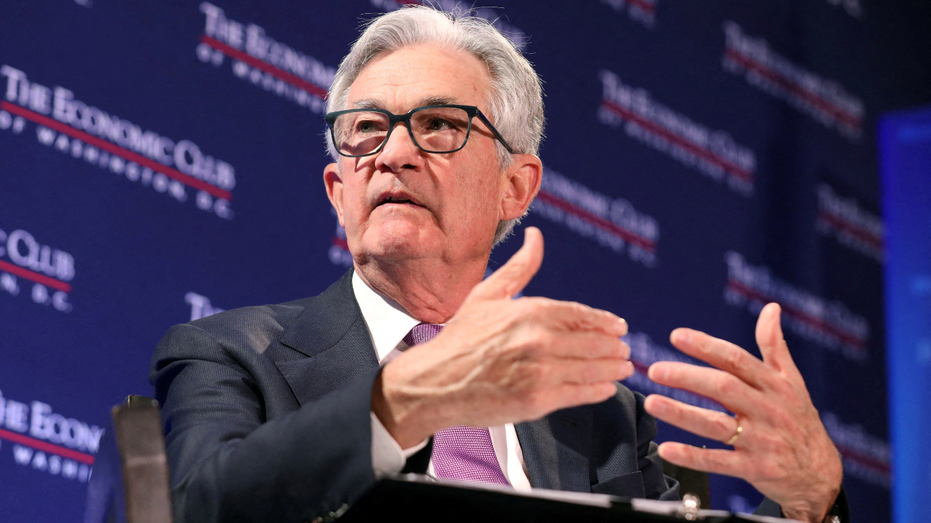
Federal Reserve Chair Jerome Powell said last month that it was uncertain how the Iran war would impact the economy. (Amanda Andrade-Rhoades/Reuters)
Fed policymakers will get two sets of fresh inflation data this week, starting with the Commerce Department’s personal consumption expenditures (PCE) index for February which will be released on Thursday. The PCE index is the Fed’s preferred inflation gauge and the February edition of the report was delayed by the government shutdown.
Additionally, the Labor Department will release the consumer price index (CPI) inflation report for March on Friday.
The FOMC will hold its next monetary policy meeting on April 28–29, when it will announce whether the benchmark interest rate will be held steady, increased or reduced.
Policymakers left interest rates unchanged at their most recent meeting in March, after doing the same at the previous FOMC meeting in January.




















































You must be logged in to post a comment Login