Business
Largecaps to lead near term as markets wait for earnings and trade clarity: Ashi Anand

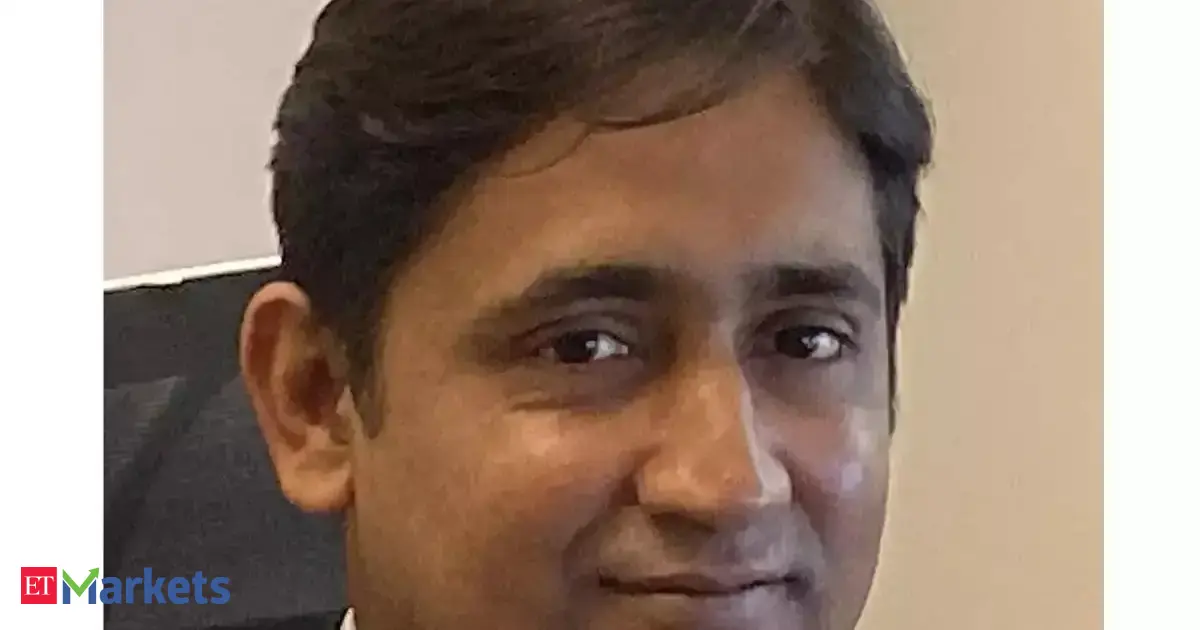
Speaking to ET Now, Ashi Anand, Founder & CEO, IME Capital offered a measured, ground-up view that ties market direction firmly to economic and earnings fundamentals, while also flagging intensifying competition in new-age consumption themes.
On the much-debated revival of small and midcap stocks, Anand cautioned against premature optimism. “For small and midcaps to come back, you first need the overall markets to come back. You need momentum in the economy and corporate earnings, so that is actually the first level.” He noted that investors are closely tracking the ongoing results season for early signs of an earnings turnaround across sectors. According to him, clarity on macro variables—especially the contours of the US-India trade deal—remains a critical missing piece.
Without that visibility, expecting an early surge in the broader market may be unrealistic. “I think expecting to see small and midcaps recovering without clarity around this overall corporate earnings recovery, that is probably unlikely,” Anand said, adding that largecaps are likely to continue outperforming over the next quarter or two. Participation from small and midcaps, he stressed, will come only as confidence around earnings recovery strengthens.
Addressing the broader question of market momentum, Anand expressed cautious optimism about 2026. “We are fairly confident that the momentum of the markets in 2026 would actually be upwards,” he said, while explaining that 2025’s weakness needs to be seen in context. After two years of strong performance, markets have been digesting a slowdown in economic growth and corporate earnings, compounded by global uncertainties that were absent earlier.

However, the groundwork for a recovery appears to be taking shape. Anand pointed to policy measures rolled out over the past several months—income tax cuts in lower slabs, GST rationalisation and interest rate cuts—as factors that could revive consumption. Stress in the banking sector, from net interest margin pressures to asset quality concerns, also seems to be easing. “As you are getting into 2026, there are clear signs of parts of the market which were under strain starting to come back,” he noted.
Beyond macro and market cycles, investor attention is also firmly on the quick commerce segment, especially with Zepto’s proposed IPO. Anand described the listing as one that will be “very interesting and very closely watched,” both from a valuation and competitive standpoint. Unlike peers such as Swiggy or Eternal, which straddle food delivery and quick commerce, Zepto is a pure-play bet on rapid delivery—a business growing faster but still deep in investment mode. “Quick commerce is possibly the most interesting land grab or the most interesting sector which is out there,” Anand said, highlighting the massive opportunity as traditional commerce and e-commerce increasingly shift toward instant delivery models. At the same time, competition is only set to intensify. With Zepto raising fresh capital and incumbents like Swiggy and Eternal sitting on strong cash balances—alongside the looming presence of Amazon and Flipkart—the near term is likely to remain fiercely contested.
Importantly, Anand pushed back against an excessive focus on near-term profitability. “We think it is more important that companies continue to invest, continue to grow even at the cost of short-term profitability,” he said, arguing that scale and positioning today will determine who emerges as one of the top two or three winners five to six years down the line.
For now, portfolio decisions will hinge on relative valuations and clearer disclosures as Zepto moves closer to listing. As Anand summed up, with many numbers still awaited, sharper judgments will follow once more data is on the table.
In the meantime, markets appear to be in a waiting phase—balancing early signs of recovery against the need for sustained earnings momentum. For investors, patience and selectivity, rather than aggressive risk-taking, may remain the dominant strategy as the road to 2026 unfolds.