
Business
LifeMD: Pure Telehealth Play With In-House Pharmacy Integration (NASDAQ:LFMD)



We’re a long-only asset manager allocating into tech and growth asset classes. Learn more at www.tnginvestments.com
Analyst’s Disclosure: I/we have no stock, option or similar derivative position in any of the companies mentioned, and no plans to initiate any such positions within the next 72 hours. I wrote this article myself, and it expresses my own opinions. I am not receiving compensation for it (other than from Seeking Alpha). I have no business relationship with any company whose stock is mentioned in this article.
Seeking Alpha’s Disclosure: Past performance is no guarantee of future results. No recommendation or advice is being given as to whether any investment is suitable for a particular investor. Any views or opinions expressed above may not reflect those of Seeking Alpha as a whole. Seeking Alpha is not a licensed securities dealer, broker or US investment adviser or investment bank. Our analysts are third party authors that include both professional investors and individual investors who may not be licensed or certified by any institute or regulatory body.


Perenti’s underground mining business arm Barminco will continue its association with Regis Resources, following another contract extension.

Asia stocks surge on US-Iran ceasefire; Japan, S.Korea rally over 5%

Operator
Greetings. Welcome to the Aehr Test Systems Fiscal 2026 Third Quarter Financial Results Conference Call. [Operator Instructions] Please note, this conference is being recorded.
I will now turn the conference over to your host, Jim Byers of PondelWilkinson Investor Relations. You may begin.
Jim Byers
PondelWilkinson Inc.
Thank you, operator. Good afternoon, and welcome to Aehr Test Systems Third Quarter Fiscal 2026 Financial Results Conference Call. With me on today’s call are Aehr Test Systems’ President and Chief Executive Officer, Gayn Erickson; and Chief Financial Officer, Chris Siu.
Before I turn the call over to Gayn and Chris, I’d like to cover a few quick items. This afternoon, right after market closed, Aehr Test issued a press release announcing its third quarter fiscal 2026 results. That release is available on the company’s website at aehr.com. This call is being broadcast live over the Internet for all interested parties, and the webcast will be archived on the Investor Relations page of the company’s website.
And I’d like to remind everyone that on today’s call, management will be making forward-looking statements that are based on current information and estimates and are subject to a number of risks and uncertainties that could cause actual results to differ materially from those in the forward-looking statements. These factors are discussed in the company’s most recent periodic and current reports filed
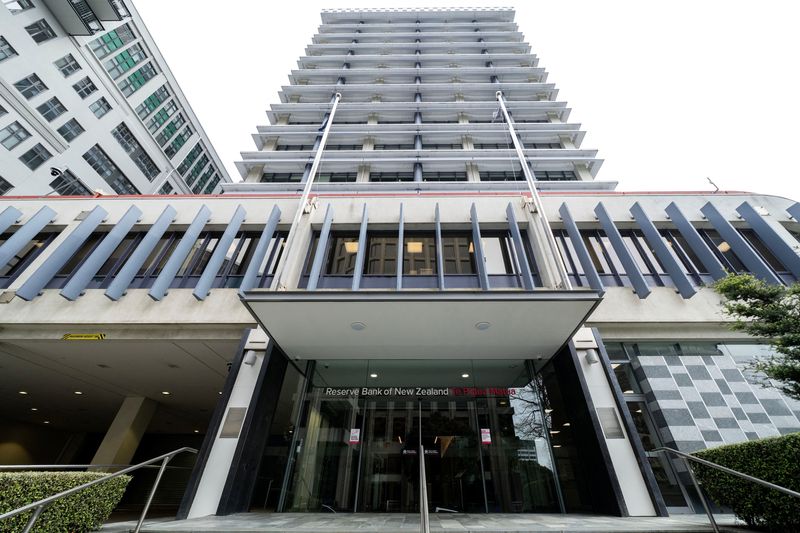

NZ central bank holds cash rate at 2.25%, adopts cautious stance amid Iran war

CVS Health Corp. shares jumped more than 6% in morning trading Tuesday, climbing to $78.19, up $4.92 or 6.71%, as investors cheered fresh optimism around Medicare Advantage payments and the company’s ongoing turnaround efforts in a challenging health care environment.

The NYSE-listed stock (CVS) rallied on reports that the Centers for Medicare & Medicaid Services finalized 2027 Medicare Advantage rates in a manner viewed as more favorable than feared, easing concerns that had weighed on the sector. The move marked the fourth straight day of gains for CVS and pushed shares toward the upper end of their recent trading range.
Analysts described the reaction as a relief rally for a stock that has faced persistent pressure from margin compression in its insurance business, regulatory scrutiny and a broader reset in managed care valuations. With Q1 2026 earnings set for release on May 6, the Tuesday surge reflected growing confidence that CVS is stabilizing its Aetna health insurance segment while leveraging its massive pharmacy and retail footprint.
CVS Health, one of the nation’s largest health care companies, operates roughly 9,000 retail pharmacies, more than 1,000 clinics and a leading pharmacy benefits manager serving about 87 million plan members. It also provides health insurance coverage to millions through Aetna, including highly rated Medicare Advantage plans.
The company has been executing a multi-year turnaround plan aimed at improving margins, simplifying operations and using technology — including artificial intelligence — to better integrate its pharmacy, insurance and clinical services. Executives have highlighted progress in lowering drug prices, enhancing care navigation and positioning CVS as “the front door of care” for millions of Americans.
In February, CVS reported fourth-quarter 2025 results that beat Wall Street expectations on both revenue and earnings. The company reaffirmed its full-year 2026 guidance, projecting adjusted earnings per share of $7.00 to $7.20 and revenue of at least $400 billion. It also maintained GAAP diluted EPS guidance of $5.94 to $6.14.
“Our fourth quarter and full-year results demonstrate the progress we are making in transforming the health care experience,” CEO David Joyner said at the time. The company noted steady performance in its pharmacy and consumer wellness segment, which helped offset pressures in the health insurance business.
Analysts largely view CVS as undervalued. The consensus 12-month price target from roughly two dozen Wall Street firms sits near $95, implying potential upside of more than 20% from current levels. Ratings skew heavily toward Buy or Moderate Buy, with no Sell recommendations in recent coverage. Some bullish voices see shares reaching the mid-$100s if Medicare Advantage margins recover as expected and cost-cutting initiatives deliver.
The stock has traded in a 52-week range roughly between the mid-$50s and mid-$80s, reflecting volatility tied to insurance sector headwinds and broader economic uncertainty. Despite the challenges, CVS has maintained a healthy dividend, recently declaring a quarterly payout of $0.665 per share, payable May 4 to shareholders of record on April 23.
Tuesday’s gains came as the broader health care sector showed mixed performance, with several managed care peers also rising on the Medicare news. Investors appeared to price in expectations of improved medical benefit ratios and more stable membership trends in CVS’s insurance business.
Turnaround Plan Shows Early Signs of Success
CVS has focused on several pillars in its recovery strategy. These include optimizing its pharmacy benefit manager operations, expanding clinical services through its retail clinics and MinuteClinic locations, and investing in digital tools that connect patients, payers and providers more seamlessly.
The company has faced scrutiny over insulin pricing and other pharmacy practices, reaching a proposed settlement with the Federal Trade Commission in March. It has also navigated antitrust concerns and ongoing litigation related to its business practices.
Still, executives have expressed confidence that 2026 will mark continued improvement. The reaffirmed guidance projects margin expansion across segments even as overall revenue growth remains relatively modest. Cash flow from operations is expected to reach at least $9 billion.
Analysts at firms such as Seeking Alpha contributors and major banks have highlighted CVS’s attractive valuation metrics — trading at a forward price-to-earnings multiple in the low teens and a price-to-sales ratio near 0.25. Some argue the market has overly penalized the stock for near-term insurance pressures while underappreciating the long-term strength of its diversified model.
“Stop catastrophizing and start believing,” one analysis suggested, pointing to potential for more than 50% upside if Medicare margins normalize and the company executes on its integration plans.
Upcoming Earnings in Focus
Attention now turns to the May 6 earnings release and conference call. Investors will look for updates on same-store sales trends in retail pharmacy, membership changes in Medicare Advantage, progress on cost controls and any commentary on the competitive landscape.
CVS has been expanding its offerings, including new pharmacy-only locations and enhanced primary care services. It continues to invest in technology platforms that aim to create a more unified consumer experience, potentially driving customer loyalty and higher-margin services.
Broader industry challenges persist. Rising medical costs, regulatory changes and competition from other pharmacy chains and telehealth providers remain risks. CVS must also manage its significant debt load while funding growth initiatives and returning capital to shareholders through dividends and potential buybacks.
Despite these headwinds, many see CVS as well-positioned for a multi-year recovery. Its scale — touching millions daily through pharmacies, clinics and insurance — provides a resilient foundation. The integrated model allows the company to capture value across the health care spectrum, from filling prescriptions to managing chronic conditions to providing insurance coverage.
Dividend Appeal and Shareholder Returns
The quarterly dividend offers a yield that remains attractive for income-focused investors. With the ex-dividend date approaching later this month, some buying may reflect positioning for the payout.
CVS has a long history of returning capital to shareholders, though it has moderated share repurchases in recent years to prioritize balance sheet strength amid the turnaround.
As trading continued Tuesday, volume was elevated as the stock tested resistance levels near $78-$80. Options activity showed increased interest in calls, reflecting bullish sentiment around the Medicare developments and upcoming earnings.
For long-term investors, CVS represents a bet on America’s aging population and the enduring demand for accessible pharmacy and health services. Success hinges on improving profitability in its insurance arm while defending its dominant position in retail pharmacy amid shifting consumer habits and competitive pressures.
The company, headquartered in Woonsocket, employs hundreds of thousands and operates one of the most extensive health care networks in the United States. Its brands — including CVS Pharmacy, Aetna and Omnicare — are household names.
Tuesday’s surge provided a positive note after periods of relative underperformance. Whether the momentum sustains will depend on execution in the coming quarters and any surprises in the May earnings report.
Analysts caution that while the setup looks increasingly favorable, CVS must deliver consistent results to rebuild investor confidence fully. Regulatory and reimbursement risks in Medicare could still create volatility.
For now, the market appears to be rewarding signs that the worst of the pressures may be easing and that the turnaround plan is gaining traction. With shares still trading well below analyst targets, some see the current levels as an attractive entry point for those bullish on health care’s long-term fundamentals.
As the session progressed, CVS Health stood out as one of the stronger performers in the health care sector, underscoring Wall Street’s renewed appetite for beaten-down names showing operational progress.

A worker has died at goldminer Vault Minerals’ King of the Hills operation near Leonora following a light vehicle car incident in the early hours of Tuesday morning.

Tamboran Resources prices $103.5 million stock offering at $35

RBC Capital lowers Pharvaris stock price target on model adjustments

The drug maker’s Pen G and 6-APA backward-integration project has reached break-even, with output ramping up to an annualised 9,000-10,000 tonnes. With the government set to reset minimum import price (MIP) on Pen G, 6-APA and Amoxicillin, which are antibiotics used to treat bacterial infections, from the first quarter of FY27, pricing is expected to improve, offering a further boost to profitability.
 Agencies
Growth Pulse Co to gain from new product launches and backward integration even as the new acquisition in US starts to deliver
The US business, after reporting a 3% drop year-on-year in the December 2025 quarter, is expected to pick up, led by ramp-up in sterile capacity, execution of the specialty pipeline and synergies from the integration of Lannett Company, acquired in July 2025. In addition, the Dayton facility in the US has moved into the commercial phase and is expected to start contributing meaningfully from FY27, while the Raleigh sterile facility awaits regulatory clearance. The drug maker expects the pace of the US launches to remain healthy amid intense competition.
Europe remains the strongest region for Aurobindo, supported by a steady flow of launches across key markets such as Germany, France and Southern Europe. The region’s revenue share improved to over 31% in the December quarter from nearly 27% in FY25. The company has retained the guidance of crossing 1 billion in annual revenue for FY26 compared with 921 million in FY25. It has begun launches of key products such as bevacizumab and trastuzumab, used in cancer treatment, in parts of Europe. The oral solid dosage facility in China is expected to breakeven at the operating level in the March 2026 quarter helped by production gradually scaling towards two billion units annually and EU approvals for 10 products. The unit is likely to start contributing to the bottomline in FY27.

Motilal Oswal Financial Services expects Aurobindo to deliver 21% earnings growth annually over FY26-28. The broker has maintained a buy rating on the stock with a target price of ₹1,500, implying an upside of around 13% from Tuesday’s closing price of ₹1,329.6 on the BSE.
Business
Asian shares: Global Market Today | Oil dives, Asian stocks surge as Trump agrees to two-week ceasefire
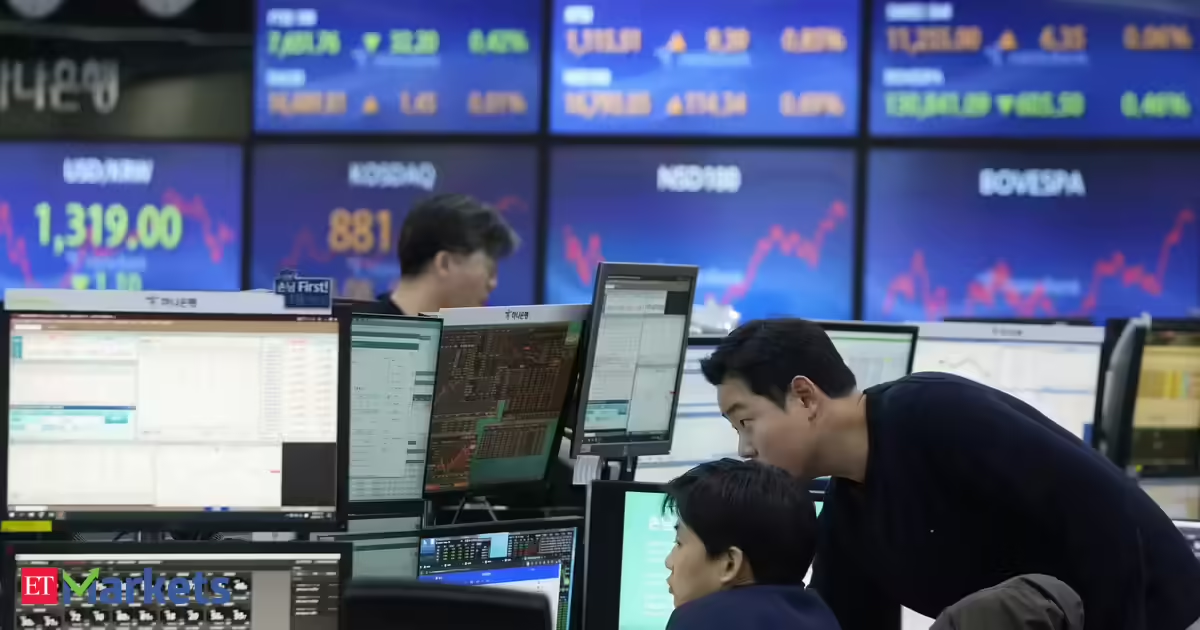
U.S. President Donald Trump said he agreed to suspend bombing and attacks on Iran for two weeks and that a long-term peace agreement was in progress.
Global markets have been rattled since the U.S. and Israel attacked Iran at the end of February, leading Tehran to effectively close the Strait of Hormuz, a key waterway used to transit one-fifth of the world’s oil and gas.
U.S. crude futures fell around 16.5% to $94 a barrel, S&P 500 futures leapt over 2% and the dollar fell broadly, having been the haven of choice for investors during the tumult.
“Markets have been predicting that Trump was looking for an off-ramp in Iran,” said Jamie Cox, managing partner at Harris Financial Group. “Today, he got one and took it.”
Futures pointed to broad gains for Asia’s stock markets, which have been beaten down by war and soaring energy prices, and 10-year U.S. Treasury futures jumped about 15 ticks.
The risk-sensitive Australian dollar rose 1.3% to above $0.7070 and the euro gained 0.76% to $1.1683. Cryptocurrencies also rose. Trump had set a late Tuesday deadline for a deal with Iran to be reached, threatening to destroy every bridge and power plant in the country if Iran did not reopen the Strait of Hormuz. Iran had said it would retaliate against U.S. allies in the Gulf.
The six-week conflict has sent oil prices surging, stoked worries of inflation and upended the global rates outlook with countries and companies scrambling to adjust to the energy shock.
In commodities, gold prices rose over 2% to $4,812 per ounce.
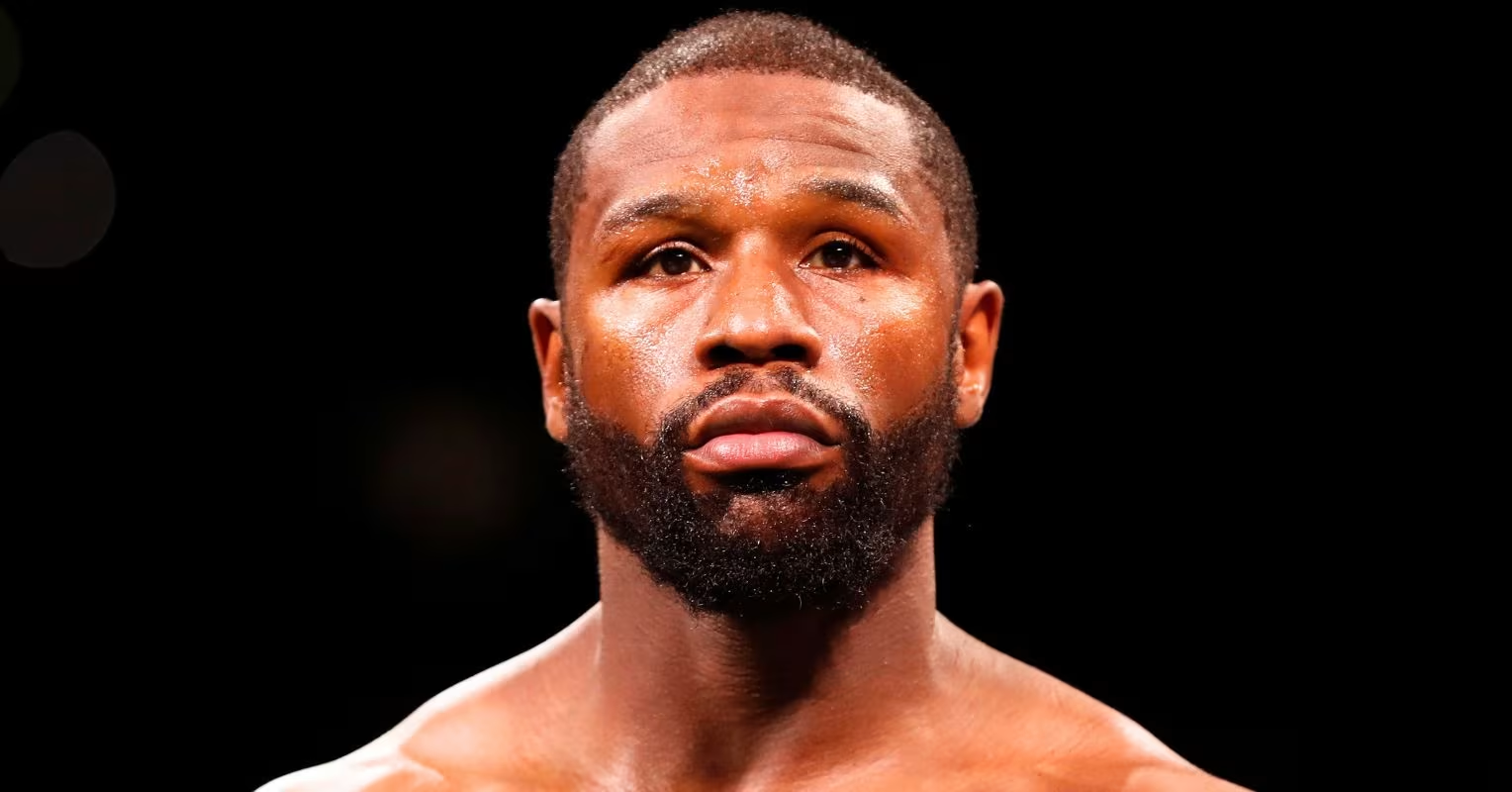
Floyd Mayweather forced to choose between two fights after ‘breach of contract’

Bartlett Lake for Normies
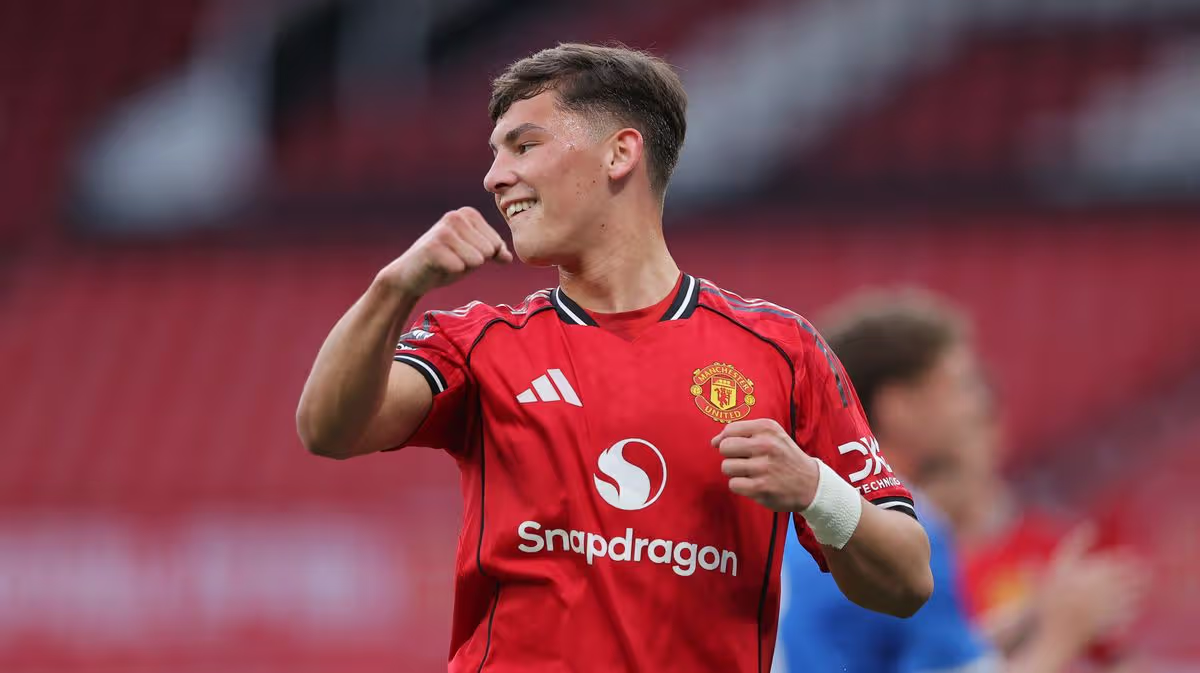
Manchester United’s rising star scored vs Real Madrid – but the best is yet to come


-

 NewsBeat5 days ago
Steven Gerrard disagrees with Gary Neville over ‘shock’ Chelsea and Arsenal claim | Football
-

 Business5 days ago
No Jackpot Winner and $194 Million Prize Rolls Over
-

 Fashion4 days ago
Weekend Open Thread: Spanx – Corporette.com
-

 Crypto World6 days ago
Gold Price Prediction: Worst Month in 17 Years fo Save Haven Rock
-

 Business2 days ago
Three Gulf funds agree to back Paramount’s $81 billion takeover of Warner, WSJ reports
-

 Sports3 days ago
India men’s 4x400m and mixed 4x100m relay teams register big progress | Other Sports News
-

 Business4 days ago
Expert Picks for Every Need
-

 Business6 days ago
Login and Checkout Issues Spark Merchant Frustration
-

 Tech5 hours ago
How Long Can You Drive With Expired Registration? What Florida Law Says
-
Business3 days ago
No Jackpot Winner, Prize to Climb to $231 Million
-

 Tech5 days ago
Commonwealth Fusion Systems leans on magnets for near-term revenue
-

 Tech6 days ago
Drawing Tablet Controls Laser In Real-Time
-

 Crypto World6 days ago
Ripple rolls out enterprise crypto treasury platform for corporates
-

 Fashion2 days ago
Massimo Dutti Offers Inspiration for Your Summer Mood Board
-

 Crypto World6 days ago
Why It’s Partnering, Not Issuing
-
Politics5 days ago
Wings Over Scotland | The quality of mercy
-

 Business3 days ago
Akebia Therapeutics, Inc. (AKBA) Discusses Pipeline Progress and Strategic Focus on Kidney Disease Treatments at R&D Day – Slideshow
-

 Fashion7 days ago
Debenhams Occasion Dresses for Girls 2026 Collection
-
 Sports6 days ago
Steal Gary Woodland’s subtle power move for longer drives
-
 Tech6 days ago
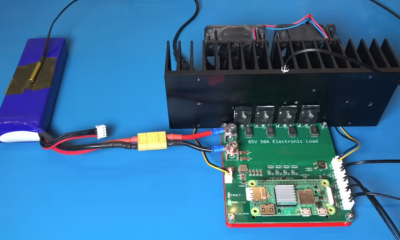
Battery Tester Outperforms Cheaper Options
You must be logged in to post a comment Login