
Business
Low Voter Participation Marks Second Phase of Myanmar’s Controversial Election

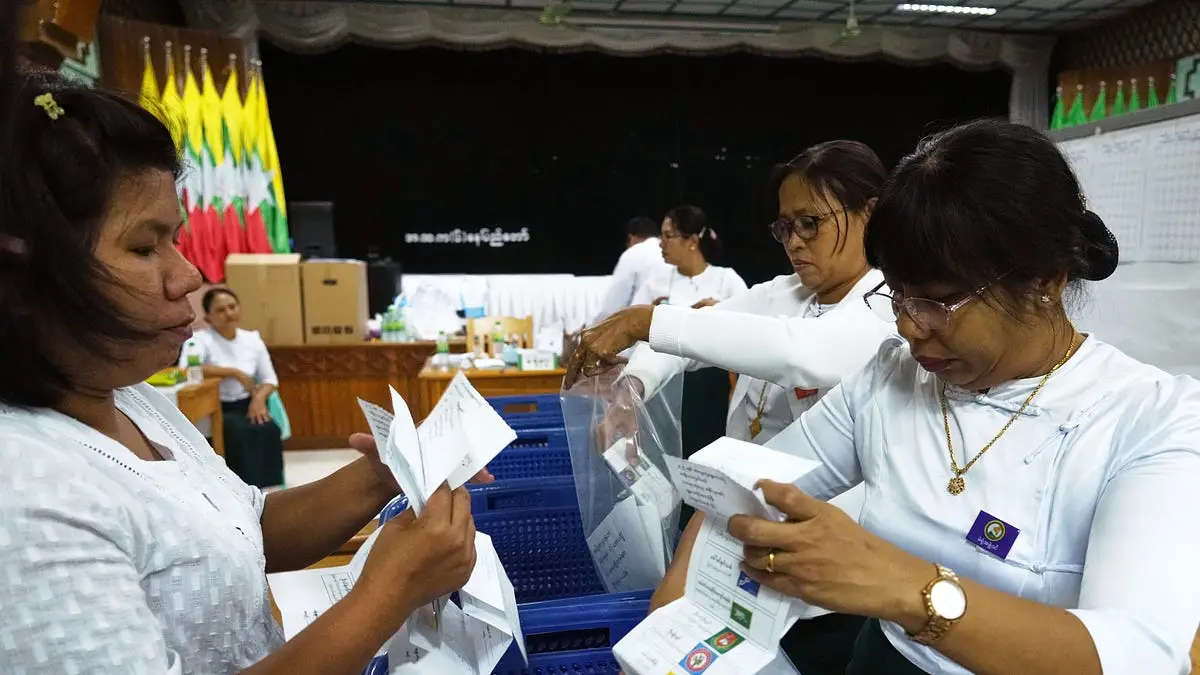
Myanmar’s junta enters second phase of national election amid civil war and international criticism of a rigged process.
Myanmar’s junta has initiated the second phase of a national election, which is widely regarded as rigged. The country is currently embroiled in a grinding civil war, and this election is seen as an attempt by the military to legitimize their power.
Key Points
- Myanmar’s junta took the country into the second phase of a national election derided as rigged.
- Election almost universally derided as rigged
- Junta seeks legitimacy to keep military in power
- Grinding civil war besets the country, with the junta’s actions being questioned by many.
The international community has been critical of the election process, with many nations viewing it as a sham. Despite this, countries like China, India, and Russia are quietly working with the junta, potentially undermining the efforts of other nations to promote democracy in Myanmar.
International Response and Implications
The international response to Myanmar’s election has been largely critical, with many nations refusing to recognize the legitimacy of the process. However, some countries are taking a more nuanced approach, engaging with the junta while also promoting democratic values. The implications of this election are far-reaching, with potential consequences for regional stability and human rights in Myanmar. As the situation continues to unfold, it is essential to monitor the actions of key players like China, India, and Russia, and their impact on the country’s political landscape.
Ongoing Conflict and Uncertainty
The future of Myanmar remains uncertain, with the civil war showing no signs of abating. The election is likely to exacerbate tensions, potentially leading to further violence and humanitarian crises. As the international community navigates this complex situation, it is crucial to prioritize human rights and democratic principles, while also addressing the root causes of the conflict. The role of external actors will be critical in shaping the outcome, and their actions must be carefully considered to avoid perpetuating the cycle of violence and instability in Myanmar.



