Salcombe’s brands are already sold in Fortnum & Mason, Selfridges and John Lewis
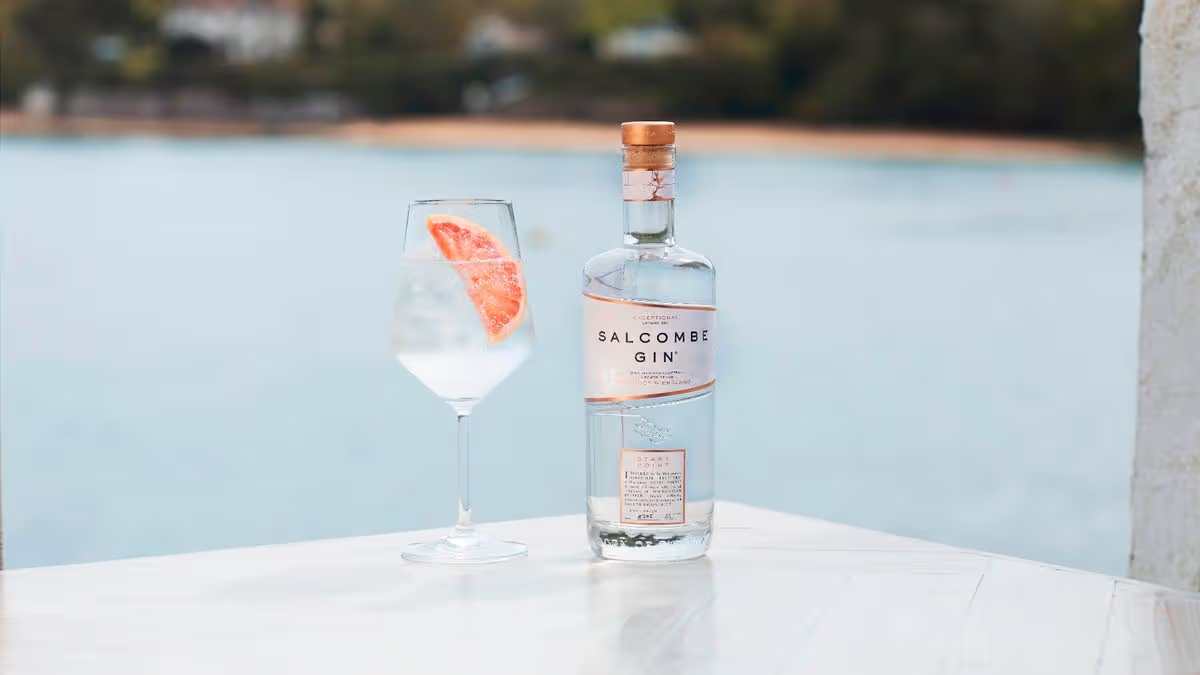
Salcombe Gin is aiming to triple in size over the next five years(Image: Handout)
A Devon distillery is aiming to triple in size over the next five years after reporting 10 per cent year-on-year growth. Salcombe, which produces premium gin, rum and non-alcoholic spirits, said its performance amid challenging market conditions was driven by “disciplined brand positioning, strategic partnerships and international expansion”.
The company’s growth was bolstered by a 40 per cent uplift in travel retail, with the distillery’s brands now listed in some 26 duty free stores across 16 UK airports and on more than 10 cruise ships and cross-channel ferries, including P&O Cruises, P&O Ferries and Brittany Ferries.
Howard Davies, co-founder and director of Salcombe Distilling Co, said: “In a market where premium drinks brands are facing real pressure, we’ve remained clear on who we are and where we fit. Our growth reflects not only the strength of our coastal luxury positioning, but the loyalty of partners and consumers who believe in what we’re building”.
Salcombe also achieved a 25 per cent uplift in the domestic on-trade wholesale market – where drinks are sold and drunk on premises such as in bars and restaurants – which it said reflected a “deliberate strategy of partnership-led expansion”.
Advertisement
Angus Lugsdin, co-founder and director of Salcombe Distilling Co, said: “Travel retail feels like a natural fit for us. We were born on the waterfront, so partnering with leading cruise, ferry and travel operators allows us to bring that coastal story to travellers in an authentic and meaningful way”.
The distillery’s coastal luxury proposition is also gaining traction internationally. Salcombe Gin is now distributed across multiple US states on the east and west coasts, while its non-alcoholic New London Light brand is available nationally in North America via Amazon.
Further export success has followed in Asia, including a recent launch at the Royal Hong Kong Yacht Club, with future expansion planned into other coastal cities where demand for luxury British goods remains strong, Salcombe said.
Salcombe Distilling Co was founded in 2014 by Mr Lugsdin and Mr Davies, who met in the 1990s teaching sailing in Salcombe. In 2016, Salcombe Gin ‘Start Point’ launched alongside completion of the waterfront distillery.
Advertisement
Since launching, Salcombe’s brands have gained a number of prestige listings including in Fortnum & Mason, Selfridges and John Lewis & Partners.
Mr Lugsdin added: “Our ambition is clear, to become the world’s number one coastal luxury spirits brand. We will continue to grow thoughtfully, protect our premium positioning and expand internationally across both alcoholic and non-alcoholic categories.”
While US President Donald Trump’s announcement on talks with Iran brought much-needed relief to stock markets and oil prices, some traders may have benefitted from the news even before it was out. ‘Mystery’ bets in oil futures and S&P 500 futures made just before Trump’s announcement have raised eyebrows over possible insider trading.
Trump said on Monday that the US and Iran had very good and productive conversations over the last two days regarding the “complete and total resolution” of the rising hostilities in the Middle East. He announced that the US is postponing all military strikes against Iranian power plants and energy infrastructure for five days. After the announcement, oil futures crashed up to 15% to fall below the key $100 per barrel mark, while Wall Street rallied.
However, market analysts noted some mysterious bets made just before the announcement. Just five minutes before Trump’s announcement, S&P 500 futures worth $1.5 billion were bought, while oil futures worth $192 million were sold, according to trading platform Unusual Whales.
Around 6,200 futures contracts linked to Brent and WTI crude were traded in a few seconds before Trump’s announcement, according to a report by the Financial Times. The notional value of these trades was estimated at $580 million, the report further said, adding that it remains unclear whether the trades were executed by a single or multiple participants.
Advertisement
Hence, S&P futures were bought at significantly lower levels minutes before they rallied sharply after Trump’s announcement, according to reports. Oil futures, meanwhile, were sold at sharply higher levels just before they tumbled.
Live Events
The Economic Times could not independently verify the reports. White House spokesperson Kush Desai dismissed the allegations of insider trading. “The White House does not tolerate any administration official illegally profiteering off insider knowledge, and any implication that officials are engaged in such activity without evidence is baseless and irresponsible reporting,” he said.Notably, this is not the first time such trades have raised eyebrows before Trump’s announcements. Before the US and Israel conducted joint military strikes on Iran on March 3, killing its former supreme leader Ayatollah Khamenei and beginning the war in the oil-rich Middle East, several mysterious bets were placed on prediction-market platforms Polymarket and Kalshi, making millions for investors betting on the outcome of the conflict.
After Trump’s announcement, Iran’s parliament speaker Mohammad Bagher Ghalibaf said no negotiations have been held with the US. “No negotiations have been held with the US, and fake news is used to manipulate the financial and oil markets and escape the quagmire in which the US and Israel are trapped,” Ghalibaf said in a post on X.
(Disclaimer: Recommendations, suggestions, views and opinions given by the experts are their own. These do not represent the views of The Economic Times)
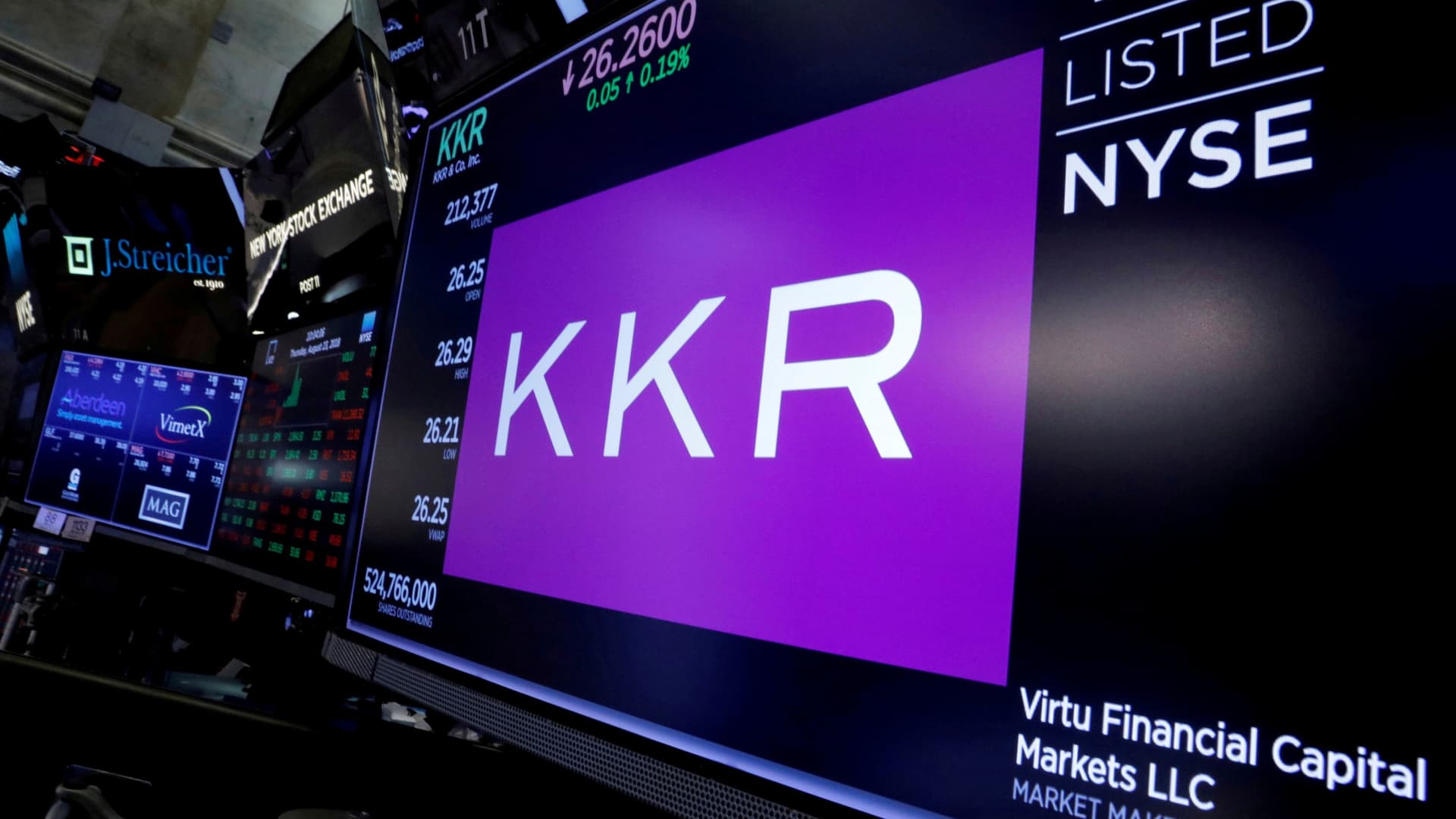
A KKR logo displayed on the floor of the New York Stock Exchange on Aug. 23, 2018.
Brendan McDermid | Reuters
Moody’s Ratings on Monday downgraded a private credit fund run by KKR and Future Standard to junk amid rising bad loans and a string of weak earnings.
Advertisement
The ratings firm lowered the debt ratings of FS KKR Capital Corp by one notch to Ba1 from Baa3 — pushing it into “junk” territory — saying that the fund’s underlying asset quality had worsened more than its peers.
Non-accrual loans, meaning borrowers who have stopped making payments, rose to 5.5% of total investments at the end of 2025, one of the highest rates among rated BDCs, according to the report.
“The downgrade reflects FSK’s continued asset quality challenges, which have resulted in weaker profitability and greater net asset value erosion over time relative to business development company (BDC) peers,” Moody’s said.
The move by Moody’s is the latest sign of distress in the private credit world. Retail investors have been rushing to withdraw funds, running into gates amid concerns about upcoming credit losses, especially related to software loans. Funds like FS KKR issue debt to help juice returns, so the Moody’s downgrade could increase its borrowing costs and, therefore, lower future returns.
Advertisement
Moody’s also flagged other aspects of the fund that could expose it to greater losses over time, including higher leverage, a higher proportion of payment-in-kind loans, and a lower percentage of first-lien loans than peers.
FS KKR posted a net loss of $114 million in the fourth quarter alone and earned just $11 million in net income for all of 2025, according to Moody’s.
The fund didn’t immediately return a request for comment.
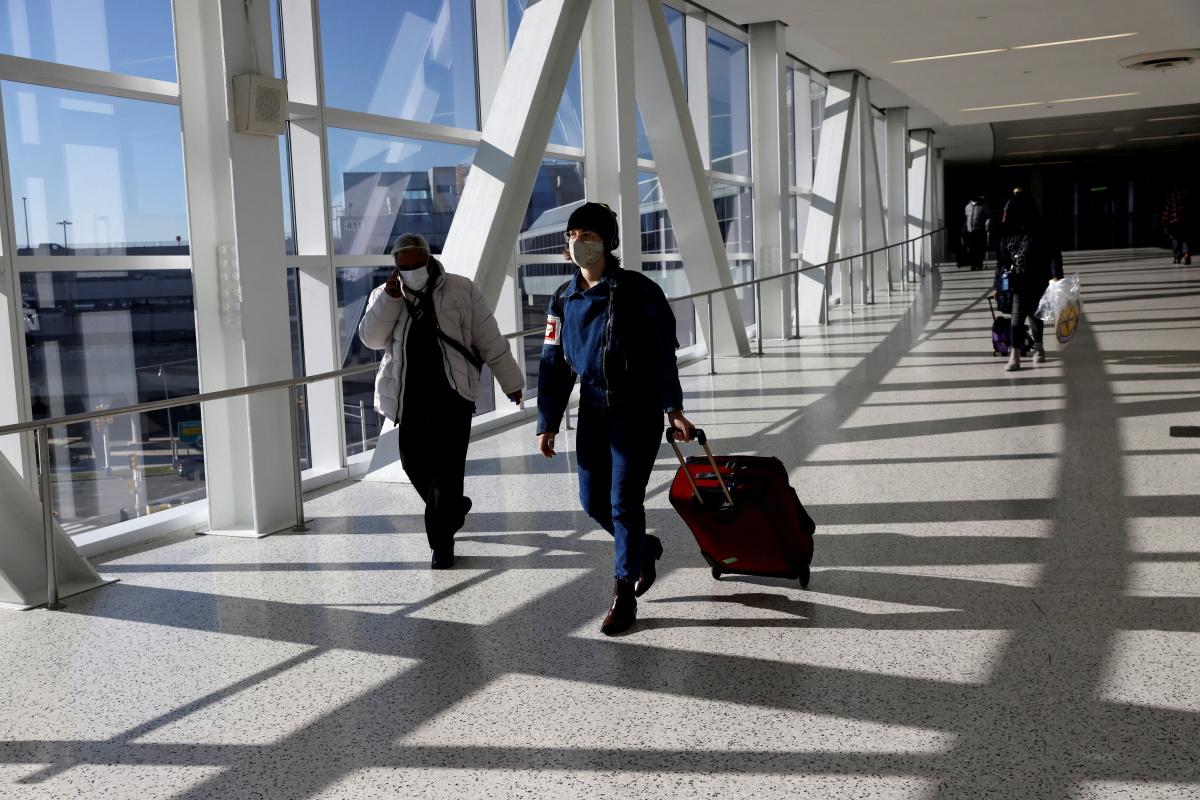
NEW YORK – Travelers heading to John F. Kennedy International Airport on Tuesday, March 24, 2026, face significant uncertainty at security checkpoints as a partial federal government shutdown continues to strain Transportation Security Administration staffing, leading to long and unpredictable lines.
JFK Airport has temporarily suspended its official real-time TSA wait time reporting due to the funding lapse, warning passengers that security lines “may be significantly longer than normal” and urging them to allow extra time. Third-party trackers and traveler reports indicate average waits of 15 to 35 minutes in many cases, with peaks reaching 60 to 90 minutes or more during busy periods — and isolated reports of up to three hours over the weekend.
The ongoing DHS funding crisis has prompted higher than usual call-outs among TSA officers, who are working without guaranteed paychecks. At JFK, one of the nation’s busiest international gateways handling more than 60 million passengers annually, the impact has been noticeable across its six terminals.
As of late Monday and early Tuesday, third-party monitoring sites reported general security lines averaging around 18 to 25 minutes during non-peak hours, while TSA PreCheck lanes moved faster in the 5- to 15-minute range when open. However, passenger anecdotes shared on social media and forums described far longer delays, particularly in Terminal 4 and Terminal 5, popular hubs for international and JetBlue flights.
One traveler arriving for a morning flight in Terminal 5 reported waiting nearly 75 minutes on Sunday, calling the experience a “complete disaster” with poor line management. Others noted lines snaking through terminals and even spilling toward check-in areas during peak morning rushes between 5 a.m. and 9 a.m.
Advertisement
Airport officials issued a clear advisory on the JFK website and social media: “Due to the federal funding lapse, security wait times may be significantly longer than normal. Wait times are subject to rapid change based on passenger volumes and TSA staffing. For these reasons, wait time reporting has been temporarily suspended. Please allow for significantly more time and check with your airline for the current status of your flight.”
The Port Authority of New York and New Jersey, which operates JFK, has not restored live estimates as of Tuesday evening. In normal conditions, JFK security waits average 15 to 30 minutes, with peaks of 30 to 45 minutes during rush hours. This week, those figures have proven unreliable.
Spring break travel combined with the shutdown has exacerbated the situation. Similar disruptions have hit other major hubs, including LaGuardia, Newark Liberty International, Atlanta and Houston, where some passengers faced waits exceeding four hours.
President Donald Trump announced over the weekend that ICE agents would be deployed to assist at airports nationwide to help alleviate staffing shortages. While the move aims to support operations, its immediate effect on TSA screening lines at JFK remains unclear, with mixed reports on whether additional personnel have eased bottlenecks.
Advertisement
Travelers with TSA PreCheck or CLEAR memberships generally report shorter waits, often under 15 minutes even on challenging days. However, even PreCheck lines stretched to 45-90 minutes at times over the weekend at New York-area airports.
Experts recommend arriving at JFK at least three to four hours before international flights and two to three hours for domestic departures during this period. Those without trusted traveler status should plan even more buffer time.
“Conditions can change quickly based on passenger volumes, TSA shift changes and staff availability,” said a Port Authority spokesperson. “We appreciate travelers’ patience as we navigate this federal situation.”
JFK’s terminals vary in typical crowd levels. Terminal 4, home to Delta, Emirates and many international carriers, often sees the longest lines due to higher passenger volumes and additional international screening requirements. Terminal 5 (JetBlue) and Terminal 8 (American Airlines) have also reported heavier delays.
Advertisement
Some checkpoints have operated with reduced lanes, leading to sudden surges when passenger waves hit. Reddit users and X posts from recent days described scenarios where lines moved smoothly one hour only to back up dramatically the next.
Airlines have encouraged passengers to check flight status and consider alternative transportation options where possible. Several carriers have adjusted policies to allow more flexible rebooking amid the uncertainty.
The shutdown’s impact extends beyond security. Some travelers reported longer check-in lines and baggage processing delays as airline staff manage overflow from security backups.
TSA has not released official nationwide figures for March 24, but the agency’s MyTSA app may provide limited traveler-reported data. Independent trackers pulling from airport feeds show fluctuating estimates, with some terminals listing waits as low as 10 minutes during overnight lulls and climbing above 30 minutes by mid-morning.
Advertisement
For those flying today, practical tips include:
– Enroll in TSA PreCheck or CLEAR if eligible for faster processing. – Pack liquids and electronics in easily accessible bags to speed screening. – Monitor airline apps for gate information and any delays. – Use the AirTrain or public transit to reach the airport and avoid roadway congestion. – Check terminal-specific social media or third-party apps for crowd updates.
The situation remains fluid. Port Authority officials have not provided a timeline for when official wait time displays will resume.
JFK continues to operate normally for takeoffs and landings, with air traffic control unaffected by the TSA staffing issues. However, missed connections and stress from long security lines have disrupted travel plans for many.
Advertisement
The funding impasse in Washington has drawn criticism from both travelers and aviation industry groups, who warn that prolonged uncertainty could harm the U.S. travel economy during a busy spring season.
As evening approaches on March 24, passenger volumes typically ease, potentially shortening lines after the 7 p.m. rush. Overnight and early morning flights may see lighter security traffic, though unpredictability persists.
Travelers are advised to stay flexible and maintain communication with airlines. Updates will likely continue via the JFK Airport website, X account (@JFKairport) and individual carrier notifications.
For now, the message from New York’s premier international gateway is consistent: Plan ahead, build in extra time and prepare for longer-than-usual TSA waits at John F. Kennedy International Airport today and in the coming days until the federal funding situation is resolved.
An early bounce for Australian shares has faded, as hopes of Middle East de-escalation crumbled on reports US Gulf allies were taking steps to enter the conflict.
Lionel Messi and Cristiano Ronaldo have never met in a World Cup match during their two-decade rivalry. With the 2026 tournament just months away, the bracket has aligned perfectly for what could be their final showdown — and analysts now put the odds of an Argentina-Portugal quarterfinal at roughly 65 percent if both stars deliver as expected.
IBTimes US
The expanded 48-team World Cup draw, completed in December 2025, placed defending champion Argentina in Group J with Algeria, Austria and Jordan. Portugal landed in Group K alongside Colombia, Uzbekistan and a playoff winner. Both teams enter as overwhelming favorites to top their groups, setting up a high-probability path through the knockout stages.
Under the new format, the top two teams from each group plus the eight best third-place finishers advance to a 32-team knockout round. If Argentina and Portugal win their groups — a scenario bookmakers give better than 80 percent probability for each side individually — they would meet in the quarterfinals on July 11 at Arrowhead Stadium, provided they navigate the round of 32 and round of 16.
Projection models from sites like Opta and betting markets currently estimate the combined likelihood of that exact quarterfinal matchup at around 60-70 percent, with many settling near 65 percent when factoring in group dominance and early knockout form. Earlier clashes remain possible but less likely: a round-of-16 meeting if one team finishes second (around 20-25 percent) or a remote round-of-32 scenario if both drop to third.
Ronaldo, turning 41 in February 2026, has made clear this will be his last World Cup. The Portuguese captain continues to score prolifically for Al-Nassr and recently posted recovery updates after a minor hamstring issue. Coach Roberto Martinez has expressed full confidence in Ronaldo’s fitness for June.
Advertisement
AFP
Messi, who turns 39 during the tournament, has been more reserved but strong signals point to his participation. The eight-time Ballon d’Or winner has already designated Kansas City as Argentina’s base camp, with group-stage matches scheduled at Arrowhead and AT&T Stadium. Inter Miami and Argentina coaching staff have indicated he plans to be there for what could be his farewell tour.
Argentina remains the tournament favorite according to most oddsmakers, buoyed by its 2022 triumph and deep squad. Portugal sits further back but possesses enough talent to reach the later stages even with managed minutes for its aging superstar.
The potential July 11 clash in Kansas City has already sent ticket demand soaring on resale platforms, with some listings for the projected quarterfinal jumping 300 percent since the draw. Global TV audiences for such a matchup could reach billions, adding one final unforgettable chapter to a rivalry that has produced countless classics at club level.
For Messi, a second World Cup title would solidify his legacy. For Ronaldo, the tournament represents perhaps his last realistic shot at the one major honor missing from his glittering career. They have combined for 48 World Cup appearances without ever sharing the pitch in the competition.
Analysts caution that football’s unpredictability remains. Upsets in the group stage or early knockouts could derail the dream scenario. Yet the bracket’s structure, combined with both teams’ quality, makes the quarterfinal meeting the most probable outcome of any Messi-Ronaldo World Cup encounter.
Advertisement
FIFA President Gianni Infantino has repeatedly highlighted the tournament’s potential for “dream matches,” and few would top this one. As friendlies continue in March and squads take shape, the soccer world is already counting down to what could be the ultimate last dance.
Whether it ends in a Messi masterclass, Ronaldo heroics or dramatic extra time, a 65 percent chance feels tantalizingly close to destiny for two players who have defined an era.
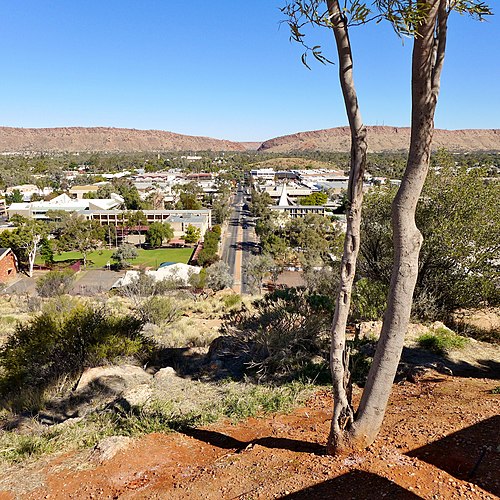
SYDNEY — Alice Springs in the Northern Territory remains Australia’s city with the highest crime rate in 2026, recording dramatically elevated offence levels per capita that far exceed national averages and place it among the more dangerous urban areas globally according to perception-based indexes.
Alice Springs
Recent data from the Australian Bureau of Statistics, state police reports and crowd-sourced platforms such as Numbeo show that while Australia overall maintains low crime rates compared with many nations, certain regional centers — particularly in the Northern Territory and Queensland — continue to grapple with disproportionate levels of property crime, assaults and public order offences.
Experts attribute the patterns to complex social factors including alcohol and substance abuse, socioeconomic disadvantage, family violence and challenges in remote Indigenous communities. Here are the five cities consistently ranked with the highest crime rates in early 2026 assessments.
Alice Springs, Northern Territory Alice Springs tops nearly every domestic ranking with an extraordinary 37,955 offences per 100,000 residents for the year ending November 2025, according to detailed local statistics. Numbeo’s 2026 Crime Index places the city at 66.9, ranking it 34th most dangerous worldwide — higher than many major global metropolises. Assaults, property damage and theft dominate reports, with violent crime rates several times the national average. Community leaders and police have intensified interventions, including alcohol restrictions and youth programs, yet the remote location and underlying social issues sustain the challenges.
Rockhampton, Queensland Rockhampton in central Queensland frequently ranks second or first depending on the metric, with a Numbeo Crime Index of 66.3 in 2026 data. The city of about 80,000 reports high rates of property crime, assaults and public nuisance offences. Some analyses cite 132 offences per 1,000 people in certain periods. Local authorities point to economic pressures in the resource sector and alcohol-related incidents as key drivers. Rockhampton has implemented targeted policing and community safety initiatives, but it remains a focal point for regional crime concerns.
Darwin, Northern Territory The Northern Territory capital records a Crime Index of 62.9 on Numbeo, reflecting persistent issues with violent assaults, property theft and alcohol-fueled disorder. Offence rates hover around 13,686 per 100,000 residents in recent figures, well above most Australian cities. Suburbs such as Palmerston, Karama and Malak show particularly elevated numbers. Darwin’s tropical climate, transient population and proximity to remote communities contribute to the statistics. Territorial government programs focus on harm reduction and increased police visibility.
Cairns, Queensland Far North Queensland’s tourism hub registers a Crime Index of 62.1, driven largely by property crime — including one of the highest rates of theft and burglary in the country. Reports indicate more than 16,000 property offences per 100,000 people in some assessments. Tourists and locals alike face risks of opportunistic theft, while night-time economy issues add to assault figures. Cairns City Council and Queensland Police have expanded CCTV coverage and tourism safety campaigns, yet the city remains prominent in national discussions.
Townsville, Queensland Townsville often appears in composite “danger” indexes that factor in property crime alongside natural disaster vulnerability. A 2026 iSelect safety ranking placed it as Australia’s least safe major center with a score of 41.65, citing high property crime and other risks. Violent incidents and youth-related offences feature prominently in police data. The city has launched multi-agency responses, including youth engagement programs and increased night patrols, as part of broader Queensland efforts to address regional hotspots.
These five cities stand out against Australia’s generally safe reputation. Major capitals such as Sydney, Melbourne and Brisbane record significantly lower per-capita rates overall, although their dense CBDs and certain suburbs experience elevated property crime and theft due to population volume. National ABS figures for 2024–25 show 344,620 offenders proceeded against by police across the country, with family and domestic violence remaining a persistent concern everywhere.
Criminologists caution that raw crime indexes can be influenced by reporting rates, population size and methodology. Numbeo data relies heavily on user perceptions, while official ABS and state statistics track recorded incidents. Smaller regional populations in places like Alice Springs can amplify per-capita figures even when absolute numbers are modest.
Australian authorities have responded with targeted strategies. The Northern Territory has expanded alcohol management plans and invested in community-led prevention. Queensland Police continue “Operation Safe Haven” style initiatives in Townsville, Cairns and Rockhampton. Federally, funding for early intervention, mental health support and housing programs aims to address root causes, particularly in Indigenous communities where over-representation in crime statistics persists.
Advertisement
Travelers and residents in these areas receive consistent advice: exercise normal caution, avoid isolated spots at night, secure property and use rideshares or well-lit routes. Tourism operators in Cairns and Darwin emphasize safety measures for visitors.
Despite the challenges, overall crime trends in Australia have shown mixed results, with some property offences declining due to better surveillance while certain violent categories remain stable or rise modestly. The concentration in specific regional centers underscores the need for localized solutions rather than nationwide generalizations.
As 2026 progresses, police and community groups in the highlighted cities continue collaborative efforts. Success will depend on sustained investment in social services, economic opportunities and justice system reforms. For most Australians living in larger metropolitan areas, daily life remains among the safest in the developed world.
Officials stress that while these five cities warrant heightened awareness, Australia’s strong rule of law, community policing and low overall homicide rate — far below many international peers — provide a broader context of security.





















































You must be logged in to post a comment Login