
Business
Mark Zuckerberg Says Criminal Behavior on Facebook ‘Inevitable’ in Child Safety Trial Deposition

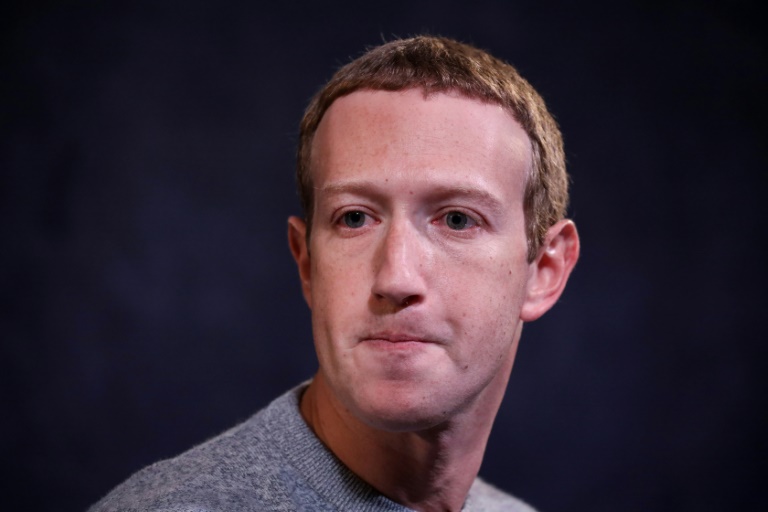
Meta CEO Mark Zuckerberg acknowledged in a taped deposition played during a high-stakes child safety trial that criminal activity, including harms to children, is an unavoidable reality on platforms serving billions of users like Facebook and Instagram.

The comments, revealed March 4-5, 2026, in a New Mexico courtroom, came as prosecutors played excerpts from Zuckerberg’s pretrial deposition to support allegations that Meta violated state consumer protection laws by failing to adequately disclose or mitigate risks of child sexual exploitation and mental health damage on its services.
“I just think if you’re serving billions of people, the unfortunate reality is that some very small percent of them are going to be criminals, and we should work as hard as we can to stop that activity from happening,” Zuckerberg said in the deposition. “I don’t think that the standard for our platforms would be that you should assume that it will ever be perfect.”
The statement drew sharp reactions from critics and child safety advocates, who argue Meta prioritizes engagement and profits over robust protections. Zuckerberg’s words were part of broader testimony addressing Meta’s efforts — or perceived shortcomings — in combating predatory behavior, underage access and harmful content.
The ongoing bellwether trial, brought by New Mexico Attorney General Raúl Torrez, accuses Meta of knowingly allowing dangerous conditions to persist on Facebook, Instagram and related apps. Prosecutors presented internal documents and executive statements claiming the company downplayed known risks to maintain user growth and advertising revenue.
Instagram head Adam Mosseri echoed similar sentiments in his own deposition, played alongside Zuckerberg’s, noting the inevitability of some bad actors in vast online communities. Both emphasized Meta’s investments in safety tools, including AI detection, content moderation teams and billions spent annually on enforcement.
Zuckerberg defended the company’s approach, highlighting thousands of employees dedicated to trust and safety, proactive removals of violating content and partnerships with law enforcement. He stressed the challenge of balancing privacy features like end-to-end encryption — which limits direct message scanning — with safety needs. “Our job is to build products that balance these things in appropriate ways,” he said. “Safety is obviously extremely important. People also care a lot about privacy and security, too.”
The trial builds on years of scrutiny over Meta’s handling of youth safety. It follows Zuckerberg’s February 2026 testimony in a separate Los Angeles addiction lawsuit, where he faced questions on algorithmic design and underage verification. In that case, he admitted improvements in detecting children under 13 but wished the company had acted sooner.
New Mexico’s suit focuses on consumer protection violations, alleging Meta misrepresented platform safety to users and parents. Prosecutors pointed to cases of sexual exploitation facilitated through the apps, including grooming and sextortion schemes targeting minors. They argue Meta’s scale amplifies these issues, with harms like depression, anxiety and suicide linked to exposure.
Meta counters that it discloses risks, removes harmful content aggressively and cannot eliminate every violation in open platforms. Company lawyers note adversarial actors constantly evade systems, but Meta continually upgrades defenses.
The case has spotlighted broader industry challenges. Social media giants face mounting lawsuits and regulatory pressure over youth mental health and exploitation. Section 230 protections shield platforms from liability for user content, but states like New Mexico seek to hold companies accountable for design choices and disclosures.
Public reaction to Zuckerberg’s remarks has been swift and critical. Advocacy groups called the statement an admission of defeat on child protection, urging stronger federal legislation. On social media, users debated whether billions of users inherently doom platforms to host crime or if better tools could minimize it further.
Zuckerberg has long maintained that perfection is unattainable but progress is ongoing. In past congressional hearings, he apologized to families affected by platform harms and pledged reforms.
As the New Mexico trial continues, depositions from other executives like former policy head Nick Clegg reinforced that harmful content damages business interests — bad for ads and brand trust. Clegg noted advertisers avoid proximity to toxic material.
The outcome could influence hundreds of similar suits nationwide, potentially reshaping how platforms approach safety, moderation and transparency. For Meta, the case tests the limits of scale: serving billions inevitably includes risks, but critics say Zuckerberg’s words underscore insufficient urgency in addressing them.
With testimony ongoing and more internal records expected, the trial highlights enduring tensions between innovation, privacy, safety and corporate responsibility in the social media era.

In a notification issued Friday, the central bank asked authorised dealers of foreign currency to comply with the rule by April 10. The cap will be on their open position on the onshore deliverable market.
“Traders must be long on the dollar in a large way. This regulation basically curbs speculative positions of a bank, which will in turn reduce pressure on the rupee,” said a currency trader at a private sector bank.
“This is called the overnight open position which traders are allowed to keep in respect of all currencies involving the rupee. For a large bank, these positions can usually be at around $1 billion both in onshore and offshore markets,” he said.
RBI prescribes limits for open positions involving the rupee for exchange rate management and orderly development of the market, depending on market conditions.

The rupee has depreciated 3.5% since the start of the war and nearly 10% in this fiscal year. High crude oil prices are clouding the outlook for the local unit, with traders now expecting the rupee to touch 96-97 per dollar if oil prices remain around $115 per barrel.
“It has now been decided that authorised dealers shall ensure that their NOP-INR positions in the onshore deliverable market shall be maintained within $100 million at the end of each business day,” RBI said Friday in its master direction on risk management and inter-bank dealings.

Banks led by IDBI had sought a challenge bid to NARCL’s Rs 130 crore offer earlier this month, with due diligence for prospective bidders ending on March 23.
No bidder came forward till the end of the day on March 24, the final day for bids in the Swiss challenge auction, after which banks are moving ahead with the transfer to NARCL.
The NARCL offer means a 13% recovery for banks and will be in a mix of 15% cash and the rest in security receipts to be redeemed on recovery.
Kay Bouvet is a heavy engineering company engaged in the design, engineering and manufacturing of specialised equipment for strategic industries such as nuclear energy, power, defence and space. It has two manufacturing facilities in Maharashtra and Haryana.

CaixaBank, S.A. (CAIXY) Shareholder/Analyst Call – Slideshow
Adidas: A Buy At Undemanding Valuations As Inventory Set To Normalize

The brokerage said suppliers of energy in the Nifty, including companies in coal, electricity and upstream oil, will benefit from higher realisations. Meanwhile, demand for coal and electricity is likely to increase as users shift away from oil and gas as fuel inputs.
 Agencies
Upstream oil, coal and power make up energy mix in index, which will see higher realisations
ICICI Securities said oil and gas suppliers, such as oil marketing and gas companies-the most impacted-are largely outside the Nifty and are spread across the small-cap and mid-cap segments. Energy-intensive industrials such as chemicals, fertilisers and building materials are also concentrated in the small-cap and mid-cap segments and are significantly impacted by higher crude and gas costs.
Within consumption, sectors such as aviation, autos, and consumer goods could be impacted by higher input costs, although larger companies within the Nifty can pass on costs and consolidate market share.
The brokerage said services sectors, including IT, banks and financials, which account for a large weight in the index, do not rely much on oil and gas, limiting the overall impact.

Earnings call transcript: EverCommerce Q4 2025 earnings miss hits stock
Business
US Stock Market | Stocks tumble, Dow confirms correction territory, as Middle East tensions drag
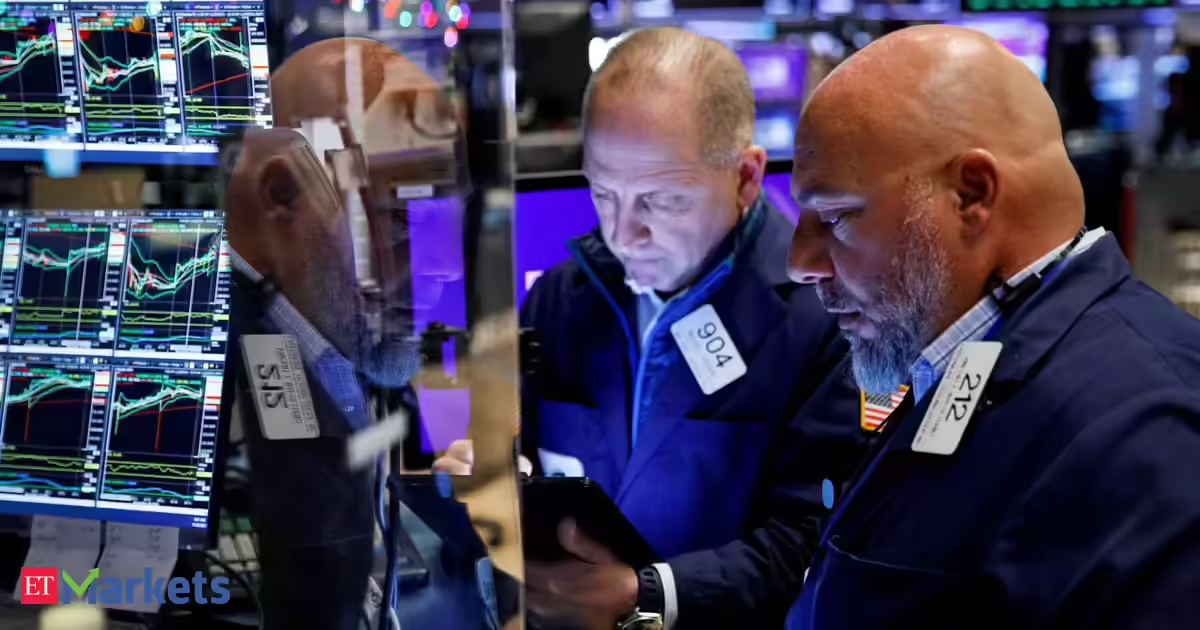
The Dow, S&P 500 and Nasdaq each suffered their fifth straight weekly decline, the longest such streak in nearly four years. The Dow is now down more than 10% from its February 10 record close, becoming the latest major index to confirm a correction, commonly defined as a drop of 10% from its prior high. The Dow follows the Nasdaq in crossing the correction threshold while the Russell 2000, which was the first on the correction path, confirmed it last Friday.
“Clearly, the overall tone has turned very negative and now we have broken down into correction territory,” said Ken Polcari, partner and chief market strategist at SlateStone Wealth in Jupiter, Florida.
“In the end, I would view this as a big opportunity, but would not be surprised if we see a drawdown anywhere between 15% to 20% before it is over.”
The Dow Jones Industrial Average fell 793.47 points, or 1.73%, to 45,166.64, the S&P 500 lost 108.31 points, or 1.67%, to 6,368.85 and the Nasdaq Composite lost 459.72 points, or 2.15%, to 20,948.36.
The CBOE Volatility Index, considered Wall Street’s fear gauge, was up 3.61 points to close at 31.05, its highest close since April 21.
Megacaps were the biggest drag on the benchmark S&P index, with Nvidia down 2.2% as the biggest weight, while Amazon dropped 4%. Software shares were also under renewed selling pressure, and the S&P 500 software and services index closed at its lowest level since November 6, 2023. Along with pressure from Amazon, consumer discretionary stocks dropped 3.1%, the worst-performing of the 11 major S&P sectors, as cruise operator Carnival slumped 4.3% after cutting its annual adjusted profit forecast. Fellow cruise operator Norwegian tumbled 6.9%. The surge in oil prices along with other products such as fertilizer as a result of the Iran war has fanned inflation fears and dampened expectations that the Federal Reserve and other central banks have room to lower interest rates. Money market participants are not pricing in any easing from the U.S. Federal Reserve this year, compared with expectations of two cuts before the conflict broke out, according to CME’s FedWatch Tool. Markets are now pricing in a roughly 25% chance for a hike of at least 25 basis points at the Fed’s October meeting. Philadelphia Fed President Anna Paulson acknowledged the risks to the economy from the war, but did not specify what it meant for monetary policy in the near term. U.S. consumer sentiment eased to a three-month low in March, raising concerns about the economy due to the Middle East war.
Declining issues outnumbered advancers by a 3.38-to-1 ratio on the NYSE and by a 3.62-to-1 ratio on the Nasdaq.
The S&P 500 posted 22 new 52-week highs and 27 new lows while the Nasdaq Composite recorded 25 new highs and 355 new lows.
Volume on U.S. exchanges was 18.13 billion shares, compared with the 20.4 billion average for the full session over the last 20 trading days.
Business
PVAL: Cautiously Optimistic Owing To Recent Outperformance, Factor Mix, Buy Rating Maintained
PVAL: Cautiously Optimistic Owing To Recent Outperformance, Factor Mix, Buy Rating Maintained
Earnings call transcript: Blend Labs Q4 2025 sees revenue beat, EPS miss
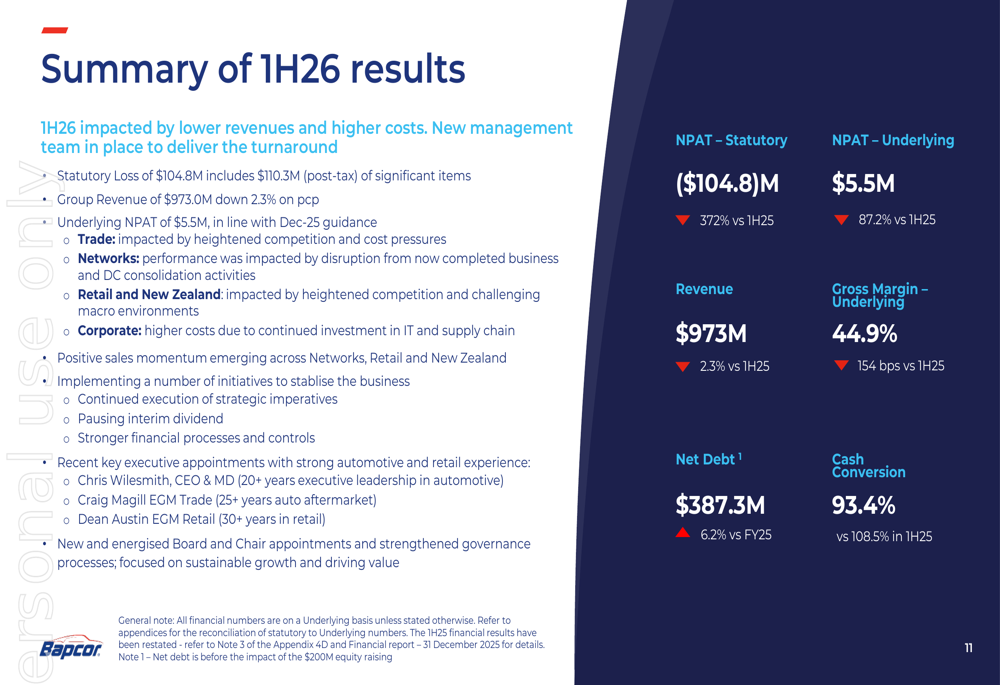
Bapcor 1H26 slides: new CEO outlines turnaround after $105M loss
Trump spent several minutes spinning a tale about Sharpies to his Cabinet. The pen maker doesn’t know what he’s talking about
RBI tightens norms on net open positions to curb rupee’s slide

IPL 2026: Defending champions RCB begin title defence against SRH at Chinnaswamy | Cricket News


-
 NewsBeat3 days ago
Manchester United reach agreement with Casemiro over contract clause amid transfer speculation
-

 Crypto World6 days ago
Best Crypto to Buy Now: Strategy Just Spent $1.57 Billion on Bitcoin During Fear While Early Investors Quietly Enter Pepeto for 150x Potential
-

 News Videos2 days ago
Parliament publishes latest register of MPs’ financial interests
-

 Crypto World6 days ago
Bitcoin Price News: Bhutan Sells $72 Million in BTC Under Fiscal Pressure, but the Smart Money Entering Pepeto Sees What the Market Does Not
-

 Sports5 days ago
Remo Stars and Kano Pillars Strengthen Survival Hopes in NPFL
-

 Sports5 days ago
Gary Kirsten Accuses Pakistan Cricket Board Of ‘Interference’, Mohsin Naqvi Responds
-

 Business5 days ago
No Winner in March 21 Drawing as Prize Rolls to $133 Million for Next
-

 Tech5 days ago
Give Your Phone a Huge (and Free) Upgrade by Switching to Another Keyboard
-

 Tech5 days ago
AI enters the chat: New Seattle dating app relies on tech to facilitate meaningful human connections
-

 News Videos5 days ago
Ch 9 Financial Management Part 1 | Detailed One Shot | Class 12 Business Studies Boards 2026
-

 Tech6 days ago
Today’s NYT Connections Hints, Answers for March 22 #1015
-

 Business1 day ago
Instagram, YouTube Found Responsible for Teen’s Mental Health Struggle in Historic Ruling
-

 Business6 days ago
Will Duke Basketball Win It All? Duke Basketball Enters Second Round as Third Favorite to Claim NCAA Title
-

 Sports5 days ago
2026 Kentucky Derby horses, odds, futures, preview, date: Expert who hit 12 Derby-Oaks Doubles enters picks
-
 NewsBeat6 days ago
Update on Wisbech river crash as search for teenage boy enters fifth day
-
 Entertainment5 days ago
Cynthia Bailey Dishes on ‘RHOA’ Season 17, Discusses Kandi
-

 Tech4 days ago
Samsung will soon let you control smart home devices from your car’s dashboard
-

 Fashion3 days ago
Does It Matter What You Wear When You’re Laid Off and Looking?
-
 NewsBeat3 days ago
Tesco is selling new Cadbury Dairy Milk bar and people can’t wait to try it
-

 NewsBeat6 hours ago
The Story hosts event on Durham’s historic registers
You must be logged in to post a comment Login