Business
Mastercard’s Raja Rajamannar on the future of fan-first marketing and the power of ‘Priceless’ experiences

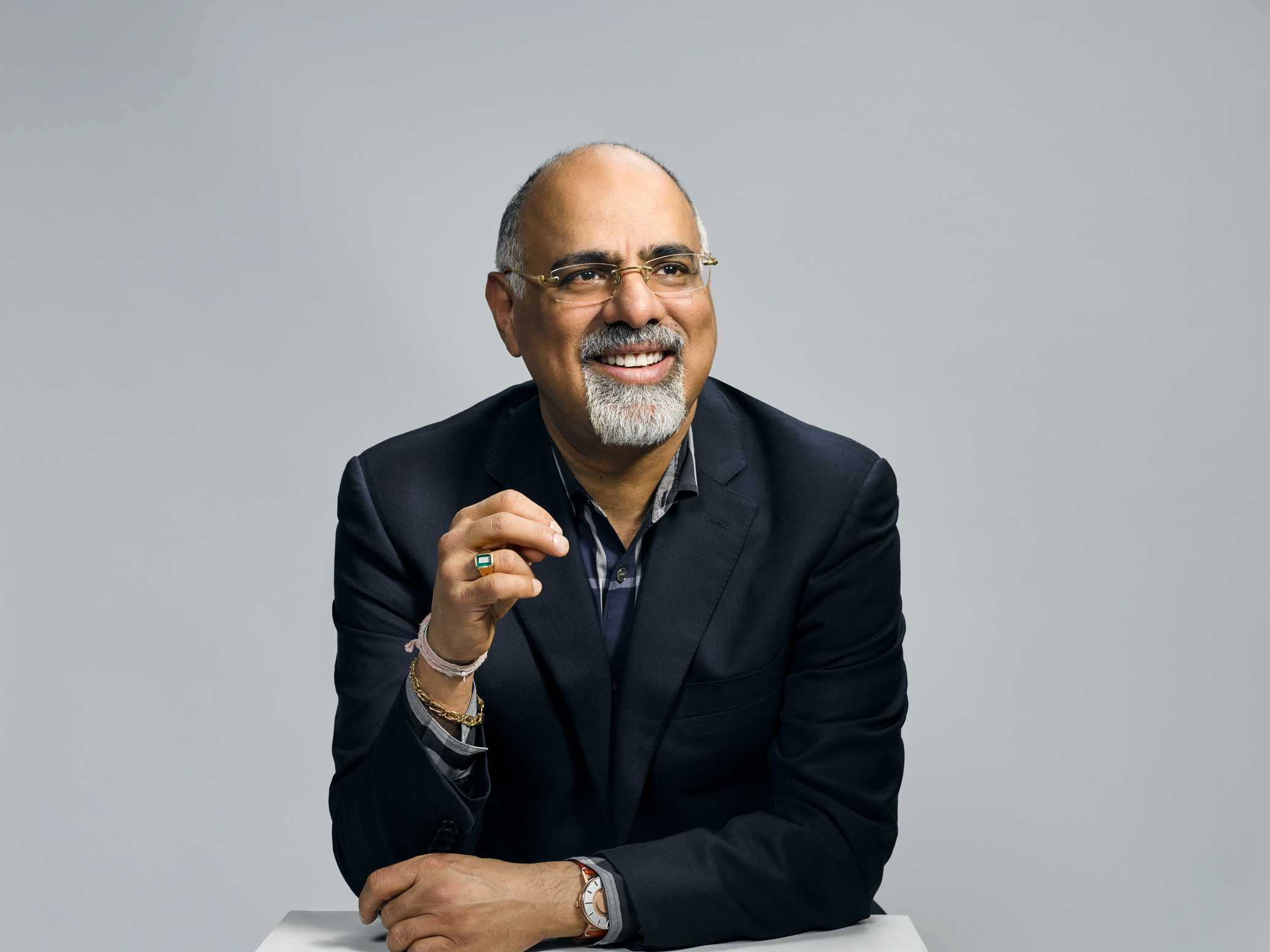
“That is the simple philosophy,” he says. “We have evolved ‘Priceless’ into something much more meaningful – curating experiences at scale, in the places people care about most.”
Curating passion at global scale
Rajamannar says Mastercard’s strategy began with a question: how can the brand become “more deeply embedded in people’s lives”? The answer was to understand human passions, not products.
“We divided people’s lives into 10 areas of interest, which we call passion points,” he explains. “Music, sports, arts and culture, movies, culinary, travel, philanthropy, shopping, environment and sustainability, and health and wellbeing.”
Each passion point becomes a gateway for the company to co-create unique experiences with world-leading partners, from Live Nation and Lady Gaga to film festivals in Cannes, Venice and Panama. The ambition is scale, but also relatability.
“We can’t do it ourselves,” Rajamannar notes. “So we partner with the best – sport teams, global artists, film producers, sports leagues, to curate extraordinary experiences.”
The impact has been profound. “Our brand has climbed from 87th to the 12th most valuable brand in the world,” he says. “And people make the connection between our marketing actions and business outcomes.”
Why Formula One and why McLaren?
The brand’s latest major move is its expanded partnership with McLaren, one of Formula One’s most iconic teams.
“Formula One is the fastest-growing sport in the world,” Rajamannar says. “Forty-two percent of fans are women – that is extraordinarily unique. Millennials and Gen Z are flocking to it, and its global reach is unmatched.”
But for Mastercard, choosing a team was as important as choosing the sport.
“I met with six teams,” he says. “Each was extraordinary, but McLaren had momentum, young and exciting drivers, and a mindset that matched ours. They are technology heavy; we are technology heavy. They are data-driven; we are data-driven.”
He also highlights the personal chemistry with Zak Brown, CEO of McLaren – a former marketing executive himself. “There was instant connection,” he says. “We saw the world the same way.”
The partnership has grown rapidly, culminating in Mastercard becoming McLaren’s official naming partner from 2026 – a rare accolade. “McLaren had resisted taking a title sponsor for years,” notes Rajamannar. “They saw how we engage fans and curate experiences. The results in our first year were so strong that we upgraded the partnership.”
Reimagining fans
Rajamannar rejects the traditional view of a consumer.
“Companies look at customers as consumers – that is 1970s thinking,” he says. “We look at them as people. People with passion are called fans.”
If a brand can elevate fans’ enjoyment of what they already love, he argues, that’s when magic happens.
He offers examples that show ‘Priceless’ is not reserved for high-spending elites. During the pandemic, Mastercard launched online culinary sessions with celebrity chefs. “A family of four joins a Zoom session, learns to cook a signature dish, and receives a digital certificate,” he says. “It becomes a memorable family occasion.”
In music, the company recently created a once-in-a-lifetime experience for Lady Gaga superfans. “We brought 30 fans to New York to learn dance moves from her choreographer,” he shares. “And then the wall opened – Lady Gaga herself walked in. Only 30 people were in the room, but a billion people watched it online.”
These are the moments Mastercard defines as “fan-first”.
The science behind Priceless
Rajamannar is also the architect of quantum marketing, a framework now taught at Harvard and Yale – where he has just been appointed an executive fellow.
“Most marketing today uses theories from the 1960s and ’70s,” he says. “There was no internet, no mobile, no social media, no AI. So we reinvented it.”
Quantum marketing integrates behavioural economics, neuroscience, multi-sensory branding and emerging technologies.
“For example, instead of asking people why they behaved a certain way, which leads to post-rationalisation – neuromarketing lets us study the brain’s responses directly,” says Rajamannar. “We know people better than they know themselves.”
Mastercard has also pioneered sonic branding – the now-famous Mastercard melody and multi-sensorial campaigns that go beyond traditional audio-visual marketing.
Measuring success beyond impressions
Rajamannar insists that Mastercard’s creative flair is matched with equally rigorous measurement.
“We evaluate everything on three dimensions,” he explains. “Does it help our brand grow? Does it help our business grow profitably? And does it build a competitive advantage that others cannot replicate?”
‘Priceless’, he says, has been built into a fortress of platforms, from the Mastercard Design Studio to the Innovation Challenge to Priceless Planet.
“These create a sustainable competitive advantage,” he says. “This is not something that can be copied easily.”
The same standards apply to McLaren. “It is by far one of our biggest sponsorships,” he says. “We activate at all 24 races. It costs a lot, so we must prove it works. The numbers are very strong.”
Lessons for smaller brands
Asked for advice for brands without Mastercard-scale budgets, Rajamannar offers three principles.
“First, understand consumers better than they understand themselves,” he says. “Second, be crystal clear in your strategic direction. Third, execution requires talent – build a fantastic team.”
As for the pitfalls: “Don’t change campaigns too quickly. Marketers get bored faster than customers do. And don’t get left behind. AI is transforming marketing, and you must learn.”
A new chapter and a legacy
After 12 years as CMO, Rajamannar steps into a new strategic role as senior fellow for Mastercard from January, working closely with academic institutions and global business leaders.
“We have done such purpose-driven work – from Stand Up To Cancer to the World Food Programme to the Priceless Planet Coalition,” he reflects. “These are initiatives that move the needle for society in measurable ways.”
He says he feels privileged to continue shaping the future of marketing from a wider vantage point.
“The best is yet to come,” says Rajamannar with a smile.