Connect with us
DAPA Banner

Business

Middle East Escalation Leaves Significant Upside For Oil And Gas Markets

Published

on

Middle East Escalation Leaves Significant Upside For Oil And Gas Markets
Continue Reading
Click to comment

You must be logged in to post a comment Login

Leave a Reply

Business

Energy prices could fall sharply if Iran agrees to deal, energy secretary says

Published

on

Energy prices could fall sharply if Iran agrees to deal, energy secretary says

Energy markets could see a sharp reversal if tensions ease in the Middle East, as officials say a diplomatic breakthrough could quickly restore critical oil flows.

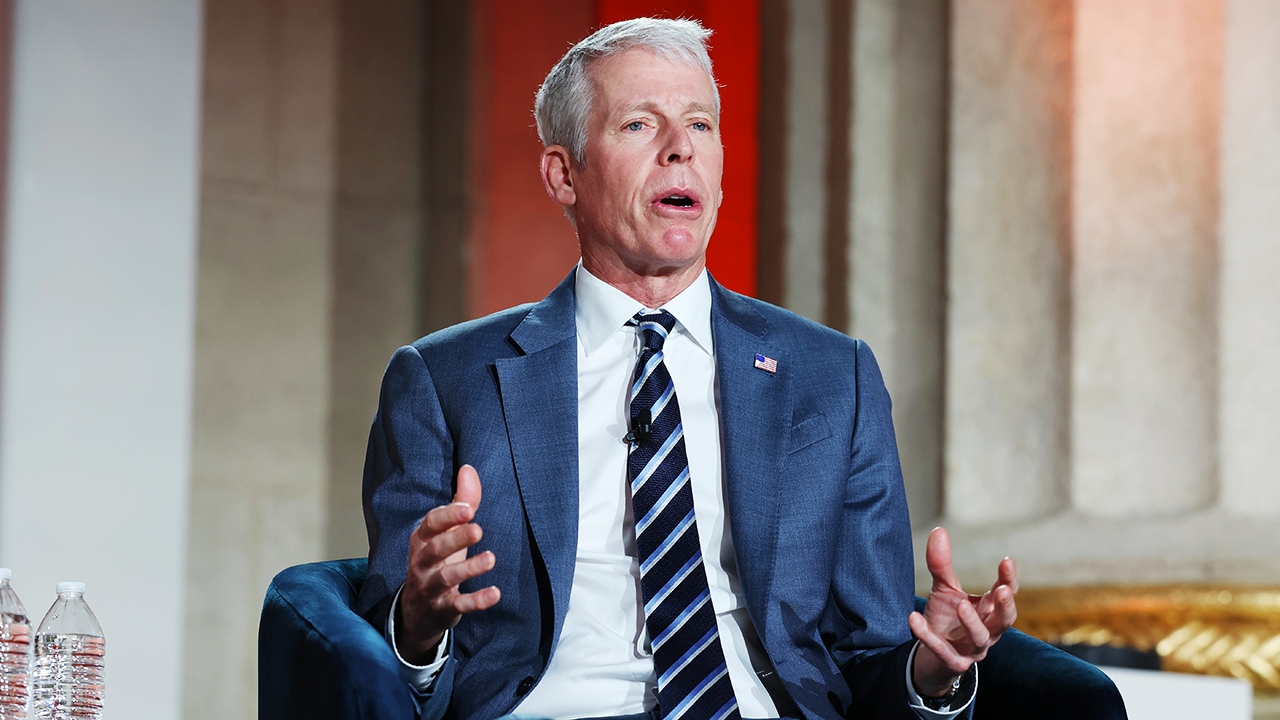
U.S. Energy Secretary Chris Wright joined FOX Business’ Lauren Simonetti on “Varney & Co.” to discuss how a potential agreement with Iran could help reopen the Strait of Hormuz and stabilize prices after weeks of disruption.

Advertisement
U.S. Energy Secretary

U.S. Energy Secretary Chris Wright speaking during a panel.  (Anna Moneymaker/Getty Images / Getty Images)

Wright indicated that energy markets are closely tied to developments in the region, emphasizing how quickly conditions could shift if a deal is reached.

A STATE-BY-STATE LOOK AT GAS PRICES AS IRAN CONFLICT PUSHES OIL HIGHER

“They would go down quite a bit. If we see a pathway to have the Strait of Hormuz open soon and energy flowing again, you’d see energy prices drop pretty significantly,” Wright said.

The comments come as global markets react to constrained movement through one of the world’s most critical energy chokepoints, where even temporary disruptions have pushed fuel costs higher for consumers.

Wright suggested the path forward depends on whether Iran is willing to de-escalate and negotiate.

KEVIN O’LEARY FORECASTS GLOBAL POWER SHIFT IN STRAIT OF HORMUZ AS IRAN CONFLICT RATTLES OIL MARKETS

“That could happen if a peace agreement is reached… If Iran thinks enough is enough, and they’re willing to make a deal… Then there’ll be a deal,” Wright said.

Advertisement

For now, officials say short-term market volatility is expected as the situation continues to develop.

CLICK HERE TO DOWNLOAD THE FOX NEWS APP

Advertisement
Continue Reading

Business

Toyota to Invest $1 Billion in Kentucky, Indiana Operations

Published

on

Toyota to Invest $1 Billion in Kentucky, Indiana Operations

Toyota 7203 -2.23%decrease; red down pointing triangle Motor will invest $1 billion in its Kentucky and Indiana manufacturing operations as part of the company’s pledge to invest up to $10 billion in the U.S.

The investment includes $800 million to prepare its Kentucky plant for Toyota’s second battery electric vehicle, as well as to increase capacity for Camry and RAV4 assembly lines, the Japanese automaker said Monday.

Copyright ©2026 Dow Jones & Company, Inc. All Rights Reserved. 87990cbe856818d5eddac44c7b1cdeb8

Continue Reading

Business

Porridge recalled months after mouse contamination

Published

on

Porridge recalled months after mouse contamination

Moma Foods says a third-party facility found “a mouse contamination event” last autumn.

Continue Reading

Business

Form 6K ELDORADO GOLD CORP /FI For: 23 March

Published

on


Form 6K ELDORADO GOLD CORP /FI For: 23 March

Continue Reading

Business

Form 6K Lloyds Banking Group plc For: 23 March

Published

on


Form 6K Lloyds Banking Group plc For: 23 March

Continue Reading

Business

Acquisitive investor Meraki Capital buys TBC Recruitment in its fifth deal in three months

Published

on

Business Live

TBC trades as CSP and Vital People

Nick Gordon, founder of Meraki Capital.

Nick Gordon, founder of Meraki Capital(Image: Meraki Capital)

A recruitment firm with bases across the North and the Midlands has been taken over by acquisitive investor Meraki Capital in its fifth deal of the year so far.

Meraki Capital has acquired Chester-based TBC Recruitment, which trades as CSP and Vital People, for an undisclosed amount. It will move those companies into its Magnus Search brand, which it acquired last year.

Magnus is being built up through a series of acquisitions led by MD Bradley Wood. The new deal means it will have access to an £8 million funding facility.

TBC Recruitment specialises in recruitment in sectors including warehousing, food production, logistics, distribution and basic manufacturing. The business has 31 members of staff, all of whom will transfer to the firm’s new owners, and more than 650 temporary workers across its client base. CSP Rectuitment’s website lists contacts across the North and Midlands, including in Doncaster, Leicester, Nottingham and Tamworth.

Advertisement

TBC founder Jason Fox had been looking towards “semi-retirement” and that transition will continue under the group’s new ownership under its existing management team.

Nick Gordon, founder of Meraki Capital, said: “As with so many recruitment companies right now, the company has struggled to keep up with wage inflation, increased National Insurance costs and the broader rise in employment costs. This industry is at a precipice – these traditionally low-margin blue-collar recruiters are being hammered by this Government. But these great companies cannot just disappear, losing all these jobs with them.

“We see that TBC is fundamentally a strong business with a loyal client base and a highly experienced team. Bringing TBC under the Magnus brand allows us to provide the resources, technology and commercial support needed to help the business become profitable again and realise its full potential.”

Mr Fox said: “I’m really very pleased and excited for TBC’s next steps. We’ve worked hard and grown into a wonderful team. But my time is now to move away for the new talent to take over.

Advertisement

“Nick has offered me a solution in order to continue the business under new ownership without my team being affected. It’s an exciting future for them all, which I will watch from afar with great confidence and pride.”

Continue Reading

Business

States where gas prices are rising as Iran conflict boosts oil

Published

on

Iran warns oil could hit $200 per barrel as US, IEA release emergency reserves

Americans are paying more for gas nationwide, with some states hit harder than others as the Iran conflict drives oil prices higher.

The national average is now $3.95 per gallon, up $1.02 from a month ago, according to AAA.

Advertisement

Prices are climbing across nearly every region, with some states already well above the national average. On the West Coast, drivers are seeing the highest costs, with prices reaching $5.79 per gallon in California and $5.27 in Washington.

OIL, GAS PRICES JUMP AS TRUMP FLIRTS WITH STRIKING IRANIAN OIL INFRASTRUCTURE

Along the East Coast, gas prices are approaching or exceeding $3.70 in several areas, including $3.86 in New York and $3.80 in Maine.

In the Midwest, Illinois stands out at $4.16 per gallon, while much of the region remains closer to the mid-$3 range. Southern states are generally lower, though still rising, with Texas at $3.62 and Florida at $3.93.

Advertisement

THE UNLIKELY TOOL TRUMP IS EYEING TO TACKLE RISING OIL PRICES AMID THE IRAN CONFLICT

A man stands at a gas station.

Gas prices are climbing across nearly every region in the United States due to the ongoing conflict in the Middle East. (Justin Sullivan/Getty Images)

Diesel is outpacing gasoline due to its link to freight and industry, meaning increases can ripple through supply chains and raise costs. It averaged $5.28 a gallon, up $1.69 over the same period, according to AAA.

The surge comes as traders closely watch the Strait of Hormuz, a critical global energy chokepoint where tanker traffic has slowed to a crawl as tensions intensify.

TRUMP PROMISED LOWER COSTS; THE IRAN CONFLICT NOW THREATENS THAT PLEDGE

Advertisement
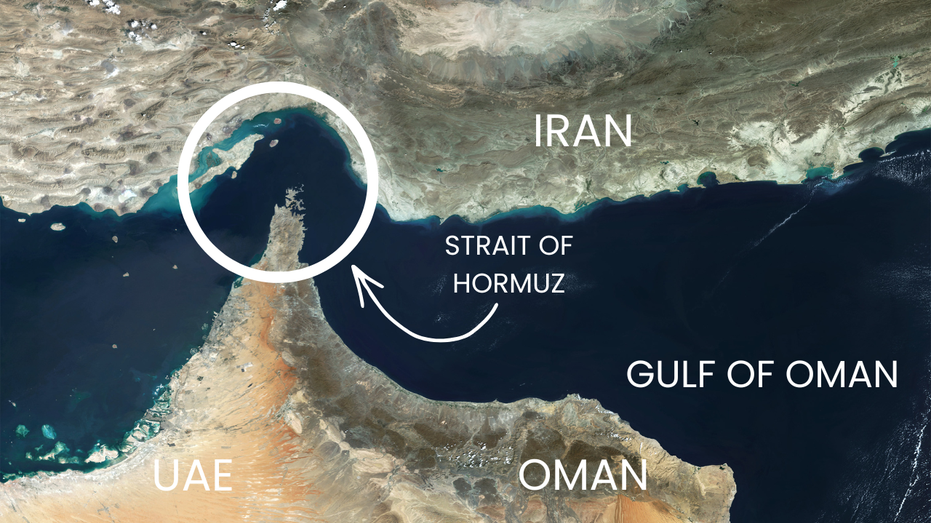
Satellite view showing the Strait of Hormuz connecting the Persian Gulf to the Gulf of Oman

A satellite image shows the Strait of Hormuz, a key maritime passage connecting the Persian Gulf to the Gulf of Oman, vital for global energy supply. (Amanda Macias/Fox News Digital)

Just 21 miles wide at its narrowest, the waterway between Iran, the United Arab Emirates and Oman carries roughly 20 million barrels of oil per day and about one-fifth of global liquefied natural gas, along with significant volumes of jet fuel.

GET FOX BUSINESS ON THE GO BY CLICKING HERE

For U.S. drivers, prices could keep climbing just as summer travel and road trip season begins.

Advertisement
Continue Reading

Business

Reducing Downtime and Repair Costs

Published

on

Brussels is resisting an “urgent plea” for the European Union to extend zero-tariff Brexit trade rules on electric vehicles amid car industry concerns over a deadline of New Year’s Day that could lead to job losses.

Traditional vehicle maintenance has operated on two basic models for decades: wait until something breaks, or service everything on fixed schedules regardless of its actual need. Both methods waste money and also create problems.

Reactive maintenance means dealing with breakdowns when they happen. A delivery truck breaks down on a busy highway. A rental car leaves customers alone. A fleet vehicle costs thousands in emergency repairs because a small issue turned into a major failure.

Time-based maintenance tries to stop this by servicing vehicles at set intervals – oil changes every 5,000 miles, brake inspections every six months, tire rotations on schedule. But this often leads to either under-maintaining vehicles that need attention earlier, or over-maintaining vehicles that could run longer without the need of any service.

Both approaches share the same important flaw: they don’t include and retain the actual condition of the vehicle. A truck that carries heavy loads on rough roads needs more periodic attention than one making light deliveries on smooth highways.

Predictive maintenance powered by AI vehicle inspections gives us a smarter method. Instead of guessing when vehicles need service or sticking to strict schedules, this technology keeps the vehicles for only when needed based on actual wear and condition. The result is less breakdowns, lower costs, and vehicles that last much longer.

Advertisement

What is Predictive Maintenance?

Predictive maintenance makes the use of real-time data, AI models, and pattern recognition to spot the possible problems before they lead to any failures. Instead of fixed schedules, it depends on dynamic vehicle condition data to understand when maintenance is really needed.

This data mix makes predictions about when specific components are likely to fail. The system might understand and find that a particular vehicle’s brake pads will need replacement in 2,000 miles based on current wear patterns, driving conditions, and historical data from similar vehicles.

The key difference from traditional approaches is timing. Instead of changing brake pads every 30,000 miles regardless of condition, or waiting until they fail completely, predictive maintenance schedules replacement exactly when needed. This prevents both premature replacement and unexpected failures.

Machine learning makes these predictions increasingly accurate over time. As the system processes more data from more vehicles, it gets better at understanding the early warning signs and predicting failure timelines with greater precision.

Advertisement

Role of AI-Powered Vehicle Inspections

Computer vision technology has an essential role in predictive maintenance by studying and analyzing the images and videos to understand early signs of wear and problems. These AI models can spot issues that human inspectors might miss or evaluate inconsistently.

The technology is really good at identifying subtle visual indicators of developing problems. Tire wear patterns that suggest alignment issues, small cracks in body panels that could lead to structural problems, fluid stains that show signs of leaks, or paint deterioration that might signal corrosion below.

AI models can flag anomalies that don’t yet affect vehicle function but signal future failures. A slight bulge in a tire sidewall, barely visible discoloration around a seal, or minor panel misalignment that suggests mounting hardware is loosening.

One major advantage is remote inspection capability. Instead of needing the technicians to manually check every vehicle, operators can include images using smartphones or fixed camera stations. The AI processes these images immediately, flagging vehicles that need attention while clearing others for continued operation.

Advertisement

The system learns from every inspection, building a database of visual patterns which are connected with different failure modes. This allows it to recognize early-stage problems that might take human inspectors years of experience to identify consistently.

Visual inspection data combines with other sensor inputs to create comprehensive condition assessments. A vehicle might show normal engine performance data but reveal concerning wear patterns in visual inspections, or vice versa. The AI connects these different data streams to keep the maintenance needs accurate.

Benefits of Predictive Maintenance Using AI

Lower Repair Costs

Catching minor issues early stops them from escalating into major, expensive problems. A small oil leak detected early might need just a simple seal replacement. Left ignored, it could lead to engine damage which might cost thousands of dollars.

The technology helps avoid emergency repairs, which typically cost much more than planned maintenance. Emergency service calls, after-hours labor rates, and expedited parts delivery all add major costs that predictive maintenance helps to remove.

Advertisement

Optimized Maintenance Scheduling

AI helps to give importance to the vehicles that need immediate attention versus those that can wait. This optimization increases workshop efficiency by decreasing unnecessary inspections while also making sure that the critical issues get addressed promptly.

Maintenance teams can plan their work more effectively when they know exactly which vehicles need service and what type of work is needed. This reduces idle time and improves technician productivity.

Improved Vehicle Lifespan

Timely maintenance keeps vehicles operating at a good pace throughout their service life. Components that get attention based on actual condition instead of the arbitrary schedules tend to last longer and perform even better.

Vehicles maintained using predictive approaches often achieve higher resale values because their condition documentation shows consistent, appropriate care throughout their operational life.

Advertisement

Industries Benefiting from AI-Powered Predictive Maintenance

Several industries are seeing significant value from implementing AI-powered predictive maintenance systems, each with specific operational benefits.

Fleet management automation companies use the technology to reduce downtime and lower maintenance overhead costs. With hundreds or thousands of vehicles to maintain, even small improvements in maintenance efficiency create a good amount of savings. The power to prioritize maintenance needs across large fleets helps to optimize resource allocation and workshop scheduling.

Rental and leasing companies benefit from maintaining vehicle quality without interrupting rental cycles. Predictive maintenance helps to make sure that the vehicles remain available for customers while preventing the breakdowns that create customer service nightmares and emergency replacement costs.

Logistics providers depend on high vehicle uptime to meet delivery commitments and service level agreements. Unexpected breakdowns can spread through entire delivery networks, leading to delays and customer dissatisfaction and distrust. Predictive maintenance helps to make sure that the vehicles remain operational when it is needed the most.

Advertisement

EV and connected vehicle platforms leverage both sensor data and visual inspection information for incorporated upkeep programs. These vehicles generate extensive operational data that, combined with AI visual inspections, creates extensive health monitoring systems.

Integration into Operations

AI inspection tools integrate into existing operational workflows through multiple deployment options that fit different business models and operational requirements.

Vehicle intake processes can include AI inspections to assess conditions when vehicles return from the service. This immediate study helps identify any damage or wear that has been caused during use, making sure of the prompt attention before problems deteriorate further.

Conclusion

Predictive maintenance through AI vehicle inspections conveys a fundamental shift in how vehicle operations approach maintenance and repair. Instead of depending on arbitrary schedules or waiting for failures to occur, this technology allows maintenance decisions based on the actual vehicle condition and predictive analytics.

Advertisement

As AI technology continues growing and the integration becomes easier, predictive maintenance will become the standard procedure for professional vehicle operations. The companies adopting these systems today are positioning themselves for long-term advantages that will become difficult for the competitors to match.

By stopping breakdowns and optimizing service timing, AI-powered predictive maintenance helps the businesses to operate more effectively while also increasing vehicle life and reducing total cost of ownership. This technology changes the maintenance from a necessary cost center into a strategic operational advantage.

Advertisement
Continue Reading

Business

HDFC Bank crisis: Sebi says independent directors must act responsibly, back up insinuations

Published

on

HDFC Bank crisis: Sebi says independent directors must act responsibly, back up insinuations
In the wake of the HDFC Bank crisis triggered by chairman Atanu Chakraborty’s surprise quitting, Sebi chairman Tuhin Kanta Pandey on Monday said independent directors need to act responsibly, and back up any insinuations with evidence.

In comments that came days after problems at the largest private-sector lender, Pandey said independent directors like Chakraborty play a very important role in protecting minority shareholders’ interests on the board and outlined the process for voicing concerns as per the statutes.

Chakraborty resigned, citing concerns about values and ethics, which led to widespread worries about governance at the systemically important bank and a sharp correction in its stock prices as investors became wary.

Reading from the code of conduct for independent directors (ID), Pandey said any concern about the functioning of a company or a proposed action needs to be taken up with the board, and if the same is not resolved, include the same in the minutes of the board meeting.

Advertisement

Pandey said the IDs need to “act responsibly”, and added that they cannot keep things “vague”.


“Obviously, no one is expected to make any insinuations without proper evidence and recording because this has an impact on the minority shareholders’ interests. The independent directors have to be actually responsible in terms of whatever they say and record,” he said.
Declining to spell out Sebi’s stance in the matter, Pandey stuck to reading the statutes but added that the capital markets regulator will go into whatever is there on the record. “Strategic detail of an investigation cannot be discussed in a press conference,” Sebi’s whole-time member Kamlesh Varshney said.

Pandey admitted that IDs have explicit powers to question a company and so on, including at forums like the audit committee or the remuneration committees, they need to be responsible and ensure minority investor interest is protected.

It can be recalled that the HDFC Bank board members, including the chief executive and managing director Sashidhar Jagdishan, have said that they were “baffled” by Chakraborty’s actions because the former bureaucrat from the Gujarat cadre did not back up his claims.

Pleas to relook at the words in the resignation letter, where Chakraborty cites concerns on ethics and values, were also ignored, as per the directors.

Advertisement

Three senior executives have been sacked by the bank in the immediate aftermath of the resignation for mis-selling.

Continue Reading

Business

Jon DiPietra on Valuing New York’s Landmark Real Estate

Published

on

Jon DiPietra on Valuing New York’s Landmark Real Estate

Jon A. DiPietra is a commercial real estate valuation executive based in New York City and the co-founder and Executive Vice President of H&T Appraisal, the valuation division of Horvath & Tremblay.

With more than two decades of experience, he has built a reputation for disciplined analysis, leadership, and a deep understanding of complex property markets.

DiPietra was born in New York City and spent his early years in New Jersey before moving to upstate New York, where he attended Shaker High School. He later studied accounting and finance while living in Burlington, Vermont. He eventually returned to New York City and began his career as an equity trader, gaining first-hand insight into how financial markets operate.

He later transitioned into real estate valuation as a residential appraiser and quickly developed a strong interest in the field. The work required problem-solving, research, and careful judgment. Over time, he moved into commercial appraisal, valuing apartment buildings, mixed-use properties, retail centres, industrial facilities, and office towers.

As his experience grew, DiPietra worked on some of New York City’s most prominent assets, including the New York Times Building and several World Trade Center properties. He later led the New York office of a major real estate services firm, managing a team of 40 professionals and overseeing thousands of appraisal reports annually.

Advertisement

Today, as co-founder of H&T Appraisal, he is focused on building a national valuation practice while continuing to contribute to the commercial real estate industry through disciplined analysis and a commitment to lifelong learning.

Q: Let’s start at the beginning. What first drew you into the world of finance and real estate?

I grew up between New Jersey and upstate New York, and I was always curious about how businesses and markets worked. After finishing school, I moved to Burlington, Vermont, where I studied accounting and finance while also spending some time pursuing music. It was a fun period of life, but eventually I realised I wanted to focus on business. I moved back to New York City and began working as an equity trader. That experience was important. It gave me a front-row seat to how markets behave in real time.

Q: What made you transition from trading to real estate valuation?

Trading taught me how markets price risk, but I was drawn to work that involved deeper analysis and problem-solving. I entered the real estate valuation field as a residential appraiser. I quickly found that the work suited me. Every assignment required research and careful judgment. No two properties were exactly the same. That variety kept the work interesting.

Q: How did your career evolve from residential work into commercial valuation?

After gaining experience in residential appraisal, I began working on commercial assignments. I started with smaller properties such as apartment buildings and mixed-use assets. Over time, the work became more complex. I moved into retail centres, industrial facilities, and office buildings. The commercial side of the industry demands a broader understanding of markets, leases, and capital structures. It pushed me to keep learning.

Advertisement

Q: You’ve appraised some of New York City’s most recognisable buildings. What is different about valuing landmark assets?

Landmark properties come with varying levels of complexity. When you appraise a building like the New York Times Building or properties within the World Trade Center complex, the scale is enormous. These assets involve sophisticated ownership structures, major corporate tenants, and global investor attention. A small change in an assumption can significantly affect value. That means the analysis has to be extremely disciplined.

Q: What does that process actually look like behind the scenes?

It involves a lot of research. You are studying lease structures, tenant credit quality, operating costs, and market trends. You are also reviewing comparable sales and rental data. In a city like New York, even a few blocks can make a difference in value. Understanding those micro-markets is critical. The work requires patience and precision.

Q: At one point, you led a large appraisal team in New York. What was that experience like?

Leading a team changes your perspective. I managed a group of about 40 professionals who produced thousands of appraisal reports each year. When you operate at that scale, systems and standards become very important. You need a consistent methodology and strong internal review processes. Leadership in that environment is about maintaining quality while helping people develop their own skills.

Q: You later co-founded H&T Appraisal. What motivated that step?

After many years in the industry, I felt ready for a new challenge. Launching a firm allowed me to focus on building something from the ground up. The goal has been to create a valuation practice that combines disciplined analysis with strong professional standards. We are working to expand coverage nationally while maintaining the technical quality that clients expect.

Advertisement

Q: The real estate market has changed significantly over the years. How do you keep up with those shifts?

You have to stay curious. Markets evolve constantly. Interest rates change. Demand patterns shift. Technology influences how buildings are used. I spend a lot of time reading market research, economic reports, and historical analysis. The more context you have, the better you can interpret what is happening today.

Q: You’ve mentioned curiosity several times. Why is that important in valuation work?

Valuation is not just a formula. It involves judgement. Two professionals can review the same data and arrive at slightly different conclusions. What matters is whether your reasoning is supported by evidence. Curiosity helps you ask better questions. It pushes you to examine assumptions rather than accept them at face value.

Q: Outside of work, what keeps you grounded?

I enjoy skiing and riding enduro motorcycles. Both activities require focus and balance, which is not very different from business. You have to pay attention to your surroundings and adjust quickly when conditions change. I also spend time reading about art, history, and anthropology. Those subjects provide perspective on how cities and societies evolve over time.

Q: When you look at your career so far, what stands out most to you?

The variety. Real estate valuation gives you a unique view into how cities grow and how markets function. One week, you may be studying a small mixed-use property. Next, you may be analysing a major office tower. That constant change keeps the work engaging.

Advertisement

Q: Finally, what advice would you give someone entering the field today?

Stay curious and stay disciplined. Learn the fundamentals of analysis, but also pay attention to how markets behave in the real world. Real estate is a long-cycle business. If you commit to understanding it deeply and continue learning, the opportunities tend to follow.

Advertisement
Continue Reading

Trending

Copyright © 2025