Connect with us
DAPA Banner

Business

Morrisons ‘alert’ to impact of Middle East conflict on customers

Published

on

Business Live

The supermarket chain said economic conditions are ‘tough’ for its customers

WELLS, UNITED KINGDOM – MAY 19: The Morrisons supermarket logo is displayed outside a branch of the supermarket retailer Morrisons on May 19, 2024 in Wells, England. The British retailer is one of the largest market leaders of groceries in the UK. (Photo by Matt Cardy/Getty Images)

Supermarket chain Morrisons said it is “alert” to the impact of the Iran war on consumer confidence and its supply chain after reporting stronger recent sales. The Bradford-based group said it is “tough for customers right now” and committed to further investment in pricing to support shoppers.

Boss Rami Baitieh said the business is assessing how shopping habits and the supply of products might be affected by the conflict in the Middle East. The business revealed sales grew over the past three months, driven by a “much-improved Christmas” performance.

He said: “We are watching current international events closely, alert to the impacts on consumer confidence and supply chains, and we will continue to do what we can to mitigate effects on our customers.”

The retailer said total sales rose 2.6% to £4.1 billion for the 13 weeks to January 25, compared with a year earlier. Group like-for-like sales were 2.8% year-on-year, it said.

Advertisement

Morrisons said it saw sales volumes grow on the back of “investment in lower prices” amid a period of intense competition between UK grocers. Under the leadership of Mr Baitieh, the retailer has sought to fight off pressure from discount rivals Aldi and Lidl, as well as price-focused strategies from other major grocers including Tesco, Sainsbury’s and Asda.

The retailer said it delivered £49m of cost savings during the quarter as it continues a transformation programme.

Mr Baitieh, chief executive of the business, said: “Against a highly competitive backdrop, with grocery market growth lagging previous expectations, we achieved our targets in Q1, delivering our 13th quarter of like-for-like sales growth. We know it’s tough for customers right now and we’re doing everything we can to offer them better value and give them more reasons to shop at Morrisons.

“That means continuing to invest in price, promotions and loyalty, concentrating on driving value where it matters most for our customers.

Advertisement

Earlier this year, Morrisons warned warned staff that it was not planning to offer significant pay rises this year as it swallows higher costs.

Continue Reading
Click to comment

You must be logged in to post a comment Login

Leave a Reply

Business

JetBlue expands Fort Lauderdale hub with more flights starting July

Published

on

JetBlue expands Fort Lauderdale hub with more flights starting July

JetBlue said on Thursday that it’s adding a new route to its offerings while also adding more flights out of one of the low-cost carrier’s Florida hubs starting this summer.

The company announced that it will expand its offerings at Fort-Lauderdale-Hollywood International Airport, including a new route to Cleveland, Ohio, that will offer daily service starting on July 8.

Advertisement

Several existing domestic routes to and from Fort Lauderdale will see additional flight options for travelers starting when the changes take effect on either July 8 or 9.

JetBlue is adding one daily flight to each of Atlanta, Newark, Jacksonville, Las Vegas and Philadelphia. The Atlanta and Newark routes will each have four daily flights, while both Las Vegas and Philadelphia will have three per day and Jacksonville will have two. JetBlue will also add two more weekly flights to Norfolk, which will boost the frequency to once a day.

JETBLUE FLIGHT TURNS BACK AFTER STRIKING A COYOTE ON THE RUNWAY: ‘WE THOUGHT IT WAS A JOKE’

JetBlue passengers

JetBlue is expanding its service offerings from Fort Lauderdale-Hollywood International Airport starting this summer. (Joe Raedle/Getty Images)

International flights to destinations in the Caribbean will also see a boost under the change. Aruba will see four more weekly flights, up to once a day. 

Advertisement

An additional daily flight to Santo Domingo, Dominican Republic, will increase the frequency to twice a day, while three more weekly flights to St. Maarten will leave that route with daily service from Fort Lauderdale.

Ticker Security Last Change Change %
JBLU JETBLUE AIRWAYS CORP. 4.51 -0.24 -5.05%

JETBLUE EXPANDS FLORIDA SERVICE, ADDS MORE INTERNATIONAL ROUTES

“These latest additions reflect our ongoing strategy to build an undeniably strong and relevant network in Fort Lauderdale by adding both new destinations and more frequencies where our customers want to fly,” said Daniel Shurz, senior vice president of revenue, network and enterprise planning at JetBlue.

“As we continue to grow in Fort Lauderdale, we’re offering customers more choice, more flexibility and a more connected network,” Shurz added.

Advertisement

JetBlue’s move comes after it signaled earlier this month that it’s on track to deliver $850 to $950 million in incremental operating profit by 2027 due to its JetForward plan, which seeks to curb costs, expand its network and improve services for travelers over the long term.

UNITED AIRLINES, JETBLUE PARTNERSHIP GETS TRUMP ADMIN CLEARANCE TO FLY

LOS ANGELES, CALIFORNIA - JANUARY 03: A JetBlue plane taxis after landing as a United plane takes off at Los Angeles International Airport (LAX) on January 03, 2025 in Los Angeles, California. JetBlue has been fined $2 million by the Department of Transportation for ‘operating multiple chronically delayed flights’ which marks the first time an airline has received such a penalty. (Photo by Mario Tama/Getty Images)

JetBlue and United announced a partnership last year. (Mario Tama / Getty Images)

The airline is about two years removed from calling off a $3.8 billion merger with Spirit Airlines, after a federal judge blocked the proposed tie-up over the potential competitive impact and antitrust concerns.

JetBlue and United Airlines announced a partnership last year that allows travelers to book flights on both carriers’ websites and interchangeably earn and use points in their frequent flyer programs.

Advertisement

GET FOX BUSINESS ON THE GO BY CLICKING HERE

Under the partnership, JetBlue also agreed to provide United access to slots at New York City’s congested JFK International Airport for up to seven daily round-trip flights starting in 2027.

Reuters contributed to this report.

Advertisement
Continue Reading

Business

Haidt warns tech companies face ‘karma’ over harm to children

Published

on

Haidt warns tech companies face ‘karma’ over harm to children

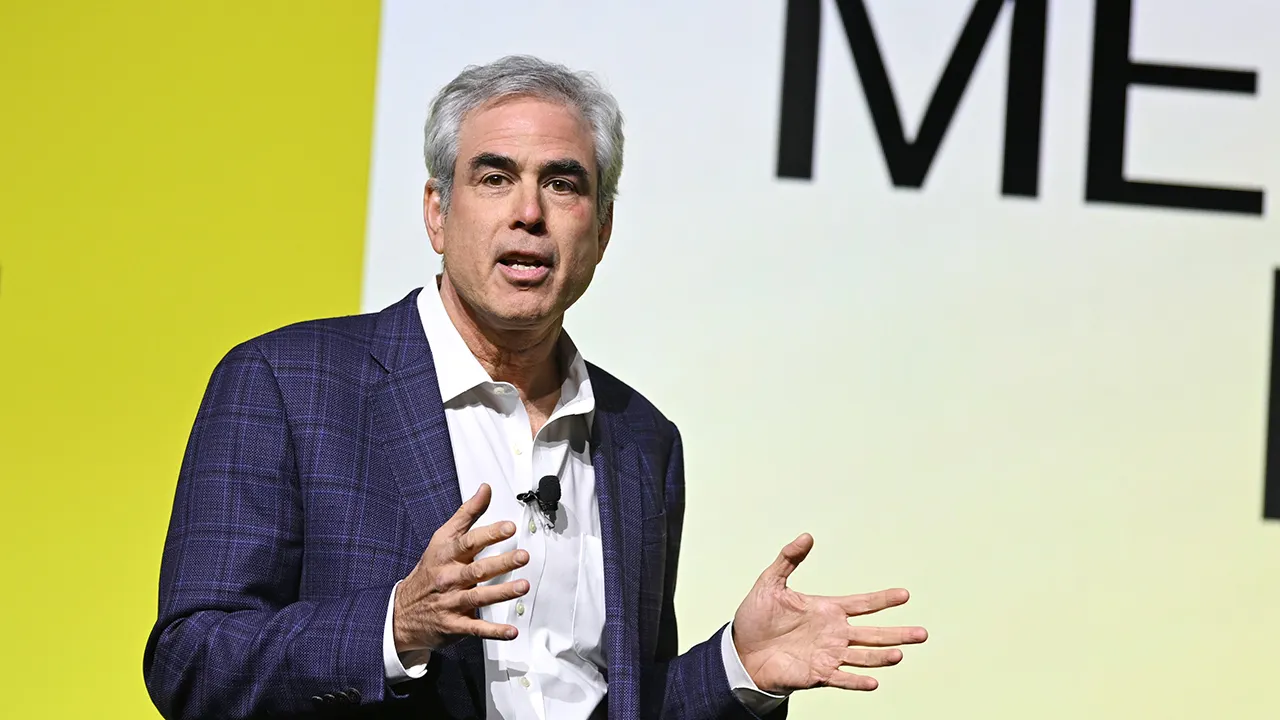
Jonathan Haidt, a social psychologist and author of “The Anxious Generation,” says mounting concerns over social media’s impact on children have hit a “turning point.”

Speaking Thursday on FOX Business’ “The Big Money Show,” Haidt pointed to a closely watched social media trial, citing internal Meta communications in which employees described Instagram as “a drug” and acknowledged they were “basically pushers.”

Advertisement

“What we learned is that the companies really behaved abominably,” Haidt said. “Congress created the problem, and now I’m thrilled to see tweets and statements from senators and congressmen [from] both parties saying, ‘We’ve got to do something about this.’”

JURY FINDS META, GOOGLE LIABLE IN LANDMARK SOCIAL MEDIA ADDICTION TRIAL, AWARDS MORE THAN $6M IN DAMAGES

Psychologist Jonathan Haidt

Jonathan Haidt at Project Healthy Minds’ World Mental Health Day Festival held at Spring Studios on Oct. 10, 2025 in New York, New York. (Kristina Bumphrey/Variety via Getty Images / Getty Images)

Haidt said the recent jury verdict could mark the beginning of a much larger wave of litigation.

“We believe that there are literally millions of victims,” Haidt said. “… Hundreds of kids are dead.”

Advertisement

With “millions of potential plaintiffs,” he warned, the financial consequences for tech companies could be enormous.

“I think we’re looking at a giant case of karma coming for these companies,” Haidt said. “They were able to exploit kids for decades and now their deeds are catching up with them.”

He argued the crisis was shaped in part by decades-old policy decisions.

META ORDERED TO PAY $375M AFTER JURY FINDS PLATFORM ENABLED CHILD PREDATORS IN LANDMARK NEW MEXICO CASE

Advertisement
social media

Social media apps are seen in this photo illustration. ( Matt Cardy / Contributor / Getty Images)

Haidt pointed to laws like Section 230 of the Communications Decency Act, which shields platforms from liability, and federal rules that allow companies to collect data from users who simply claim to be over 13.

However, public awareness is shifting — driven in part by recent jury verdicts and policy changes abroad, according to Haidt.

“We are at a turning point,” he said. “There is now a global understanding that this stuff is just wildly inappropriate for children.”

On Wednesday, a Los Angeles jury found Meta and Google liable in a case accusing the companies of designing addictive products for young users, awarding the plaintiff $6 million in damages.

Advertisement

Google and Meta both told FOX Business they plan to appeal the verdict.

SOCIAL MEDIA TRIAL VERDICT: WHAT HAPPENS NOW, HOW MUCH WILL TECH GIANTS REALLY PAY?

The family of victims raise photographs outside Social Media Trial

Family members of victims outside Los Angeles Superior Court after a jury verdict Wednesday, March 25, 2026, in Los Angeles. (Kayla Bartkowski / Los Angeles Times via Getty Images / Getty Images)

In a separate case, a New Mexico jury on Tuesday ordered Meta to pay $375 million after finding the company misled users about platform safety and allegedly enabled child sexual exploitation.

GET FOX BUSINESS ON THE GO BY CLICKING HERE

Advertisement

Meanwhile, Australia implemented a landmark law in December banning users under 16 from holding social media accounts — one of the strictest online safety measures globally.

“We parents can’t deal with this on our own,” Haidt said. “We’re all having the same fight with our kids.”

Fox News Digital’s Jasmine Baehr, Louis Casiano and Ashley Carnahan contributed to this report.

Advertisement
Continue Reading

Business

Yeahka Limited (YHEKF) Q4 2025 Earnings Call Transcript

Published

on

OneWater Marine Inc. (ONEW) Q1 2026 Earnings Call Transcript

Yeahka Limited (YHEKF) Q4 2025 Earnings Call March 26, 2026 8:00 AM EDT

Company Participants

Vincent Chan
Yingqi Liu – Executive Chairman & CEO
Zhijian Yao – Executive Director & CFO

Conference Call Participants

Advertisement

Yi Jing Wei – Citigroup Inc., Research Division
Johnny Xie – Deutsche Bank AG, Research Division
Yuxuan Chen – Huatai Securities Co., Ltd., Research Division

Presentation

Operator

Advertisement

Ladies and gentlemen, good day, and welcome to Yeahka Limited 2025 Annual Results Announcement Call. [Operator Instructions]. Please be advised that today’s conference is being recorded.

I’ll now pass the call to Mr. Vincent Chan, Head of Corporate Development and Capital Markets of Yeahka. Please go ahead, sir.

Vincent Chan

Advertisement

Thank you, and hello, everyone. Welcome to Yeahka’s 2025 Annual Results Conference Call. Before we start, we would like to remind you that this presentation includes forward-looking statements that involve a number of risks and uncertainties. Information on general market conditions comes from a variety of sources outside of Yeahka’s control. Please refer to our disclosure documents on our website’s IR section for a detailed discussion of risk factors.

Now let me introduce the management team on today’s call. Luke Liu, our Founder, Chairman and CEO, will kick off with a short overview. I will then provide a business review. John Yao, our CFO, will conclude with a financial review translated by Derek Lai, our Director of Finance, before we open the floor for questions.

Without further ado, I will now turn the call over to Luke.

Advertisement

Yingqi Liu
Executive Chairman & CEO

Thank you, Vincent. Hello, everyone. In 2025, we reached our product line and the commercialization to a new level. Core EBITDA rose 52.7% year-over-year. It expected rise of around 50% in 2024 versus 2023 in core EBITDA — sorry.

Overseas expansion delivered another year of exponential growth. AI

Advertisement
Continue Reading

Business

REX American Resources Corporation (REX) Q4 2025 Earnings Call Transcript

Published

on

OneWater Marine Inc. (ONEW) Q1 2026 Earnings Call Transcript

REX American Resources Corporation (REX) Q4 2025 Earnings Call March 26, 2026 11:00 AM EDT

Company Participants

Douglas Bruggeman – VP of Finance, CFO & Treasurer
Stuart Rose – Executive Chairman & Head of Corporate Development
Zafar Rizvi – CEO, President & Director

Conference Call Participants

Advertisement

Peter Gastreich – Water Tower Research LLC
Mason Bourne

Presentation

Operator

Advertisement

Good morning, and welcome to the REX American Resources Fourth Quarter and Full Fiscal Year 2025 Conference Call. As a reminder, today’s call is being recorded. [Operator Instructions]

I would now like to turn the call over to Mr. Doug Bruggeman, Chief Financial Officer of REX American. Please go ahead.

Douglas Bruggeman
VP of Finance, CFO & Treasurer

Advertisement

Good morning, and thank you for joining this morning’s call. I have joining me on the call today, Stuart Rose, REX’ Executive Chairman; and Zafar Rizvi, our Chief Executive Officer. We’ll get to our presentation and comments momentarily as well as your questions. But first, I will review the safe harbor disclosure.

In addition to historical facts or statements of current conditions, today’s conference call contains forward-looking statements that involve risks and uncertainties within the meaning of the Private Securities Litigation Reform Act of 1995. Such forward-looking statements reflect the company’s current expectations and beliefs but are not guarantees of future performance. As such, actual results may vary materially from expectations. The risks and uncertainties associated with the forward-looking statements are described in today’s news announcement and in the company’s filings with the Securities and Exchange Commission, including the company’s reports on Form 10-K and 10-Q. REX American Resources assumes no obligation to publicly update or revise any forward-looking statements.

I’d now like to turn the call over to Stuart Rose, our Executive Chairman.

Advertisement

Stuart Rose
Executive Chairman & Head of Corporate Development

Good morning, and thank

Advertisement
Continue Reading

Business

How Cruise Tourism Supports Global Port Economies

Published

on

How Cruise Tourism Supports Global Port Economies

Cruise tourism has quietly become one of the more significant contributors to port city economies across the world.

Passengers tend to focus on the destinations they’re visiting or the experience of being on the ship itself, but the economic impact stretches far further than the vessel’s hull. Port infrastructure, local hospitality, logistics firms, tour operators – the ripple effects of a cruise arrival can touch an enormous range of sectors within any given port city.

Many international cruise itineraries start from major travel hubs where airports and ports work in close coordination to shift large numbers of passengers efficiently. People researching cruises will often look for routes that pair flights with departures from well-connected ports. It’s fairly common, for instance, to stumble across fly cruise deals that let travellers fly straight to an embarkation port before their voyage begins. This kind of arrangement has quietly reinforced the importance of certain cities as genuine gateways within the global cruise network.

Ports as economic gateways

Cruise ports sit at the intersection of global travel and local economic life. When a ship arrives, it brings thousands of passengers alongside crew members, all of whom interact with the surrounding area during embarkation, disembarkation or day visits ashore. That movement of people keeps a wide range of businesses ticking over – hotels, restaurants, shops, taxis and more.

Cities like Barcelona, Miami, Singapore and Athens have built strong reputations as cruise hubs, largely because they handle large passenger volumes without too much friction. They tend to combine well-developed port facilities with solid air connections, which makes them natural starting points for international itineraries. For local economies, that translates into fairly consistent demand across multiple industries. Tour operators, cab drivers and hospitality businesses all benefit from the steady stream of visitors passing through before or after their voyages. Even a short port call can generate meaningful economic activity when passengers venture out to explore.

Advertisement

Investment in port infrastructure

As cruise tourism has grown, cities have poured considerable investment into modernising their port facilities. Terminals need to accommodate enormous vessels, process passengers efficiently and satisfy increasingly strict security and environmental standards. Getting that right typically requires collaboration between local authorities, port bodies and private investors.

Modern cruise terminals are designed to handle thousands of passengers at once. That means baggage systems, customs areas and decent transport links between the port and the city centre. Smooth connections between flights, terminals and local transport are essential – nobody wants to spend half a day queuing.

Interestingly, infrastructure built with cruise tourism in mind often benefits other maritime activities too. Better docking facilities, improved navigation systems and upgraded port services support cargo shipping and regional transport alongside the cruise trade. So investment driven by cruise growth tends to strengthen a port’s overall maritime capabilities rather than serving just one narrow purpose.

Supporting local tourism industries

The economic effects don’t stop at the port gates. Cruise passengers spread out across destinations through organised excursions, guided tours or simply wandering around independently. That creates real opportunities for local businesses offering cultural experiences, outdoor activities and transport services.

Advertisement

In historic cities, cruise visitors fill museums, landmarks and cultural sites that depend heavily on tourism income. Coastal towns and island destinations see passengers exploring beaches, markets and local attractions during their time ashore. Even a brief visit adds up when several thousand people arrive at once. Restaurants, cafés and shops near terminals often do brisk trade on ship arrival days. In some places, independent traders and local artisans rely quite heavily on cruise tourism to get through the busiest parts of the season.

Employment opportunities

The employment dimension is worth considering too. Ports need dock workers, security staff, logistics teams and maintenance crews just to keep things running. Terminals employ people in passenger services, customs coordination and transport management. It’s a sizable workforce before you even step outside the port gates.

Further afield, hospitality, transport and tour operations all tend to see increased demand. Hotels pick up additional bookings from passengers arriving early for departures or staying on after their voyage ends. Local transport providers – buses, taxis, shuttles – play a crucial role in moving people between airports, ports and accommodation, and that creates another layer of employment within the wider community.

The role of cruise hubs

Certain cities have emerged as major cruise hubs thanks to their location and the strength of their travel infrastructure. Because these places serve as starting or finishing points for itineraries, passengers often spend extra time in the area either side of their voyage.

Advertisement

Mediterranean ports like Barcelona and Rome are key departure points for cruises around southern Europe. In the Caribbean, cities such as Miami and Fort Lauderdale fulfil a similar function, handling large numbers of embarkations throughout the year. These hubs benefit not just from cruise passengers but from the entire travel ecosystem that surrounds them. Airlines, hotels and tourism providers all feed into the infrastructure needed to handle high volumes of international visitors, which reinforces the economic importance of these locations within global tourism.

Managing growth responsibly

That said, cruise tourism isn’t without its complications. Large numbers of visitors arriving simultaneously can put real strain on local infrastructure and historic sites. Several cities are now introducing measures to manage visitor numbers more carefully and spread tourism more evenly across the calendar year.

Port authorities and cruise operators are also looking seriously at environmental impact. Cleaner fuel technologies, shore power systems that allow ships to cut their engines whilst docked, and better waste management practices are all part of ongoing efforts to reduce the footprint of cruise operations. Balancing economic benefit against environmental and social pressures is increasingly central to long-term planning for port cities.

A connected global travel network

Cruise tourism sits within a much larger global travel network connecting airlines, ports, hotels and local economies. The relative ease with which travellers can move between flights and cruise departures has helped itineraries reach further and strengthened the role of international ports in the process.

Advertisement

For many cities, cruise tourism represents a meaningful and consistent source of economic activity – one that underpins infrastructure development, supports local employment and keeps smaller businesses viable. The ships don’t stay long, but the economic effects linger well beyond their departure.

As global travel continues to shift and evolve, cruise tourism will almost certainly remain tightly bound up with the development of international transport hubs. Ports that manage to weave together aviation, maritime operations and local tourism infrastructure look well placed to benefit as this interconnected industry keeps on growing.

Advertisement
Continue Reading

Business

CK Snacks acquires Keystone Food Products

Published

on

CK Snacks acquires Keystone Food Products

Addition of private label snack maker adds production muscle.

Continue Reading

Business

Caleb Williams, George Gervin at odds over ‘Iceman’ trademark

Published

on

Caleb Williams, George Gervin at odds over 'Iceman' trademark

Caleb Williams‘ “Iceman” nickname is in danger of being frozen.

The Chicago Bears quarterback recently filed trademark applications for the nickname, given to him after some late-game heroics throughout this past season. But the name was also used by Basketball Hall of Famer George Gervin, who played for the Chicago Bulls.

Advertisement

Gervin filed similar trademark applications four days later, saying he has been using the nickname for goods and services since 1979. Jerald Barisano, the president and CEO of Gervin Global Management, told the Chicago Sun-Times that he mistakenly thought Gervin had filed the trademark already.

CLICK HERE FOR MORE SPORTS COVERAGE ON FOXBUSINESS.COM

Caleb Williams and George Gervin

Caleb Williams and George Gervin are at odds over the “Iceman” nickname. (Matt Marto/Imagn Images; Focus on Sport/Getty Images / Fox News)

“I’ve got nothing but respect for [Williams],” Gervin told the outlet earlier this week. “He’s already proved greatness and his potential upside is great. Like an ‘Iceman.’ But that name is taken…

“All I’m saying is: Young fella, we’ve already got one ‘Iceman.’”

Advertisement

Barisano added, “We are hoping the inspectors will do the right thing. All they’ve got to do is one Google search, and they’ll see hundreds and hundreds of articles on the ‘Iceman,’ George Gervin.”

Caleb Williams

Caleb Williams of the Chicago Bears stands on the sidelines during the national anthem before the San Francisco 49ers game at Levi’s Stadium on Dec. 28, 2025, in Santa Clara, California. (Brooke Sutton/Getty Images / Getty Images)

KYLIE KELCE REVEALS HER ‘DOS AND DON’TS’ OF TALKING TO POSTPARTUM WOMEN: ‘OH, I’M SO SERIOUS’

The trademarks Williams filed included two silhouettes of himself from the wild fourth-and-8 pass to Rome Odunze against the Green Bay Packers in the NFC wild-card round. The Sun-Times noted that Williams’ trademarks were for sporting goods, footballs, sweatshirts, T-shirts, hats, jerseys, jackets, vests, water bottles, mugs, bags, backpacks, luggage, sunglasses, posters and downloadable trading cards.

Barisano, though, said he and Gervin plan to contest the trademark if it’s awarded to the quarterback.

Advertisement

In his sophomore season, the 2024 first overall pick had his coming-out party, leading the Bears to an NFC North title and going to the divisional round. He threw for 3,942 yards and ran for another 489. His 4,352 total yards were the most ever by a Bears quarterback, as he also threw 27 touchdowns against just seven interceptions.

Caleb Williams celebration

Bears quarterback Caleb Williams celebrates after a 31-27 victory against the Green Bay Packers in an NFC wild-card game at Soldier Field in Chicago on Jan. 10, 2026. (Chris Sweda/Chicago Tribune/Tribune News Service via Getty Images / Getty Images)

GET FOX BUSINESS ON THE GO BY CLICKING HERE

Gervin was named an All-Star 12 times in both the NBA and ABA and was selected to the NBA’s 75th Anniversary Team. He averaged 25.1 points and 5.3 rebounds, winning four scoring titles.

Follow Fox News Digital’s sports coverage on X, and subscribe to the Fox News Sports Huddle newsletter.

Advertisement

Continue Reading

Business

Target faces AFT boycott over ICE response in Minneapolis

Published

on

Target faces AFT boycott over ICE response in Minneapolis

A major teachers’ union is calling for its members to skip Target when buying back-to-school supplies, the latest twist in a series of boycotts that have targeted the big-box retailer as its turnaround shows signs of life, CNBC has learned.

The AFT, or American Federation of Teachers, passed a resolution Thursday that calls on its 1.8 million members and others to shop at local stores and not at Target, saying the company did not respond adequately to the surge of federal immigration enforcement in the retailer’s hometown of Minneapolis this winter. Federal agents shot and killed two U.S. citizens, Renee Good and Alex Pretti, during the operation.

The labor union, which is affiliated with the AFL-CIO, plans to urge a similar resolution at AFL-CIO’s convention in Minneapolis this summer and at conventions held by other organizations, including the NAACP and LULAC, AFT President Randi Weingarten said.

Target could not immediately be reached for comment on the boycott resolution.

Advertisement

Target’s annual sales have declined for the past three years in a row, but the company’s new CEO Michael Fiddelke laid out an ambitious plan earlier this month to refresh its stores, add more enticing merchandise and return to sales growth. The retailer said it expects net sales to rise about 2% this fiscal year compared with the prior year and anticipates sales will grow every quarter.

It is unclear if and how much the AFT’s call for a back-to-school boycott could hurt Target, which is trying to win back customers. Earlier this month, Atlanta area pastor Jamal Harrison Bryant announced the end of a yearlong boycott of the company, called Target Fast, which had started because of the company’s rollback of major diversity, equity and inclusion initiatives. At a press conference, Bryant said Target has demonstrated its commitment to the Black community with investments in Black businesses and donations to Historically Black Colleges and Universities. Yet other activists leading a separate boycott, including former Ohio state Sen. Nina Turner, have said they continue to call for shoppers to steer clear of Target.

The retailer has attributed some of its sales losses to backlash to its DEI decision, along with other factors including company missteps with merchandise, a weaker store experience and softer discretionary spending.

At an investor meeting in Minneapolis in early March, Fiddelke stressed that it’s “a new chapter for Target.” He said the company is “doing the work to build connection with new guests, deepen relationships with existing guests and earn back trust with guests we’ve disappointed.”

Advertisement

In a separate email to Target employees earlier this month, Fiddelke highlighted how the retailer is putting its strategy into action, including through its move to cut prices on more than 3,000 items and the opening of its 2,000th store. He said Target has made progress with winning back trust, too, noting the end of the Target Fast boycott.

He said Target has had “ongoing conversations with the organizers” of the boycott, who have “acknowledged the meaningful contributions Target has made, and will continue to make, to the Black community.”

In an interview with CNBC, Weingarten said the AFT’s boycott is focused on what she called Target’s lack of response to the surge of aggressive and violent immigration enforcement in its own backyard. Weingarten said the AFT sent a letter to Target and met with Target staff to encourage them to speak up before the union moved to pass the resolution.

“Target was negotiating with our colleagues in the civil rights community for weeks and weeks and weeks,” she said. “They could have very easily dealt with both [concerns about DEI and immigration enforcement] and they chose not to.”

Advertisement

She said Target is “more worried about standing with the Trump administration than the communities that made them a profitable company.”

Fiddelke joined dozens of executives from Minnesota-based corporations in co-signing a letter in late January calling for an “immediate de-escalation” in the state after the fatal shooting of Pretti. However, the letter did not name the shooting victims Pretti or Good or call out the president, his immigration policies or federal agents.

Fiddelke also shared a video message with employees that more directly acknowledged current events, but stopped short of calling for ICE agents to leave the city or for accountability in the two shooting deaths.

Weingarten described the CEOs’ letter as “insulting” and said it “basically blamed both sides.”

Advertisement

She said the union, which includes many teachers, can have the greatest financial impact during the back-to-school shopping season this summer and fall. By passing the resolution now, she said, the AFT can get the word out to members and “give Target enough time to come back to its senses.”

Continue Reading

Business

The Renters’ Rights Act Is Rewriting the Business Case for Buy-to-Let

Published

on

Low levels of buy-to-let activity have sent rents higher in the UK, according to a Hamptons report.

The buy-to-let sector has weathered tax changes, stamp duty surcharges, and tightening mortgage criteria over the past decade.

But the Renters’ Rights Act, which takes effect on 1 May 2026, may prove to be the most consequential shift yet — not because it makes landlording unprofitable, but because it makes amateur landlording untenable.

For England’s estimated 2.3 million private landlords, the Act does not simply change a few rules. It restructures the entire operating model of residential letting. The landlords who recognise this will adapt and profit. Those who treat it as another piece of red tape will find themselves financially exposed.

A New Operating Model

The private rental sector has operated on a relatively simple premise for decades. A landlord offers a property, a tenant signs a fixed-term agreement, and if things go wrong, Section 21 provides a clean exit — two months’ notice, no reason required, no court scrutiny.

From 1 May, that safety net disappears. Section 21 is abolished entirely. Every route to regaining possession now runs through Section 8, which requires landlords to prove specific legal grounds and back them with documented evidence. Serious rent arrears, antisocial behaviour, intention to sell, or a genuine need for the landlord or a family member to move in — each ground carries its own notice period, its own burden of proof, and its own risk of failure at tribunal.

Advertisement

Critically, courts will examine the landlord’s overall compliance record before granting possession. A missing gas safety certificate, an expired electrical installation condition report, or an overlooked licensing requirement could be enough to defeat an otherwise valid claim. The message is clear: your ability to recover your own asset now depends entirely on how well you have managed it.

The Numbers That Should Worry You

Beyond eviction reform, the Act introduces financial risks that demand attention from anyone treating property as an investment.

Advance rent is now prohibited. Landlords can no longer require more than one month’s rent upfront. For overseas investors and agents who routinely secured six months in advance as a buffer against risk, this removes a key financial safeguard overnight.

Rent increases are restricted to once annually, following the formal Section 13 process with two months’ notice. Every increase can be challenged by the tenant at a First-tier Tribunal. Price too aggressively and you face a formal dispute. Price too conservatively and your yield erodes.

Advertisement

The sharpest risk, however, lies in Rent Repayment Orders. The penalty window is doubling from 12 to 24 months. If a property is found to be operating without required licensing — something that catches more London landlords than most realise — a tribunal can order the repayment of up to two full years of rent. On a property generating £2,500 per month, that is a £60,000 liability before you factor in fines.

Fixed-term tenancies are also abolished. Every tenancy becomes a rolling periodic contract from day one, with tenants free to leave on two months’ notice at any point. Rental periods are capped at one calendar month, ending the practice of quarterly or annual billing that has been standard in prime central London for decades. For portfolio landlords, this is not a minor administrative adjustment — it is a fundamental change to cash flow forecasting.

Why This Favours the Professional

The thread running through every change in the Act is compliance. Possession depends on it. Rent increases depend on it. Avoiding five-figure penalties depends on it.

The landlords most at risk are those managing properties informally — tracking certificates in email threads, letting inspections lapse, handling tenant issues as they arise rather than preventing them. Under the old rules, Section 21 papered over these gaps. Under the new rules, every gap is a potential liability.

Advertisement

This quietly reshapes the competitive landscape. Landlords who run their properties as a proper business — systematic compliance tracking, preventative maintenance programmes, rigorous tenant referencing — will attract better tenants, experience fewer voids, and hold stronger legal standing when they need it most.

For portfolio landlords and overseas investors, the regulatory burden now makes a compelling case for professional property management. The annual cost of a managing agent is increasingly dwarfed by the potential cost of a single compliance failure.

Three Moves to Make Before May

Audit every property. Gas safety certificates, electrical reports, EPCs, local licensing — every document must be current, correctly filed, and linked to the right property and tenancy. Under the new regime, a single lapse does not just attract a fine. It can invalidate a possession claim entirely.

Stress-test your finances. Section 8 possession proceedings are slower and less predictable than Section 21 was. Build a cash reserve covering at least three to six months of operating costs per property. If you cannot absorb a void period without distress, your portfolio is under-capitalised for the new environment.

Advertisement

Upgrade your tenant selection. With eviction becoming slower, more expensive, and less certain, the quality of your tenant screening is now your single most important risk control. Affordability checks, employment verification, previous landlord references, and guarantor arrangements are no longer optional extras — they are your first line of defence. A detailed breakdown of the new possession grounds and notice periods (https://www.5dgryphon.co.uk/blogs/renters-rights-act-2026-london-landlords) should inform how you assess and manage tenant risk going forward.

The Opportunity Behind the Regulation

It would be easy to read the Renters’ Rights Act as the latest blow to an already pressured sector. That would be the wrong conclusion.

Demand for rental property in England’s major cities continues to outstrip supply. Rents are rising. The fundamentals of well-managed residential property investment remain sound. What the Act does is raise the barrier to competent operation — and every landlord who clears that barrier will compete in a less crowded, more professional market.

The era of passive, low-touch property ownership is ending. For those who approach buy-to-let as a serious business rather than a side income, the new rules are not a threat. They are a competitive moat.

Advertisement

This article is for general information only and does not constitute legal or professional advice. The information was accurate at the time of writing (March 2026), but legislation and guidance may change. For advice specific to your situation, please consult a qualified solicitor.

Artem Dumchev — 5D Gryphon Real Estate, 21 Knightsbridge, London

Advertisement
Continue Reading

Business

Saks CEO Accused of Potential Favoritism Toward Moncler in Bankruptcy Proceedings

Published

on

Artificial Intelligence / AI

Saks Global CEO Geoffroy van Raemdonck is facing scrutiny over possible favoritism toward Moncler as the retailer moves through bankruptcy proceedings.

Concerns have been raised that his dual role as Saks CEO and a Moncler board member could create a conflict of interest.

The issue surfaced in a February complaint filed through EthicsPoint, a platform used for anonymous reports.

The complaint questioned whether Moncler, which is owed about $6.3 million in the bankruptcy case, could receive better treatment than other creditors, NY Post reported.

Advertisement

It asked, “When vendors are paid off during bankruptcy and Moncler is paid a higher percentage than a different vendor, would it be due to the presence of Geoffroy?”

The filing also raised concerns about business decisions beyond payments. It suggested that Saks might receive priority access to Moncler products, such as popular jackets, because of van Raemdonck’s position.

The complaint warned that even the appearance of favoritism could affect how other retailers, including competitors, view the situation.

Expert Says Saks CEO ‘Stuck on Both Sides’

Moncler responded on March 5, saying it is reviewing the matter. The company stated it is “conducting the appropriate regulatory corporate governance and assessment” and added that it is working to prevent and manage any potential conflict of interest.

Advertisement

A spokesperson for Saks Global said the company had reviewed van Raemdonck’s outside roles before hiring him.

The spokesperson explained that safeguards are already in place. “Protocols are in place under our longstanding conflict of interest policy, which have been discussed with Moncler, and a direct line of communication has been established between the companies to ensure continued compliance,” the statement said.

According to TotalNews, experts say the situation puts the executive in a difficult position. Charles Elson of the University of Delaware said van Raemdonck is “stuck on both sides,” with duties to Saks as a bankrupt company and to Moncler as a board member.

He added that the situation is “not a good look” for Moncler, which may want to avoid appearing to favor one creditor over others.

Advertisement

Saks Global filed for bankruptcy protection on January 14. As part of the process, a court is expected to review van Raemdonck’s employment agreement, including his role at Moncler, with a decision anticipated in April.

Van Raemdonck joined Moncler’s board in April 2025 after leading Neiman Marcus through its own bankruptcy and later overseeing its acquisition by Saks in a $2.7 billion deal.

Originally published on vcpost.com

Advertisement
Continue Reading

Trending

Copyright © 2025