




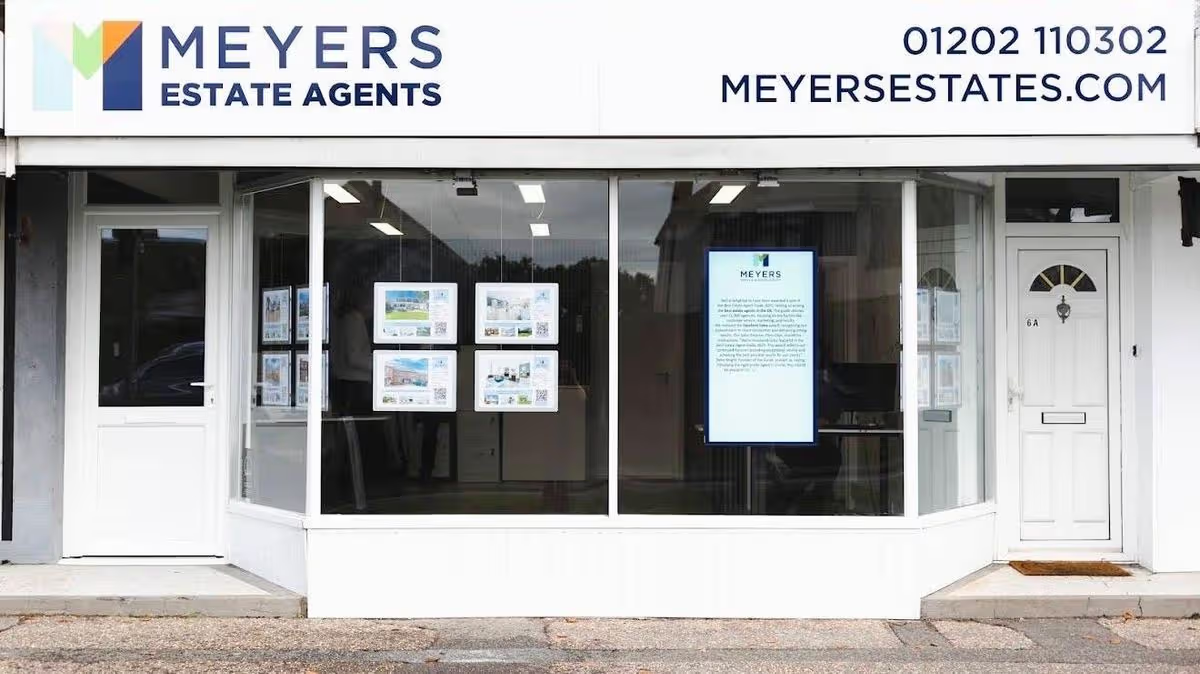
Meyers Franchising was launched in 2011 and adds 10 partners to LSL’s network

Meyers Estate Agents.(Image: LSL Estate Agency Franchising)
The estate agency division of property services group LSL has acquired a franchise operation based on England’s South Coast.
LSL Estate Agency Franchising has acquired Meyers Franchising Limited, based in Dorchester, which operates across Dorset. The undisclosed deal will see 10 franchise partners and six branches added to the LSL network, with the acquisition set to be earnings accretive this year.
Meyers was founded in 2011 by Mark Meyer out of his garage, and has gone on to become a franchise operation giving mainly home-based agents systems and branding to work with. LSL says that over the past 15 years, Meyers has become a trusted name in the region’s property market and pointed to the company as one of the leading sales agents across a large part of Dorset and the South Coast, with coverage extending from Christchurch and Bournemouth across to Weymouth and Poundbury, then up to Sherborne and Shaftesbury.
In becoming part of LSL, Meyers will benefit from investment support and access to the London Stock Exchange-listed group’s resources, infrastructure and strategic expertise. LSL says its strong lettings capability will come into play as an area of opportunity for the Meyers network.
Mark Meyer, founder of Meyers Estate Agents, said: “I am incredibly proud of what we have built at Meyers over the years. Our success is down to the dedication of our franchise partners and their commitment to delivering outstanding service. As we look to the future, partnering with LSL Estate Agency Franchising provides the perfect opportunity to take all the Meyers partners to the next level, while staying true to our core values.”
Paul Hardy, managing director of LSL Estate Agency Franchising, said: “Meyers Estate Agents is a fantastic business with a strong reputation, a proven franchise model, and a highly engaged network of partners. We are delighted to welcome Mark and the Meyers team into the LSL family. With our investment and particular strength in lettings, we see significant opportunities to support Meyers in accelerating its growth and further strengthening its position across the South Coast.”
The latest acquisition for LSL follows full year results for the Newcastle-registered group which saw underlying operating profit rise to to £32.6m in 2025, from £27.8m the year before. Group revenue was up 8% in the same year to nearly £183m as a £12m share buyback scheme was launched in January.
Chief executive Adam Castleton said it had been a strong year for the property services business with improved profitability across each of its divisions, record margins and strong cash generation. It follows a significant reorganisation of LSL in recent years which saw its estate agency network of more than 180 branches switch to a franchise model.

















































You must be logged in to post a comment Login