Netflix co-CEO Ted Sarandos responds to criticisms over the streaming service’s proposed acquisition of Warner Bros. Discovery on ‘The Claman Countdown.’
Netflix dropped its bid to buy Warner Bros. after the studio announced Paramount’s latest bid to buy the entire company was “superior.”
“The transaction we negotiated would have created shareholder value with a clear path to regulatory approval. However, we’ve always been disciplined, and at the price required to match Paramount Skydance’s latest offer, the deal is no longer financially attractive, so we are declining to match the Paramount Skydance bid,” Netflix co-CEOs Ted Sarandos and Greg Peters said in a statement.
Advertisement
They continued, “Warner Bros. is a world-class organization, and we want to thank David Zaslav, Gunnar Wiedenfels, Bruce Campbell, Brad Singer and the WBD Board for running a fair and rigorous process. We believe we would have been strong stewards of Warner Bros.’ iconic brands, and that our deal would have strengthened the entertainment industry and preserved and created more production jobs in the U.S. But this transaction was always a ‘nice to have’ at the right price, not a ‘must have’ at any price.”
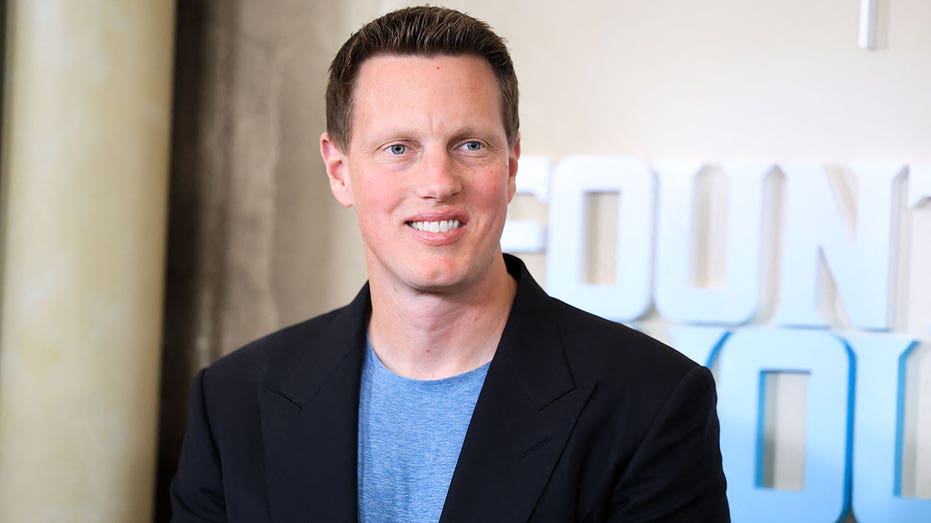
Warner Bros. Discovery CEO David Zaslav said “we are excited about the potential of a combined Paramount Skydance and Warner Bros. Discovery and can’t wait to get started working together telling the stories that move the world.”
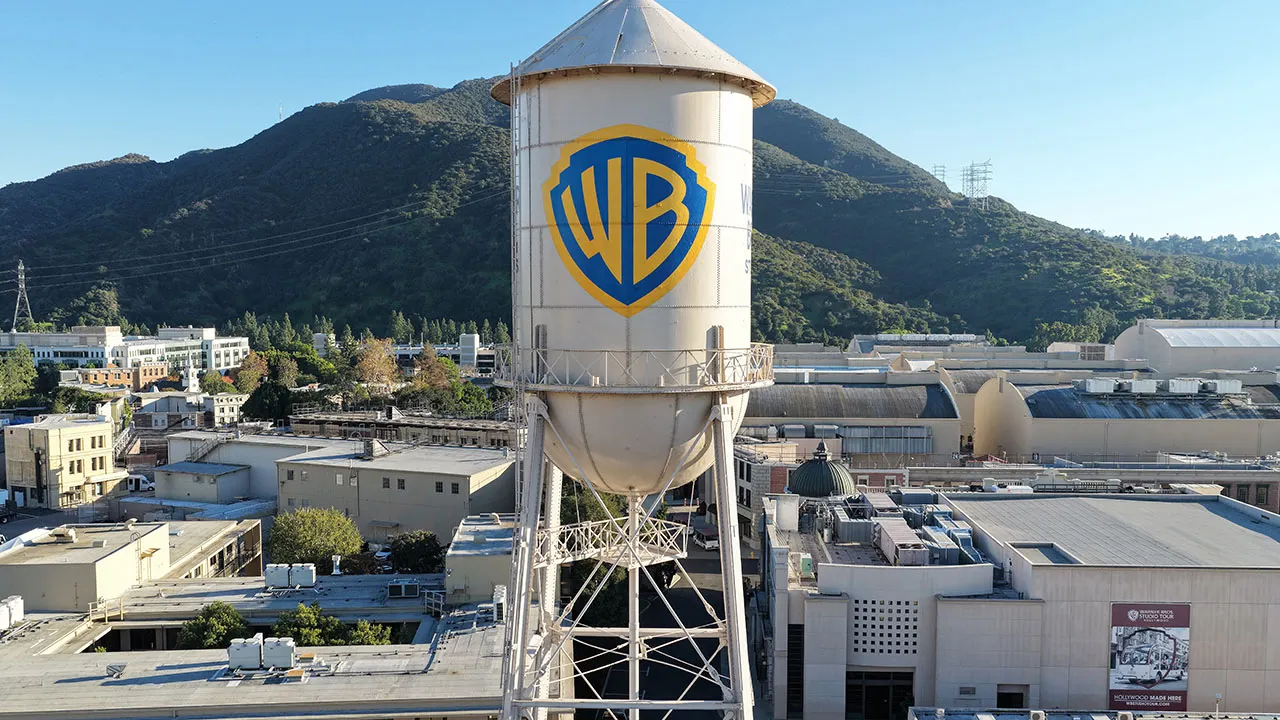
Warner Bros. Discovery announced Thursday that Paramount’s bid to take over the company is “superior” to the Netflix deal. (Mario Tama/Getty Images / Getty Images)
Earlier in the day, Warner Bros. Discovery said Paramount’s latest offer was “superior.”
Advertisement
“Warner Bros. Discovery, Inc. today announced that its Board of Directors, following consultation with its independent financial and legal advisors, has determined that the previously disclosed proposal from Paramount Skydance Corporation constitutes a ‘Company Superior Proposal’ as defined in WBD’s merger agreement with Netflix, Inc.” the company said in a press release.
Paramount’s revised offer raises WBD’s value to $31.00 per share, putting the company’s evaluation at $111 billion. Paramount would additionally pay the $2.8 billion termination fee that would go to Netflix if WBD backs out of their deal.
“We are pleased WBD’s Board has unanimously affirmed the superior value of our offer, which delivers to WBD shareholders superior value, certainty and speed to closing,” Paramount CEO David Ellison said in a statement.
Ellison’s billionaire father Larry Ellison is personally backing Paramount’s bid committing $45.7 billion in equity through the Ellison Trust while Bank of America Merrill Lynch, Citi and Apollo will provide a $57.5 billion debt commitment.
Netflix declined to raise its bid for Warner Bros., clearing the path for Paamount to take over. (Nikos Pekiaridis/NurPhoto via Getty Images / Getty Images)
In December, Warner Bros. announced it had reached a deal with Netflix to buy the Hollywood studio and HBO for $83 billion, prompting Paramount to launch a $108 billion hostile takeover bid for the entire company, including all of its cable assets like CNN, which would have been spun off into a separate company under the Netflix deal.
Paramount CEO David Ellison’s takeover of Warner Bros. Discovery will follow his own $8 billion acquisition of Paramount last year. (Charly Triballeau/AFP via Getty Images / Getty Images)
Both the Paramount and Netflix bids for Warner Bros. had sparked panic across the entertainment industry.
Advertisement
Critics of the Paramount bid fear putting two legacy studios under one company would lead to mass layoffs and worry about Ellison taking over CNN, while critics of Netflix are concerned about the streaming giant’s growing influence and whether it will commit to theatrical windows for film releases in support of movie theaters.
TUCSON, Ariz. — The search for Nancy Guthrie, the 84-year-old mother of NBC’s “Today” show co-anchor Savannah Guthrie, entered its third month Thursday with no arrests, no confirmed suspect and growing uncertainty about whether the elderly woman is still alive nearly 70 days after she was abducted from her suburban Tucson home.
Authorities continue to investigate the case as a targeted kidnapping after finding drops of blood on the front porch and signs of forced entry at Guthrie’s residence in the Catalina Foothills area. Pima County Sheriff Chris Nanos has said investigators believe they know the motive behind the abduction but have not publicly identified a suspect or confirmed whether Nancy Guthrie remains alive.
Guthrie was last seen around 9:48 p.m. on Jan. 31 after family members dropped her off following dinner and games. She failed to appear at church the next morning, prompting relatives to check on her. Evidence at the scene led authorities to conclude she had been taken against her will early on Feb. 1. A masked, armed figure captured on surveillance footage approaching her door that night has become a focal point of the investigation, though no identification has been made.
The high-profile case has drawn national attention, in part because of Savannah Guthrie’s prominent role on morning television. The family has offered a reward of up to $1 million for information leading to Nancy Guthrie’s recovery, supplementing an earlier $50,000 reward from the FBI. Savannah Guthrie returned to the “Today” show anchor desk on April 6 for the first time since the abduction, describing it as “good to be home” while expressing ongoing anguish over her mother’s fate.
Advertisement
In recent weeks, media outlets including TMZ reported receiving additional ransom-style notes demanding Bitcoin in exchange for information about Guthrie’s whereabouts or the alleged kidnapper. One recent note reportedly claimed knowledge of her location in Mexico’s Sonora state before shifting to suggest she may no longer be alive. Authorities have not confirmed the authenticity of the notes, and experts caution they could be hoaxes or opportunistic attempts to exploit the case. Similar communications surfaced earlier in the investigation.
Sheriff Nanos has described the abduction as targeted and said the suspect could “absolutely” strike again. He has cleared all immediate family members, including Savannah Guthrie and her siblings, as persons of interest. The investigation has involved the FBI, extensive neighborhood canvassing, aerial searches and analysis of surveillance footage from Guthrie’s home and nearby properties. Additional images recovered from cameras in recent weeks yielded no significant new leads, according to law enforcement sources.
Nancy Guthrie, who had limited mobility and required daily medication including for a pacemaker, was described by family and authorities as unlikely to have wandered away on her own. Some investigators and outside experts have theorized that kidnappers may have underestimated her fragile health, potentially leading to a medical emergency while in captivity. Retired detectives have suggested that if she suffered complications, the abductors might have disposed of her body when she was no longer useful for ransom purposes.
The case has generated tens of thousands of tips, but progress has slowed as weeks turn into months. A person detained along with his mother in an earlier SWAT operation was released without charges and has publicly denied any involvement. Gloves found near the home and tire tracks have been examined, but no breakthroughs have been announced.
Advertisement
Savannah Guthrie has spoken emotionally about the ordeal, including in a tearful interview where she questioned whether her celebrity status might have made her mother a target. In an Easter message released in early April, she reflected on themes of hope, resurrection and the pain of uncertainty, asking for continued prayers and tips from the public. She has urged anyone with information to contact authorities anonymously.
The abduction has spotlighted the challenges of investigating crimes against elderly victims, especially when initial evidence points to foul play but physical traces fade quickly. Experts note that stranger abductions of seniors are statistically rare, often involving family or acquaintances, yet this case appears to deviate from typical patterns. The presence of ransom demands and the masked figure on camera have fueled speculation of a financially motivated plot, possibly by someone familiar with the family’s public profile.
Pima County authorities have faced some criticism over the pace of the investigation, including questions about early handling of the scene and resource allocation. A recall effort against Sheriff Nanos has been mentioned in local discussions, though it remains unclear how much traction it has gained. The sheriff’s office has defended its work, emphasizing collaboration with federal agencies and the volume of tips processed.
As the search continues, focus has shifted toward possible secondary locations where Guthrie might have been held. Blood evidence and mixed DNA samples recovered from the home are still being analyzed as part of a complex “biological puzzle.” Authorities have asked neighbors to review and share any additional security camera footage from the night of the disappearance.
Advertisement
Nancy Guthrie’s disappearance has resonated deeply with the public, drawing parallels to other high-profile missing persons cases while highlighting the unique pain of prolonged uncertainty for families. Thousands of people go missing in the U.S. each year, but cases involving elderly victims with limited mobility and connections to public figures often sustain intense media scrutiny.
The Guthrie family has expressed gratitude for public support, including yellow ribbons and signs of encouragement shown to Savannah upon her return to the “Today” show plaza. Savannah has balanced her professional duties with private grief, at times apologizing to relatives for wondering aloud if her fame played a role.
No timeline has been given for when major updates might emerge. Investigators continue to pursue leads, including analysis of Bitcoin-related communications and potential cross-border angles if Mexico connections prove credible. The FBI maintains an active page with details on the case and contact information for tips.
For now, the investigation remains open and active, with authorities urging anyone who may have seen something unusual in the Catalina Foothills neighborhood in late January or early February to come forward. Tips can be submitted to the Pima County Sheriff’s Department or the FBI tip line.
Advertisement
Nancy Guthrie, a mother of three including Savannah, was known as an active churchgoer and family-oriented woman in her Tucson-area community. Her abduction has left a void felt not only by her loved ones but by viewers who have followed Savannah Guthrie’s career for years.
Whether the latest ransom notes provide genuine clues or amount to distractions, they underscore the bizarre elements that have marked this case from the start. As day 69 approaches with no resolution, the hope for Nancy Guthrie’s safe return persists alongside the grim possibility that the investigation could shift toward recovery and justice for a crime that has gripped the nation.
Augusta National Golf Club, home of the prestigious Masters Tournament, has spent years and more than $200 million expanding its footprint in Augusta, Georgia. The club is buying up hundreds of acres of surrounding land for future development.
But one property, long considered a holdout, remains firmly in the hands of the family of its original owners.
Advertisement
The home at 1112 Stanley Rd. was built in 1959 by Herman and Elizabeth Thacker, and it still stands just across from Gate 6-A.
It’s a modest, 1,900-square-foot three-bedroom house, but its story has become something of a local legend.
Over the past decade, nearly the entire neighborhood around it has been bought and cleared, with Augusta National Golf Club spending more than $40 million to convert the land into parking and infrastructure for tournament patrons. The club has spent more than $280 million on property acquisitions over the past 25 years, according to Golf.com.
Advertisement
Dustin Johnson on the second green during the first round of the 2026 Masters Tournament at Augusta National Golf Club on April 9, 2026. (Jared C. Tilton/Getty Images)
Many of those homeowners became millionaires overnight.
The Thackers chose a different path. Despite multiple seven-figure offers, they refused to sell.
“Money ain’t everything,” Herman Thacker famously told NJ.com in a 2016 interview.
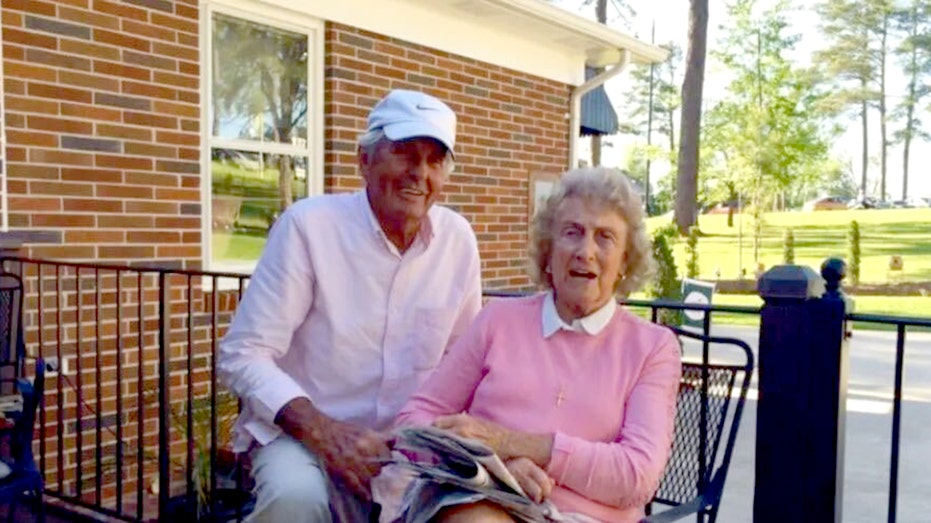
Herman Thacker died in 2019 at the age of 86. His wife, Elizabeth, lived in the home for many years after, becoming one of the last — and most well-known — holdouts against the club’s expansion.
Herman and Elizabeth Thacker. (Robin Thacker Rinder)
Since last year’s Masters, the Thacker family has experienced a significant loss: Elizabeth Thacker died in July at the age of 93.
Her daughter, Robin Thacker Rinder, confirmed to FOX Business that while her mother is gone, the home remains in the family.
Rinder says she is now living in the house herself, “taking good care of it,” and confirmed that the property has not changed hands. Notably, she says Augusta National has not approached the Thacker children with any new offers since the family originally declined to sell.
The Thacker family home near the Augusta National Golf Club in Augusta, Georgia. (Google Maps)
Augusta National did not respond to FOX Business’ multiple requests for comment.
The property is estimated to be worth roughly $330,000, but that’s a fraction of what Augusta National has paid out to the owners of nearby homes in years past.
The Thackers previously sold another nearby property they owned to the club for $1.2 million, but wanted to live the rest of their lives at 1112 Stanley Rd., the home where they raised two children, five grandchildren and five great-grandchildren.
The home remains, at least for now, not for sale. Still, Rinder left the door slightly open when asked if that could ever change.
“If the price is right,” she said with a laugh.
For now, one of the most famous holdouts in golf endures.
WA’s largest super fund GESB’s former chief Ben Palmer has emerged as the managing director of a new funds management division launched by Affinity Capital Group.
Convatec Group PLC (CNVVY) Analyst/Investor Day April 9, 2026 9:00 AM EDT
Company Participants
David Phillips Jonathan Mason – CEO & Director Tanja Dormels – President & COO of Advanced Wound Care Bruno Pinheiro – President & COO of Ostomy Care Mark Jassey – President & COO of Continence Care & Home Services Group Kjersti Grimsrud – President & COO of Infusion Care Divakar Ramakrishnan – Executive VP, Chief Technology Officer and Head of Research & Development Fiona Ryder – Group Financial Controller, CFO & Director
Conference Call Participants
Advertisement
Kane Slutzkin – Deutsche Bank AG, Research Division Aisyah Noor – Morgan Stanley, Research Division Veronika Dubajova – Citigroup Inc., Research Division David Adlington – JPMorgan Chase & Co, Research Division Richard Felton – Goldman Sachs Group, Inc., Research Division Susannah Ludwig – Bernstein Institutional Services LLC, Research Division Sebastien Jantet – Panmure Liberum Limited, Research Division Christian Glennie – Stifel, Nicolaus & Company, Incorporated, Research Division Beatrice Fairbairn – Joh. Berenberg, Gossler & Co. KG, Research Division
Presentation
David Phillips
Advertisement
Good afternoon. Welcome. I’m David Phillips, Head of Investor Relations here at Convatec. Can I just set some quick housekeeping rules for the day? And can I please ask that you switch your phones off or put them on silent. In 30 minutes, we will split into 4 groups for the category breakout sessions, which are across the corridor. This will bring the best of Convatec to life. Prerecorded videos of these — some of the presentations are online for those who are watching on the webcast. To enable us to keep the time today, we would respectfully ask if you keep your questions until the end. We’ve got ample time and then all of the presenters and guests will be in the atrium and able to speak. We now have a very short video to introduce Accelerate, and then Jonny will begin. So thank you very much and lights out.
In the Nifty500 pack, nine stocks’ closing prices crossed above their 200 DMA (Daily Moving Averages) on April 9, 2026, according to stockedge.com’s technical scan data. The 200-day daily moving average (DMA) is used by traders as a key indicator for determining the overall trend in a particular stock. As long as the stock is priced above the 200-day SMA on the daily timeframe, it is generally considered to be in an overall uptrend. Take a look:
The White House warned staff against improperly leveraging their positions to place bets in futures markets in an email on March 24, a day after President Donald Trump ordered a brief pause in some Iran strikes, a White House official said on Thursday.
Some of Trump’s major policy decisions have been preceded by well-timed bets, leading some experts to question whether information had somehow leaked ahead of time.
Exchange data and Reuters calculations showed an unidentified trader or traders bet $500 million on Brent and WTI crude futures in a one-minute period shortly before Trump called a five-day delay on March 23 in attacks on Iran’s energy infrastructure, after which oil prices crashed 15%.
“While he (Trump) seeks a strong and profitable stock market for everyone, members of Congress and other government officials should be prohibited from using nonpublic information for financial benefit,” White House spokesman Davis Ingle told Reuters in a statement.
Advertisement
The Journal, which previously reported the news, said the announcement was made in a staff-wide email from the White House management office.
FREMONT, Calif. — Aehr Test Systems Inc. stock rocketed higher Thursday, climbing more than 8% to trade around $68 as investors bet on the semiconductor test equipment maker’s surging order book tied to artificial intelligence infrastructure, even after the company posted mixed fiscal third-quarter results.
Aehr Test Systems
Shares of the NASDAQ-listed company (AEHR) rose as much as 10% intraday Thursday, building on a 26% surge the previous session following its earnings release. The stock has now skyrocketed more than 210% year-to-date in 2026, turning it into one of the hottest small-cap plays in the chip sector amid booming demand for AI processors and data center components.
Aehr, which specializes in wafer-level and package-level test and burn-in systems, reported fiscal third-quarter revenue of $10.3 million for the period ended Feb. 27, missing Wall Street expectations of about $10.8 million and plunging 44% from $18.3 million a year earlier. The company swung to a non-GAAP net loss of $1.5 million, or 5 cents per share, compared with a year-ago profit of 7 cents per share. However, the loss was narrower than the consensus forecast of a 7-cent loss.
The revenue shortfall stemmed largely from a shift in product mix and timing of shipments, but investors quickly zeroed in on far stronger forward-looking signals. Aehr booked a whopping $37.2 million in new orders during the quarter — delivering a book-to-bill ratio exceeding 3.5 times — pushing its effective backlog to a record $50.9 million when including post-quarter wins.
“We are seeing significant demand from AI and data center customers,” Aehr President and CEO Gayn Erickson said in a statement accompanying the results. The company highlighted production orders for its FOX-XP wafer-level burn-in systems from a lead AI processor customer and follow-on wins in silicon photonics for hyperscale data center optical interconnects.
Advertisement
Analysts and market watchers described Aehr as a “quiet bottleneck” in the AI supply chain. Its equipment stresses semiconductors through burn-in testing to weed out early failures, ensuring reliability for high-power AI chips used in training and inference workloads at massive data centers. Only a fraction of advanced AI accelerators currently undergo full wafer-level burn-in, leaving substantial room for adoption growth as hyperscalers ramp production.
Recent orders underscore that momentum. In February, Aehr landed a $14 million order for FOX-XP systems from its lead AI processor customer. It also secured follow-on business for silicon photonics devices critical to high-speed optical connections in AI servers. Earlier in the year, the company won initial orders for its Sonoma ultra-high-power systems to burn-in next-generation AI ASICs for a major hyperscale customer.
“These wins position Aehr at the heart of AI infrastructure buildout,” said one analyst who upgraded the stock following the earnings. Craig-Hallum upgraded Aehr to Buy from Hold, citing improving business momentum, while Lake Street raised its price target to $56 from $50.
Aehr also announced a $60 million at-the-market equity offering Thursday, giving it flexibility to fund growth or acquisitions as demand accelerates. The company completed the acquisition of Incal Technology last year to expand its footprint in AI semiconductor testing.
Advertisement
For the full fiscal year ending May 2026, Aehr reaffirmed guidance for revenue on the high end of $45 million to $50 million. It expects second-half revenue between $25 million and $30 million and reiterated a path to non-GAAP profitability in the fourth quarter.
The upbeat bookings outlook helped offset concerns about the current-quarter softness, which management attributed partly to lumpy shipment timing and a temporary emphasis on package-level burn-in products.
Aehr’s technology addresses a critical pain point in semiconductor manufacturing. As chips for electric vehicles, AI, silicon carbide power devices and photonics become more complex and power-hungry, the need for rigorous testing and stabilization before deployment grows. Aehr’s FOX family of systems can test and burn-in full wafers or singulated die in parallel, improving yields and reducing costs for customers.
The company’s products serve diverse end markets, including AI processors, data center infrastructure, automotive, industrial and silicon photonics for optical I/O. Demand from hyperscale cloud providers building out AI training clusters has become a dominant driver.
Advertisement
Wall Street’s view on Aehr remains mixed but tilting more positive. Consensus ratings hover around Hold with an average price target near $68, though some firms see higher upside if AI orders continue to materialize. The stock’s rapid run has left it trading at elevated valuations, with a market capitalization now exceeding $2 billion.
Investors appeared unfazed by the revenue miss, focusing instead on the massive backlog and potential for a strong second half. Broader market sentiment also helped, with a ceasefire agreement between the U.S., Israel and Iran easing some geopolitical tensions and lifting risk assets.
Aehr executives expressed confidence in a rebound. Management highlighted expectations for a “near-term follow-on production order” from its lead hyperscale customer and said bookings for the second half should land on the high side of prior $60 million to $80 million guidance.
Shares closed Wednesday at $63.16, up sharply on the earnings reaction and macro tailwinds. By mid-afternoon Thursday, they traded near $68.19, extending gains.
Advertisement
The surge reflects growing recognition that Aehr’s niche expertise in reliability testing could prove essential as the AI boom demands ever-more robust semiconductors. Hyperscalers and chip designers cannot afford failures in massive AI clusters, making burn-in a non-negotiable step.
Still, risks remain. Aehr derives a significant portion of revenue from a handful of large customers, exposing it to order timing volatility. The company has yet to achieve consistent profitability, and competition in the test equipment space could intensify.
For now, momentum favors the bulls. With AI capital spending showing no signs of slowing and Aehr’s backlog at record levels, the company appears poised for a potential inflection as shipments ramp in coming quarters.
Aehr Test Systems, founded in 1977 and headquartered in Fremont, employs about 136 people. It has installed thousands of systems worldwide and continues to innovate in wafer-level solutions that enable parallel testing of hundreds or thousands of devices simultaneously.
Advertisement
As the semiconductor industry grapples with exploding complexity driven by AI, companies like Aehr that provide critical enabling technology are drawing fresh attention from growth-oriented investors.
Whether the stock can sustain its blistering pace will depend on execution in the back half of the year and the ability to convert that hefty backlog into revenue and, ultimately, profits.























































You must be logged in to post a comment Login