
Business
Oil market dynamics: Factors that will drive prices in 2026

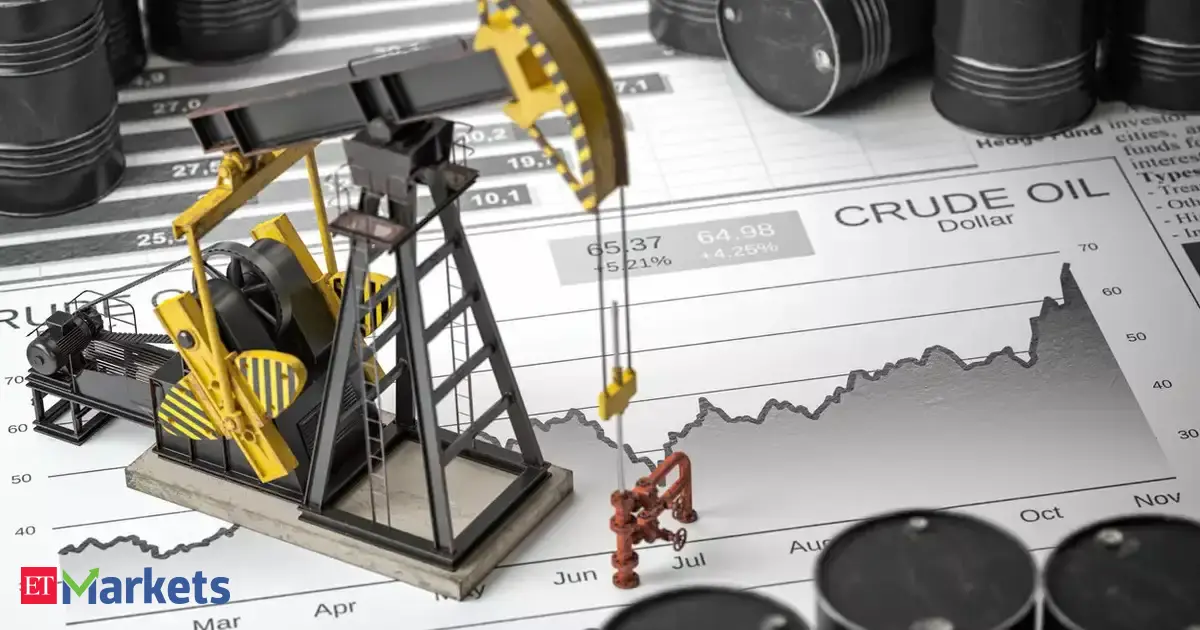
Periodic geopolitical flare-ups (Israel–Iran in June, Russia–Ukraine infrastructure strikes) briefly supported crude oil prices, but the market’s structural surplus prevailed. As per the US Energy Information Administration data, implied stock builds in the previous year were among the largest since 2020.
Supply exceeds demand
Crude oil prices in 2025 were pressured by a confluence of supply-side and structural factors. OPEC+ began unwinding earlier production cuts, adding barrels to an already soft macroeconomic backdrop, while robust non-OPEC growth—led by U.S. output at record levels—further diluted any geopolitical risk premium. Tariff and sanctions adjustments by the U.S. toward Russia, Iran, and Venezuela shifted trade flows but failed to create lasting shortages, allowing inventories to swell. Meanwhile, China’s strong import activity largely fed strategic reserves rather than immediate consumption. This muted demand signals and cushioned sharper price declines. Adding to the imbalance, refined product inventories climbed faster than crude in several regions, compressing margins and weakening the pull on upstream demand.

Maduro’s arrest possible impact
On January 3, 2026, U.S. forces captured Venezuelan President Nicolas Maduro, flying him and his wife to New York to face narco-terrorism and drug-trafficking charges, both pleaded not guilty. The episode jolted global oil politics because Venezuela—an OPEC founder with the world’s largest proven reserves—has been constrained by sanctions, underinvestment, and operational decay.
Though the arrest may introduce political uncertainty, the immediate impact on global crude supplies remains limited. Venezuela currently produces just under 1 mb/d -less than 1% of global output- and ongoing U.S. sanctions and tanker blockades have already sharply constrained its exports.In the short term, there may be modest supply disruption, but global inventories remain ample and projects a 3.8 mb/d surplus well into 2026. Brent oil almost unchanged and stabilized near $60–61, reflecting skepticism that political upheaval will translate into sustained supply shocks. In fact, the arrest may open doors for eventual U.S. and European investment.
Maduro’s removal may introduce short-lived volatility, but structural oversupply and constrained Venezuelan capacity will likely neutralize any significant price spike. If political stabilization and investment unfold, Venezuela’s crude output may gradually increase, which may pressure oil prices in the medium term, but the path remains slow and uncertain.
Supply – Demand dynamics
Forecasts diverge, but most agree on surplus conditions in 2026. The EIA expects production to exceed consumption, with global inventory builds of more than 2 mb/d on average. There is a forecast that OPEC+ will hold output steady into Q1’26, which helps limit volatility but doesn’t erase the surplus. Meanwhile, the IEA has warned of a possible “super-glut”, a surplus of 3–4 mb/d, if OPEC+ and rivals continue adding more supply than demand can absorb.
Persistent oversupply is expected to be the dominant theme, driven by strong output from OPEC+ and non-OPEC producers such as the U.S., Brazil, and Guyana. Inventory builds projected by the EIA and IEA reinforce the view that the market will struggle to absorb additional barrels, even as OPEC+ holds production steady in early 2026. Unless the group pivots to deeper cuts, the surplus bias will likely cap any sustained price rally.
On the demand side, growth remains modest, with the IEA projecting an increase of roughly 1.2 mb/d, concentrated in Asia. However, global economic uncertainty, slower-than-expected recovery in China, and cautious monetary policies in major economies are tempering the bullish sentiment. These factors, combined with high stock levels, suggest that demand alone will not be sufficient to tighten balances significantly. As a result, price movements will hinge more on supply discipline than on consumption trends.
Price outlook
Oil prices in 2026 are expected to remain under pressure, with most forecasts placing Brent in the $54–62 range and WTI around $48–62 per barrel. Geopolitical risks—such as Middle East tensions, developments between Russia and Ukraine, and policy shifts following Venezuela’s political upheaval—could inject short-term volatility; however, structural oversupply limits the potential for prolonged price spikes. Investor sentiment remains bearish, with most expecting range-bound trading unless OPEC+ intervenes aggressively or a major disruption occurs. In summary, 2026 is shaping up to be a supply-driven year, where prices are likely to fluctuate within a narrow band unless unexpected shocks or coordinated production cuts alter the current trajectory.



