
Business
Opinion: Strategic collaborations worth studying

As much as the term ‘super university’ sounds like an academic fairytale, it could be the solution to a real-world problem facing the state’s tertiary institutions.
Among the sector’s numerous challenges, one that requires urgent attention is ensuring Western Australia’s universities can be made stronger without stripping them of their soul.
A state government-appointed committee, chaired by former state Labor minister and federal MP Alannah MacTiernan, is examining the costs and benefits of potential structural reforms to WA’s university sector. It is due to deliver its findings by year’s end.
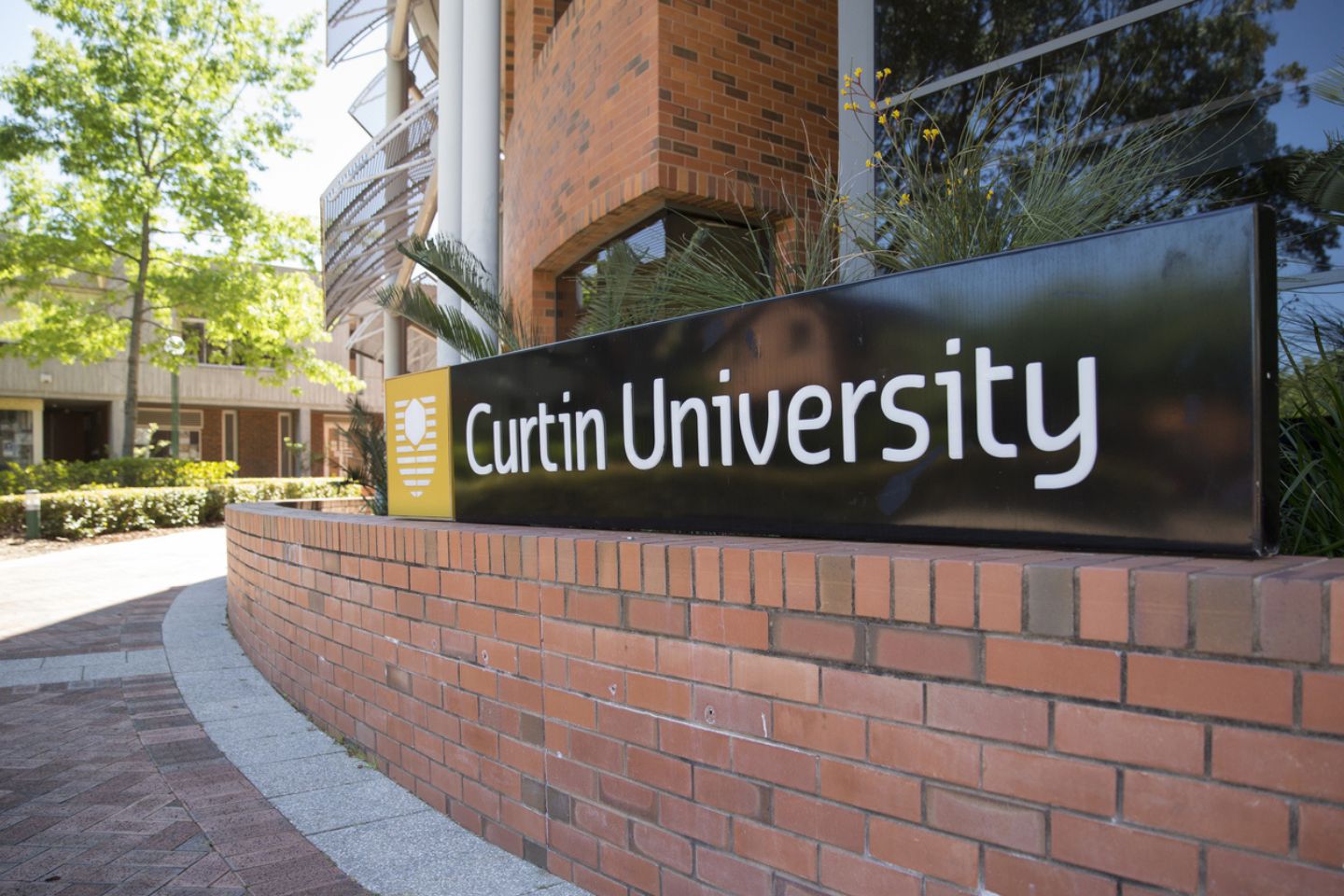
The committee’s task is to assess whether closer collaboration or mergers between The University of WA, Curtin University and Murdoch University could enhance competitiveness, efficiency and long-term sustainability.
Edith Cowan University has been excluded from consideration, likely because it is already deep into its own transformation, with construction of a new city campus nearing completion and a strategic focus distinct from its peers.
While mergers might promise efficiencies on paper, they usually provoke fierce opposition in practice.
The history of higher education is littered with examples of failed attempts at unions that created more confusion than cohesion.
In WA, where each university has carved out its own identity and community niche, any attempt to fold one into another would almost certainly face the same fate.
Each university’s graduates, donors and local communities feel a strong sense of ownership that makes merger talk emotionally charged, as well as operationally complex.
The very histories that make our institutions distinctive can also make them difficult to join.
However, many believe standing still is not an option, either.
Universities face tightening budgets, growing international competition and shifting student expectations.
Collaboration is no longer a courtesy but a necessity.
This is why a super university model – a structure that encourages shared governance, resources and strategy while preserving institutional independence – deserves consideration.
Under a super university model, WA’s public universities would remain separate in name, culture and community connection, but operate under a coordinated framework that brings them closer together where it counts.
The concept borrows from federated systems emerging overseas, whereby institutions share governance, resources and strategic direction without dissolving their individual identities.
Each of WA’s universities brings something valuable to the table.
UWA carries the state’s research reputation and sandstone prestige, while Curtin has cultivated deep industry partnerships and a strong applied focus.
Murdoch offers flexible learning and community reach and ECU prides itself on teaching quality and creative industries.
Each has carved out its own space, serving different student groups and economic needs.
A wholesale merger would risk flattening those differences into uniformity.
A super university, however, could preserve individuality while pooling the power that comes with scale.
In practice, UWA, Curtin and Murdoch would retain their own brands and leadership and collaborate through a shared governing council or central office overseeing areas such as research investment, infrastructure planning, student mobility and international partnerships.
Common systems for IT, payroll, finance and procurement could deliver efficiencies without the disruption of a full merger.
Students could enrol in joint programs, access cross-campus learning opportunities and benefit from a broader range of expertise than any single university could offer.
Such a structure would combine the collective strength of a large institution with the flexibility of smaller, distinctive campuses.
It would allow universities to pool resources where duplication is costly while maintaining the autonomy to serve different student populations and local communities.
The super university model is not about creating one monolithic institution but a federation of equals; a network that competes globally while cooperating locally.
Change in higher education rarely comes easily.
But the choice between standing still and smashing entities together is a false one.
A federated super university offers a third option that is pragmatic, protective and progressive.
As the MacTiernan committee prepares to hand down its report, its recommendations will no doubt shape the future of higher education in WA for years to come.
Whether the outcome favours mergers, partnerships or something in between, the real test will be whether reform strengthens the sector without eroding what makes each institution distinct.
A super university model, rooted in cooperation rather than consolidation, offers a practical path toward that balance.
• Professor Gary Martin is the chief executive of the Australian Institute of Management WA



