




Business
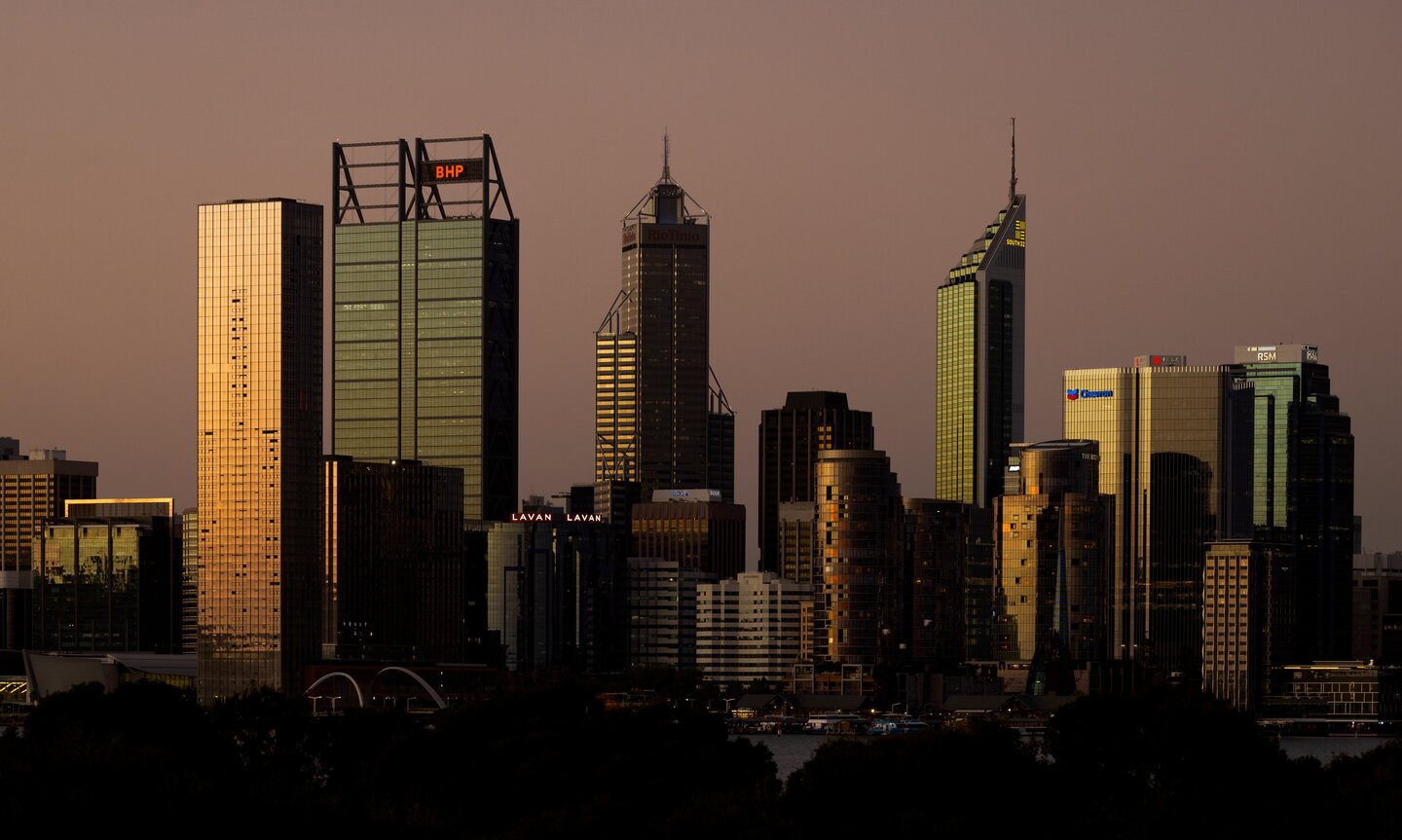
Perth office vacancy with slight shift
Business
General Motors Company (GM) Presents at Federal Reserve Bank of Chicago’s Automotive Insights Symposium Transcript
Kristin Dziczek
Well, thank you so much for coming back and staying with us. This you won’t want to miss. So it’s my pleasure to introduce our next session, managing transformation in a dynamic environment. [Operator Instructions] I’d first like to introduce our moderator, Mike Colias. Mike is the U.S. Auto Editor for Reuters. He’s long covered the auto industry and for the Wall Street Journal and Automotive News, and he’s the author of a 2025 book, Inevitable: Inside the Messy, Unstoppable Transition to Electric Vehicles. So he’s pretty ideally positioned to lead today’s fireside chat with GM’s CFO, Paul Jacobson.
And speaking of which we are tremendously honored that Paul has decided to join us. He’s a well-known around Detroit and in the auto industry since he joined General Motors in 2020 as the Executive Vice President and CFO. He’s established himself as an exceptional leader on GM’s executive team, demonstrating a remarkable financial stewardship during some very unprecedented business and industry challenges.
From navigating the post-pandemic supply chain disruptions to orchestrating GM’s strategic pathway to EV profitability and tariffs and what we can all agree has been a very uncertain policy environment. Under Paul’s guidance, GM has delivered impressive results in 2025 with robust earnings and a strong outlook. We are again thankful that Paul has agreed to join us today to share his insights.
I’ll bring Paul up for a few remarks, and then Mike will join him on stage for the Q&A.
Paul Jacobson
Executive VP & CFO
Well, thank you all. I was having to look around to figure out who
Business
Enphase Energy: Upgrading On Improving Outlook And Sentiment
Business
Nearly two dozen more prisoners freed in Venezuela, legal rights group says

Nearly two dozen more prisoners freed in Venezuela, legal rights group says
Business
E.l.f. Beauty (ELF) Q3 2026
Elf Beauty cosmetics
Courtesy: e.l.f Beauty
E.l.f. Beauty reported a huge earnings beat Wednesday and raised its guidance for the fiscal year.
E.l.f. stock was up as much as 15% in after-hours trading before losing the majority of those gains.
Here’s what the company reported for the third fiscal quarter, compared with analyst estimates from LSEG:
- Earnings per share: $1.24 adjusted vs. 72 cents expected
- Revenue: $490 million vs. $460 million expected
E.l.f. said net sales increased 38% to $489.5 million, from $355 million in the same period a year ago, driven by growth across the globe and across its retailers and e-commerce. It reported adjusted net income of $74.5 million, up from $43 million over the same period a year ago.
The company recently acquired celebrity Hailey Bieber’s skincare company, Rhode, in a roughly $1 billion deal, and it contributed $128 million to the company’s net third-quarter sales growth. E.l.f. told CNBC it’s projecting Rhode to contribute up to $265 million in net sales this year, up $65 million from its previous guidance.
E.l.f. also raised its full-year guidance, increasing its revenue outlook by a range of $42 million to $50 million.
“Our Q3 results, which included 130 basis points of market share gains for our namesake e.l.f. Cosmetics brand and a record-breaking launch of rhode in Sephora in the U.K., are a continuation of the consistent, category-leading growth we’ve delivered over the past 28 quarters,” CEO Tarang Amin said in a statement. “Our value proposition, powerhouse innovation and disruptive marketing engine continue to fuel our brands.”
— CNBC’s Jodi Gralnick contributed to this report.
Business
Nykaa Q3 Results Preview: PAT may surge up to 192% YoY led by BPC momentum; revenue to rise up to 28%
The estimates from ElaraCapital, Nuvama Institutional Equities and JM Financial have been taken into account. The margins could take a hit in the October-December quarter.
The company will announce its earnings on Thursday, February 5.
Here’s what estimates say about these four key parameters:
1) PAT
— Elara Capital: Rs 60 crore, up 128% YoY and 88% QoQ
— Nuvama: Rs Rs 64 crore, up 139% YoY and 89% QoQ
— JM Financial: Rs 78 crore, up 192% YoY and 117% QoQ
2) Revenues
— Elara Capital: Rs 2,869 crore, up 27% YoY and 22% QoQ
— Nuvama Institutional Equities: Rs 2,902 crore, up 28% YoY and 24% QoQ
— JM Financial: Rs 2,859 crore, up 26% YoY and 22% QoQ
3) EBITDA
— Elara Capital: Rs 202 crore, up 43% YoY and 27% QoQ
— Nuvama Institutional Equities: Rs 209 crore, up 48% YoY and 31% QoQ
— JM Financial: Rs 215 crore, up 52% YoY and 35% QoQ
4) EBITDA margin
Nuvama has pegged the Earnings Before Interest, Taxes, Depreciation and Amortisation (EBITDA) at 7.2% in Q3FY26, down 100 bps YoY and down 40 bps QoQ. Meanwhile, JM Financial sees margin expansion of 130 bps YoY, indicating sustained operating leverage.
(Disclaimer: The recommendations, suggestions, views, and opinions given by the experts are their own. These do not represent the views of The Economic Times.)
Business
How India is likely to shield its farmers in US trade deal
Both sides have shared the broad outlines of the deal but not the details, with early indications suggesting India will grant the U.S. only limited access to its agricultural market.
WILL INDIA LOWER TARIFFS ON US CORN, SOYBEANS OR SOYMEAL?
India, which bans genetically modified (GM) food crops, is unlikely to lower tariffs on imported farm goods such as corn, soybeans and soymeal as it seeks to protect millions of small farmers who eke out a living on meagre incomes.
The United States primarily produces GM corn and soybeans, limiting the scope for market access in India.
Unlike China, which buys millions of tons of corn and soybeans from the United States, India’s import requirements for both crops are relatively small.
India is holding large stockpiles of corn and soymeal, an animal feed derived from crushing soybeans for soyoil.
While India is the world’s largest importer of soyoil, sourcing supplies mainly from Brazil, Argentina and the United States, its overseas purchases of soybeans remain negligible, including from Africa where non-genetically modified oilseeds are produced. India also has ample supplies of domestically produced ethanol, made from corn, rice and sugarcane, making it unlikely to concede to requests for imports of either ethanol or corn as feedstock for ethanol production.
While the U.S. has pushed for greater access to India’s dairy market, long protected by high import duties and non-tariff barriers, New Delhi is likely to keep the sector off the table given its importance to farmer livelihoods.
The average herd size in India is only two to three animals per farmer, compared to hundreds in the United States – a difference that puts small Indian farmers at a disadvantage, Indian officials have argued.
WHERE ELSE COULD INDIA CEDE GROUND IN AGRICULTURE?
India could agree to lowering tariffs or allowing expanded import quotas on farm products such as almonds, walnuts, pistachios, apples, pears and berries. New Delhi could also lower trade barriers for fruits and vegetables, wine and spirits – the areas that do not tend to hurt Indian farmers.
Since India is already import-dependent for almonds, walnuts, pistachios, apples, pears and berries, it would be easier for Prime Minister Narendra Modi’s Bharatiya Janata Party to sell any lowering of import barriers on these premium farm products to voters and other political constituencies.
Similarly, President Donald Trump’s administration can tout access to Indian markets as a major win for American farmers.
WHY AGRICULTURE REMAINS SENSITIVE ISSUE FOR INDIA
Although the farm sector contributes a relatively modest 15% to India’s almost $4 trillion economy, it sustains nearly half the country’s 1.4 billion people.
Nearly 80% of Indian farmers are smallholders, owning two hectares of land or less, which limits their income. But farmers form an influential voting bloc, and successive governments have sought to avoid angering millions of growers.
The Samyukt Kisan Morcha, an umbrella group of farmers’ organisations, and its top leaders including Rakesh Tikait have already taken Modi’s government to task over its trade deal with Washington.
Business
US probes Nike over white worker discrimination claims
The Equal Employment Opportunity Commission (EEOC), which enforces workplace discrimination laws, announced on Wednesday it has demanded company records going back to 2018, including the use of race and ethnicity data, and whether such information influenced executive pay.
Business
Texas Instruments Goes Back To The M&A Well To Augment Its Growth
Business
CBDT chief says 88 per cent of individual taxpayers have opted for new tax regime
He said selecting a particular tax regime is the choice of the taxpayers, but the response to the new regime has been “very good”.
“I can tell you that when ITR 1, 2, 3 and 4 are taken together (income tax return forms used by individuals), about 88 per cent of people have moved to the new tax regime.
“And insofar as presumptive tax cases, about 97 per cent of the taxpayers have moved to the new tax regime. For corporates, about 60 per cent of the income is now being reflected in the new tax regime,” Agrawal told PTI during a post-Budget interview.
We believe, he said, with the new MAT (minimum alternate tax) provisions coming in the FY27 Budget, “it will also persuade people to move to the new tax regime”.
MAT, meant only for companies, is calculated at the rate of 15 per cent of book profit and is chargeable only when it is more than the tax on income. The Budget has proposed MAT to be the final tax and has reduced the rate from 15 to 14 per cent for companies in the old regime.
Asked about the hike in STT (securities and transaction tax) proposed in the FY27 budget, the CBDT chief said it is hoped that this will “certainly dissuade retail investors from very aggressively taking up this exercise”. “Only time would tell how much it would curb, but this is an attempt from the department and the government to actually at least address this issue and flag this issue,” he said.
The Budget 2026-27 has proposed an increase in STT on futures contracts to 0.05 per cent from 0.02 per cent. STT on options premium and exercise of options are proposed to be raised to 0.15 per cent from the present rate of 0.1 per cent and 0.125 per cent, respectively.
Agrawal said he was confident about meeting the direct taxes collection target for the 2025-26 fiscal that has been revised to Rs 24.21 lakh crore in the Budget.
The old tax regime refers to the income tax calculation and slabs that existed before the introduction of the new tax regime in 2020. The old tax regime has higher tax rates, but taxpayers get the option to claim various tax deductions and exemptions. In contrast, the new regime offers lower tax rates and allows full exemption for those earning up to Rs 15 lakh a year.
Business
Icons Who Defined a Nation’s Sporting Legacy
Australia has produced some of the world’s most dominant and inspirational athletes across cricket, tennis, swimming, athletics and more. From record-shattering cricketers to trailblazing Olympians, these figures have not only amassed medals and titles but also shaped national identity and inspired generations.
This list of the 10 greatest Australian athletes of all time, compiled from consensus across rankings by ESPN, Sport Australia Hall of Fame legends, Olympic records, fan polls and expert analyses as of 2026, balances historical impact, statistical dominance, cultural significance and global influence. While debates rage over order — especially between eras and sports — these names consistently top discussions.

1. Sir Donald Bradman (Cricket)
Widely regarded as the greatest batsman in cricket history, Bradman towers over Australian sport. His Test batting average of 99.94 remains unmatched, nearly 40 points above the next best. In an era of uncovered pitches and hostile bowling, he scored 29 centuries in 52 Tests.
Bradman’s feats during the 1930s “Bodyline” series and beyond made him a national hero. The Sport Australia Hall of Fame inducted him first in 1985, and he remains the benchmark for excellence. No other athlete has so profoundly defined a sport for a country.
2. Rod Laver (Tennis)
The only player to achieve the calendar-year Grand Slam twice (1962, 1969), Laver won 11 majors in singles and dominated during tennis’s amateur and early Open era. His versatility on all surfaces and against legends like Roy Emerson cemented his status.
Laver’s “Grand Slam” feats inspired generations, and he is often called the greatest ever by peers. His legacy endures in the Rod Laver Arena at the Australian Open.
3. Ian Thorpe (Swimming)
“The Thorpedo” revolutionized freestyle swimming with five Olympic golds, three silvers and a bronze across Sydney 2000 and Athens 2004. He set 13 individual world records and won 10 Commonwealth golds.
Thorpe’s dominance in the 200m and 400m freestyle, plus his cultural impact as a young star, made him a global icon. ESPN ranked him No. 1 among 21st-century Australian athletes.
4. Dawn Fraser (Swimming)
Fraser became the first swimmer to win the same event — 100m freestyle — at three consecutive Olympics (1956, 1960, 1964). Her four golds and eight total medals highlight her longevity and grit.
A trailblazer for women’s sport, Fraser’s rebellious spirit and records (including breaking her own marks) earned her Legend status in the Hall of Fame.
5. Cathy Freeman (Athletics)
Freeman’s 400m gold at Sydney 2000, carrying the weight of Indigenous reconciliation after lighting the cauldron, remains one of Australia’s most emotional sporting moments. She won world titles in 1997 and 1999.
Her success transcended sport, symbolizing unity and pride for First Nations people. Freeman is celebrated as an Indigenous icon and national treasure.
6. Ash Barty (Tennis)
Barty retired at No. 1 in 2022 after three Grand Slam singles titles (French Open 2019, Wimbledon 2021, Australian Open 2022). She also excelled in doubles and won the WTA Finals.
Her all-court game, humility and Indigenous heritage made her a modern hero. ESPN placed her second among 21st-century Aussies.
7. Margaret Court (Tennis)
Court holds the all-time record with 24 Grand Slam singles titles, plus dominance in doubles and mixed. Her career spanned amateur and Open eras.
Though controversial later in life, her on-court achievements remain unmatched in quantity.
8. Emma McKeon (Swimming)
Australia’s most decorated Olympian with 14 medals (six gold) across Tokyo 2020 and Paris 2024. Her seven-medal haul in Tokyo (four gold) tied the single-Games record for women.
McKeon’s versatility and records in freestyle events mark her as a modern great.
9. Shane Warne (Cricket)
The greatest leg-spinner ever, Warne took 708 Test wickets and revived the art of leg-spin. His “Ball of the Century” to Mike Gatting in 1993 is legendary.
Warne’s charisma and Ashes dominance made him a household name until his 2022 passing.
10. Lauren Jackson (Basketball)
A four-time Olympian with three silvers and a bronze, Jackson dominated the WNBA (two championships, three MVPs) and WNBL (six titles). She is Australia’s most successful basketball export.
Her scoring prowess and leadership earned her Hall of Fame induction.
Honorable Mentions
- Betty Cuthbert: Four Olympic golds in athletics.
- Ellyse Perry: Dual international in cricket and soccer.
- Sam Kerr: Modern football superstar.
- Heather McKay: Squash dominance with 16 British Opens.
Australia’s sporting success stems from a culture valuing grit, innovation and fair play. These athletes embody that spirit, from Bradman’s statistical perfection to Freeman’s unifying moment.
Debates will continue — cricket’s team sport vs. individual Olympic glory — but these 10 represent the pinnacle of Australian excellence. Their stories inspire young Aussies chasing dreams on fields, pools and courts worldwide.
-
Crypto World5 days agoSmart energy pays enters the US market, targeting scalable financial infrastructure
-
Crypto World6 days ago
Software stocks enter bear market on AI disruption fear with ServiceNow plunging 10%
-
Politics5 days agoWhy is the NHS registering babies as ‘theybies’?
-
Crypto World6 days agoAdam Back says Liquid BTC is collateralized after dashboard problem
-
Video2 days agoWhen Money Enters #motivation #mindset #selfimprovement
-
Tech15 hours agoWikipedia volunteers spent years cataloging AI tells. Now there’s a plugin to avoid them.
-
Fashion5 days agoWeekend Open Thread – Corporette.com
-
NewsBeat6 days agoDonald Trump Criticises Keir Starmer Over China Discussions
-
Politics3 days agoSky News Presenter Criticises Lord Mandelson As Greedy And Duplicitous
-
Crypto World5 days agoU.S. government enters partial shutdown, here’s how it impacts bitcoin and ether
-
Sports4 days agoSinner battles Australian Open heat to enter last 16, injured Osaka pulls out
-
Crypto World4 days agoBitcoin Drops Below $80K, But New Buyers are Entering the Market
-
Crypto World3 days agoMarket Analysis: GBP/USD Retreats From Highs As EUR/GBP Enters Holding Pattern
-
Crypto World5 days agoKuCoin CEO on MiCA, Europe entering new era of compliance
-
Business5 days ago
Entergy declares quarterly dividend of $0.64 per share
-
Sports3 days agoShannon Birchard enters Canadian curling history with sixth Scotties title
-
NewsBeat2 days agoUS-brokered Russia-Ukraine talks are resuming this week
-
NewsBeat2 days agoGAME to close all standalone stores in the UK after it enters administration
-
Crypto World24 hours agoRussia’s Largest Bitcoin Miner BitRiver Enters Bankruptcy Proceedings: Report
-
Crypto World6 days agoWhy AI Agents Will Replace DeFi Dashboards