
Business
Positive Breakout: These 7 stocks cross above their 200 DMAs


In the NSE list of stocks with a market cap over Rs 10,000 crore, seven stocks saw their closing prices cross above their 200-day moving averages (DMA) on February 18, according to StockEdge.com’s technical scan data. The 200-day daily moving average (DMA) is used as a key indicator by traders for determining the overall trend in a particular stock. As long as the stock price is above the 200-day SMA on the daily time frame, it is generally considered to be an overall uptrend. Take a look:

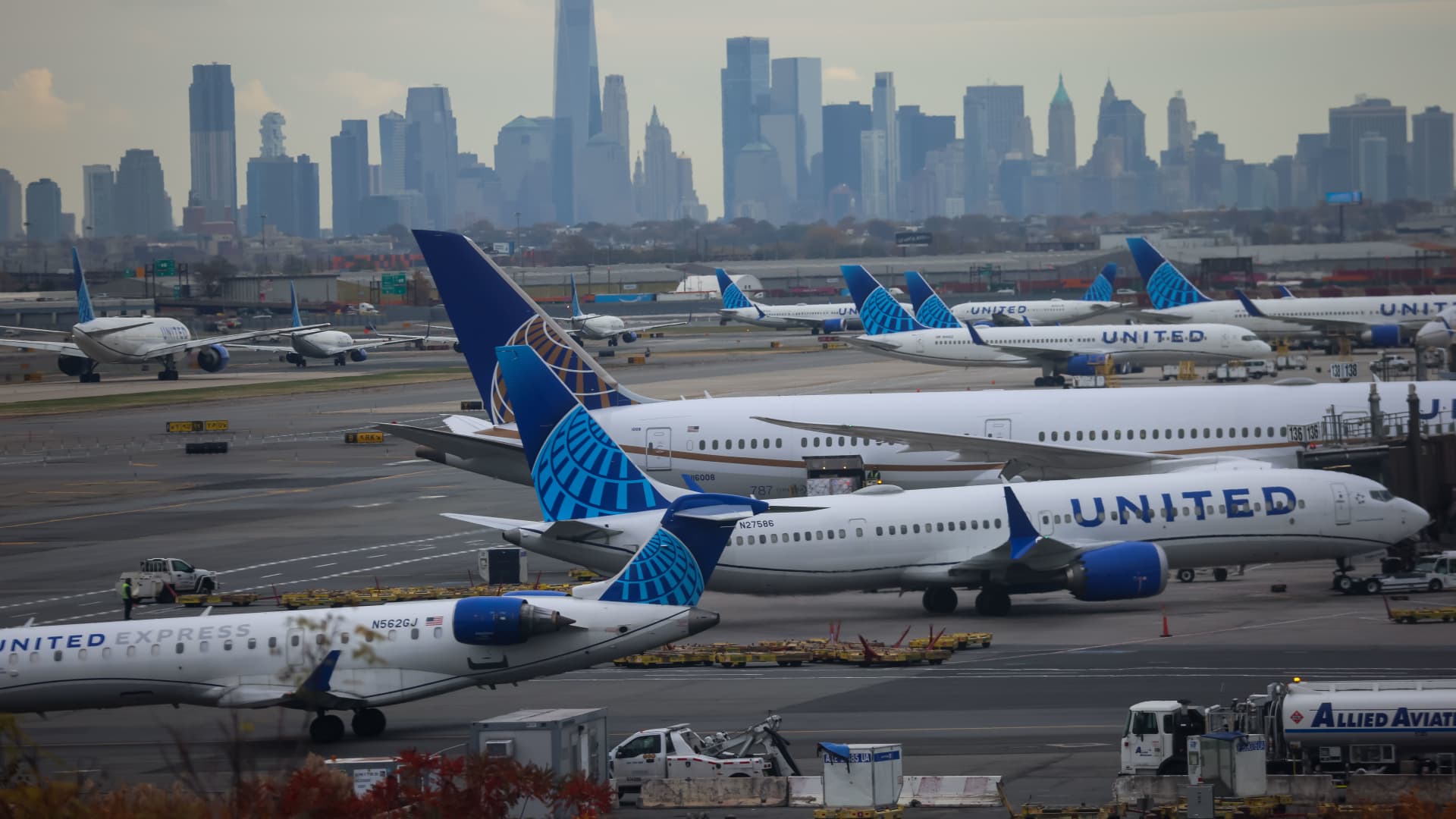
United Airlines
Bloomberg | Bloomberg | Getty Images
United Airlines hiked its checked bag fee by $10 on Thursday, becoming the second U.S. carrier in less than a week to raise the fee as the industry grapples with this year’s surge in fuel costs, airlines’ biggest expense after labor.
United’s new fee will be $45 to check a first bag on most domestic itineraries if the traveler pays ahead of time and $50 if they pay within 24 hours of their flight.
“United is raising first and second checked bag fees by $10 for customers traveling in the U.S., Mexico and Canada and Latin America beginning with tickets purchased Friday, April 3,” the carrier said.
United last raised checked bag fees in 2024 and, like other carriers, is trying to cover the recent surge in jet fuel costs.
Fuel prices for Chicago, Houston, Los Angeles and New York averaged $4.56 a gallon on Wednesday, up more than 82% since the U.S. and Israel attacked Iran on Feb.28, according to data from Argus published by industry group Airlines for America.
JetBlue Airways on Monday hiked its checked bag fees at least $4 per bag — and up to $9 per bag, depending on when a customer’s travel is booked — CNBC first reported.
Competitors often follow suit with such fee increases. There are loopholes, however. Airline credit cards often give customers a free checked bag when they’re on domestic itineraries in coach and it usually comes as a perk with elite frequent flyer status. Also, first-class seats generally include a free checked bag.
“United Chase credit card holders, MileagePlus Premier members, active military members and customers traveling in premium cabins can still check a bag for free, and customers in most markets will still enjoy a $5 discount if they prepay for their bags online 24 hours before their flight,” United said.
Higher fuel is showing up at gas stations and other sectors, too. Amazon is adding a 3.5% “fuel and logistics-related surcharge” to fees it collects from third-party sellers who use its fulfillment services, CNBC reported earlier Thursday.
— CNBC’s Annie Palmer contributed to this article.

Tango Therapeutics president sells $572k in shares
Business
UK Hosts 40-Nation Talks to Reopen Iran-Blocked Strait of Hormuz as Oil Prices Surge Amid War

LONDON — Britain convened a virtual summit Thursday with about 40 countries to explore ways of reopening the Strait of Hormuz, the vital Persian Gulf chokepoint effectively shut down by Iran during the ongoing U.S.-Israeli war, as global oil prices climbed on fears of prolonged disruption to nearly one-fifth of the world’s seaborne crude and liquefied natural gas supplies.

British Foreign Secretary Yvette Cooper chaired the discussions, which followed Prime Minister Keir Starmer’s announcement that reopening the waterway “will not be easy” but is essential to prevent Iran from “holding the global economy hostage.” The meeting included major European nations, Gulf states, Japan and others heavily dependent on the strait, though the United States was not directly involved in the talks, according to officials.
The Strait of Hormuz, a narrow passage between Iran and Oman connecting the Persian Gulf to the Arabian Sea and broader Indian Ocean, has seen maritime traffic plummet since Iran began restricting or attacking vessels in response to U.S. and Israeli strikes that escalated in late February 2026. Prior to the conflict, roughly 138 vessels transited daily, carrying about 20% of global oil and significant LNG volumes. Marine traffic data now shows clusters of loitering ships on both sides, with many operators avoiding the route due to safety risks.
Iran has declared the strait largely closed to vessels linked to the U.S. and Israel, while allowing limited passage for others — sometimes in exchange for substantial fees reportedly paid in Chinese currency or cryptocurrency, according to shipping reports and Gulf officials. Iranian parliament panels have discussed formal toll systems, and Tehran has signaled it will use control over the waterway as leverage to extract concessions, refusing a full ceasefire or unrestricted access until attacks on Iran cease.
President Donald Trump has repeatedly urged allies to “build up some delayed courage” and take control of the strait themselves, emphasizing that the U.S. produces ample domestic energy and will not shoulder the burden alone. In recent statements, Trump suggested the waterway could reopen “naturally” at the end of the conflict but warned of further strikes on Iranian energy infrastructure, including power plants and Kharg Island, if it remains blocked. He extended a deadline for action into early April while noting ongoing talks with what he described as a “new, and more reasonable” Iranian regime.
French President Emmanuel Macron pushed back Thursday, calling any military operation to force open the strait “unrealistic” and fraught with high risks. Macron advocated for dialogue and cooperation with Iran rather than confrontation, rejecting unilateral force during a trip to South Korea. Other European leaders echoed concerns that a Red Sea-style naval escort mission — which proved costly and only partially effective against Houthi attacks — would be far more challenging in the confined, Iran-dominated waters of Hormuz.
The disruption has already driven oil prices higher, with benchmarks surging amid supply fears and rerouting of tankers around Africa or elsewhere, adding weeks to journeys and inflating costs. Analysts warn of a potential “food security timebomb” if energy shortages ripple into broader economic pain, particularly for import-dependent Asian nations. China, a major buyer of Iranian oil, has blamed the U.S.-Israeli actions as the “root cause” of the blockage.
Attacks on shipping have compounded the crisis. Reports document multiple incidents since early March, including projectiles striking tankers, unmanned vessel rammings and at least one confirmed crew fatality. On April 1, a QatarEnergy-linked tanker, Aqua 1, was damaged north of Doha. The U.K. Maritime Trade Operations and other monitors have logged over a dozen verified or suspected strikes on merchant vessels in the Gulf region. Iran has escorted some “friendly” tankers through while maintaining its grip, turning the strait into what some describe as a de facto toll booth.
The International Maritime Organization estimates around 2,000 ships stranded or affected in the broader area. Shipping giants have suspended or rerouted operations, echoing disruptions seen earlier in the Red Sea but on a scale that threatens far greater global impact given Hormuz’s role in Gulf oil exports from Saudi Arabia, the United Arab Emirates, Kuwait, Iraq and Iran itself.
Gulf Arab states, including members of the Gulf Cooperation Council, have expressed alarm. The UAE and others have maintained steady postures but joined calls for safe passage. Some Iranian officials, including those close to the Islamic Revolutionary Guard Corps, have boasted of Tehran’s ability to maintain “legal-security dominance” over the strait even after any ceasefire, potentially imposing new rules or tolls long-term.
Environmental risks loom large. Strikes on oil infrastructure and the possibility of escalated targeting of desalination plants — critical for potable water in the arid Gulf — have drawn warnings from U.N. experts about long-term ecological damage, greenhouse gas emissions from burning fields and potential spills in one of the world’s most sensitive marine environments.
The U.K.-led meeting Thursday was described as an initial step, with follow-up discussions planned, including a G7 and Gulf Cooperation Council gathering next week. Participants signed a joint statement demanding Iran end its blockade and pledging contributions to ensure safe passage. Military planners are expected to meet soon under British hosting to assess options, though details remain guarded amid divisions over the use of force.
For Iran, the strait represents both a defensive asset and economic lifeline. Tehran has historically threatened closure during tensions, but the current scale — tied to the wider 2026 war that began with extensive U.S.-Israeli airstrikes on Iranian military targets — marks an unprecedented escalation. Iranian navy vessels have conducted escorts for paying clients while IRGC-linked media emphasize the strait’s value in ensuring regime survival and deterring future threats.
Analysts note that fully reopening the strait could take months even after any ceasefire, due to insurance costs, lingering war-risk premiums, damaged infrastructure and eroded confidence among shippers. Rebuilding trust and clearing potential mines or debris would add further delays. In the interim, alternative routes and increased U.S. domestic production offer only partial relief, as global markets remain tightly linked.
The crisis underscores the strait’s enduring strategic importance. At its narrowest, just 21 miles wide with shipping lanes even tighter, it has been a flashpoint for decades, from the 1980s “Tanker War” during the Iran-Iraq conflict to repeated Iranian seizures of vessels in recent years. Today’s events, however, unfold against a backdrop of direct great-power involvement and hybrid threats including drones, missiles and fast-attack boats.
Trump’s approach — shifting responsibility to energy-importing nations while keeping U.S. options open — has drawn mixed reactions. Supporters see it as America First realism; critics argue it risks fracturing alliances and emboldening adversaries. Retired U.S. Navy officers have assessed that while American forces could neutralize Iranian threats in the strait if ordered, the operation would be complex, costly and potentially prolonged, especially with Iran’s arsenal of anti-ship missiles and asymmetric tactics.
As talks continue, shipping firms monitor real-time intelligence from sources like the U.K. Maritime Trade Operations and U.S. warnings advising vessels to stay clear of certain zones. Crew safety remains paramount, with some operators paying premiums or hiring private security.
Broader implications extend beyond energy. Disrupted supply chains affect everything from jet fuel for airlines to petrochemical feedstocks for manufacturing. Developing nations face heightened vulnerability, while stock markets and currencies react to every headline from the Gulf.
Thursday’s summit reflects growing international urgency. With no immediate resolution in sight, diplomats, military planners and energy executives are weighing a difficult balance: pressuring Iran without triggering wider escalation that could close the strait indefinitely or spark environmental catastrophe.
Iranian assurances of safe passage for certain nationalities, such as Filipino seafarers, offer limited comfort amid the selective blockade. Tehran continues to frame its actions as defensive responses to foreign aggression, vowing not to yield without guarantees.
For now, the Strait of Hormuz remains a contested lifeline — partially open to some under Iranian terms, closed to others and a source of skyrocketing costs for the global economy. The outcome of ongoing diplomacy and any potential naval coordination will shape not only energy markets but the trajectory of the larger conflict in the Middle East.
As Britain and partners seek consensus, the world watches whether dialogue or deterrence will prevail in one of the most critical maritime arteries on the planet.

No ticket matched all six numbers in Wednesday night’s Powerball drawing, leaving the estimated $194 million jackpot unclaimed and rolling over for a bigger prize on Saturday, lottery officials confirmed Thursday.

The winning numbers for the April 1 drawing were 4, 10, 11, 52 and 64, with the red Powerball 24. The Power Play multiplier was 3X. The annuity jackpot was advertised at $194 million with a cash value option of about $87.1 million before the draw, though some reports listed it near $194.9 million.
The absence of a grand prize winner means the jackpot for the next drawing on Saturday, April 4, is now estimated at $217 million, with a cash value around $97.4 million. Drawings occur three times weekly — Monday, Wednesday and Saturday — at 10:59 p.m. ET from the Multi-State Lottery Association headquarters in Des Moines.
Powerball is played in 45 states, the District of Columbia, Puerto Rico and the U.S. Virgin Islands. Tickets cost $2, or $3 with the optional Power Play, which multiplies non-jackpot prizes. Players select five white balls from 1 to 69 and one red Powerball from 1 to 26.
Wednesday’s results produced several lower-tier winners. Official data showed no Match 5 + Powerball winners, meaning no $1 million prizes (or $2 million with Power Play). There were also no Match 5 winners without the Powerball. However, thousands of tickets won smaller amounts, from $4 for matching just the Powerball up to $150,000 for matching four white balls with Power Play.
The drawing came on April Fool’s Day, prompting some lighthearted social media commentary about whether the “joke” was on hopeful players who came close but missed the jackpot. One viral post joked that the numbers felt like an elaborate prank, but lottery officials stressed the results were legitimate and verified through multiple audits.
Powerball jackpots have grown steadily in recent weeks after a series of rollover drawings. The last jackpot win occurred earlier in 2026, with the prize occasionally climbing into nine figures before being claimed. When won, players can choose the annuity option — paid over 30 years with gradual increases — or the lump-sum cash value, which is significantly lower but provided immediately.
For Wednesday’s draw, the odds of hitting the jackpot remained astronomically low at about 1 in 292.2 million. Despite those odds, millions of tickets are sold for each drawing, especially when the jackpot exceeds $100 million and captures national attention.
Lottery experts note that rollovers fuel excitement and boost ticket sales, creating a virtuous cycle for prize growth. Each rollover adds to the pool after prize reserves and retailer commissions are accounted for. The Multi-State Lottery Association, which administers Powerball, ensures transparency with live draws broadcast on television and streamed online.
Players are encouraged to check tickets carefully, as unclaimed prizes can be substantial. In many jurisdictions, winners have 180 days to a year to claim prizes, depending on state rules. For the jackpot, claimants must come forward with the winning ticket and complete verification, including tax withholding — federal taxes alone can claim up to 37% or more, with state taxes varying.
Wednesday’s no-winner outcome continues a pattern seen in recent months where jackpots frequently roll over multiple times before being claimed. The biggest Powerball jackpot in history reached $2.04 billion in 2022, won in California. Other massive wins have occurred in states like Florida, New York and Pennsylvania, which consistently rank among top sellers.
Powerball’s popularity stems from its massive potential payouts and widespread availability. Convenience stores, gas stations and supermarkets across the country sell tickets, often displaying signs highlighting the current jackpot. Online sales are permitted in some states, expanding access further.
Beyond the jackpot, Wednesday’s drawing awarded prizes in nine other categories. Matching four white balls plus the Powerball typically pays $50,000, jumping to $150,000 with Power Play. Matching four white balls alone paid $100, with the multiplier boosting it to $300. Lower tiers included $7 for three white balls plus Powerball (or $21 with Power Play) down to the $4 Powerball-only prize.
The Power Play 3X multiplier was drawn separately and applies to all non-jackpot prizes except the Match 5. It is selected from a field that can reach up to 10X in some drawings, though 2X, 3X and 5X are more common when the jackpot is lower.
As the jackpot builds toward Saturday, anticipation is expected to grow. Ticket sales typically surge in the final days before a big drawing, with lines forming at retailers and players discussing strategies — though officials remind everyone that every combination has equal odds.
Responsible gambling advocates urge players to set limits and treat the lottery as entertainment rather than an investment. The odds remain heavily against winning the top prize, and stories of sudden wealth often come with challenges, including family disputes, financial mismanagement and loss of privacy.
For those who did win smaller amounts Wednesday, prizes under $600 can usually be claimed at the retailer where the ticket was purchased. Larger wins require visiting a state lottery office or mailing the ticket for validation.
The April 1 drawing followed Monday’s results, where the numbers were 7-11-31-41-57 with Powerball 20 and Power Play 2X, also without a jackpot winner. That rollover set the stage for Wednesday’s $194 million prize.
Powerball has evolved since its launch in 1992. The current matrix — five from 69 and one from 26 — was introduced in 2015 to create larger jackpots by lengthening the odds. The game has generated billions for state education programs, infrastructure, environmental projects and other public services through proceeds shared among participating lotteries.
States use their share of revenue differently. Some dedicate funds strictly to education, while others support general funds or specific initiatives like college scholarships and wildlife conservation.
As Thursday dawned with no new multimillionaire from the April 1 draw, eyes turned to Saturday’s drawing. Players across the country will check apps, websites and local news for updates on the climbing jackpot.
To play responsibly, officials recommend buying only what one can afford and remembering that the lottery is a game of chance. For Wednesday’s participants, the dream lives on — just deferred to the next opportunity.
Those holding tickets from the April 1 drawing should verify them promptly through official channels: the Powerball website, state lottery apps or authorized retailers. Second-chance drawings and promotions sometimes offer additional opportunities for non-winning tickets in certain states.
With the rollover confirmed, the Powerball machine resets for another chance at making history. Whether the next drawing produces a winner or continues the streak of rollovers, it will likely draw even more attention as the prize approaches life-changing territory for the fortunate ticket holder.
For now, the answer to “Did anyone win the Powerball jackpot on April 1?” is a clear no. The numbers were drawn, hopes were high, but the big prize rolls on, building excitement for Saturday night.

Shares of Blue Owl Capital Inc. fell sharply in morning trading Thursday after the alternative asset manager announced it would limit redemptions on two major private credit funds following unprecedented withdrawal requests from investors, raising fresh concerns about liquidity in the booming but scrutinized private credit sector.

Blue Owl (NYSE: OWL) shares traded as low as $8.10 before recovering somewhat, closing the previous session at $8.71 and opening lower amid heavy volume. By mid-morning, the stock was down about 3.62% at $8.40, extending a volatile period that has seen the shares lose more than half their value over the past year. The move came after the company disclosed that investors sought to pull roughly 21.9% of shares from its flagship $36 billion Blue Owl Credit Income Corp. (OCIC) and a staggering 40.7% from the smaller tech-focused Blue Owl Technology Income Corp. (OTIC) during the first quarter.
In response, Blue Owl informed shareholders it would cap redemptions at 5% for the quarter in both funds, a move designed to manage liquidity while avoiding forced sales of underlying loans at potentially unfavorable prices. The development marks the latest challenge for the firm, which has positioned itself as a leader in direct lending and private credit but now faces investor nervousness over credit quality, exposure to technology and software companies, and broader market conditions.
Blue Owl, co-founded by executives including Doug Ostrover and Marc Lipschultz, has grown rapidly into one of the largest players in alternative investments, with more than $307 billion in assets under management as of the end of 2025. The firm operates across credit, real assets and GP strategic capital platforms, emphasizing permanent capital vehicles such as business development companies (BDCs) that provide more stable fee income compared to traditional drawdown funds.
Thursday’s announcement highlighted tensions in the private credit market, where non-bank lenders have filled gaps left by tighter bank regulations, providing loans to middle-market companies often with floating rates that appeal in higher-interest environments. However, as the Federal Reserve has signaled potential rate cuts and concerns mount over valuations in tech-heavy portfolios, some investors are seeking exits.
The OCIC fund, one of the industry’s largest, saw redemption requests totaling about 21.9% of outstanding shares, while OTIC — heavily tilted toward technology and software lending — faced even steeper demand at 40.7%. Such levels are described as historic for major private credit vehicles. By imposing a 5% cap, Blue Owl aims to stagger outflows and protect remaining investors, but the decision echoes earlier moves, including a February asset sale of $1.4 billion across affiliated funds and a temporary halt on certain quarterly redemptions that also pressured the stock.
Analysts noted that the surge in requests may stem from multiple factors, including worries about credit quality in a slowing economy, potential markdowns on illiquid loans and competition from other yield-seeking investments. Some investors have grown wary of Blue Owl’s exposure to software firms, where revenue visibility can fluctuate, and questions persist about fair-value accounting for private assets that lack daily market pricing.
Despite the redemption pressures, Blue Owl has continued to attract new capital in other areas. On March 31, the firm announced the final close of its Asset Special Opportunities Fund IX with $2.9 billion in commitments, exceeding its $2.5 billion target. The vehicle focuses on asset-backed and special situations strategies, underscoring diversification efforts beyond core direct lending.
Co-CEOs Ostrover and Lipschultz have emphasized the resiliency of Blue Owl’s model, which includes a significant portion of permanent capital that reduces reliance on volatile fundraising cycles. In the firm’s fourth-quarter 2025 earnings released in February, management highlighted $56 billion in new capital commitments for the full year and growth in fee-paying assets under management. The company also maintained its quarterly dividend at $0.37 per share for the first quarter of 2026, payable in mid-April.
Yet the stock has struggled, trading well below analyst average price targets around $17 and reflecting a market capitalization near $6 billion. Over the trailing 12 months, shares have declined more than 50%, underperforming broader financials amid sector-wide scrutiny of private credit valuations and liquidity terms.
Industry observers point out that private credit has ballooned to an estimated $1.8 trillion market, with vehicles like Blue Owl’s BDCs offering retail and institutional investors access to higher yields than traditional fixed income. However, the illiquid nature of the underlying loans means redemption requests can strain funds if not managed carefully. Blue Owl’s decision to cap outflows at 5% follows similar liquidity management tactics used by peers when faced with elevated tenders.
The firm has taken steps to address concerns, including secondary sales of assets executed at or near book value and ongoing portfolio monitoring. In February, Blue Owl sold approximately $1.4 billion in loans from three BDCs to institutional buyers such as public pension funds and insurers, using proceeds to meet redemptions and reduce leverage in certain vehicles.
Thursday’s news also comes ahead of upcoming earnings for affiliated BDCs. Blue Owl Capital Corporation (OBDC) and Blue Owl Technology Finance Corp. (OTF) are scheduled to report first-quarter 2026 results in early May, with conference calls to discuss performance, credit metrics and any updates on liquidity.
Broader market context includes a shift in monetary policy expectations and increased competition in direct lending. While higher interest rates initially boosted net interest margins for private credit providers, potential easing could compress spreads, pressuring future fee growth and distributions.
Blue Owl’s leadership has argued that its scale, origination capabilities and focus on senior secured loans provide a defensive edge. The firm reported strong fundraising in private wealth channels in 2025, with equity commitments rising significantly as advisors allocated more client assets to alternatives.
Still, critics highlight the company’s own balance sheet leverage and the sustainability of its dividend payout ratio, which some analysts view as elevated given potential earnings pressure from lower base rates. A law firm launched an investigation in February into possible fiduciary duty issues following the asset sale and redemption changes, though no formal charges have emerged.
For investors in Blue Owl’s publicly traded shares, the redemption drama in its funds adds to volatility. The stock’s beta above 1 indicates it moves more than the market, reflecting sensitivity to alternative asset sentiment. Options trading has shown mixed sentiment, with some positioning for further downside.
Blue Owl traces its roots to Owl Rock Capital and Dyal Capital Partners, merging in 2021 to create a diversified alternative manager. It went public through a SPAC transaction and has since expanded via acquisitions and organic growth. The credit platform remains the largest, generating the bulk of management and incentive fees.
As of late 2025, fee-paying assets under management stood at approximately $187 billion, with permanent capital vehicles forming a key pillar for predictable revenue. Real assets and GP stakes provide additional diversification.
Thursday’s sell-off occurred against a backdrop of mixed performance across alternative asset managers. While some peers like Blackstone and KKR have faced their own pressures, Blue Owl’s retail-oriented BDCs have drawn particular attention due to quarterly liquidity features that appeal to individual investors but can create mismatch with illiquid holdings.
Company officials have not issued a public statement beyond the shareholder letters, but past comments stress a commitment to transparency and prudent capital management. With Q1 BDC earnings approaching, investors will seek details on portfolio yields, non-accrual rates and any realized losses.
The private credit sector overall continues to grow, fueled by banks’ retreat from riskier lending and demand from borrowers seeking flexible terms. Yet episodes like Blue Owl’s redemption caps serve as reminders of liquidity risks in a market where assets cannot always be sold quickly without discounts.
Longer term, Blue Owl’s management believes its model is built for various environments, citing historical performance through market cycles. The firm continues to win awards, including multiple 2025 PERE and infrastructure investor recognitions, and maintains active deal pipelines.
For now, the focus remains on navigating the current wave of redemptions without disrupting underlying portfolios. By limiting outflows to 5%, Blue Owl buys time to originate new loans, collect repayments and potentially attract fresh capital at more favorable terms.
The stock reaction underscores Wall Street’s sensitivity to any signs of stress in private markets. Whether this proves a short-term blip or signals deeper challenges will depend on execution in coming quarters and the health of the broader credit environment.
As one of the more visible players in retail private credit, Blue Owl’s handling of the situation will be closely watched by competitors, regulators and allocators. For shareholders, the coming weeks bring both uncertainty and potential opportunity if the firm demonstrates resilience amid the outflows.

Do you know how to hire international employees? If you’re looking to extend your company’s reach into global markets, hiring qualified candidates in other countries can help with that effort.
But if you don’t have a local entity, you may be wondering if it’s possible to recruit applicants in places like the UK.
Thankfully, you can, even if you lack a registered business structure there. Read on to learn how to recruit UK talent without a local entity.
Determine Your Hiring Strategy
It’s possible to hire in the UK without a formal business presence there, but you’ll need a hiring model to make it happen. You have a few options. And the right one may be determined by your size, financial status, and overall preferences.
You can hire individuals in the UK as individual contractors, for example. In this scenario, individuals will give you invoices for their work on your company’s behalf.
While independent contracting is a simple approach, it does come with some potential drawbacks. These individuals are essentially company employees, meaning that the UK may reclassify them. You could end up paying stiff penalties as a result.
With the Employer of Record (EOR) option, a third-party entity in the UK will do the hiring for you. You won’t need to establish an entity of your own and deal with payroll responsibilities. This option is appealing for its simplicity, and you can feel confident you’re staying compliant.
If you do set up a UK entity, you’ll gain more control over the hiring process, and you won’t need to outsource it. But be prepared to wait months for the entity to be set up, and know that you’ll have to tackle payroll and compliance issues.
Account for Benefits and Pensions
Keep in mind that you’ll need to budget for certain entitlements with UK hires. Employees in the UK are guaranteed at least 28 days of holiday pay each year. They can take parental leave and receive sick pay, assuming they are eligible.
Additionally, account for mandatory workplace pensions. Any employee over age 22 will be automatically placed in the pension program, and minimum contributions are 8% each year. 3% comes from the employer, while 5% comes from the employee.
The pension program is a requirement in the UK. But employees are allowed to opt out. Be aware that they’ll be re-enrolled every three years, though.
Calculate Employment Costs
Remember that providing an employee with a salary is just one part of the hiring process. You’ll need to budget for more than a salary.
Plan on making room for pension contributions, leave, and Employer National Insurance contributions. The insurance may be around 15% of an employee’s earnings, and you’ll be responsible for paying it. You may also have fees for your EOR.
Don’t be blindsided by unexpected costs. Instead, do the calculations in advance using resources from a reputable employer of record services in UK. You’ll gain access to a more accurate total compensation number that can help you anticipate future expenses.
Verify Legal Status and Run Payroll
Are you hiring employees who are legally allowed to work in the UK? Before issuing any contracts or paychecks, it’s important to check.
Make sure to evaluate passports or visas, and adhere to UK guidelines for doing checks. Failing to verify legal status can lead to fines.
In addition, you need to be mindful of the UK’s Pay As You Earn (PAYE) system. Be careful about deducting income tax and insurance contributions. All payments must adhere to strict government-mandated deadlines, as well.
It’s wise to turn to an EOR to oversee processes related to status and payroll. When an EOR handles the details, your risk of getting flagged for failure to comply should decrease. They’ll also be careful with all personal data, help with employee onboarding, and act as a reliable resource throughout the hiring process.
Recruit the Best UK Talent
Finding excellent UK employees without a local entity requires careful planning and research. While you can simplify some aspects of the process by going with a contractor model, you may be better off with an Employer of Record. You won’t have to worry about payroll, benefits, or onboarding with EORs.
With the right approach, you can start bringing in top talent to help your organization grow.
Business
Shui On Land Limited 2025 Q4 – Results – Earnings Call Presentation (OTCMKTS:SOLLY) 2026-04-02


Seeking Alpha’s transcripts team is responsible for the development of all of our transcript-related projects. We currently publish thousands of quarterly earnings calls per quarter on our site and are continuing to grow and expand our coverage. The purpose of this profile is to allow us to share with our readers new transcript-related developments. Thanks, SA Transcripts Team


Financial analyst by day and a seasoned investor by passion, I’ve been involved in the world of investing for over 15 years and honed my skills in analyzing lucrative opportunities within the market.I specialize in uncovering high quality dividend stocks and other assets that offer potential for long term-growth that pack a serious punch for bill-paying potential. I use myself as an example that with a solid base of classic dividend growth stocks, sprinkling in some Business Development Companies, REITs, and Closed End Funds can be a highly efficient way to boost your investment income while still capturing a total return that follows traditional index funds. I created a hybrid system between growth and income and manage to still capture a total return that is on par with the S&P.
Analyst’s Disclosure: I/we have a beneficial long position in the shares of QQQ, QQQI, META either through stock ownership, options, or other derivatives. I wrote this article myself, and it expresses my own opinions. I am not receiving compensation for it (other than from Seeking Alpha). I have no business relationship with any company whose stock is mentioned in this article.
Seeking Alpha’s Disclosure: Past performance is no guarantee of future results. No recommendation or advice is being given as to whether any investment is suitable for a particular investor. Any views or opinions expressed above may not reflect those of Seeking Alpha as a whole. Seeking Alpha is not a licensed securities dealer, broker or US investment adviser or investment bank. Our analysts are third party authors that include both professional investors and individual investors who may not be licensed or certified by any institute or regulatory body.

SYDNEY — Australia’s gambling sector is heading toward a defining compliance moment. As the March 31, 2026 deadline for key AML/CTF reforms approaches, operators are preparing for a more demanding reporting environment shaped by lower thresholds, tighter verification expectations, and more visible scrutiny. For many businesses, this is no longer a narrow legal adjustment. It is a structural reset that will affect product design, payments, onboarding, and customer trust.

The most immediate pressure point is administrative. When thresholds fall and due diligence obligations become heavier, compliance stops being something handled quietly in the background. It becomes part of the user experience. That is why Australia’s next phase cannot be judged only by the strength of its rules. It also has to be judged by how clearly those rules translate into a workable, intelligible market for operators and users alike.
That is where Canada offers a useful reference point. Ontario’s move from a loosely tolerated grey market to a formal, government-supervised iGaming system did more than legalize activity. It created a clearer environment around licensing, operator vetting, payment expectations, and consumer recourse. Just as importantly, it helped build an information layer around the market, where users could better understand which operators were legitimate and which were not.
Moving Beyond the Grey Zone
That distinction matters for Australia in 2026. Modern regulation is no longer only about restriction. It is about accountability that still leaves room for innovation. The strongest frameworks do not simply block risk. They create visible standards that help consumers and operators distinguish credible services from those that are merely opportunistic.
Canada’s example is useful because it shows that transparency is not created by regulation alone. It is also created by the surrounding ecosystem. A market becomes more trustworthy when users can identify licensed operators more easily, compare them more clearly, and understand what protections actually exist if something goes wrong. That is one of the reasons Ontario’s regulated model has attracted so much attention internationally. It does not just impose oversight. It makes oversight more legible.
Trust Needs Infrastructure, Not Just Rules
Once a market becomes structured, trust stops behaving like a vague branding concept and starts functioning as a commercial advantage. Consumers do not only want to know that standards exist. They want visible proof of those standards in the way platforms present identity checks, payment rules, security features, and operator credentials. In mature markets, confidence grows when users can evaluate platforms through more than advertising language.
That is why review infrastructure matters so much. In mature markets, consumers are increasingly avoiding platforms that operate outside the regulated framework, favoring trustworthy operators instead. This has made professional review portals like CasinoCanada a vital resource; they act as a digital shield, allowing users to distinguish licensed providers from high-risk offshore sites that lack recourse or security.
This point is more important than it may first appear. A regulated market can still feel confusing if ordinary users are left to interpret licensing quality, payment clarity, and platform reputation on their own. Independent review platforms help close that gap. They do not replace the regulator, but they make the market easier to navigate in practical terms. That is a lesson Australia should take seriously as its own compliance environment becomes more demanding.
Technical Benchmarks: Identity, Payments, and Friction
The second major lesson from Canada is more technical. A modern regulated market is not only judged by whether it is legal. It is judged by how intelligently it handles identity, payments, and transaction friction. That question is especially relevant in Australia, where policy has already taken a firm line on payment controls. Since June 2024, licensed online wagering operators have been prohibited from accepting credit cards and digital currency for bets. That is a strong consumer-protection signal, but it also shows that restriction on its own does not automatically produce a better user experience.
Canada’s provincial model offers a different perspective. It shows how high standards can coexist with a more flexible market design, provided the rules are clear and the operator environment is properly supervised. A closer look at the current Canada gambling laws overview shows how individual jurisdictions can maintain strong security expectations while still allowing different approaches to payments, oversight, and operational efficiency.
The practical point is simple: identity and payments are no longer secondary technical questions. They are where users feel the quality of regulation most directly. If onboarding is confusing, if verification feels arbitrary, or if payment rules create friction without explanation, users interpret that as weakness rather than safety. The strongest regulated systems are the ones that make control visible without making the process feel broken.
What a stronger 2026 framework should deliver
- Clear identity standards that remain consistent across the user journey.
- Payment rules that are understandable in practice, not only defensible on paper.
- A visible distinction between licensed operators and offshore risk.
- Independent consumer resources that help compare operators on trust, not hype.
The Future Is Biometrics and AI-Driven Compliance
The next encouraging sign is that stronger security no longer has to mean worse usability. Identity tools are improving quickly, and that changes the old trade-off between safety and convenience. Biometric sign-in, passkeys, and identity-as-a-service layers are making it easier to imagine a regulated gambling product that feels both secure and efficient. That matters because compliance systems tend to fail when they are designed purely as obstacles rather than as usable infrastructure.
Passkeys are a good example. They reduce reliance on traditional passwords, improve authentication flow, and lower failed sign-in rates. In practical terms, that means stronger security with less user frustration. The broader lesson is that identity is becoming the new perimeter. In a market facing tighter AML/CTF expectations, the operators that handle identity well will not only reduce risk. They will also feel more modern and more trustworthy to consumers.
AI-driven compliance is likely to deepen that trend. Transaction monitoring, behavioural anomaly detection, automated risk scoring, and adaptive compliance checks are all becoming more realistic as core platform functions rather than aspirational add-ons. For Australia, that could be one of the real opportunities hidden inside the 2026 reforms. Done properly, stronger controls could improve the user experience by making checks smarter, faster, and less visibly disruptive.
Conclusion
Australia’s 2026 regulatory shift should not be seen only as a compliance burden. It is also a market-design challenge. The question is not simply whether tighter oversight will exist. It is whether that oversight will produce a clumsy system built around friction, or a more intelligent one built around visible trust, better filtering, and clearer user signals.
Canada remains a useful reference point because it shows that transparency is strongest when it is supported by more than rules alone. Regulation, review infrastructure, technical clarity, and better trust signals all work together. If Australia wants its regulated market to remain commercially viable while meeting tougher AML/CTF expectations, it will need that same combination: stronger compliance, smarter identity systems, clearer payments logic, and a better way for users to recognize which operators deserve confidence in the first place.
Business
China Communications Services Corporation Limited 2025 Q4 – Results – Earnings Call Presentation (OTCMKTS:CUCSY) 2026-04-02
Seeking Alpha’s transcripts team is responsible for the development of all of our transcript-related projects. We currently publish thousands of quarterly earnings calls per quarter on our site and are continuing to grow and expand our coverage. The purpose of this profile is to allow us to share with our readers new transcript-related developments. Thanks, SA Transcripts Team

New police footage shows Tiger Woods ‘phoned Donald Trump moments after car crash’

United Airlines hikes checked bag fees by $10 as fuel prices climb
Bitget Brings Crypto Into Everyday Spending With APAC Launch of Bitget Card


-

 NewsBeat6 days ago
The Story hosts event on Durham’s historic registers
-

 Sports6 days ago
Sweet Sixteen Game Thread: Tide vs Michigan
-

 NewsBeat6 hours ago
Steven Gerrard disagrees with Gary Neville over ‘shock’ Chelsea and Arsenal claim | Football
-
Entertainment3 days ago
Fans slam 'heartbreaking' Barbie Dream Fest convention debacle with 'cardboard cutout' experience
-
 Entertainment5 days ago
Lana Del Rey Celebrates Her Husband’s 51st Birthday In New Post
-
Crypto World3 days ago
Dems press CFTC, ethics board on prediction-market insider trades
-

 Crypto World1 day ago
Gold Price Prediction: Worst Month in 17 Years fo Save Haven Rock
-

 Tech4 days ago
The Pixel 10a doesn’t have a camera bump, and it’s great
-

 Sports2 days ago
Tallest college basketball player ever, standing at 7-foot-9, entering transfer portal
-

 Tech3 days ago
EE TV is using AI to help you find something to watch
-

 Fashion5 days ago
Amazon Sundays: Soft Spring Layers
-

 Tech3 days ago
Apple will hide your email address from apps and websites, but not cops
-

 Politics3 days ago
Should Trump Be Scared Strait?
-

 Tech3 days ago
How to back up your iPhone & iPad to your Mac before something goes wrong
-

 Crypto World3 days ago
U.S. rule change may open trillions in 401(k) funds to crypto
-

 Tech3 days ago
Flipsnack and the shift toward motion-first business content with living visuals
-

 Tech4 days ago
Avatar Legends: The Fighting Game comes out in July and it looks pretty slick
-

 Tech5 days ago
Elon Musk’s last co-founder reportedly leaves xAI
-

 Business7 days ago
Chinese universities with military links bought Super Micro servers with restricted AI chips
-

 Fashion6 days ago
Weekly News Update, 3.27.26 – Corporette.com
You must be logged in to post a comment Login