
Business
Real estate broker warns of California wealth tax’s ‘trickle-down’ fallout


Former ‘Million Dollar Listing’ star Josh Altman joins ‘Varney & Co.’ to break down California’s slow post-fire rebuilding process and warn that a proposed wealth tax could drive billionaires and jobs out of the state.
Luxury real estate broker Josh Altman warned that California’s proposed wealth tax could drive a number of billionaires out of the state and trigger a damaging “trickle-down” effect.
“There’s about 200 to 250 billionaires in California, more than any other state. However, there are also 40 million people in California, 23 [million] of whom are eligible to vote. If this hits the ballot, there is no way that the billionaires come out on top here, and that’s an issue,” the former “Million Dollar Listing” star told FOX Business.
Discussing the matter Wednesday on “Varney & Co.,” Altman said that seven billionaires he personally knows have already left California for other parts of the U.S., including Las Vegas and Florida.

Josh Altman speaks at BravoCon from Caesars Forum in Las Vegas on Nov. 3, 2023. (Chelsea Guglielmino/Bravo via Getty Images / Getty Images)
Though the proposed measure would impose a one-time 5% tax on the net worth of California residents worth more than $1 billion, he argued it is not the billionaires who will suffer most.
“It’s the trickle-down effect. It’s people, the hundreds of thousands of people that work for these billionaires. It’s the trillion dollars in taxes that we’re going to lose,” he said.
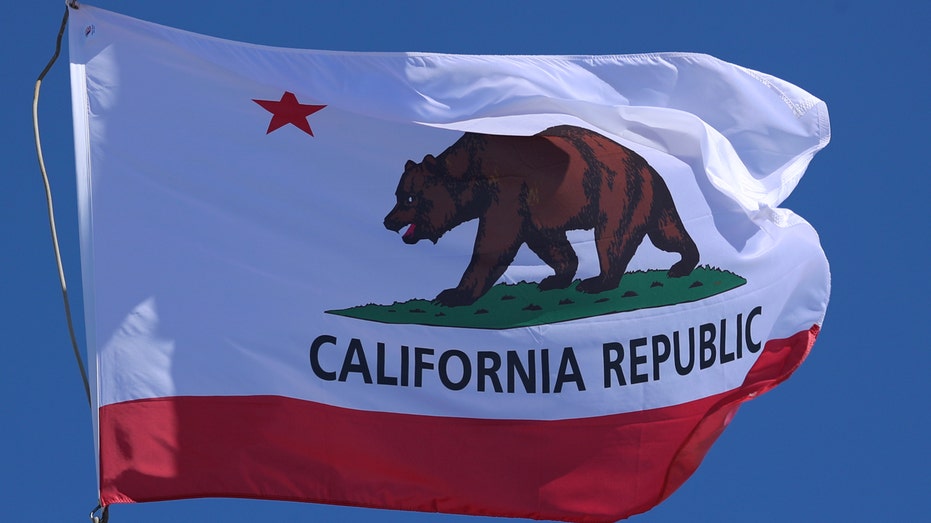
An unfurled California flag flies in Oceanside, Calif. on Oct. 24, 2017. (Mike Blake/Reuters / Reuters)
“You know what a billionaire said to me once? He said, ‘You know what the difference is between 100 million and a billion? Nothing.’ They’ll be fine. It’s people that need them that are not, and we’re running them out of California.”
Under the proposed ballot initiative, the one-time tax would be due in 2027, and taxpayers could spread payments over five years with additional nondeductible charges, according to the Legislative Analyst’s Office.
GET FOX BUSINESS ON THE GO BY CLICKING HERE
FOX Business host Marcus Lemonis discusses billionaires fleeing California to avoid a proposed wealth tax on ‘The Bottom Line.’
FOX Business’ Kristen Altus contributed to this report.

Business
Rainbow Rare Earths Limited 2026 Q2 – Results – Earnings Call Presentation (OTCMKTS:RBWRF) 2026-04-09


Seeking Alpha’s transcripts team is responsible for the development of all of our transcript-related projects. We currently publish thousands of quarterly earnings calls per quarter on our site and are continuing to grow and expand our coverage. The purpose of this profile is to allow us to share with our readers new transcript-related developments. Thanks, SA Transcripts Team

U.S. Money Markets: Slow Calm To Steady State

Epam Systems stock hits 52-week low at $125.53
BlackBerry earnings up next: All eyes on FY27 revenue outlook

The U.S. Tariff Shock In 2025 Vs. 2026 – Same Negative Impact, Different Drivers
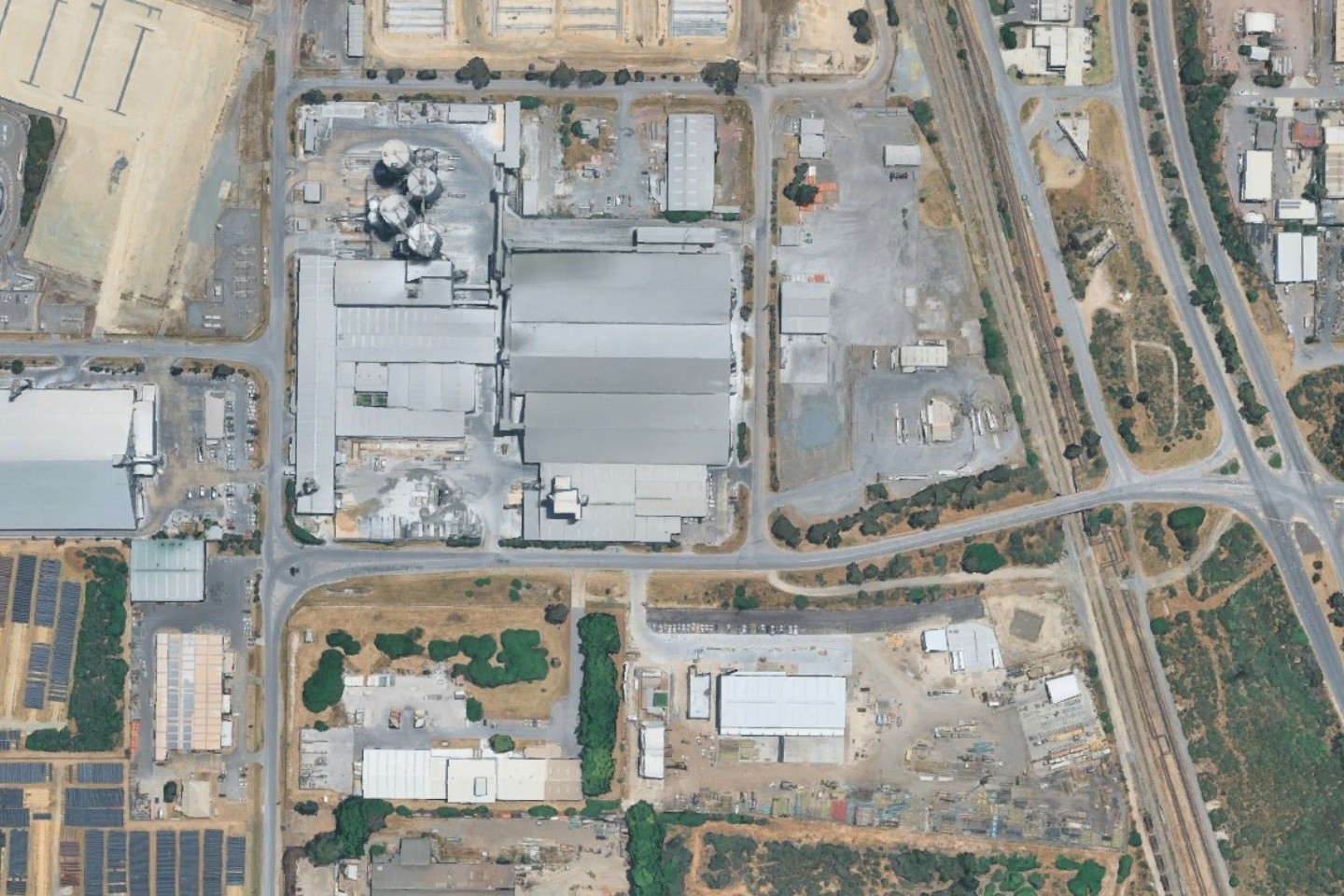
The two purchases in Naval Base are part of Main Roads’ plans to make way for the state’s $7.2 billion Westport project.


American Airlines raises checked bag fees, trims economy perks amid soaring fuel prices

Dwayne Schnell | 500px Plus | Getty Images
A version of this article first appeared in CNBC’s Inside Wealth newsletter with Robert Frank, a weekly guide to the high-net-worth investor and consumer. Sign up to receive future editions, straight to your inbox.
The Iran war has propelled oil prices to above $94 a barrel, up about 30% since the conflict began in late February. That rally has been a boon for investment firms of ultra-wealthy families who made opportunistic bets on oil in recent years.
Since the pandemic, private equity funds and other institutional investors have backed away from oil and gas in part due to pressure from environmentally conscious stakeholders. Family offices have stepped in to fill some of that void, investors and advisors told CNBC.
While many family offices are environmentally minded — with a September survey by Citi Private Bank showing more than half of respondents reporting they were likely to make sustainable investments in the next five years — they’re not subject to the same ESG mandates as private equity firms or endowments, which have faced pressure to divest from oil and gas.
“Family offices are contrarian players. A lot of investors left the sector for non-fundamental reasons, like endowment funds, who had students protesting,” said Keith Behrens, head of energy and clean energy investment banking at Stephens. “Family offices saw that flight of capital, and it created really good investment opportunities for them. They were able to come in and invest with pretty reasonable cash flow multiples.”
Family offices also have an edge on private equity players as they generally hold investments for longer periods, meaning they can weather oil price fluctuations and dealmaking downturns, according to Gillon Capital’s Jeff Peterson.
“We back teams who are looking to build businesses over the long term, because that’s where we really differentiate ourselves. A fund can only really hold a business for their fund life,” he said. “We invest for generations in mind so we can look through current cycles.”
Peterson has managed investments for the descendants of oil tycoon H.L. Hunt for 14 years. About five years ago, A.G. Hill Partners, one of the family’s personal investment firms, doubled down on oil and gas to take advantage of attractive valuations.
Multiples for the sector typically range between two to three times cash flow, according to Peterson, who is now chief investment officer for Gillon Capital, a family office spun out of A.G. Hill Partners a year ago.
Peterson said the family has taken the lead on major deals in the sector, such as forming a consortium of family offices and a few PE funds for the $2 billion acquisition of natural gas producer PureWest Energy. The family is also an anchor investor in a minerals and royalty fund that has raised about $500 million in capital and has a substantial position in the Permian Basin, which is the highest-producing oil field in the U.S., he said.
The sector is increasingly drawing interest from family offices without ties to energy, according to Tailwater Capital’s Doug Prieto. He leads upstream energy funds, which back oil and gas exploration and production, for the middle-market PE firm. Prieto said the funds have raised about $500 million from family offices without backgrounds in energy and just last week took a commitment from a family office built from an options-trading fortune.
Family offices without energy expertise are typically seeking to diversify their portfolio with assets that are uncorrelated to stocks and bonds, Prieto said. Oil and gas are also attractive as inflation hedges, he added.
The Trump administration’s efforts to prioritize oil, gas and nuclear power over clean energy have given investors more confidence in the sector, according to Ellen Conley, lawyer and co-chair of Haynes Boone’s energy finance practice group.
Plus, the potential for cash dividends appeals to family offices, she said.
“Family offices are viewing these assets as cash-flowing real assets rather than a speculative commodity gamble,” she said. “We’re dealing with real assets, particularly in Texas, where you have this repeatable cash flow and predictive models.”
Conley said investors’ interest in energy was already on the rise before the recent oil surge. But headlines about oil prices tied to the Iran war have spurred queries from family offices looking to invest, according to Vicki Odette, global chair of Haynes Boone’s investment management practice group.
However, investors who are new to the space can only realistically take advantage of the current price surge by hedging, Peterson said.
“For anybody to start a drilling program today, you’re really not looking at production this calendar year. You’re looking at next year,” said Peterson.
Analysts generally expect the current spike to be temporary.
And while high prices are good for existing investors, they make it harder to get deals done, according to Behrens.
“If someone’s selling a property, they’re going to want to sell it at the highest price possible and get the latest day close,” he said. “The buyer is going to say, ‘Hey, that’s great that oil is at $115 a barrel, but three months ago it was at $60.’”
Prieto added that it is possible to have too much of a good thing. High oil prices for a prolonged period of time poses a recession risk, he said.
“We like to see a robust U.S. economy. I think for us, somewhere between $75 and $85 a barrel feels pretty darn good,” he said. “When you get over $100, you start to have adverse impacts that don’t benefit anyone.”

Iran is demanding the right to collect tolls in the Strait of Hormuz as a precondition for reopening the vital waterway after its war with the United States and Israel.
The strait is a key route for global oil supplies, but analysts warn that charging ships would violate the long-standing principle of freedom of navigation under international law.
The United Nations’ Convention on the Law of the Sea, in effect since 1994, guarantees the “innocent passage” of ships through straits that do not threaten coastal states.
Experts say allowing Iran to collect tolls could set a dangerous precedent.
“Freedom of navigation has always been recognized, including specifically in straits,” said Philippe Delebecque, a maritime law professor at Paris’ Sorbonne University.
He added that if Iran were allowed to charge tolls, other strategic waterways like the Strait of Gibraltar or the Strait of Malacca could face similar restrictions, potentially undermining international maritime order.
According to AP News, after the war began on February 28, Iran blocked the strait with attacks and threats, causing immediate shortages in Asia and higher gasoline prices in the US and Europe.
It then implemented a “tollbooth” scheme, requiring ships to detour around Larak Island and submit detailed information about their crew and cargo to intermediaries of Iran’s Islamic Revolutionary Guards Corps.
At least two vessels reportedly paid $2 million in Chinese yuan for passage.
US Opposes Iran’s Hormuz Toll Plan
Iran’s 10-point proposal to end the war includes allowing itself and Oman to charge ships passing through the strait, with the funds earmarked for reconstruction, according to a regional official involved in the negotiations.
While the financial impact of tolls on global oil prices might be small—around $1 per barrel on a fully loaded tanker—experts warn about the geopolitical consequences.
An Iranian toll could enrich the Revolutionary Guards and encourage other countries to restrict navigation in their waters, including China in the Taiwan Strait.
US President Donald Trump has prioritized reopening the strait, but the White House opposes tolls, Inquirer reported.
Gulf producers, including Saudi Arabia, share the concern, fearing that Iranian control could limit oil exports.
The region has already had to shut down roughly 12 million barrels per day in crude production due to the blockade, and pipelines bypassing the strait are insufficient to replace lost shipments.
Julien Raynaut, head of the French Association of Maritime Law, said, “Not having ratified the convention doesn’t give Iran total freedom of action in the Strait of Hormuz. It remains subject to international law and notably this customary right of passage.”
Analysts argue that reopening the strait freely would stabilize energy prices, reduce the geopolitical windfall for Russia, and restore a measure of predictability to global trade.
Originally published on vcpost.com


I am Gen Alpha. I have more than 14 years of investment experience, and an MBA in Finance. I focus on stocks that are more defensive in nature, with a medium- to long-term horizon. I provide high-yield, dividend growth investment ideas in the investing group iREIT®+HOYA Capital. The group helps investors achieve dependable monthly income, portfolio diversification, and inflation hedging. It provides investment research on REITs, ETFs, closed-end funds, preferreds, and dividend champions across asset classes. It offers income-focused portfolios targeting dividend yields up to 10%. Learn more.
Analyst’s Disclosure: I/we have a beneficial long position in the shares of REXR, PFE either through stock ownership, options, or other derivatives. I wrote this article myself, and it expresses my own opinions. I am not receiving compensation for it (other than from Seeking Alpha). I have no business relationship with any company whose stock is mentioned in this article.
I am not an investment advisor. This article is for informational purposes and does not constitute as financial advice. Readers are encouraged and expected to perform due diligence and draw their own conclusions prior to making any investment decisions.
Seeking Alpha’s Disclosure: Past performance is no guarantee of future results. No recommendation or advice is being given as to whether any investment is suitable for a particular investor. Any views or opinions expressed above may not reflect those of Seeking Alpha as a whole. Seeking Alpha is not a licensed securities dealer, broker or US investment adviser or investment bank. Our analysts are third party authors that include both professional investors and individual investors who may not be licensed or certified by any institute or regulatory body.

Rainbow Rare Earths Limited 2026 Q2 – Results – Earnings Call Presentation (OTCMKTS:RBWRF) 2026-04-09

Tokenized Commodities Push Crypto Platforms Into Direct Competition With Traditional Finance

Netflix Fans Hype About Drama In ‘Temptation Island’ S2


-

 NewsBeat7 days ago
Steven Gerrard disagrees with Gary Neville over ‘shock’ Chelsea and Arsenal claim | Football
-

 Business7 days ago
No Jackpot Winner and $194 Million Prize Rolls Over
-

 Fashion6 days ago
Weekend Open Thread: Spanx – Corporette.com
-

 Business5 days ago
Expert Picks for Every Need
-

 Business4 days ago
Three Gulf funds agree to back Paramount’s $81 billion takeover of Warner, WSJ reports
-

 Sports5 days ago
India men’s 4x400m and mixed 4x100m relay teams register big progress | Other Sports News
-

 Tech2 days ago
How Long Can You Drive With Expired Registration? What Florida Law Says
-
Business4 days ago
No Jackpot Winner, Prize to Climb to $231 Million
-

 Fashion3 days ago
Massimo Dutti Offers Inspiration for Your Summer Mood Board
-

 Tech7 days ago
Commonwealth Fusion Systems leans on magnets for near-term revenue
-

 Fashion2 days ago
Let’s Discuss: DEI in 2026
-
Politics6 days ago
Wings Over Scotland | The quality of mercy
-
 Business5 days ago
Akebia Therapeutics, Inc. (AKBA) Discusses Pipeline Progress and Strategic Focus on Kidney Disease Treatments at R&D Day – Slideshow
-

 Fashion7 days ago
Statement Sunglasses: The Accessory Shaping Modern Fashion
-

 Crypto World24 hours ago
Bitcoin recovers as US and Iran Agree a Ceasefire Deal
-

 Politics6 days ago
East Jerusalem Palestinian families eviction orders
-

 Sports7 days ago
Which German players will make final cut?
-

 Fashion7 days ago
For Love & Lemons’ Spring 2026 Line is for the Romantics
-

 Politics6 days ago
Why so many children are now classified as ‘disabled’
-

 Fashion7 days ago
Coffee Break: Santa Croce Tote
You must be logged in to post a comment Login