
Business
REVEALED: Dubai real estate market trends in 2026, according to experts

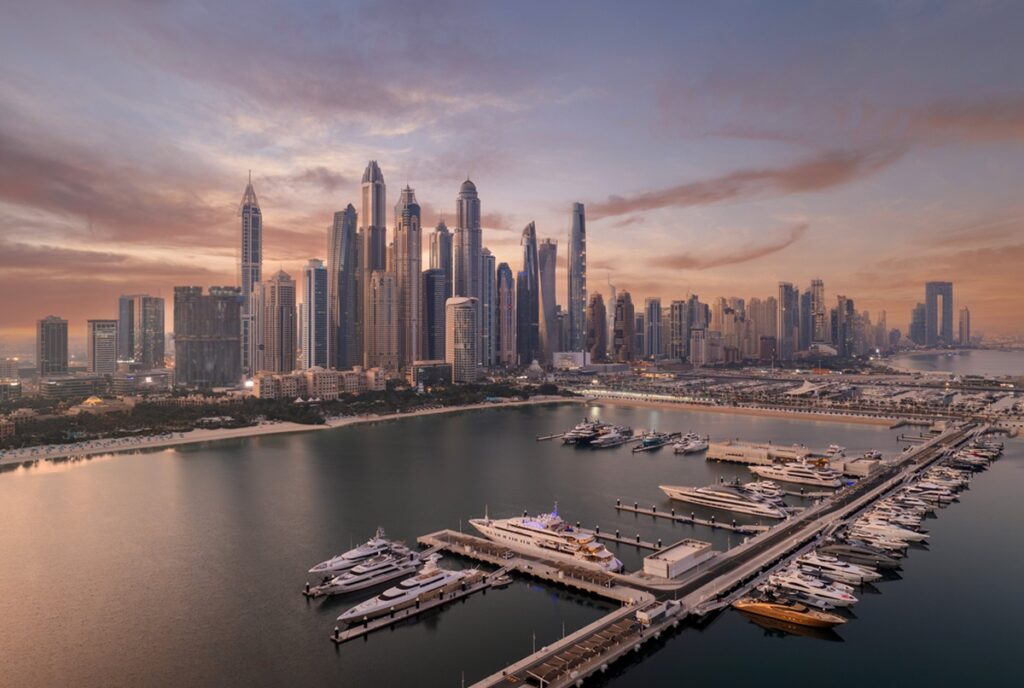
Industry experts told Arabian Business that Dubai is no longer a single, rising tide lifting all property equally. Instead, the market is fragmenting by asset type, buyer profile and location, with villas emerging as the clearest winners, apartments entering a phase of stabilisation and long-term residents increasingly boosting demand.
Growth remains, but the pattern has changed
Dubai is closing 2025 with residential transaction values exceeding AED 500 billion, supported by rapid population growth that added more than 200,000 residents in a single year. Activity remained broad-based across villas, townhouses and apartments.
Yet as the year progressed, price momentum became more selective.
“It’s a market heading into 2026 with steady growth, tempered by pockets of stabilisation,” said Louis Harding, CEO of betterhomes. “That’s not a correction. It’s a cycle maturing naturally.”
Harding said demand continues to be underpinned by population growth, foreign investment and end-users transitioning from renting to owning. However, parts of the apartment market are seeing more choice as supply increases, giving buyers greater negotiating power and slowing price growth in certain communities.
Villas pull ahead as supply tightens
The strongest divergence is emerging in the villa and townhouse segment.
New villa supply remains limited, while demand from families relocating to Dubai continues to rise. As a result, prices and rents for villas have continued to climb faster than apartments.
“If you own a villa or townhouse today, you’re essentially sitting on a goldmine,” said Lewis Allsopp, chairman of Allsopp & Allsopp. “There is very limited stock and sustained demand from families and high-net-worth buyers.”
Allsopp & Allsopp recorded a 22 per cent year-on-year increase in average sales prices and an 18 per cent rise in rental rates in 2025. In November alone, villas on Palm Jumeirah rented for up to AED 1.5 million annually, while properties in Tilal Al Ghaf achieved close to AED 900,000, the brokerage said.
Apartments, by contrast, are entering a more balanced phase. While demand remains healthy, particularly for larger units, studios and one-bedroom apartments are seeing slower absorption as new supply comes to market.
“Dubai is growing so quickly that both segments are still appreciating,” Allsopp said. “But they are doing so for very different reasons.”

Developers pivot toward discipline
Developers are also adjusting their strategies as the market evolves.
Rather than pursuing volume-led expansion, many are recalibrating around delivery quality, location and long-term demand.
“2026 will be defined by strategic and measured growth,” said Ramjee Iyer, chairman and CEO of Acube Developments. “Sustainable value is built by focusing on the right locations, the right product and the right buyer segments, not expansion for its own sake.”
Iyer said demand remains strongest in the affordable luxury segment, typically priced between AED 1 million and AED 3 million, where end-users dominate. At the ultra-luxury end, interest remains strong but increasingly selective, with buyers prioritising differentiation and proven delivery over headline pricing.
“What is fading is speculative buying and impractical design,” he said. “The market is rewarding thoughtful, reliable development.”
Golden Visa drives long-term ownership
A key structural force shaping Dubai’s housing market is long-term residency.
Industry experts say the Golden Visa has altered buyer behaviour by encouraging residents to treat Dubai as a permanent base rather than a temporary assignment.
“The Golden Visa has helped anchor population growth and reinforced confidence among buyers making longer-term commitments to the city,” said Gil Van Gelder, director of residential brokerage at Espace Real Estate.
Van Gelder said the shift has translated into stronger demand for primary residences, family homes and established communities, particularly in villa and townhouse developments.
Iyer echoed that view, saying long-term residency has changed how developers approach design and amenities. “Dubai is now seen as a permanent home, not just an investment,” he said.
UK buyers remain a key force
UK-origin demand continues to play a significant role in Dubai’s property market and is expected to remain strong into 2026, executives said.
Economic uncertainty and tax changes in Britain have made long-term planning more complex for many investors, while Dubai’s regulatory and tax environment remains comparatively predictable.
“The UK has long been the largest buyer nationality for us, and we saw that trend strengthen in the second half of 2025,” Van Gelder said. “That demand continues across both prime and mid-market segments, particularly within the villa market.”
Allsopp said many UK buyers are relocating wealth, establishing businesses and committing to Dubai for the long term rather than making short-term investments.
Alongside the UK, buyers from India, Western Europe, the GCC and North America continue to underpin demand, giving Dubai one of the most internationally diversified residential markets globally.
Oversupply risks remain localised
Concerns around oversupply have resurfaced as thousands of new residential units are scheduled for delivery in 2026. However, industry leaders say the risk is uneven rather than systemic.
Van Gelder said any imbalance is likely to be confined to specific apartment segments or locations, while Harding noted that headline delivery numbers often overstate actual supply due to delays and phased handovers.
Population growth alone, Harding said, requires tens of thousands of new homes annually just to keep pace.
For buyers and investors, experts believe the message heading into 2026 is not to exit the market, but to be more selective.
Off-plan developments remain attractive for those seeking long-term capital growth and flexible payment plans, particularly with established developers. The secondary market continues to appeal to investors prioritising immediate rental income and lower risk.



