

Business
Rohit Singhania bets on financials, telecom and healthcare for alpha generation

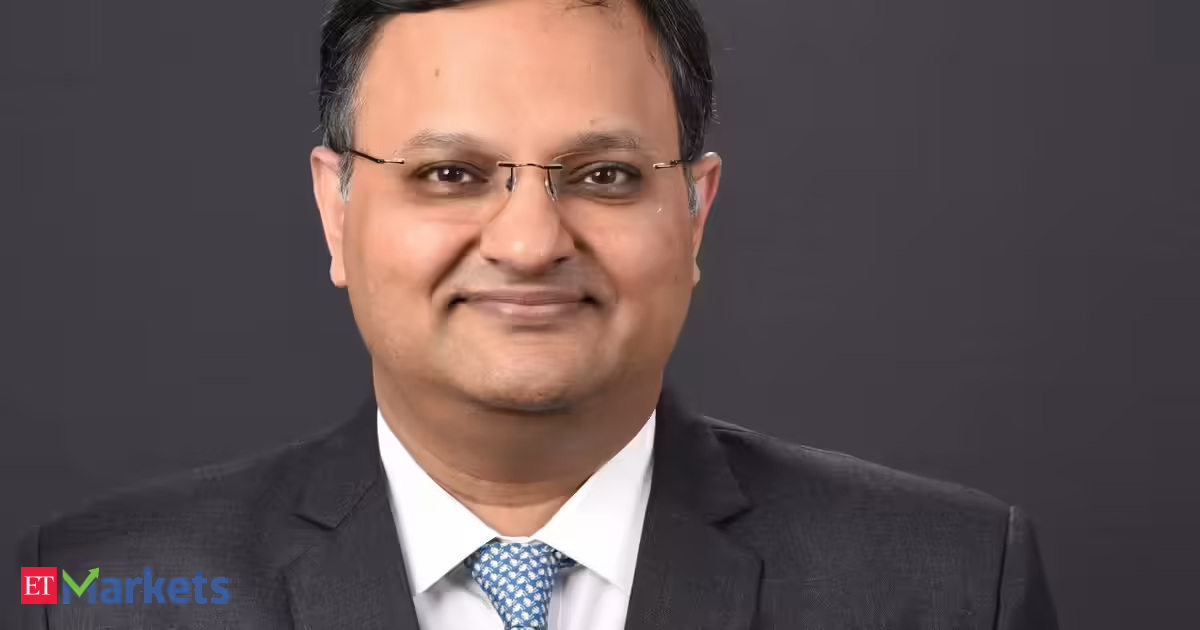
Speaking to ET Now, Rohit Singhania from DSP Mutual Fund said investors are entering a “wait and watch” phase, with risks rising steadily over the past month as the ongoing global conflict refuses to ease.
“What we have seen in the last one month or so is the risks have gone up. Till one month back, 45 days back, the view was the war is not going to last for long. But the fact is it is still going on,” Singhania said.
He added that while the full impact of higher commodity prices and supply chain disruptions has not yet filtered into the economy, the pressure is beginning to build beneath the surface.
“The pressure of commodity prices going up and the impact it may have on inflation, we have still not felt the actual impact because if you see the transport fuel prices, other prices have still not gone up a lot,” he said.

According to Singhania, prolonged geopolitical uncertainty could eventually force companies to raise prices, which may hurt demand and corporate profitability over the coming quarters.
“So, I would say yes, risks still remain in terms of supply chain disruptions, they continue. Eventually, if this continues for longer, we will see price hikes also happening. So, what it does to demand? So, it is a wait and watch period right now,” he noted.Earnings Risks Still Not Fully Priced In
Despite the correction seen in several pockets of the market, Singhania believes valuations are not yet attractive enough to justify an aggressive investment stance.
“I would say not so much currently because if you go longer-term averages if you take, 16.5-17 is a fair multiple if you look at two years forward. So, I would say risk-reward is still not favourable,” he said.
DSP has already revised down earnings assumptions and valuation expectations for several holdings, but the fund house is not rushing to deploy capital aggressively.
“We need to be aware about the potential risk which we have not seen in the last one-and-a-half months since the war started,” he added.
On market valuations, Singhania said the Nifty currently appears balanced between upside and downside risks.
“If people just looking at yesterday’s Nifty at around 23,500, it was giving me an upside of 7-8% and a downside of 7-8%. So, we are somewhere in the middle right now,” he explained.
However, he indicated that a deeper correction could create a more compelling buying opportunity.
“So, I would not be all in or all out, but yes, another 5-7% correction if at all the market corrects, that is the time I would go aggressively and buy more in my portfolios,” he said.
Largecaps Preferred Amid Uncertainty
Singhania reiterated that DSP continues to maintain a slight preference for largecaps in the current environment, though he stressed that portfolio construction remains fundamentally bottom-up rather than driven by market capitalisation labels.
“As a fund manager we do not start by saying I want to buy a largecap stock or a midcap or smallcap,” he said.
He explained that investment decisions are based on business quality, valuations, and risk visibility over the next couple of years.
At the same time, he acknowledged that smallcaps appear relatively more expensive than largecaps at present.
“In this current environment of uncertainty where there are lot of unknowns versus known, historically it tells us largecaps tend to do better in these periods,” Singhania said.
Still, he clarified that compelling opportunities in the smallcap universe would not be ignored simply because of broader valuation concerns.
Financials, Telecom and Healthcare Stand Out
Among sectors, Singhania said DSP remains constructive on financials, telecom, and select healthcare names over the next 12 to 18 months.
“We are quite positive on the financial space whether it is banks, insurance companies, few capital market plays. We also like telecom and few healthcare names,” he said.
The optimism on banks stems largely from stronger balance sheets across both lenders and corporates, a stark contrast to the stress seen in previous economic slowdowns.
“Today even if a pure commodity company comes and tells us that for the next two quarters my profits are not going to grow or maybe they can fall, we do not worry a lot because they have strong balance sheets,” he said.
On telecom, Singhania highlighted the sector’s defensive characteristics and resilient demand profile.
“They are not really impacted by what is happening globally. Like, I need to use my telecom every day. We all are using our phones. We use data,” he said.
Healthcare, meanwhile, is being driven more by earnings visibility than by valuation comfort.
“So, healthcare is a call more on the visibility of business growth rather than on valuations,” he explained, referring specifically to hospitals and diagnostic businesses.
IT Remains a “Wait and Watch” Bet
Singhania struck a cautious tone on the information technology sector, admitting that the evolving business environment has made forecasting difficult.
“So, IT again, it is a wait and watch for me at least, it is my personal view,” he said.
He acknowledged that IT stocks appear inexpensive on pure valuation metrics, but warned that business visibility remains weak amid concerns over slowing demand and margin pressures.
“Every day is a new day today. So again, we as DSP we are trying to understand what can be the actual impact. Is it a one, two, three more quarter impact or it can continue for next one-two years?” he said.
DSP’s funds currently remain slightly underweight on IT, with Singhania saying there is no strong fundamental trigger yet to turn positive on the sector.
“When you compare it with business outlook or business visibility, you feel there is maybe still time to wait it out,” he added.



As a detail-oriented investor with a strong foundation in finance and business writing, I focus on analyzing undervalued and disliked companies or industries that have strong fundamentals and good cash flows. I have a particular interest in sectors such as Oil&Gas and consumer goods. Basically, anything that has been unloved for unjustified reasons that could offer substantial returns. Energy Transfer is one of those companies that I came across when no one wanted to touch it and now I can’t resolve myself to sell it. I will always focus more on long-term value investing but I can sometimes lose myself in possible deal arbitrage such as with Microsoft/ Activision Blizzard, Spirit Airlines/Jetblue (that one still hurts), and Nippon/U.S. Steel (perfect exit at $50.19). I tend to shun businesses that I can’t understand either high-tech or certain consumer goods such as fashion (give me a Levi’s jeans). I don’t understand why anyone would invest in cryptocurrencies as well. Through Seeking Alpha, I aim to connect with like-minded investors, share insights, and build a collaborative community of individuals seeking superior returns and informed decision-making, currently on a quest to review every public company.
Analyst’s Disclosure: I/we have no stock, option or similar derivative position in any of the companies mentioned, and no plans to initiate any such positions within the next 72 hours. I wrote this article myself, and it expresses my own opinions. I am not receiving compensation for it (other than from Seeking Alpha). I have no business relationship with any company whose stock is mentioned in this article.
Seeking Alpha’s Disclosure: Past performance is no guarantee of future results. No recommendation or advice is being given as to whether any investment is suitable for a particular investor. Any views or opinions expressed above may not reflect those of Seeking Alpha as a whole. Seeking Alpha is not a licensed securities dealer, broker or US investment adviser or investment bank. Our analysts are third party authors that include both professional investors and individual investors who may not be licensed or certified by any institute or regulatory body.

Form 13G TOWER SEMICONDUCTOR LTD For: 9 June


The market’s typical reaction to tech stock wipeouts like the one on Friday has been a strong bounce the following session. But Iranian missile attacks on Israel and that country’s response reminded investors of unpleasant geopolitical realities: There’s still a war on. Oil prices are up sharply to start the week and stock futures are mixed ahead of the open. The week’s big event will be SpaceX’s initial public offering.
📈 Follow our live markets data and coverage.
Copyright ©2026 Dow Jones & Company, Inc. All Rights Reserved. 87990cbe856818d5eddac44c7b1cdeb8

Columbia Select Mid Cap Growth Fund Q1 2026 Commentary

There is a bidding war for the world’s oldest bank.
Italy’s Intesa Sanpaolo on Monday launched a $35 billion takeover offer for smaller rival Banca Monte dei Paschi BMPS 2.63%increase; green up pointing triangle di Siena, in the latest sign of consolidation in the country’s banking industry. The bid came a day after fellow Italian lender Banco BPM said it had approached Monte dei Paschi about a possible merger.
Copyright ©2026 Dow Jones & Company, Inc. All Rights Reserved. 87990cbe856818d5eddac44c7b1cdeb8

GSK plc (GSK) Nuvalent, Inc. – M&A Call – Slideshow

OpenTheBooks CEO John Hart joins ‘Varney & Co.’ to discuss long-term Social Security and Medicare deficits as fiscal pressures mount.
The clock is ticking faster for American workers and seniors.
The Social Security Administration’s newly released 2026 Trustees Report confirms that the federal retirement safety net is less than seven years away from fiscal depletion, as the Old-Age and Survivors Insurance (OASI) trust fund will completely exhaust its accumulated reserves in the fourth quarter of 2032.
Once the reserve dries up, ongoing tax revenues will cover only 78% of scheduled retirement benefits, according to the report.
“One Big Beautiful Bill Act (OBBBA): Enacted on July 4, 2025, this law makes permanent the lower income tax rates and adjusted tax brackets originally enacted under the 2017 Tax Cuts and Jobs Act and both increases and makes permanent the larger standard deduction of the 2017 Act,” the report says.
AMERICANS RETHINK SOCIAL SECURITY TIMING AS LONGER LIFESPANS AND INSOLVENCY FEARS RAISE THE STAKES
“The OBBBA also adds a temporary additional standard deduction for taxpayers over age 65,” it says. “As a result, less income tax will be paid on Social Security benefits, and the OASI and DI Trust Funds will receive lower levels of revenue in the future from income taxation of Social Security benefits.”

A Social Security Administration trustees report, released Tuesday, confirmed that the trust fund behind schedule payments will become insolvent by late 2032. (Getty Images)
The nonpartisan Congressional Budget Office (CBO) previously warned about the fund’s insolvency date, explaining that, “because the government would not have the legal authority to make payments in excess of receipts, it would no longer be able to pay the full amounts scheduled or projected under current law.”
Social Security benefits are funded by payroll tax receipts along with the OASI trust fund, and once the trust fund is tapped out, the federal government would only be able to pay benefits equal to incoming payroll tax revenue under current law — meaning benefits would face cuts without action by Congress.
Rep. David Schweikert, R-Az., highlights a potential 24% benefit cut under current law, warning it could double senior poverty in America as the Social Security Trust Fund is projected to run dry by 2032 according to a report.
In an interview on the “Moon Griffon Show” Monday, House Speaker Mike Johnson, R-La., said: “The reason we’re in trouble is because over 74% of federal spending is on autopilot — mandatory spending, that is your entitlement programs like Medicare, Medicaid and things like Social Security — they have to be adjusted and fixed.”
“We have a plan to do that next year, and it’s critical, because we’re at $40 trillion-plus in debt. At some point you get into a hole so deep you can’t climb out of it, so desperate times call for desperate measures,” Johnson said.
GET FOX BUSINESS ON THE GO BY CLICKING HERE
Pontera co-founder and chairman Uri Levine discusses saving for retirement on ‘The Claman Countdown.’
The Social Security Administration’s latest trustees report suggests that, if Congress alters the law to allow fund sharing between the retirement and healthier disability insurance system, the total depletion window can be extended to the third quarter of 2034. Following a combined depletion in 2034, 83% of scheduled benefits will be funded by ongoing payroll collections.
“The Trustees recommend that lawmakers address the projected trust fund shortfalls in a timely way to phase in necessary changes gradually and give workers and beneficiaries time to adjust,” says the report. “Implementing changes sooner rather than later would allow more generations to share in the needed revenue increases or reductions in scheduled benefits.”
FOX Business’ Eric Revell contributed to this report.

NEW YORK — The CBOE Volatility Index, widely known as the VIX or “fear gauge,” dropped 1.19 points, or 6.29%, to close at 17.73 on Tuesday, reflecting reduced anxiety among investors as major stock indices advanced on renewed optimism around artificial intelligence spending and signs of easing geopolitical tensions.
The decline in the VIX signals improving market sentiment and lower expectations for large swings in equity prices over the coming 30 days. When stocks rise steadily and risk appetite improves, the VIX typically falls as demand for protective options decreases. Tuesday’s move brought the index back toward levels seen during calmer periods earlier this year, well below the elevated readings that often accompany market stress.
The drop aligned with gains across major benchmarks. The Nasdaq Composite rose more than 1%, the Dow Jones Industrial Average advanced nearly 390 points, and the Russell 2000 small-cap index posted a strong 2.22% gain. Broad participation in the rally, particularly in technology and growth-oriented sectors, helped calm volatility expectations.
Analysts attributed the VIX decline to several supportive factors. Continued enthusiasm for AI infrastructure investments has bolstered confidence in corporate earnings growth and productivity gains. Major technology and semiconductor companies have driven much of the market’s upside, with spillover effects benefiting broader indices and reducing perceived downside risks.
Geopolitical developments also contributed to the calmer tone. Reports of progress in diplomatic efforts involving Middle East tensions helped ease concerns over potential oil supply disruptions and wider economic fallout. Lower energy prices supported transportation and industrial sectors, further encouraging risk-taking and diminishing the need for volatility hedges.
The VIX, which measures implied volatility derived from S&P 500 options prices, remains a key barometer for investor sentiment. Readings below 20 generally indicate relative complacency, while moves above 30 often signal heightened fear. At 17.73, the current level suggests markets are pricing in a period of moderate stability, though traders remain watchful for shifts in economic data or policy signals.
Market participants noted improving breadth and constructive technical patterns across equities. Stronger participation from small-cap and cyclical stocks has helped validate the rally, reducing concentration risks that sometimes fuel volatility. Volume remained healthy, indicating genuine conviction rather than short-covering alone.
Looking ahead, investors will focus on upcoming inflation data, including the consumer price index, for clues on the Federal Reserve’s policy path. While expectations for aggressive rate cuts have moderated, any evidence of cooling price pressures could further support lower volatility. Corporate earnings season also continues to provide company-specific insights that influence sentiment.
The broader economic backdrop includes resilient growth signals and solid corporate results in recent quarters. Many firms have highlighted AI-related opportunities, reinforcing long-term optimism even as short-term uncertainties around trade, regulation and consumer spending persist. The VIX’s sensitivity to these narratives makes its recent decline noteworthy.
International factors played a supporting role. Mixed but generally stable performance in Asian and European markets, combined with a steadier U.S. dollar, contributed to a less turbulent global environment. Bond yields moved modestly as investors balanced growth optimism with rate expectations, avoiding sharp moves that often spike volatility.
For options traders and portfolio managers, the lower VIX translates into cheaper protection costs, potentially encouraging further positioning in equities. However, many caution that the index can reverse quickly on unexpected news. Historical patterns show that periods of extended low volatility sometimes precede sharper corrections when catalysts emerge.
The Russell 2000’s outperformance on Tuesday highlighted broadening market strength, a development often associated with declining fear levels. Smaller companies, more sensitive to domestic conditions and borrowing costs, tend to benefit when rate cut expectations improve and economic resilience appears solid.
Sector rotation dynamics have favored growth areas tied to innovation while also lifting value and cyclical names. This healthy mix has helped sustain the rally and keep volatility contained. Financial stocks gained on improved lending outlooks, while industrials benefited from lower input costs.
As trading concluded, futures pointed to continued monitoring overnight. Market breadth remained supportive, with advancing issues leading decliners on major exchanges. The VIX’s path in the coming sessions will depend heavily on economic releases and corporate guidance.
The current environment reflects a maturing bull market where innovation themes coexist with traditional economic drivers. While risks such as policy shifts or geopolitical flare-ups remain, the VIX’s decline suggests investors currently assign lower probability to sharp downside moves in the near term.
Tuesday’s action reinforces the interconnected nature of equity performance and volatility expectations. As long as positive catalysts around technology and economic stability persist, the fear gauge is likely to remain subdued. However, sustained vigilance is warranted given the market’s history of rapid sentiment shifts.
Broader participation and constructive data flows could support further moderation in volatility. Conversely, hotter-than-expected inflation or disappointing earnings could prompt a quick rebound in the VIX. For now, the lower reading provides a tailwind for risk assets and reflects confidence in the ongoing expansion.
Investors are advised to maintain balanced portfolios and avoid overexposure based solely on short-term VIX moves. The index serves best as one tool among many for assessing market conditions rather than a standalone signal for trading decisions.
The decline to 17.73 marks another step toward normalization after earlier spikes tied to various uncertainties. With major indices pushing higher and sentiment improving, the VIX’s behavior underscores a market that is gradually digesting risks while focusing on growth opportunities in artificial intelligence and beyond.
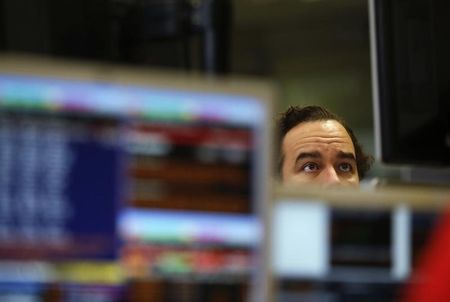
US volatility index rises above 23 on Iran tensions
Business
Gold Prices Ease 0.25% to $4,352.50 as Equity Rally and Stronger Dollar Curb Safe-Haven Buying

NEW YORK — Gold futures declined 0.25% on Tuesday, settling at $4,352.50 per ounce as a rebound in global stock markets and a firmer U.S. dollar reduced demand for the precious metal as a safe-haven asset, even as broader economic uncertainties and geopolitical undercurrents provided some underlying support.
The modest pullback reflected shifting investor sentiment after recent strong gains for gold, which had climbed to record territory earlier in the year amid central bank buying, inflation hedging and geopolitical risks. Tuesday’s decline came as major U.S. equity indices posted solid advances, with the Nasdaq rising over 1%, the Dow gaining nearly 390 points and small-cap stocks in the Russell 2000 climbing more than 2%.
A stronger dollar weighed on gold, which is priced in the U.S. currency and becomes more expensive for foreign buyers when the greenback appreciates. The dollar index rose modestly as traders assessed upcoming inflation data and Federal Reserve policy signals. Lower bond yields also played a role, with real interest rates remaining a key driver for gold pricing.
Market participants noted that while immediate safe-haven flows eased, structural demand for gold remains robust. Central banks, particularly in emerging markets, have continued adding to reserves as a diversification strategy away from traditional currencies. Industrial demand for gold in electronics and other sectors has also provided a floor.
The session’s price action followed a period of elevated volatility in commodities. Gold had benefited earlier from concerns over Middle East tensions and potential supply disruptions, but signs of diplomatic progress helped calm those fears, allowing investors to rotate back into riskier assets like equities and certain industrial metals.
Analysts highlighted the interplay between gold and broader financial markets. When equities rally on growth optimism — particularly around artificial intelligence and technology infrastructure — capital tends to flow away from non-yielding assets like bullion. Tuesday’s move exemplified that dynamic, with improving risk appetite across sectors reducing the appeal of defensive holdings.
Looking ahead, investors will closely watch the consumer price index release for clues on inflation trends. Cooler-than-expected readings could reinforce expectations for eventual monetary easing, which would typically support gold by lowering opportunity costs. Conversely, persistent inflation might keep real yields elevated and pressure prices in the short term.
Gold’s performance in 2026 has been notable despite periodic corrections. The metal has benefited from a complex mix of factors including geopolitical instability, central bank diversification, and its role as an inflation hedge amid uncertain fiscal policies. Year-to-date gains remain substantial even after Tuesday’s modest retreat.
Comex gold futures traded in a relatively narrow range during the session, with technical support evident around recent moving averages. Trading volume was moderate, suggesting the decline was driven more by profit-taking and rotation than outright bearish conviction. Spot prices followed a similar path, with dealers reporting steady physical demand from jewelry and investment buyers in Asia.
The broader precious metals complex showed mixed results. Silver eased alongside gold, while platinum and palladium displayed greater volatility tied to industrial demand forecasts. Copper and other base metals gained on optimism about global manufacturing recovery and infrastructure spending.
Geopolitical developments continued to influence sentiment. Reduced immediate risks in the Middle East helped stabilize oil prices, which in turn supported a risk-on environment across commodities. However, longer-term uncertainties around trade policies, elections and regional conflicts keep gold’s safe-haven premium intact for many portfolio managers.
Institutional investors have maintained significant allocations to gold through exchange-traded funds and futures positions. While some profit-taking occurred on the rally, overall holdings remain elevated compared to historical averages. Central bank purchases, led by nations seeking to reduce dollar dependence, have provided consistent buying pressure throughout the year.
For retail investors, gold continues to serve as a diversification tool within balanced portfolios. Financial advisers often recommend a modest allocation — typically 5-10% — to hedge against inflation, currency fluctuations and equity market corrections. Tuesday’s price dip may present an entry opportunity for those seeking exposure, though timing remains challenging given the metal’s sensitivity to macroeconomic shifts.
Mining companies with significant gold production saw shares trade mixed. Some benefited from lower input costs and stable operations, while others faced pressure from the spot price decline. The sector as a whole has delivered strong returns in 2026, supported by higher realized prices and operational efficiencies.
As the trading week progresses, attention will turn to additional economic data points and Federal Reserve communications. Any hints of policy flexibility could reignite buying interest in gold, while stronger growth signals might sustain the current rotation into equities.
The modest decline to $4,352.50 reflects normal market fluctuations rather than a fundamental shift in gold’s long-term outlook. Structural drivers including central bank demand, geopolitical risks and its monetary role as an alternative asset continue to underpin the metal’s value proposition in an uncertain global environment.
Commodity strategists expect gold to remain range-bound in the near term while monitoring key resistance and support levels. A break above recent highs would signal renewed safe-haven flows, whereas sustained weakness below important technical thresholds could invite further profit-taking.
Tuesday’s trading underscores gold’s dual nature as both a safe-haven asset and a financial instrument influenced by opportunity costs and risk sentiment. As markets digest the latest economic signals, the metal’s path will likely hinge on the evolving balance between growth optimism and lingering uncertainties.
Investors are advised to maintain a long-term perspective on gold allocations, recognizing its role in portfolio construction rather than chasing short-term price movements. With multiple crosscurrents at play, disciplined risk management remains essential in the current environment.

FIFA names Kraken official crypto exchange supporter for 2026 World Cup

The Sexy Horror Movie That Was Almost A Documentary

Footage shows PSNI cop brutally punching defenceless man



-

 Fashion4 days ago
Weekend Open Thread: Evereve – Corporette.com
-
 Crypto World4 days ago
Jensen Huang Approves Samsung, SK Hynix, and Micron for NVIDIA (NVDA) HBM4 Memory Supply
-

 Sports7 days ago
French Open 2026 results: Alexander Zverev beats Rafael Jodar and will play Jakub Mensik in semi-finals
-
 Business7 days ago
Trump Taps Housing Chief Bill Pulte as Acting Intelligence Director After Gabbard Exit
-

 Crypto World2 days ago
Anatomy of the June crypto crash: Fed, Iran, Saylor
-
 NewsBeat7 days ago
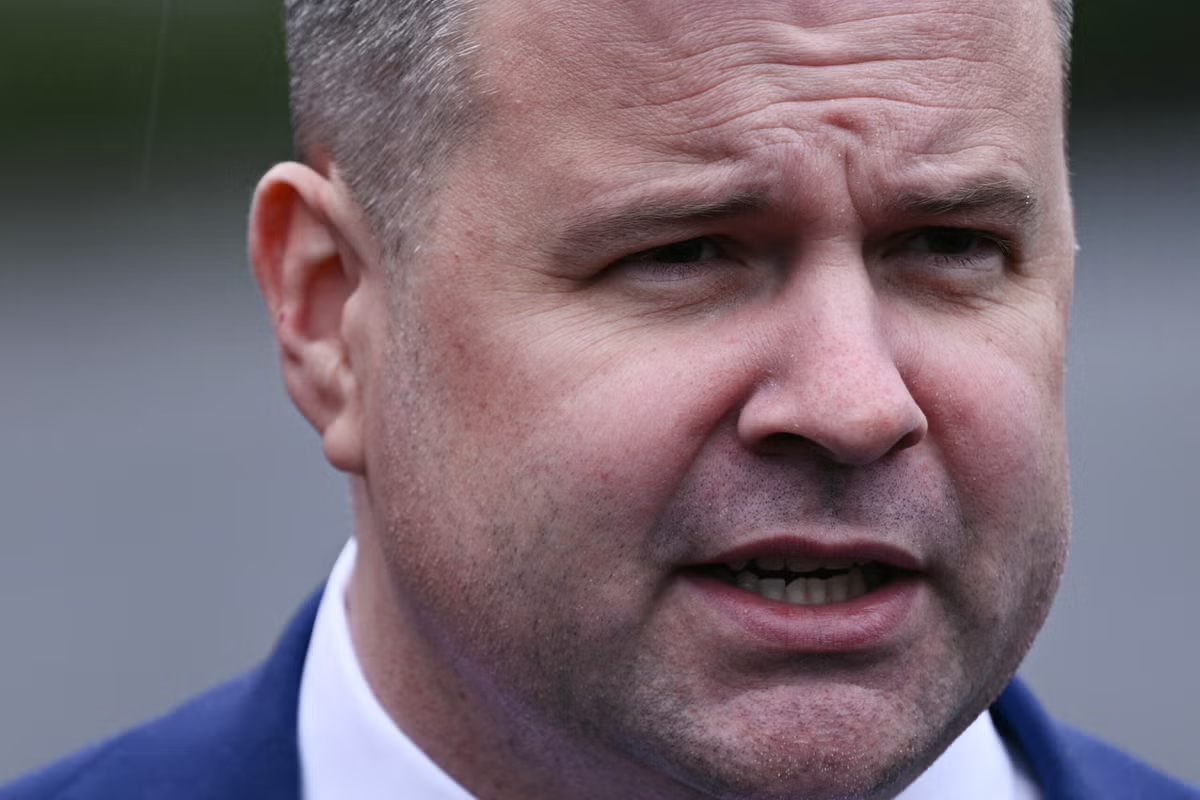
Republicans balk at Trump’s attempt to appoint a MAGA enforcer to lead National Intelligence
-
 Crypto World3 days ago
Senator Cynthia Lummis Calls CLARITY Act the Most Consequential Financial Legislation of This Generation
-
 Entertainment3 days ago
The Best Mystery Series of All Time Is Surging on Streaming 30 Years After It Ended
-
 Business3 days ago
The Pain Points Taking a Fragile Tech Rally Down a Notch
-

 Tech4 days ago
Microsoft launches MXC, an OS-level sandbox for AI agents, with OpenAI and Nvidia already on board
-

 Tech2 days ago
Microsoft unveils seven homegrown AI models in new bid for ‘long term self-sufficiency’
-

 NewsBeat2 days ago
Alexander Zverev wins the French Open to finally earn a 1st Grand Slam title
-
Crypto World4 days ago
LBank Surpasses 25 Million Users Worldwide as AFA Partnership Continues to Drive Global Growth
-

 Business7 days ago
PagerDuty, Inc. (PD) Presents at Bank of America 2026 Global Technology Conference Transcript
-

 Tech4 days ago
Suspicious Polyfill login prompts pop up on Toshiba, Muji websites
-

 Crypto World2 days ago
Trump’s AI Ownership Plan Could Benefit Anthropic at OpenAI’s Expense
-
 Sports4 hours ago
Bangladesh beat Australia after 20 years in ODIs, register only their second win over six-time world champions | Cricket News
-

 Business4 days ago
(VIDEO) Justin Bieber Delivers Surprise Happy Birthday Serenade to Diners at Los Angeles Mexican Restaurant
-

 Tech4 days ago
Meta steals a tactic from Tesla and builds data centers in tents
-

 Tech4 days ago
RCS Messages Between iPhone and Android Get End-to-End Encryption With iOS 26.5
You must be logged in to post a comment Login