
Business
Salvation Army justified in sacking refugee worker over remarks, tribunal rules

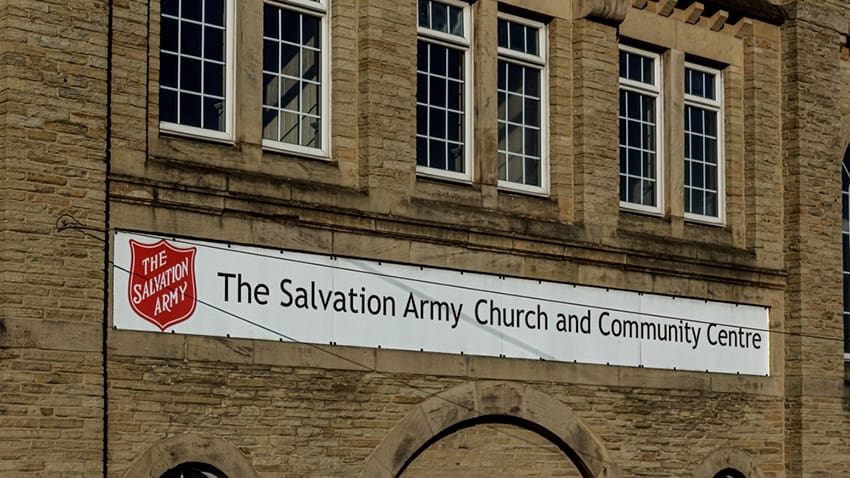
A Salvation Army employee responsible for supporting refugees was lawfully dismissed after making inflammatory remarks suggesting migrants should be sent back “on a boat”, an employment tribunal has ruled.
The tribunal found that the charity was justified in dismissing Charles Markie, 56, after comments he made while working at Strathmore Lodge, a Salvation Army–run hostel in Dundee that housed refugees and migrants.
Mr Markie, who had worked for the organisation for almost 20 years, was dismissed following comments made to colleagues in March 2024. The tribunal heard that he said there “wouldn’t be a housing shortage if we weren’t taking in 150 refugees” and added that they should be “sent back on a f****** boat”.
In its judgment, the tribunal concluded that the remarks went beyond inappropriate workplace frustration and amounted to gross misconduct, particularly given the nature of Mr Markie’s role and the values of his employer.
The tribunal found that the comments were inflammatory, carried a clear reputational risk, and were fundamentally incompatible with the mission and purpose of The Salvation Army, which provides support to vulnerable people and communities without discrimination.
Commenting on the ruling, Jainika Patel, an employment lawyer at Freeths, said the case illustrated where employers are entitled to draw a firm line.
“There are many instances where inappropriate but inoffensive comments are made by employees, whether off the cuff or in frustration, and would not warrant disciplinary action,” she said. “However, the tribunal found this case was not one of them.”
Patel added that the claimant’s remarks were considered particularly serious because of his role and the organisation’s values.
“The comments were held to be inflammatory and posed a real risk to the employer’s reputation. It was reasonable to categorise them as gross misconduct, given that the claimant worked for an organisation whose purpose is to offer help and support without discrimination,” she said.
The ruling reinforces the principle that employers are entitled to take account of reputational risk, organisational values and the nature of an employee’s role when deciding on disciplinary sanctions.
Patel noted that roles involving vulnerable groups or a high degree of public trust are subject to higher standards of conduct, and that misconduct of this nature is likely to be treated more seriously than in other workplace contexts.

Jamie Young
Jamie is Senior Reporter at Business Matters, bringing over a decade of experience in UK SME business reporting.
Jamie holds a degree in Business Administration and regularly participates in industry conferences and workshops.
When not reporting on the latest business developments, Jamie is passionate about mentoring up-and-coming journalists and entrepreneurs to inspire the next generation of business leaders.



