Business
Saudi’s Red Sea becomes first real test of foreign property ownership

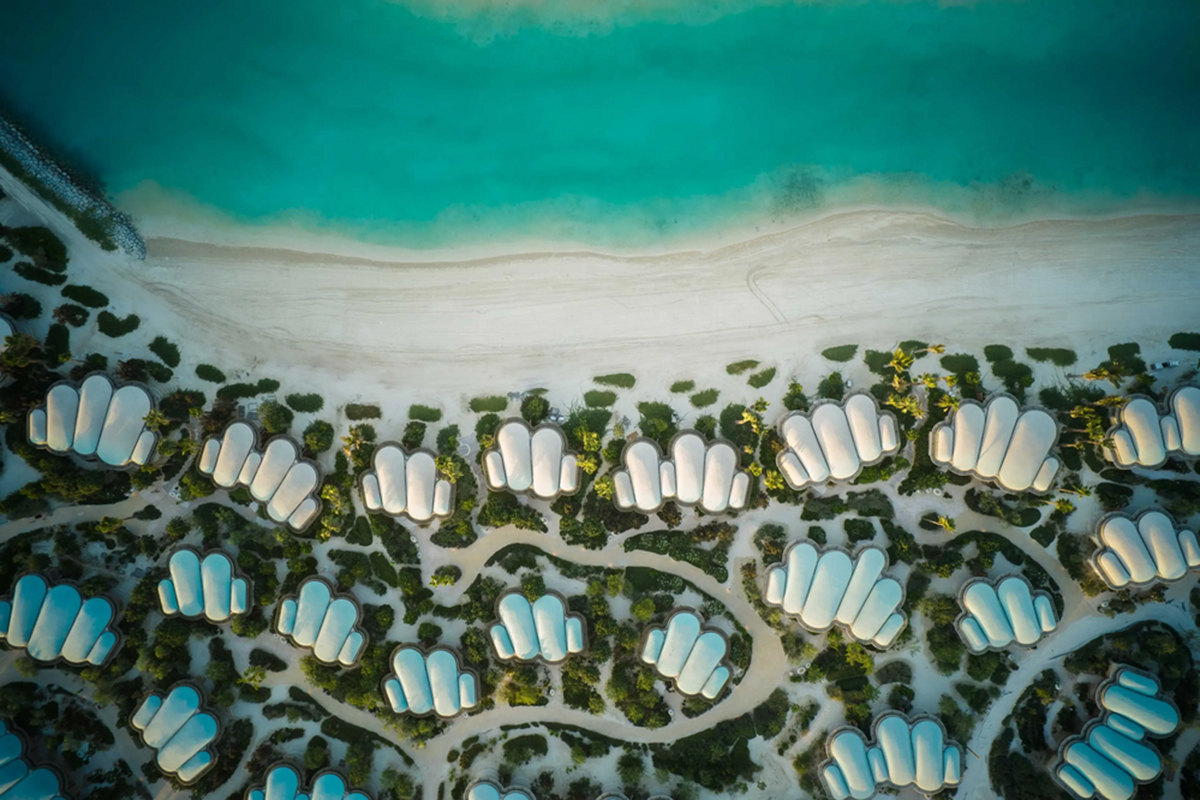
“We’re already seeing buyers pull the trigger,” Al Ajaji told Arabian Business, referring to foreign investors acquiring residential units at the Red Sea following the introduction of a unified national framework allowing non-Saudis to own property in designated areas.
The new Law on Non-Saudis’ Ownership of Real Estate has come into force this month, replacing a restrictive system that had been in place since 2000. The legislation allows foreign individuals and entities to buy residential, commercial, industrial and agricultural property within zones to be identified by the Council of Ministers on the recommendation of the Real Estate General Authority.
While the designated zones have yet to be formally published, large state-backed developments such as the Red Sea are widely expected to be among the first areas open to international ownership.
Red Sea project sets new benchmark
The Red Sea is among the most advanced of Saudi Arabia’s giga-projects. Developed by Red Sea Global, the destination spans about 28,000 square kilometres along the Kingdom’s north-west coast and includes an archipelago of more than 90 islands.
The project is planned to comprise 50 resorts by 2030, with around 8,000 hotel rooms, alongside more than 1,000 residential properties, according to the developer.
Phase one is partially complete. Five of the initial 16 resorts have opened since late 2023, including Six Senses Southern Dunes, the Ritz-Carlton Reserve Nujuma and Shebara, a resort owned and operated by Red Sea Global.
Further openings on Shura Island, the centrepiece of the development, are scheduled through 2025. Supporting infrastructure, including Red Sea International Airport and Shura Links, Saudi Arabia’s first island golf course, is already operational.
For brokerages such as Driven, the ownership reform marks a shift in market access.
Al Ajaji said the firm has operated in Saudi Arabia since 2019 but found it difficult to scale under the previous framework, where transactions were largely confined to Saudi nationals and private developers relied on in-house sales teams.
“That environment was not broker-friendly,” he said. “With government and quasi-government developers such as the Red Sea, we now have mandates for global sales.”
Homes at the Red Sea typically exceed the minimum value required to qualify for Saudi Arabia’s premium residency programme, which offers long-term residency to foreigners who own qualifying residential property worth at least 4 million riyals.
“The first thing many buyers do after purchasing is align on how to activate the premium residency,” Al Ajaji said.
Global buyers eye Saudi opportunities
Early foreign interest has differed by region, he said. Buyers from Europe, the United States and Russia have generally taken longer to assess pricing and risk, while demand from South and Southeast Asia has so far moved more quickly into completed transactions.
The policy shift comes as Saudi Arabia continues to advance one of the world’s largest development pipelines.
Real estate and infrastructure projects announced since the launch of the National Transformation Plan in 2016 total about $1.3 trillion in value, with $164 billion in contracts awarded as of the end of September 2024, according to a Knight Frank report.
More than 1 million residential units are expected to be delivered for sale across the Kingdom by 2030, the consultancy estimates. A substantial share of that supply is concentrated in Riyadh, where the government’s Regional Headquarters programme has driven job creation and population growth.
Riyadh’s housing market has recorded sharp price increases over the past five years. Apartment prices in the capital are up around 75 per cent compared with 2019 levels, while villa prices have risen about 40 per cent, Knight Frank said.
Residential transaction volumes rose more than 40 per cent year on year in 2024, although growth in total transaction value was more muted, a trend the consultancy has linked to affordability constraints in parts of the market.
The Red Sea serves a different segment of demand, Al Ajaji said, with purchases focused on second homes rather than primary residences.
“This is not competing with Riyadh’s mass housing market,” he said. “It is aimed at holiday homes and long-term lifestyle investments.”
Infrastructure delivery at the Red Sea has accelerated, with several resorts and islands scheduled to become operational this year. Al Ajaji cited recent hotel openings and transport links as factors supporting buyer interest.
Non-Saudis must follow transfer rules
Under the new law, foreign residents of Saudi Arabia may also own one personal residence outside designated zones, excluding the holy cities of Mecca and Medina. Non-residents are limited to ownership within approved areas once these are announced.
All transactions involving non-Saudis must be registered and are subject to Saudi Arabia’s real estate transfer tax, with penalties for violations including fines and potential forced sales.
Al Ajaji said early transactions handled by Driven have included buyers with links to the UAE, including residents and investors already active in Dubai’s property market.
“They are people we already know,” he said. “Either they live in the UAE or they have bought property in Dubai before.”
For now, he said, the Red Sea provides one of the clearest indications of how Saudi Arabia’s foreign ownership reform is beginning to operate on the ground.
“It is limited, controlled and scarce,” he said. “That is why it is drawing attention early.”