
Business
School meals price increase will ‘acutely’ affect children in poverty

Fiona Murrayand
Barry O’Connor,BBC News NI

 PA Media
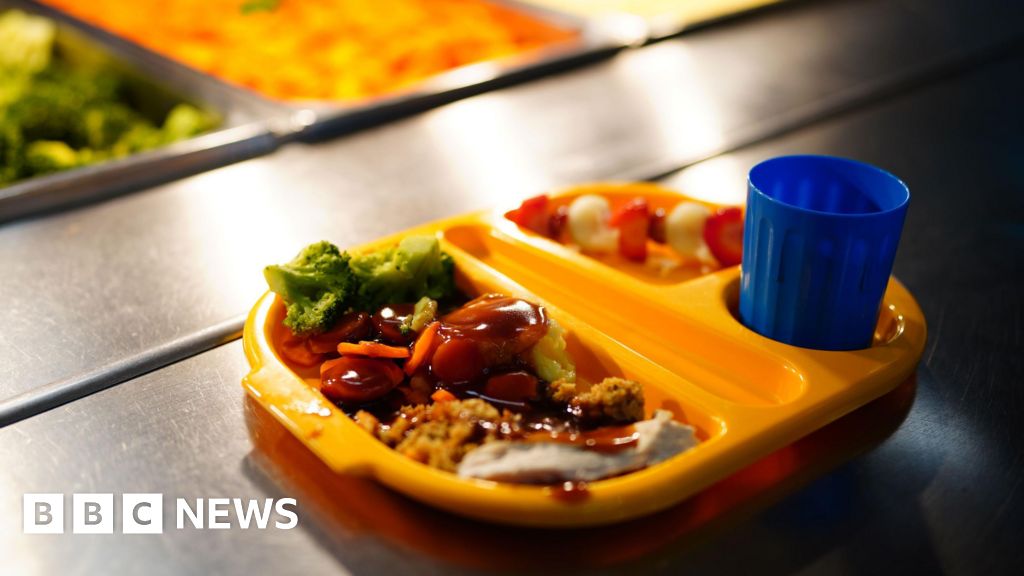
School meal price increases will “acutely” affect children living in poverty who do not qualify for free school dinners, Northern Ireland’s Commissioner for Children and Young People has said.
Chris Quinn has called for a “fundamental rethink”.
School meal prices will increase in January for the first time since 2017.
The Education Authority (EA) has said it is facing a funding gap of £300m and, unlike previous years, does not expect additional in-year money to address the shortfall.
Under savings plans announced by the EA, the cost of a school dinner for primary and special school pupils will go up by 50p from £2.60 to £3.10.
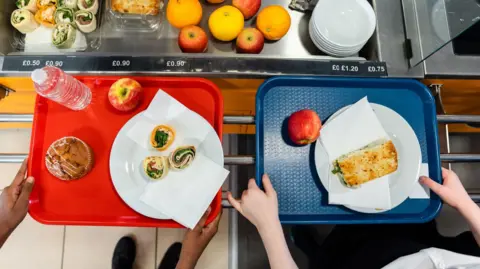
Post-primary pupils face price rises of 19% on food they buy from school canteens, while pre-school prices will also go up.
Pupils on free school meals will not be affected by the price rises, which took effect from 1 January 2026.
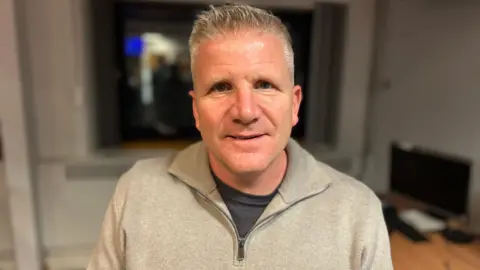
Mr Quinn said he would like to see “universal free school meals” provided to children in Northern Ireland.
He said that food inflation is “going through the roof”.
“We have lots of children here who are from low-income families and the system I think needs a radical rethink.
“I think the cost increase won’t address the issues. It could have a massive negative impact on their education and their health and well-being.
“The reality is there’s too many children here going to school hungry and there’s way too many that miss out on a free school meal,” Mr Quinn added.
He said that the cost of living has “gone up massively” and has impacted working families.
“For families with multiple children in school, there’s going to have to be a rethink at home I guess. I do think we need to address this issue from a different perspective.”
 Getty Images
Mother of three Sue McDonnell told BBC News NI that the increase has made her feel “not good”.
“I’m going to have to sit down and work out how much I can actually afford for them to actually have for school dinners every week,” she said.
Ms McDonnell highlighted the cost of living saying that “everything is going up”.
“I actually shop around for everything,” she added.
“Can I afford to give them a school meal, a hot meal, what three days a week at the minute or I might have to cut it down to two.
She added that she batch cooks lots of her meals which is “quite handy” for school meals.
She questioned why the decision was taken to do an increase in one go.
“They haven’t done a price increase in the last couple of years. Nobody would have noticed over the last couple of years.
“It’s a lot of money in one go.”
 Getty Images/iStockphoto
Glen Cawley told BBC News NI he is self employed.
“The government is not doing enough for our own people… of all things I believe in is that every child that goes to school the government should be seeing that every child should get at least one free meal a day and it shouldn’t matter if there parents are working,” he said.
“Working people are finding time hard too.”
What are the costs of school meals?
- Pre-school – £3.00
- Primary £3.10
- Post-Primary 19.25% increase
- Special school £3.10
- Adult meal £3.99
In December, trade unions took part in a protest against an increase in the price of school dinners and other savings plans announced by the EA.
What has the EA said?
About 210,000 school meals are eaten every day, although about 90,000 pupils are entitled to free school meals.
The EA said that the cost of a school dinner had not risen since 2017/18 while inflation had increased by around 35% in that time.
They said that each school meal costs an average of £4.28 to produce.
The EA has said it is facing a funding gap of £300m and, unlike in previous years, does not expect additional in-year money to address the shortfall.
The authority had previously told school principals to restrict the appointment of new staff and limit the use of substitute teachers to save money.
But the new savings measures will directly affect families and some of the things they pay for at school.



