
Business
School of thought – Arabian Business: Latest News on the Middle East, Real Estate, Finance, and More

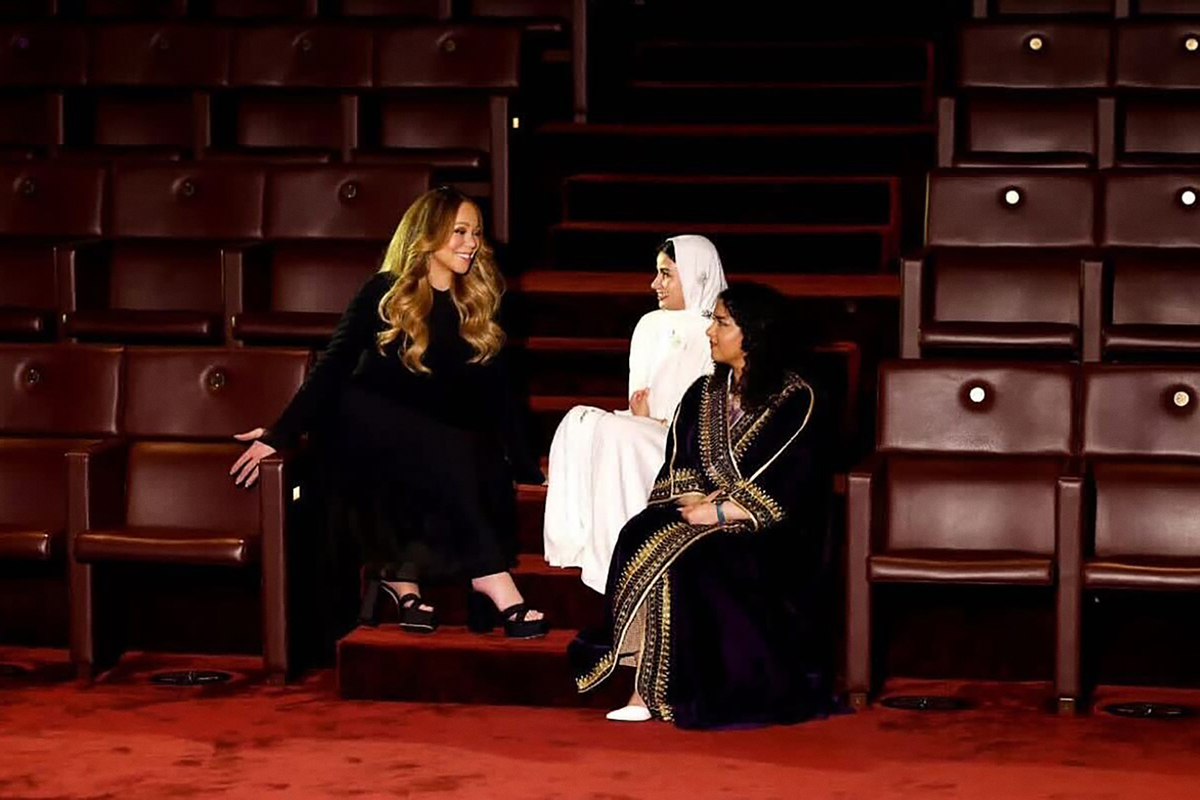
Saudi Arabia’s music ecosystem is expanding at pace. While headlines often highlight rising demand, new performance spaces and international collaborations, the deeper story lies in how the Kingdom is building the human infrastructure that will sustain its music sector for generations. Across early learning, community education, and specialist training, a coordinated national effort is underway – reaching learners at every stage of their musical journey.
At the centre of this work is the Saudi Music Commission’s General Education department, led by the Director of General Education Departament, Maha Alnofaiei. The department doesn’t directly govern all programmes, but it creates the structures, standards, and pathways that enable talent to grow systematically.
“The department is focused on building the foundations that allow learners at all ages and stages to access music education in a clear, confident, and sustainable way,” Alnofaiei explains. “Our work is guided by three core principles: accessibility, quality, and continuity. Through these principles, we are laying the human infrastructure for a future-ready music sector, one in which talent is identified early, supported effectively, and aligned with the long-term cultural vision of the Kingdom.”
That vision is already visible in schools. Together with the Ministry of Education, the department is preparing kindergarten teachers to teach music in public schools. “Phase 1 trained 9,000 teachers, Phase 2 trained 12,104, bringing the total to 21,104 kindergarten teachers trained nationally,” she notes.
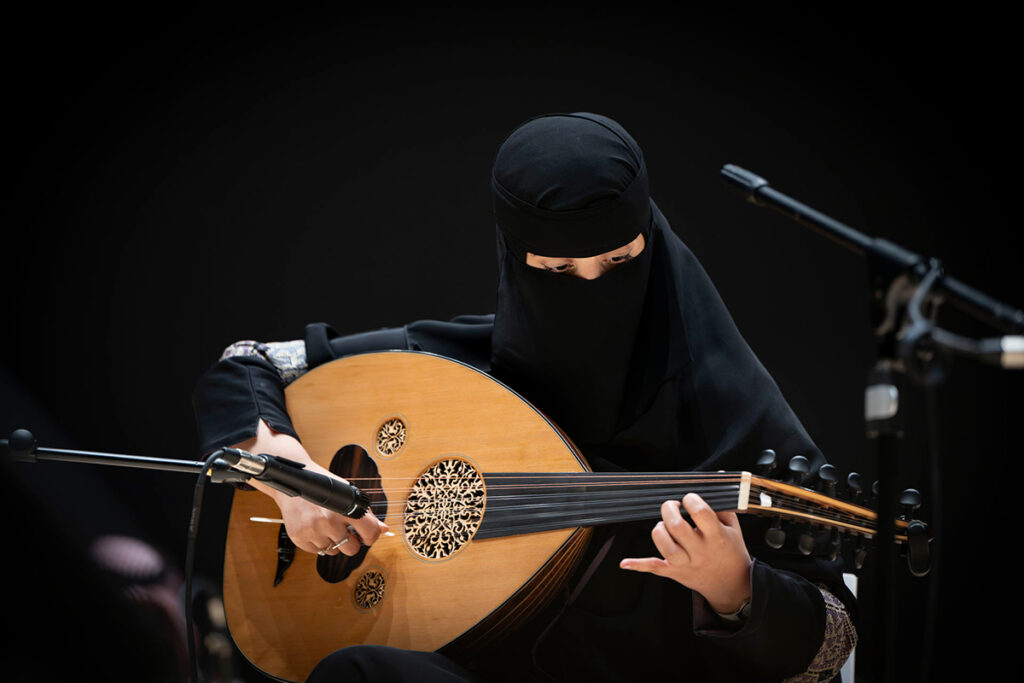
Other programmes support learners with different needs. The Music Education Support Programme for Learners with Disabilities – the first of its kind – has trained 18 teachers, equipped three centres with adapted instruments and enabled more than 65 students to participate in inclusive music-making and performances. A forthcoming curriculum for Grades 1–3 will deepen early-years progression. As Alnofaiei puts it, “On the ground, we are seeing real momentum… students, including those with disabilities, are engaging in music-making opportunities that did not exist a few years ago.
“In the long term, we envision a generation that grows up with music as part of their educational identity, supported by well-trained teachers, clear national pathways, and strong institutional capacity.”
If the General Education Department is shaping the next generation, the Saudi Music Hub is developing today’s performers and practitioners. In Riyadh, Jeddah, and Al Khobar, the Music Commission-funded Hubs provide studios, rehearsal rooms, classrooms, and stages for learners and emerging professionals.
“What stands out most to me is the sheer growth in both scale and quality,” reveals Head of the Saudi Music Hub, Khaled AlKhaldi. “We are now reaching thousands of students annually through structured programmes, short courses, residencies, and performance opportunities.”
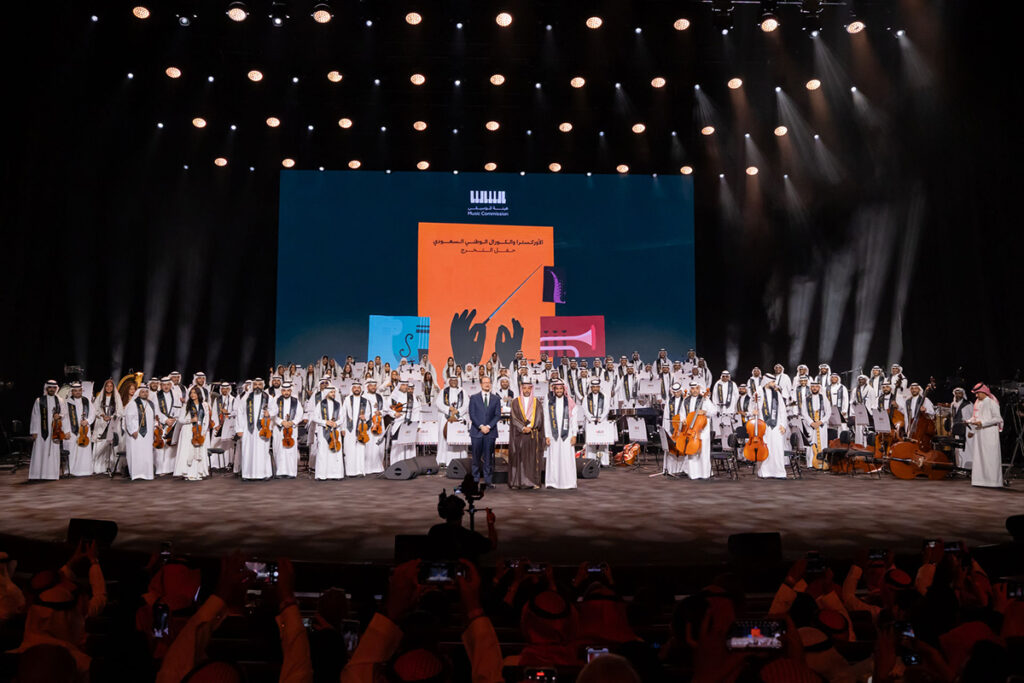
The Hubs normalise music participation by placing workshops, performances, and open-access sessions in the heart of communities, while creating talent pipelines into ensembles such as the Saudi National Orchestra and Choir. “Beyond technical skills, we focus on creativity, discipline, collaboration, cultural pride, and global openness,” AlKhaldi explains. “We want our learners to see themselves not only as performers, but as future composers, educators, producers, and cultural leaders.”
The continuation of Saudi Arabia’s long music tradition is an important part of the Hubs’ work. Programmes, events, and workshops spotlight traditional instruments and regional styles alongside contemporary genres, while dedicated spaces such as the Highlight Lounge allow artists and faculty to present heritage material in contemporary ways. “The Hubs are both guardians of heritage and incubators of new expression, ensuring that Saudi musical identity continues to evolve without losing its roots,” says AlKhaldi.
Looking ahead, he sees their role expanding. “I am most excited about the role they will play as catalysts for a new creative generation in the Kingdom… we are helping to build the foundations of a sustainable music industry and a vibrant cultural life.”
For learners seeking advanced artistic identity, Bait Al Oud Riyadh provides specialised training rooted in Arab musical traditions. Founded by renowned Iraqi oud player and UNESCO Artist for Peace, Dr. Naseer Shamma, the institution offers rigorous study in oud, maqam, ensemble performance, and musical heritage. “Saudi Arabia is building a modern artistic ecosystem rooted in its history and identity, and redefining music as a language of development, creativity, and national expression,” Shamma observes. “Bait Al Oud serves as a specialised academic institution that provides structured training in Arab music.”
Its curriculum emphasises discipline and authenticity. “We begin by giving students a solid foundation: mastery of maqam, rhythm, phrasing, improvisation, and precise technical discipline,” he explains. “True innovation comes from deep knowledge, not from abandoning tradition.”
The response from learners has been strong. “There is a hunger for accurate knowledge, structured training, and serious artistic development… Students are progressing quickly and creating a dynamic new creative community in Riyadh.” Shamma hopes the institution will shape “a Saudi school of oud and Arab music – one with its own character, depth, and global presence.” These endeavours highlight a ‘music for all’ approach, showing the Kingdom is building the human infrastructure of a future-ready music industry – one powered by knowledge, creativity, and homegrown talent.
This story first appeared in The Business of Music



