Business
‘Somehow stop India’: Cash-strapped Pakistan burned thousands of dollars lobbying, begging US during Operation Sindoor

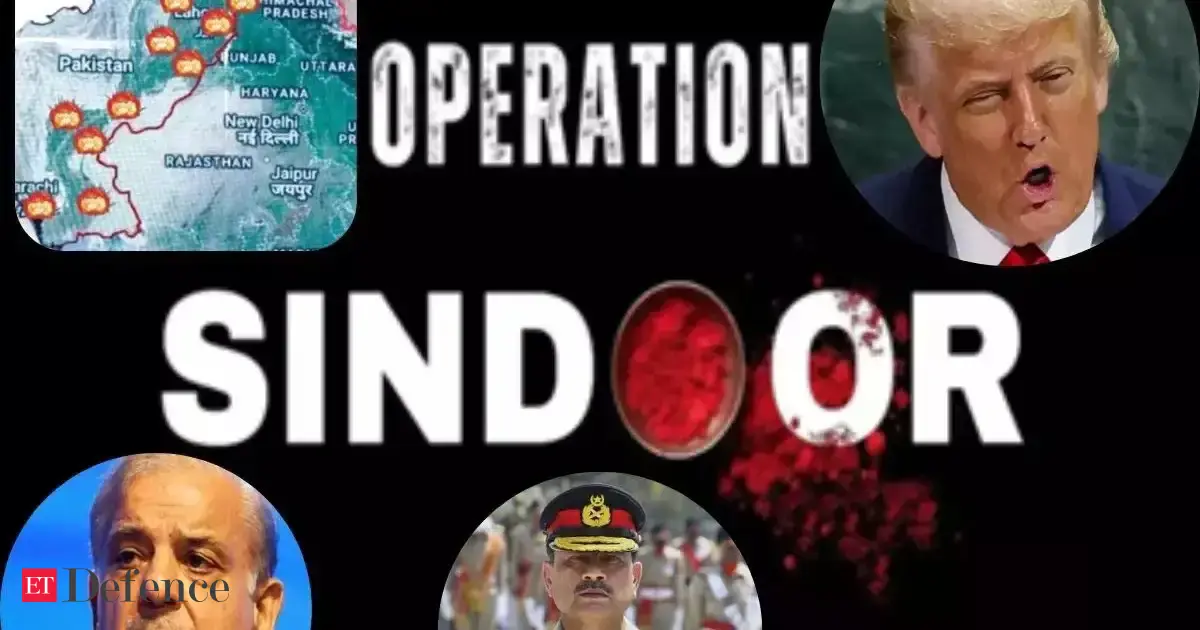
Lobbying blitz after Operation Sindoor
Filings under the US Foreign Agents Registration Act (FARA) reveal that Pakistan launched an intense lobbying campaign in Washington between May 7 and May 10. This was the period after the Indian Air Force struck the headquarters of Jaish-e-Mohammed, Lashkar-e-Taiba and Hizbul Mujahideen, and before Pakistan’s director general of military operations, Major General Kashif Abdullah, called his Indian counterpart Lt General Rajiv Ghai.
During these four days, Pakistani diplomats, including the ambassador and defence attaché, made more than 60 points of contact with senior US officials and media organisations. These included meetings, phone calls and emails, all aimed at seeking international intervention.
The details come from filings by Squire Patton Boggs, the US lobbying firm hired by Pakistan, which is legally required to disclose the nature of its engagements to the US Department of Justice.
Pleas to “somehow halt” Indian action
Most of the outreach happened as Operation Sindoor was unfolding and before India suspended its military operations. According to the records, Pakistan repeatedly asked US officials to step in and “somehow halt” India’s retaliatory strikes.

Publicly, Islamabad tried to play down the impact of the Indian action. Privately, however, the filings point to visible panic at senior levels as Indian strikes landed on terror infrastructure.
Lobbying push began just after Pahalgam terror attack
An NDTV report adds that Pakistan had expanded its lobbying presence in the US just after the Pahalgam terror attack. Filings show that Javelin Advisors LLC was registered in April to represent Pakistan under a formal consulting agreement dated April 24, just two days after Pakistan-based terrorists killed 26 civilians in Jammu and Kashmir’s Pahalgam.According to the disclosure cited by NDTV, Javelin charged a monthly fee of $50,000. The firm said its work involved communicating Pakistan’s positions on regional and global issues to the US executive branch, Congress and the public. The listed issues included the Jammu and Kashmir dispute and Pakistan-India relations.
Minerals pitch alongside diplomacy
The NDTV report also notes that the filings refer to a framework document circulated in May proposing cooperation between Pakistan and the US on rare earth minerals and critical metals. The document outlined possible collaboration across exploration, mining, processing and integration into global supply chains, and mentioned an indicative commercial value of up to $1 trillion.
The outreach came shortly after Operation Sindoor, indicating that Islamabad tried to widen the conversation beyond security even as it sought relief from Indian military pressure.
Think tanks and subcontractors join the effort
Separate disclosures cited by NDTV show that the Islamabad Policy Research Institute, a Pakistan-based think tank linked to the country’s National Security Division, spent $900,000 on lobbying and public policy outreach in the United States.
Old lobbyists, new crisis
Pakistan had originally hired Squire Patton Boggs to help steer itself away from the Financial Action Task Force (FATF) grey list. But the firm was drawn into crisis management after the Indian operation.
An email dated May 14, 2025, sent by Paul W Jones, a former US ambassador and representative of the firm, to US diplomat Elizabeth K Horst, sought to revive high-level engagement.
The email cited by TOI read: “Squire Patton Boggs is a registered agent of the govt of Pakistan. We’d very much appreciate your feedback on the attached one-page outline of ways forward in US-Pakistan relationship – Did we miss anything or would anything sound off-key in Washington? Separately, do you think we could try again to schedule a meeting with Eric to discuss and hear his perspectives on how best to move the relationship forward? Finally, I’d appreciate the opportunity to speak with you or a member of your team on FATF, in order to better understand the lay of the land.”
The reference to “Eric” was to Eric Garcetti, the US ambassador to India.
Embassy signs up another firm
Another filing mentioned in the NDTV report shows that the Embassy of Pakistan in Washington entered into a contract with Ervin Graves Strategy Group LLC, effective October 1, 2025. The agreement provides for a monthly payment of $25,000 for an initial three-month term.
Taken together, the disclosures sketch a layered and expensive lobbying effort, stretching across firms, think tanks and subcontractors, as Pakistan worked overtime in Washington while Indian military strikes sent a clear message on the ground.