
Business
Southeast Asia Faces Critical Green Economy Crossroads as 2030 Climate Deadline Looms

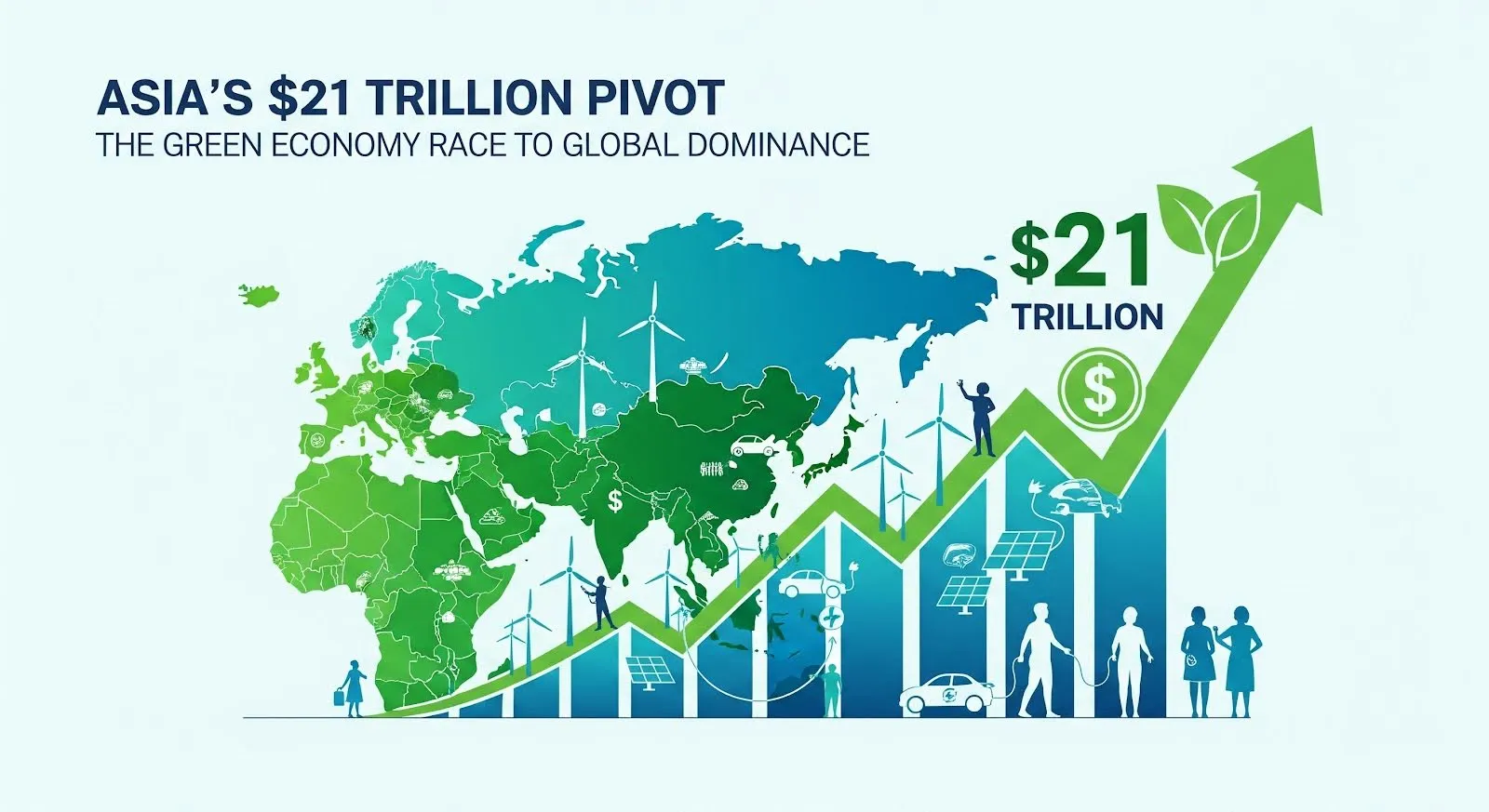
New report reveals region falling short on climate pledges but identifies $120 billion economic opportunity through strategic green transition.
Key takeaways
- Southeast Asia is off track to meet its 2030 climate pledges, requiring urgent systemic transformation across power, transport, and land use sectors within the next five years.
- Three strategic solutions (sustainable bioeconomy, modernized power grids, and EV ecosystem acceleration) could generate $120 billion in economic value and create up to 900,000 jobs by 2030.
- The region’s green transition offers a “triple dividend” of climate impact, economic competitiveness, and energy security, making decarbonization an economic opportunity rather than a burden.
Southeast Asia stands at a pivotal crossroads in its battle against climate change, with a stark new assessment revealing the region is failing to meet its 2030 climate commitments despite a decade of growing ambition and awareness, according to a comprehensive report released by Bain & Company in partnership with GenZero, Google, Standard Chartered, and Temasek.
The “Southeast Asia’s Green Economy 2025” report delivers a sobering reality check: with just five years remaining until the critical 2030 deadline, the region’s current trajectory falls dangerously short of its climate pledges. Yet within this challenge lies an unprecedented opportunity, one that could generate $120 billion in new economic value and create up to 900,000 jobs by the end of the decade.
From Ambition to Action: The Implementation Gap
“Over the past decade, ambition has soared, awareness has grown, and actions have begun, yet the results remain uneven,” the report states, highlighting the disconnect between Southeast Asia’s climate rhetoric and on-the-ground reality.
However, recent global trade uncertainty and economic volatility may paradoxically accelerate the region’s green transition. The report argues that decarbonization can unlock value through enhanced economic competitiveness, robust job growth, and crucially, long-term energy security, a compelling proposition for policymakers navigating geopolitical turbulence.
Three Game-Changing Solutions
Rather than pursuing scattered initiatives, the report advocates for a systems-based approach focusing on three high-impact solutions that address interconnected challenges across power, transport, and land use:
1. Scaling the Sustainable Bioeconomy
The global bioeconomy is projected to balloon to $30 trillion by 2050, and Southeast Asia is uniquely positioned to capture significant market share thanks to its extraordinary biodiversity and robust agricultural foundation. The region’s bioeconomy already generates 25-30% of its jobs but also accounts for 30% of its emissions, making sustainable transformation both urgent and economically compelling.
2. Modernizing Domestic and Regional Power Grids
Southeast Asia’s aging power infrastructure represents both a critical vulnerability and an extraordinary opportunity. Current grids simply cannot accommodate the renewable energy transition the region desperately needs. But the payoff for modernization would be substantial: approximately 200,000 new jobs in 2030 alone and $25 billion in GDP contributions. The catch? This transformation requires massive government intervention and investment, a political and fiscal test of the region’s climate commitment.
3. Accelerating the Electric Vehicle Ecosystem
Internal combustion engine vehicles still dominate Southeast Asian production, accounting for over 80% of manufactured vehicles, a dangerous economic exposure as global EV demand surges. The report proposes a dual strategy: simultaneously building production capacity and stimulating adoption while leveraging regional synergies to construct integrated supply chains. This approach would not only decarbonize transport but position the region competitively in the global automotive transition.
The Enabling Infrastructure
Beyond these three pillars, the report emphasizes critical enabling solutions: expanding access to climate and transition finance, scaling credible carbon markets, and harnessing green artificial intelligence applications.
Notably, this year’s assessment introduces a new strategic lens, the potential for enhanced collaboration between Southeast Asia and the broader Asia-Pacific region. “Working together, we can amplify the region’s impact and ultimately unlock the full potential of the green economy,” the authors argue.
Jobs, Growth, and Climate: The Triple Dividend
The report’s most compelling argument may be its economic case. By prioritizing these three solutions, Southeast Asia wouldn’t merely reduce emissions. It would simultaneously create nearly a million jobs, generate over $100 billion in economic value, and significantly narrow the gap between current emissions trajectories and 2030 climate targets.
This “triple dividend” of climate action (environmental protection, economic growth, and employment creation) offers policymakers a politically palatable pathway through what has often been framed as a zero-sum trade-off between development and decarbonization.
The Window is Closing
With only five years until 2030, the report’s message is clear: incremental progress is insufficient. Southeast Asia must embrace systemic transformation, make difficult investment decisions, and pursue regional collaboration with unprecedented urgency.
The question is no longer whether the region can afford to accelerate its green transition. As trade tensions mount and energy security concerns intensify, the more pressing question may be whether Southeast Asia can afford not to.



