Connect with us

Business

S&P 500 Slides as Middle East Conflict Drives Oil Surge and Risk Aversion

Published

on

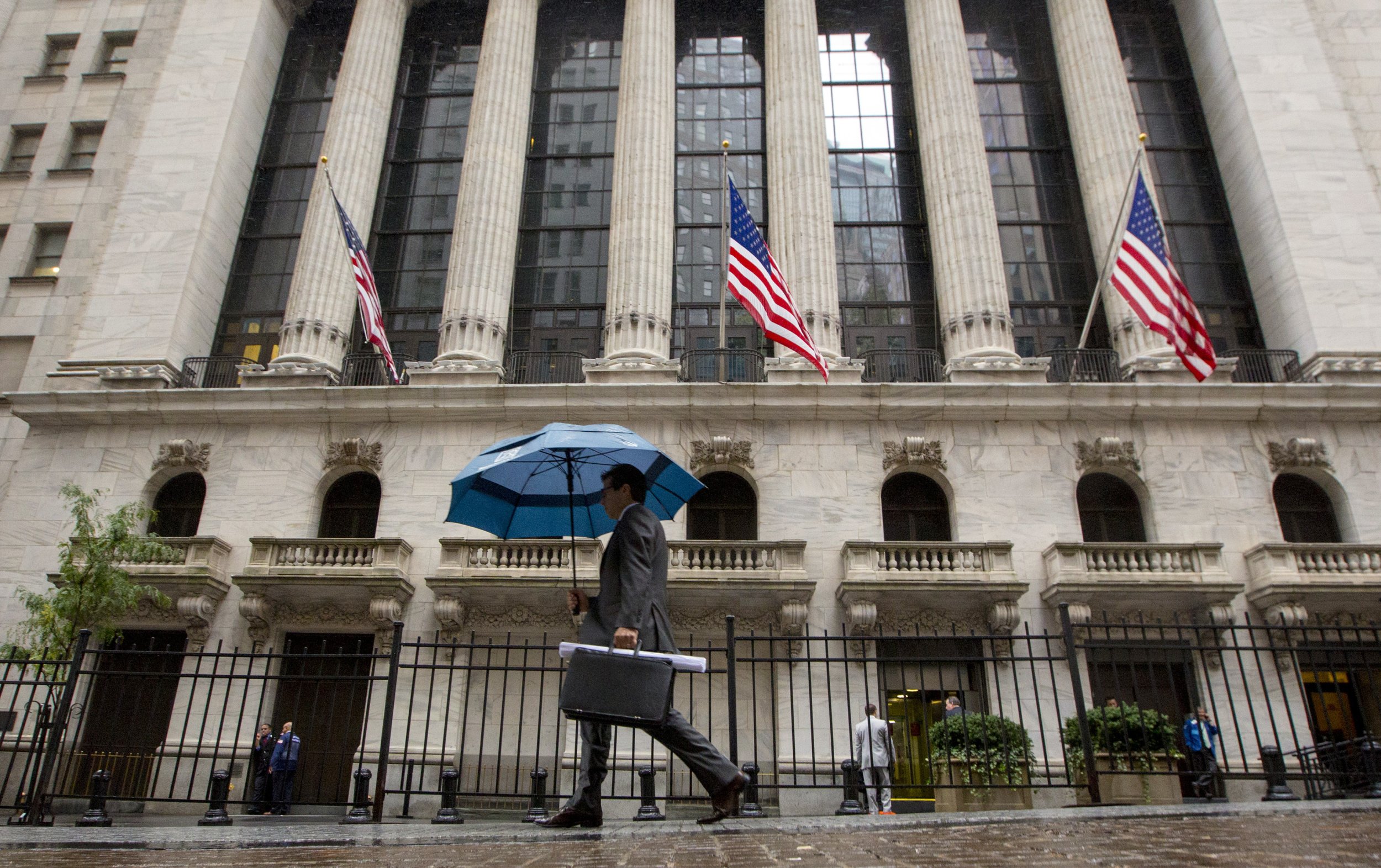
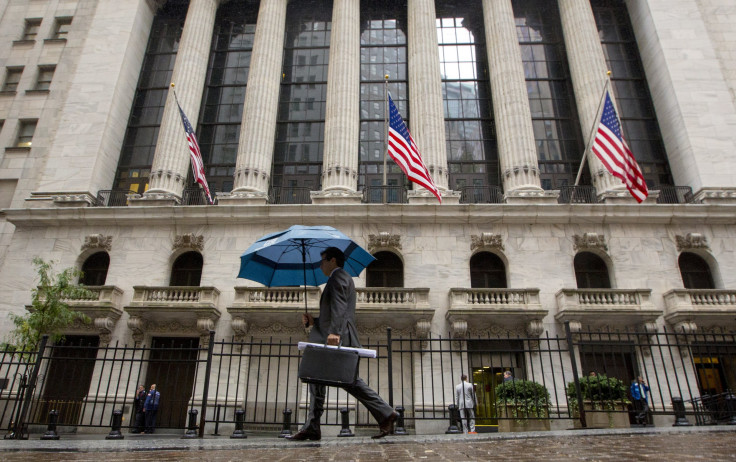
The tech sector led record gains in the S&P 500 index. Pictured: a man with umbrella walks past the New York Stock Exchange.

NEW YORK — The S&P 500 (^GSPC) extended losses into early March 2026 trading, pressured by escalating geopolitical tensions in the Middle East following U.S. and Israeli military strikes on Iran, which sent oil prices sharply higher and prompted a flight to safe-haven assets.

The benchmark index closed at 6,878.88 on Feb. 27, down 29.98 points or 0.43%, capping a volatile week that saw broader market retreats amid renewed inflation concerns from surging energy costs. On March 2, futures indicated further downside, with S&P 500 contracts sliding around 1% pre-market before opening lower, trading near 6,855-6,856 levels in early sessions with intraday ranges dipping to approximately 6,796 before partial recovery attempts.

The tech sector led record gains in the S&P 500 index. Pictured: a man with umbrella walks past the New York Stock Exchange.
S&P 500 index

The pullback reflects a classic risk-off environment triggered by weekend military actions. U.S. and Israeli forces targeted Iranian sites in what has been described as “Operation Epic Fury,” prompting fears of prolonged conflict, potential disruptions in the Strait of Hormuz — through which about one-fifth of global oil flows — and retaliatory measures. Brent crude surged as much as 8-13% at peaks, trading near $79-$82 per barrel early in the week, while West Texas Intermediate climbed toward $72-$73, marking multi-month highs and amplifying worries about sticky inflation.

Gold futures rallied over 3%, surpassing recent levels as investors sought protection, while the U.S. dollar strengthened against major currencies. The VIX, Wall Street’s fear gauge, elevated toward 20, signaling heightened volatility as traders braced for developments.

“The combination of geopolitical escalation and an oil shock is forcing a rapid repricing of risk,” one market analyst commented in a Monday note. “Higher energy prices threaten to delay any Federal Reserve easing cycle, putting pressure on valuations across equities, especially in growth-sensitive sectors.”

Advertisement

The S&P 500 has shown resilience earlier in 2026, with year-to-date performance modestly positive in some calculations around 0.5% to 1% despite February’s softness. The index ended the prior month lower overall, influenced by softer sentiment in AI and technology names amid broader rotation. However, the latest catalyst has accelerated the defensive shift, with energy and select industrial names providing relative outperformance while consumer discretionary, tech-heavy constituents and airlines faced headwinds from elevated fuel costs.

Broader indices mirrored the caution. The Dow Jones Industrial Average futures dropped over 500 points at one point, while the Nasdaq Composite — already under pressure from prior sessions — saw amplified declines due to its growth orientation. European and Asian markets opened sharply lower, with some benchmarks down 1-2% as the conflict’s global implications rippled outward.

Analysts noted that persistent oil elevation could complicate the economic soft-landing narrative that buoyed stocks through much of the cycle. Recent Producer Price Index data had already introduced hotter-than-expected inflation readings, and the energy spike risks reinforcing those trends ahead of key labor market reports and corporate earnings.

Despite the near-term turbulence, longer-term optimism lingers for some observers. The S&P 500 remains above key technical supports, including its upward-sloping 10-month exponential moving average in certain analyses, suggesting the broader uptrend intact unless escalation materially worsens. Defensive sectors like consumer staples have shown relative strength in recent rotations, while international exposure via emerging markets or Europe has outperformed in spots amid diversification plays.

Advertisement

Investors continue monitoring diplomatic channels for de-escalation signals, alongside upcoming economic releases that could influence Fed policy expectations. Any stabilization in the Middle East or cooling in oil markets might support a rebound in risk assets, though prolonged uncertainty keeps caution front and center.

The index’s valuation, trading at levels reflecting forward earnings growth tempered by macroeconomic risks, appears balanced for total return seekers willing to weather volatility. Consensus views maintain a constructive stance on U.S. large-caps, with emphasis on quality names resilient to energy shocks and potential rate path adjustments.

As March trading unfolds, the S&P 500’s performance will hinge on the trajectory of the conflict, commodity prices and incoming data. For now, the market digests the geopolitical shock, balancing growth potential against immediate headwinds from higher costs and uncertainty.

Advertisement
Continue Reading
Click to comment

Leave a Reply

Your email address will not be published. Required fields are marked *

Business

Gordon Chang warns China could see “real problems” from Iran oil halt

Published

on

Gordon Chang warns China could see "real problems" from Iran oil halt

With Strait of Hormuz traffic nearly halted, China’s reliance on Iranian oil could trigger “real problems” within two months if the crisis continues, one expert warned.

Gatestone Institute senior fellow Gordon Chang joined FOX Business’ Maria Bartiromo on “Mornings with Maria” to assess how escalating tensions around the Strait of Hormuz could reverberate through China’s fragile, export-dependent economy.

Advertisement

OIL PRICES SURGE AFTER STRIKES KILL IRAN’S SUPREME LEADER, TANKERS HIT NEAR STRAIT OF HORMUZ

Oil tanker in Strait of Hormuz

Oil tanker at a port in the Strait of Hormuz. (Giuseppe CacaceI/AFP via Getty Images)

Chang noted that a significant share of China’s discounted Iranian crude, vital for its independent “teapot” refiners, typically transits the narrow waterway, where ships are now largely stalled north and south of the Strait.

“Much of that oil… actually goes to China trying to get somewhere between… 15% and 23% of its seaborne oil from Iran, and that oil transits the Strait of Hormuz,” Chang said.

He added that while Beijing has diversified supplies, the loss of heavily discounted barrels comes at a vulnerable moment for factories dependent on cheaper energy.

Advertisement

“This will go through the system, and I suspect you will see real problems in about two months in China if this situation continues,” Chang said.

Hayman Capital Management founder and CEO Kyle Bass also joined FOX Business’ Maria Bartiromo to discuss market reaction and the broader energy shock rippling through global supply chains.

OIL MARKETS ON EDGE AS IRAN MOVES TO RESTRICT VITAL STRAIT OF HORMUZ SHIPPING LANE, REPORT SAYS

Advertisement

Bass pointed to insurance withdrawals and the strategic weight of the choke point, warning that even a temporary disruption could send front-month crude prices sharply higher.

“About a third of the world’s seaborne crude flows through that strait every day. Fifty percent of China’s imports flow through that strait every day. And right now, things are not going through the strait,” Bass said.

“If 10 million barrels goes missing or gets delayed for a week, there’s no telling where the front end can go,” Bass added.

Advertisement

With insurers retreating, LNG shipments disrupted and tanker traffic effectively frozen, the crisis underscores how a five-mile-wide passage can shape the economic trajectory of the world’s second-largest economy.

“We’re at risk of a pretty major oil price spike here,” Bass said.

GET FOX BUSINESS ON THE GO BY CLICKING HERE

Advertisement
Continue Reading

Business

Oil Markets Face Iran Conflict With Little in Reserve

Published

on

Companies Race to Reassure and Relocate Employees Caught in Middle East Conflict

Escalating tensions with Iran are hitting a global oil market stripped of its usual shock absorbers, risking severe price spikes if supplies are disrupted.

OPEC and its Russia-led allies are set to meet Sunday, and analysts anticipate an agreement to increase supply. However, any actual output boosts will be constrained by the group’s limited spare production capacity, according to a note to clients by RBC Capital Markets.

Typically, major producers boost production using their spare capacity to stabilize markets during crises. But almost every member of the OPEC+ grouping of countries is already producing at near maximum levels, analysts say. According to a report by Barclays, both spare capacity and above-ground inventories, measured in days of demand they cover, are tighter now than before the 2022 invasion of Ukraine, leaving Saudi Arabia as the sole producer with a meaningful buffer.

Continue Reading

Business

J.M. Smucker taps activist investor, expands board

Published

on

J.M. Smucker taps activist investor, expands board

Information-sharing agreement part of engagement with Elliott Investment Management.

Continue Reading

Business

Form 144 ALLEGRO MICROSYSTEMS For: 2 March

Published

on


Form 144 ALLEGRO MICROSYSTEMS For: 2 March

Continue Reading

Business

ADT Inc. (ADT) Q4 2025 Earnings Call Transcript

Published

on

OneWater Marine Inc. (ONEW) Q1 2026 Earnings Call Transcript

ADT Inc. (ADT) Q4 2025 Earnings Call March 2, 2026 10:00 AM EST

Company Participants

Elizabeth Landers – Investor Relations Officer
James DeVries – CEO, President & Chairman
Omar Khan – Executive VP & Chief Business Officer
Jeffrey Likosar – CFO and President of Corporate Development & Transformation

Conference Call Participants

Advertisement

Keen Fai Tong – Goldman Sachs Group, Inc., Research Division
Peter Christiansen – Citigroup Inc., Research Division
John Ronan Kennedy – Barclays Bank PLC, Research Division
Ashish Sabadra – RBC Capital Markets, Research Division
Gregory Parrish – Morgan Stanley, Research Division

Presentation

Operator

Advertisement

Thank you for standing by, and welcome to the ADT Fourth Quarter and Full Year 2025 Earnings Conference Call. [Operator Instructions]

I’d now like to turn the call over to Elizabeth Landers, Vice President, Investor Relations. You may begin.

Elizabeth Landers
Investor Relations Officer

Advertisement

Good morning, and thank you for joining us today to discuss ADT’s fourth quarter and full year results. Speaking on today’s call are Jim DeVries, ADT’s Chairman, President and CEO; Jeff Likosar, our CFO; and Omar Khan, our Chief Business Officer.

We are structuring today’s call a bit differently with the majority of the call focused on our strategy and key priorities to position ADT for the future. Jim will start with a broad strategic update, focusing on how we’re reshaping the future of smart home security. Omar will then describe more about our recent acquisition of Origin AI, and then Jeff will briefly describe our 2025 financial results as well as our long-range financial outlook and capital allocation priorities. After their prepared remarks, we’ll open the call for analyst questions.

This morning, we issued a press release and presentation summarizing our financial results. Both are available at investor.adt.com. We’ll reference our non-GAAP financial measures today. Reconciliations to the most comparable GAAP measures are included in the earnings presentation on our

Advertisement
Continue Reading

Business

A Vibrant Future for Synthetic Replacement

Published

on

A Vibrant Future for Synthetic Replacement

Discover a vibrant future for synthetic replacement with Givaudan’s michroma® color solutions.

Continue Reading

Business

Ted Sarandos speaks out on why Netflix dropped bid to buy Warner Bros. Discovery

Published

on

Netflix CEO Ted Sarandos to testify on $72 billion Warner Bros merger deal

Netflix co-CEO Ted Sarandos said Sunday he knew “right away” he would decline to counter Paramount’s winning attempt to buy Warner Bros. Discovery, admitting rival chief executive David Ellison made a superior offer. 

Netflix dropped its bid to buy Warner Bros. Discovery on Thursday after the company announced Paramount’s latest bid to buy all of its assets, including CNN, was “superior.”

Advertisement

“We had a very tight range that we’d be willing to pay and made that offer back when we closed this deal. We hadn’t moved much from that, except for moving to cash, which served to move the deal faster. I’m happy where we got in and happy where we got out,” Sarandos told Bloomberg

“We knew right away, when we got the notice on Thursday that they had a superior offer and the details of that deal,” he continued. “We knew exactly what we were going to do.” 

NETFLIX BACKS OUT OF WARNER BROS BIDDING WAR AFTER PARAMOUNT MADE ‘SUPERIOR’ OFFER

Ted Sarandos Netflix CEO

Netflix co-CEO Ted Sarandos said he knew “right away” he would decline to counter Paramount’s latest attempt to buy Warner Bros. Discovery. (David Benito/FilmMagic via Getty Images / Getty Images)

In December, Warner Bros. announced it had reached a deal with Netflix to buy the Hollywood studio and HBO for $83 billion, prompting Paramount to launch a $108 billion hostile takeover bid for the entire company, including all of its cable assets like CNN, which would have been spun off into a separate company under the Netflix deal.

Advertisement

Sarandos suggested that President Donald Trump was largely interested in the deal because of CNN, the news network that he has long criticized. 

“Once it was clear that we weren’t in the CNN business, it was a lot less interesting. He didn’t care that much more about our deal,” he said.

Sarandos predicted that Paramount Skydance Corp. will ultimately need to slash a significant number of jobs. His comment came after CNN insiders told Fox News Digital that staffers feel “a mix of despair, apprehension and curiosity” as they await details. 

“It would be less production, less people working,” Sarandos told Bloomberg. 

Advertisement

MOOD IS ‘HORRIFIC’ INSIDE CNN AS STAFFERS BRACE FOR CHANGE AMID POTENTIAL PARAMOUNT TAKEOVER, INSIDERS SAY

ted sarandos netflix co-ceo

Netflix co-CEO Ted Sarandos told Bloomberg he was “happy where we got out” of the bid to buy Warner Bros. Discovery. (Charley Gallay/Getty Images for Netflix / Getty Images)

Paramount’s revised offer raised WBD’s value to $31 per share, putting the company’s valuation at $111 billion. Paramount will additionally pay the $2.8 billion termination fee to Netflix after WBD backed out of their deal.

Ellison’s billionaire father, Larry Ellison, is personally backing Paramount’s bid, committing $45.7 billion in equity through the Ellison Trust, while Bank of America Merrill Lynch, Citi and Apollo will provide a $57.5 billion debt commitment.

The Netflix honcho also said Paramount has major regulatory hurdles to clear.

Advertisement

“Even when we were thinking about keeping these businesses together and running, we knew that we had a difficult task ahead of integration. I can’t imagine doing all that and trying to cut billions and billions of dollars. Today, Paramount has half of the people that they had one year ago. So that gives you some sense of where this is heading for the town and for the business,” Sarandos said. 

Last month, Trump called on Netflix to fire board member Susan Rice immediately or “pay the consequences” after the former Obama official warned that corporations she said had “taken a knee” to Republican pressure should not expect forgiveness from Democrats if they return to power.

PARAMOUNT REFUSES TO BACK DOWN IN WARNER BROS. DISCOVERY TAKEOVER FIGHT AGAINST NETFLIX

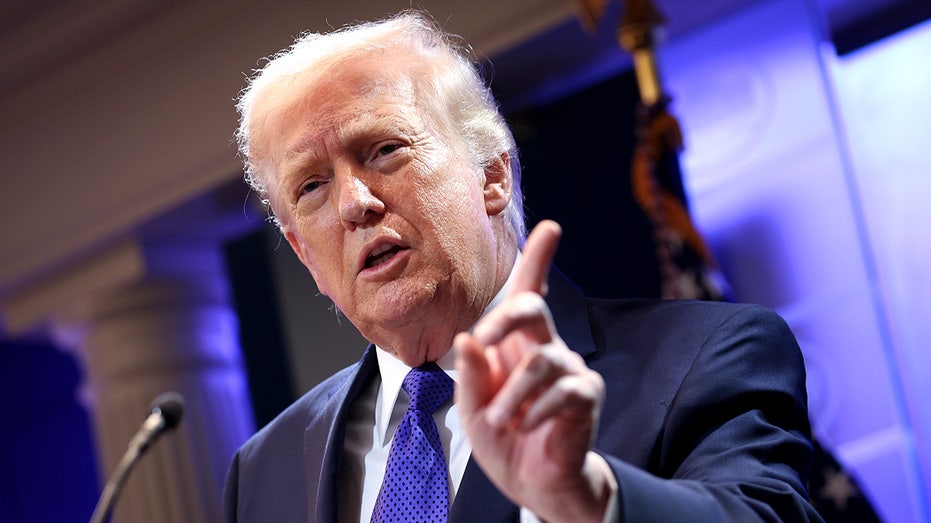
Trump points during campaign rally

President Donald Trump largely lost interest in the Netflix deal once CNN wasn’t involved, according to Ted Sarandos.  (Joe Raedle/Getty Images / Getty Images)

Sarandos told Bloomberg he spoke with Rice but never considered removing her from the board. 

Advertisement

CNN has largely embraced anti-Trump programming for much of the last decade, and the president has responded by publicly criticizing the network on a regular basis. Last year, The Wall Street Journal reported that Ellison told Trump officials that he’d make sweeping changes to CNN if he became its owner. 

One CNN insider said they were trying to keep an “open mind” but said it’s easy to understand why staffers are upset given the reporting on Ellison and Trump discussing changes.

“It’s existential for the brand to be owned by an individual who has personal allegiance to a political figure and is not even answering to public markets,” they told Fox News Digital

The White House didn’t immediately respond to Fox News Digital’s request for comment.

Advertisement

CLICK HERE TO GET FOX BUSINESS ON THE GO

Fox News Digital’s Joseph A. Wulfsohn contributed to this report. 

Continue Reading

Business

Seneca Foods acquires another B&G Foods business

Published

on

Seneca Foods acquires another B&G Foods business

The deal follows Seneca Foods’ 2023 purchase of the Green Giant canned vegetable line. 

Continue Reading

Business

Gold Climbs Above $5,300 an Ounce. Where It Goes Next Amid Middle East Fighting.

Published

on

Gold Climbs Above $5,300 an Ounce. Where It Goes Next Amid Middle East Fighting.

Gold Climbs Above $5,300 an Ounce. Where It Goes Next Amid Middle East Fighting.

Continue Reading

Business

Edwards Lifesciences Corporation (EW) Presents at TD Cowen 46th Annual Health Care Conference Transcript

Published

on

OneWater Marine Inc. (ONEW) Q1 2026 Earnings Call Transcript

Edwards Lifesciences Corporation (EW) TD Cowen 46th Annual Health Care Conference March 2, 2026 9:50 AM EST

Company Participants

Scott Ullem – Corporate VP & CFO

Conference Call Participants

Advertisement

Joshua Jennings – TD Cowen, Research Division

Presentation

Joshua Jennings
TD Cowen, Research Division

Advertisement

We’re going to get started here as we’re moving down the medical devices company presentation, fireside chat track at the 46th Annual TD Cowen Healthcare Conference. I’m Josh Jennings from the TD Cowen Medical Devices team, and we are honored to have Edwards’ CFO, Scott Ullem, joining us making the track out from the West Coast. Scott, thanks so much for being here.

Scott Ullem
Corporate VP & CFO

That’s our pleasure, and I’m here with my colleague, Gerianne Sarte, who’s going to be taking over as Head of Investor Relations in April.

Advertisement

Joshua Jennings
TD Cowen, Research Division

Thank you for introducing her. I’m sorry, I didn’t introduce you, myself. I’ve got mixed emotions here at this — you’ve been the regular attendee and your team of the TD Cowen Healthcare Conference. And this may be the last time we get to have a chat up here on stage.

Advertisement

Scott Ullem
Corporate VP & CFO

Well, I haven’t been here for all 46 of your annual investor conferences, but it’s always a pleasure to be here. Thanks, Josh.

Advertisement

Question-and-Answer Session

Joshua Jennings
TD Cowen, Research Division

Thanks, Scott. And maybe to start, just maybe the succession path and the process, any updates there? I mean it seems like there has been some restructuring in the — some of the big executives at Edwards over the past couple of years with Mike Mussallem leaving, Larry Wood leaving and now you’re departing as well. But I think in each instance, the executive’s departure was — the basis was you’re leaving the company in a good position and you have a strong team

Advertisement
Continue Reading

Trending

Copyright © 2025