
Business
Stokes poised to exit 17 years too late for shareholders

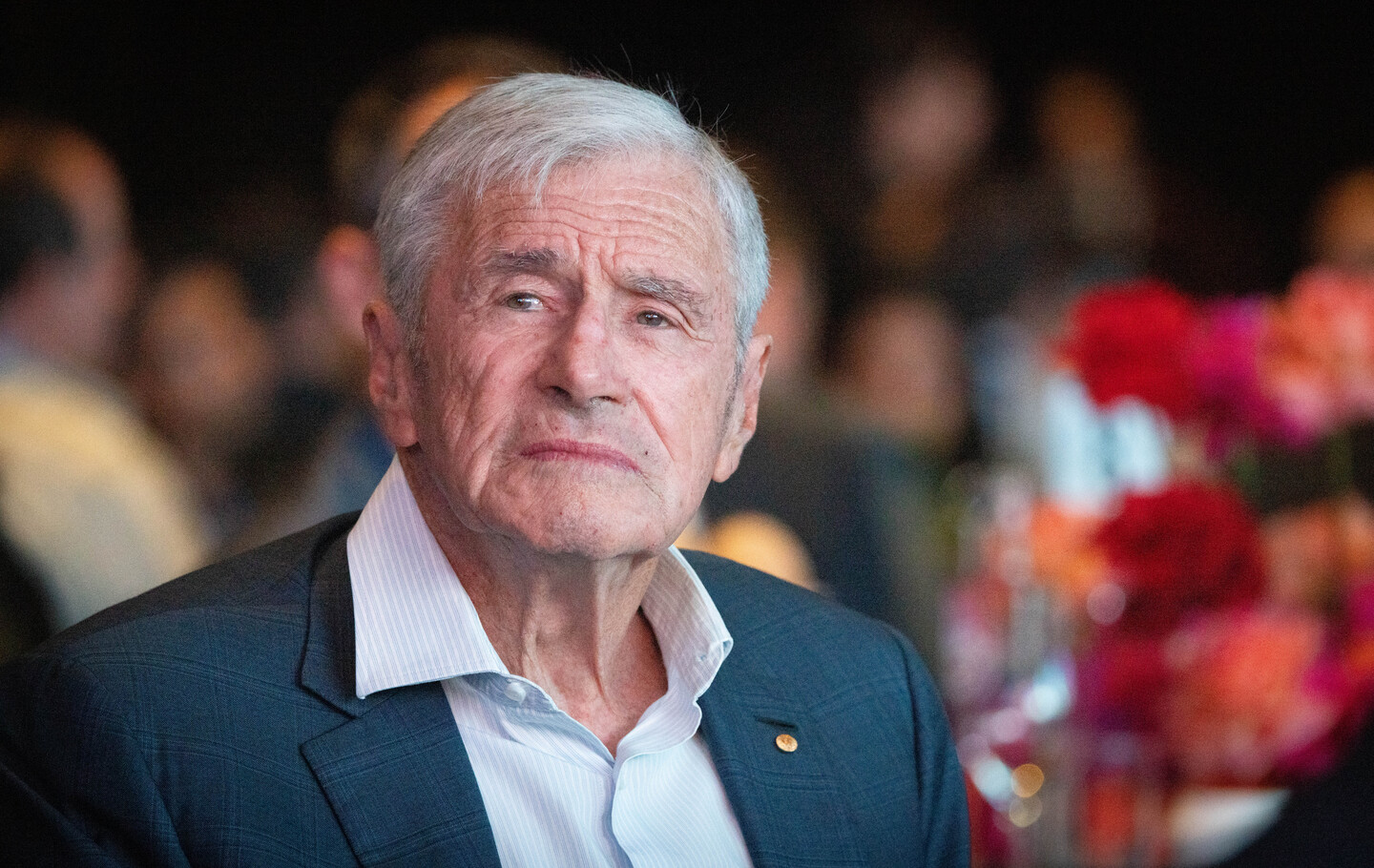
OPINION: In Western Australia, Kerry Stokes is almost untouchable. Close to government, the fourth-richest person in the state and custodian of philanthropic giant Telethon.
Mr Stokes‘ success started with TV antennas, then shopping centres and he eventually hit the big time with the diversified major now called SGH that he has passed on to his son, Ryan, to steward through what will be the founder’s twilight years.
It could be said he had the Midas touch when it came to business. Almost.
When Mr Stokes took the stage at his final Seven West Media annual meeting, back in November, he cast that company as a casualty of foreign digital giants and a regulatory framework unable to keep pace.
It was a position at odds with the confident image he usually projects.
The message was all too familiar: global platforms have siphoned billions from Australian media; governments must intervene; local companies must be protected from the digital raiders.
It’s a compelling narrative, but history complicates it. Some 16 years ago, Mr Stokes made the very opposite argument when he set out to take control of the then-independent listed media player West Australian Newspapers.
The 2008 shareholder pack distributed during that campaign shows Mr Stokes and his lieutenant Peter Gammell positioning themselves as the pair uniquely equipped to navigate the digital transition.
The existing WAN board, they argued, lacked the vision, technical literacy and urgency required in an industry being reshaped by online audiences and new advertising models.
The promise was explicit: Messrs Stokes and Gammell would arrest circulation decline, rebuild the core franchise, modernise digital operations and invest for long-term growth.
They argued that WAN had starved itself of resources and that only new leadership with deep media experience like theirs could restore performance. Their case rested on one claim: they understood the digital future better than the incumbents.
It is now possible to judge that claim. In 2008, WAN’s share price traded between $10 and $17 at the peak of takeover speculation. Looking back further, it traded long-term at between $5 and $6 a share.
In the weeks leading up to its Christmas eve ASX suspension, the merged Seven West Media entity (the combination of those same WAN assets and the Seven Network) traded at between 12 and 14 cents.
The fall in shareholder value is extreme. A hypothetical investor who bought at $10 has seen roughly 98 per cent of their capital evaporate.
Dividends, once a central justification for WAN’s conservative strategy, have vanished. Minority shareholders, as one put it at this year’s AGM, have been “treated with contempt”.
Digital disruption is the defining driver of that decline.
But it is difficult to reconcile Mr Stokes’ 2008 insistence that he had the roadmap for navigating this disruption with the reality of 2026.
The company that was supposed to be revitalised under his stewardship is now one of the Australian media sector’s most distressed businesses.
The digital platforms Mr Stokes once held up as exemplars are now the villains of his narrative. The structural pressures he warned WAN to prepare for were not meaningfully offset by investments.
This does not diminish the severity of the global forces facing traditional media. Nor does it suggest that WAN’s previous board would have fared better. But it does underscore a crucial point: Mr Stokes sought control of WAN on the basis that he and Mr Gammell knew how to manage the transition better than anyone else.
The results are now plain. The turnaround never came. The strategy failed to outrun the disruption. The Yahoo7 joint venture was a dud. And the shareholders who backed the promise of renewal have absorbed one of the most significant value destructions in modern Australian media history.
Compare that with the performance of Nine, which has faced exactly the same headwinds. Nine built Stan, which is now worth somewhere in the range of $700m to $1.2b.
Nine also merged with Fairfax, which built online real estate portal Domain and floated it. Nine’s remaining Domain shares were sold in October for about $1.4b, the majority of which was paid to shareholders as a special dividend.
The separate Nine and Fairfax businesses were worth around $5b in 2013. The merged businesses now has a market capitalisation of $1.75b. That’s not a great result, but SWM’s numbers make it look exceptional.
SWM, meanwhile, bought News Corp out of its holding in Community Newspaper Group. And it bought the Sunday Times, effectively tripling down on newspapers.
It then bought Prime Media Group, which held regional TV licences. And, in 2024, it started The Nightly, a digital-only newspaper aimed at Eastern States audiences.
SWM’s share price is about one twentieth of what it was a decade ago.
Mr Stokes now leaves Seven West Media with a familiar call for government protection. In hindsight, WAN shareholders should have sought protection from the Seven raiders back in 2008.
Some, like the institutional shareholders who sided with Messrs Stokes and Gammell and gave them the control they sought, have nobody but themselves to blame. But spare a thought for the shareholder who asked a question of Mr Stokes at the recent AGM.
A retiree, he spent $1m buying up 200,000 shares that are now worth just $24,000. He was practically begging for the reinstatement of a dividend, even if it was only half-a-cent per share.
Mr Stokes‘ response? “I’ve had no dividends either. So I am sympathetic to shareholders.”
The AGM was among Mr Stokes‘ last duties in his capacity as SWM chair. The company’s impending merger with Southern Cross Media Group is slated for completion this week and will mark the end of his tenure in the role.
The Stokes family will retain around 20 per cent of the enlarged company, and Mr Stokes intends to remain close to the post-merger Southern Cross Media Group as a special adviser to its board.
- The author worked for The West Australian from 1998-2012 and still holds a small parcel of employee-scheme-issued shares in SWM.



