
Business
Strict Regulatory Frameworks Vs The Need For Rapid Digital Innovation


Online businesses in the UK are expected to move quickly. New tools, AI systems and cloud services appear almost daily, and companies that hesitate risk falling behind competitors.
At the same time, the regulatory landscape is becoming more demanding, forcing businesses to slow down and consider compliance before rolling out new features.
This tension is particularly critical for the backbone of the British economy. UK SMEs numbered 5.49 million in 2024, representing 99.8% of all private sector businesses. These smaller entities often lack the dedicated legal departments and compliance officers that their blue-chip counterparts possess, yet they are held to similar standards regarding data protection, financial reporting, and operational resilience. The conflict between the need for speed and the requirement for safety has become the defining operational struggle of 2026.
The UK’s Expanding Online Regulations
Recent legislation shows how much the environment is changing. New duties under the Online Safety Act came into force in January 2026, placing stronger obligations on digital platforms to monitor toxic content, carry out formal risk assessments and document how their services manage online safety. For companies building social platforms, messaging tools or recommendation systems, compliance can no longer be treated as an afterthought.
The Data (Use and Access) Act 2025 is being phased in across 2025 and 2026. The law introduces new frameworks around smart data sharing, digital identity and updated rules for how organisations handle personal data. While parts of the reform are designed to support innovation, they also add new governance and reporting requirements that businesses must keep up with.
Similar pressures can be seen in highly regulated digital industries such as online gambling. Recent UK reforms have introduced stronger affordability checks, forcing operators to redesign payment systems, onboarding processes and promotional tools to remain compliant. Additionally, new LCCP SR Code 5.1.1 rules on promotions ban “mixed‑product” offers such as “bet on sports, get free spins,” and cap wagering requirements on bonuses; these apply to sports‑betting promos.
However, this also shows that the competitive environment in online marketplaces may also change as a result of regulatory tightening. Many globally based platforms operate under various legal frameworks and so offer larger betting markets or fewer product limitations and are not subject to the country’s self-exclusion program (source: https://www.gamblinginsider.com/uk/non-gamstop-betting-sites). UK-licensed operators must adjust to stake limits, affordability checks, and tougher advertising guidelines. This leads to a scenario where customer choice and product design are influenced by regulatory protections. In actuality, it draws attention to the continuous conflict between preserving a competitive atmosphere that still encourages innovation and safeguarding users through regulation.
While these measures are intended to strengthen consumer protection, they also showhow digital businesses must constantly adapt their technology and product design to operate within evolving legal frameworks.
Taken together, these changes illustrate the balancing act facing many digital firms. Innovation is still encouraged, but it now happens within a much denser network of rules covering data use, online safety and consumer protection.
Rising Compliance Costs Challenge Small Business Scalability
The administrative burden placed on growing companies has moved from a periodic annoyance to a constant operational drag. Before, compliance was often a box-ticking exercise conducted annually, but today’s digital-first environment demands continuous monitoring. Regulations such as the Digital Operational Resilience Act (DORA) and strict ICO data enforcement mean that businesses must constantly prove their cyber posture.
This redirects critical resources away from research and development. It forces founders to choose between hiring a new developer to build features or a compliance manager to ensure those features do not violate emerging protocols.
Nowhere is this contention more apparent than in the government’s own incentive schemes designed to foster growth. While tax reliefs are intended to fuel innovation, the complexity of accessing them has created a barrier for many legitimate businesses. For the 2022-2023 tax year, 62,015 SMEs made R&D tax relief claims, with the majority coming from information & communication and manufacturing sectors.
However, the administrative layers added to prevent fraud have inadvertently slowed down the funding cycle for honest innovators. When the cost of compliance begins to approach the value of the incentive itself, businesses naturally pull back on the risky, forward-thinking projects that the economy desperately needs to thrive.
Strategies For Maintaining Agility Amidst Bureaucratic Constraints
To survive heavy regulation, successful SMEs are changing how they view compliance. Rather than treating it as a final hurdle to clear before launch, forward-thinking leaders are integrating “compliance by design” into their workflows. This involves using automated regulatory technology (RegTech) that can monitor data flows and report anomalies in real-time, effectively outsourcing the heavy lifting to software.
By automating the evidence-gathering process, businesses can free up their human talent to focus on creative problem-solving and strategic growth, ensuring that innovation continues despite the red tape.
The relationship between large enterprises and their smaller suppliers will most likely dictate the pace of digital adoption. Large corporations are increasingly pushing their own regulatory obligations down the supply chain, demanding that their vendors meet the same high standards they do.
New regulations mean SMEs must provide real-time security evidence to larger clients, moving beyond annual audits to 24/7 resilience demonstrations by 2026. For the UK’s small business community, the path forward involves embracing these standards not as burdens, but as quality markers that can unlock lucrative contracts in a risk-averse world.



As a detail-oriented investor with a strong foundation in finance and business writing, I focus on analyzing undervalued and disliked companies or industries that have strong fundamentals and good cash flows. I have a particular interest in sectors such as Oil&Gas and consumer goods. Basically, anything that has been unloved for unjustified reasons that could offer substantial returns. Energy Transfer is one of those companies that I came across when no one wanted to touch it and now I can’t resolve myself to sell it. I will always focus more on long-term value investing but I can sometimes lose myself in possible deal arbitrage such as with Microsoft/ Activision Blizzard, Spirit Airlines/Jetblue (that one still hurts), and Nippon/U.S. Steel (perfect exit at $50.19). I tend to shun businesses that I can’t understand either high-tech or certain consumer goods such as fashion (give me a Levi’s jeans). I don’t understand why anyone would invest in cryptocurrencies as well. Through Seeking Alpha, I aim to connect with like-minded investors, share insights, and build a collaborative community of individuals seeking superior returns and informed decision-making, currently on a quest to review every public company.
Analyst’s Disclosure: I/we have no stock, option or similar derivative position in any of the companies mentioned, and no plans to initiate any such positions within the next 72 hours. I wrote this article myself, and it expresses my own opinions. I am not receiving compensation for it (other than from Seeking Alpha). I have no business relationship with any company whose stock is mentioned in this article.
Seeking Alpha’s Disclosure: Past performance is no guarantee of future results. No recommendation or advice is being given as to whether any investment is suitable for a particular investor. Any views or opinions expressed above may not reflect those of Seeking Alpha as a whole. Seeking Alpha is not a licensed securities dealer, broker or US investment adviser or investment bank. Our analysts are third party authors that include both professional investors and individual investors who may not be licensed or certified by any institute or regulatory body.


I am a CPA and financial consultant with over two decades of experience in financial reporting. This professional background informs my lifelong passion for investing, where I combine a natural appetite for curiosity with a disciplined, long-term approach. Through the Conviction Queue, I focus on identifying quality, founder-led businesses at attractive valuations. My primary goal is to provide deep analysis on companies with sustainable growth potential that are built to be held for years.
Analyst’s Disclosure: I/we have a beneficial long position in the shares of CAVA either through stock ownership, options, or other derivatives. I wrote this article myself, and it expresses my own opinions. I am not receiving compensation for it (other than from Seeking Alpha). I have no business relationship with any company whose stock is mentioned in this article.
Seeking Alpha’s Disclosure: Past performance is no guarantee of future results. No recommendation or advice is being given as to whether any investment is suitable for a particular investor. Any views or opinions expressed above may not reflect those of Seeking Alpha as a whole. Seeking Alpha is not a licensed securities dealer, broker or US investment adviser or investment bank. Our analysts are third party authors that include both professional investors and individual investors who may not be licensed or certified by any institute or regulatory body.

Micron: AI Memory Paradox Could Send Demand Exploding Despite Margin Risks

Former State Department deputy special envoy Ellie Cohanim discusses ongoing talks between U.S. officials and Iran over its nuclear program on ‘The Bottom Line.’
Oil prices have surged more than 40% since the start of the Iran conflict, rattling global energy markets and raising concerns that U.S. drivers could see further increases at the pump.
Analysts say consumers may not have felt the full impact yet, as higher crude costs typically take weeks to filter through to retail gasoline prices. Even if oil stabilizes, pump prices could continue rising in the near term.
“More than likely there is more to come, because there’s usually a lag between crude prices and what consumers pay at the pump,” said Phil Flynn, a FOX Business contributor and senior market analyst at Price Futures Group.
Michael Mische, a supply chain expert and professor at the University of Southern California, also predicted the worst is not over, telling FOX Business: “There’s more still to come.”
“There is a lag, and prices will continue to work their way through the system,” he said.
IRAN WAR COULD PUSH INFLATION HIGHER THIS YEAR, GOLDMAN SACHS SAYS

Prices are seen at a gas station in Downtown Brooklyn, New York, United States, on March 18, 2026. (Matthew Hoen/NurPhoto via Getty Images / Getty Images)
U.S. benchmark West Texas Intermediate crude closed at $99.64 a barrel on Friday, remaining elevated after a volatile stretch tied to the conflict. While prices were on track for their first weekly decline in more than a month, they remain sharply higher than pre-conflict levels.
The rally follows supply disruptions linked to U.S. and Israeli strikes on Iran, which analysts estimate have removed roughly 10 million to 11 million barrels per day from global markets, tightening supply.

Gas prices are displayed at a Mobile Gas station on March 17, 2026 in the Kensington neighborhood of the Brooklyn borough in New York City. (Michael M. Santiago/Getty Images)
Geopolitical uncertainty continues to drive the market. The U.S. has extended a deadline for Iran to reopen the Strait of Hormuz—a critical route for global oil shipments—while also weighing additional military action. Prices could fall if the conflict eases but are likely to remain above pre-conflict levels, while a prolonged escalation could push prices higher.
IRAN WAR FUELS ASIA ENERGY CRUNCH AS INDIA, JAPAN, OTHERS FEEL STRAIN
“Even with this supply shock, the increase has been relatively orderly—and it could have been much worse,” Flynn said.
But Mische noted that strong domestic production has helped cushion the impact. “If we didn’t have current U.S. production levels, we would be in a real mess,” he said.
For consumers, gasoline prices have already begun to rise, but further increases may be ahead as the earlier crude spike continues to pass through the system.

High gas prices are listed at Chevron gas station in Los Angeles on March 9, 2026, as gasoline prices surge amid the ongoing war with Iran. (Frederic J. BROWN / AFP via Getty Images)
The national average price for regular gasoline stood at roughly $3.98 per gallon, according to AAA—up about 6 cents from a week ago and nearly $1 higher than a month ago. GasBuddy data shows a similar trend, with prices rising about 7 cents week over week and more than $1 over the past month.
That increase largely reflects earlier gains in oil, and because retail fuel prices lag crude movements, analysts expect additional upward pressure in the coming weeks.
CLICK HERE TO GET FOX BUSINESS ON THE GO
Seasonal factors are also contributing. The transition to more expensive summer gasoline blends is underway, increasing refining costs and potentially keeping pump prices elevated even if crude stabilizes.
“Prices go up like rockets, and they come down like a feather,” Mische said.
Reuters contributed to this report.


Italian state finances can absorb shock due to Middle East crisis, Finance Minister says

Arcutis presents trial data on roflumilast cream for infants
Sanofi reports positive phase 3 data for atopic dermatitis drug

Spring has painted parts of the United States in soft shades of pink and white as cherry blossoms reach peak bloom across the country in late March and early April 2026, drawing millions of visitors to festivals that celebrate Japanese-American friendship, cultural exchange and the fleeting beauty of the season.

With the National Cherry Blossom Festival in full swing in the nation’s capital and similar events unfolding from Georgia to the Pacific Northwest, travelers are flocking to cities boasting thousands — or in one case hundreds of thousands — of flowering trees. Peak bloom in Washington, D.C., officially arrived on March 26, slightly ahead of some forecasts, creating a spectacular backdrop against iconic monuments.
While weather can shift timing by days or even a week, the 2026 season aligns well with major festivals running through mid-April. Here is a ranking of the 10 most popular U.S. cities for cherry blossom viewing and festivals this spring, based on tree counts, event scale, visitor numbers and expert recommendations from tourism boards and horticultural sources:
- Washington, D.C. — The undisputed centerpiece of American cherry blossom season. Nearly 3,800 Yoshino cherry trees ring the Tidal Basin, framing the Jefferson Memorial and other landmarks in a pink haze. The National Cherry Blossom Festival runs March 20 to April 12, featuring parades, the Blossom Kite Festival, Petalpalooza fireworks, cultural performances and a Sakura Matsuri street festival. Peak bloom was declared March 26, with optimal viewing expected into early April. The festival ties into the nation’s 250th anniversary celebrations, adding patriotic flair to the blooms. Crowds are heavy, so early morning or evening visits are advised.
- Macon, Georgia — Known as the “Cherry Blossom Capital of the World,” Macon boasts more than 350,000 Yoshino cherry trees — far outnumbering Washington, D.C. The International Cherry Blossom Festival, March 20-29, transforms the city into the “Pinkest Party on Earth” with concerts, amusement rides, food vendors, hot air balloons and family events at Carolyn Crayton Park. Mid-to-late March typically brings peak bloom, making it an accessible Southern alternative with fewer crowds than the capital.
- Newark, New Jersey — Branch Brook Park holds the largest collection of cherry blossom trees in the United States, with more than 5,300 specimens. The park’s Cherry Blossom Festival, running April 4-19, includes Bloomfest on April 19 featuring Japanese cultural demonstrations, live music and a craft market. Visitors can drive or walk tree-lined paths for an immersive experience rivaling larger festivals. Peak bloom is expected around mid-April.
- Seattle, Washington — The University of Washington Quad becomes a pink tunnel of cherry trees each spring, one of the most photographed spots in the Pacific Northwest. Peak bloom hits mid-to-late March, drawing students, locals and tourists for hanami-style picnics. Additional viewing areas include Kobe Terrace and the Seattle Japanese Garden. The setting against Pacific Northwest evergreens creates a striking contrast.
- Brooklyn, New York — The Brooklyn Botanic Garden’s Cherry Esplanade and surrounding grounds host one of the Northeast’s premier displays, with over 200 cherry trees of various species. Hanami Nights, scheduled April 21-24, offer evening illumination, cultural programming and a serene escape from Manhattan crowds. New York City’s broader cherry blossom spots, including the New York Botanical Garden, add to the metro area’s appeal.
- Portland, Oregon — Cherry trees line the Tom McCall Waterfront Park along the Willamette River and flourish at the Portland Japanese Garden, considered one of the most authentic outside Japan. Late March to early April brings peak viewing, with the urban backdrop enhancing the natural beauty. The city’s walkable layout makes it ideal for relaxed blossom strolls.
- St. Louis, Missouri — The Missouri Botanical Garden’s 14-acre Japanese Garden features more than 230 cherry trees that bloom from late March into early April. The garden’s serene paths and traditional landscaping provide a peaceful Midwest hanami experience, often paired with educational programs on Japanese culture.
- Philadelphia, Pennsylvania — The Subaru Cherry Blossom Festival of Greater Philadelphia, held March 28-29 at the Shofuso Japanese Cultural Center and other sites, draws thousands with kimono dressing, origami, tea ceremonies and taiko drumming. The city’s roughly 2,600 cherry trees offer solid viewing without D.C.-level crowds, making it a strong East Coast option.
- Dallas, Texas — The Dallas Arboretum and Botanical Garden’s “Dallas Blooms” festival, running through April 12, showcases 150 cherry trees alongside 500,000 tulips and other spring flowers. Concerts, floral classes and picnics create a festive atmosphere in the Southwest, with peak cherry blossoms typically in mid-March.
- Columbus, Ohio — The Greater Columbus Cherry Blossom Festival highlights more than 100 trees in Franklin Park, inspired by Washington, D.C.’s event. Cultural performances and family activities celebrate the season in the Midwest, offering a smaller-scale but charming alternative for regional visitors.
Trends and Practical Advice for 2026
This year’s season has been influenced by a cold winter followed by warming trends, resulting in slightly earlier blooms in some regions. Washington, D.C.’s peak arrived on March 26, while Southern and Western spots peaked or are peaking in mid-to-late March. Northern and higher-elevation areas may see blooms extending into mid-April.
Festivals emphasize cultural exchange, with many featuring Japanese music, food, crafts and educational elements honoring the 1912 gift of trees from Tokyo to Washington, D.C. Sustainability efforts, including careful tree maintenance and crowd management, are priorities at major sites.
Travelers should check real-time bloom updates via National Park Service Bloom Watch tools, garden websites or local tourism apps, as weather — especially wind and rain — can shorten the display. Early mornings or weekdays offer thinner crowds. Many events are free or low-cost, though parking and accommodations near popular sites book quickly.
Beyond the Blooms
Cherry blossom season boosts local economies through tourism, hotel stays and dining. In Washington, D.C., the festival coincides with broader spring events, while Macon’s “Pinkest Party” injects energy into downtown and park areas.
For those unable to travel, live webcams at the Tidal Basin and other sites provide virtual access. Photographers recommend wide-angle lenses for sweeping views and patience for the perfect petal-filled shot.
As petals begin to fall — creating “pink snow” on paths — the season reminds visitors of nature’s transience and the enduring cultural ties between the U.S. and Japan. Whether strolling the Tidal Basin, exploring Macon’s tree-lined streets or picnicking in Seattle’s Quad, 2026 offers memorable ways to welcome spring under canopies of cherry blossoms.
With festivals stretching into mid-April, there is still time to plan a trip and experience one of America’s most beloved seasonal spectacles.
Business
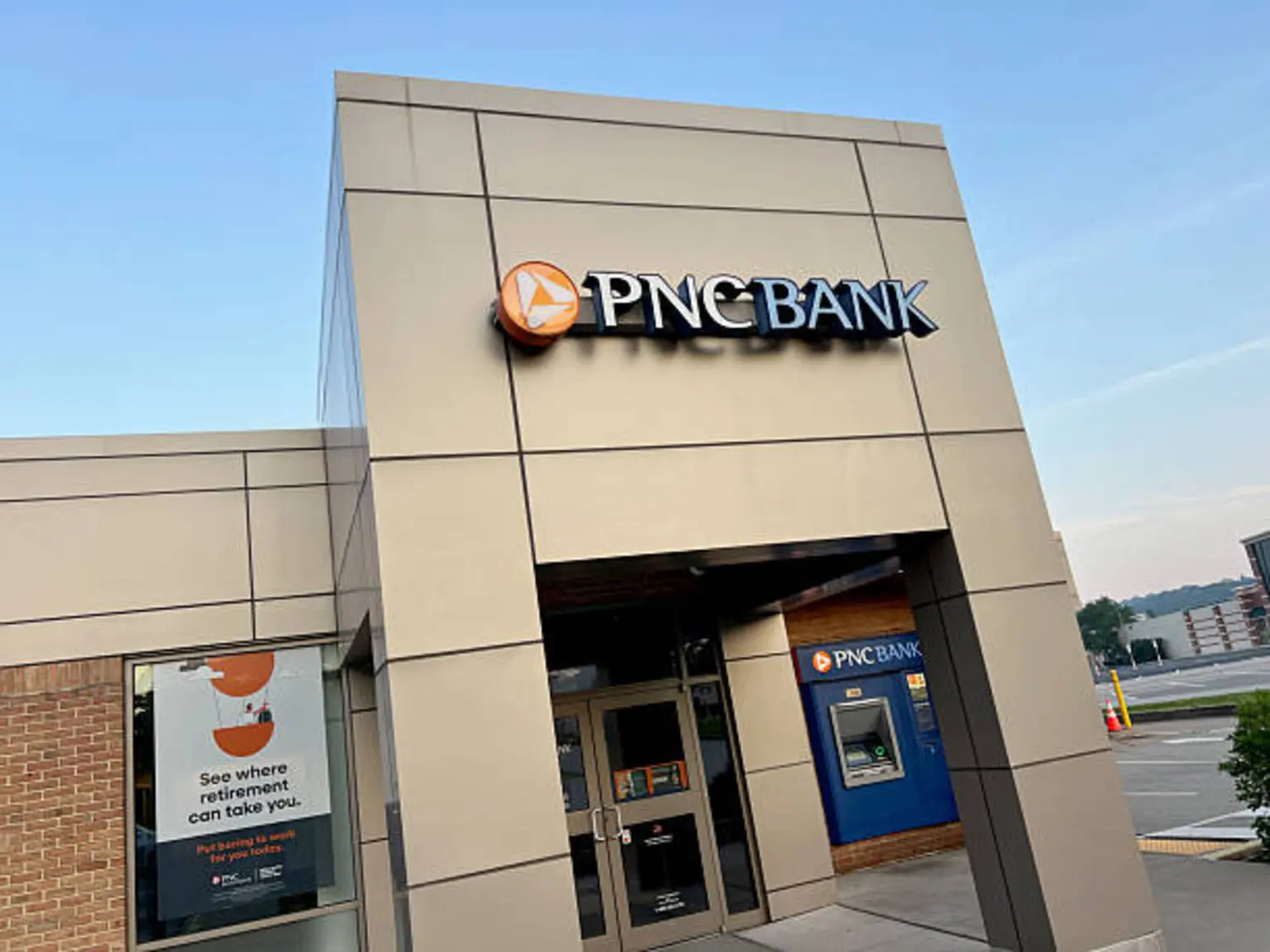
PNC Financial Services: In A 17% Drawdown, The Focus Shifts Back To Fundamentals In April (NYSE:PNC)

Freelance Financial Writer | Investments | Markets | Personal Finance | RetirementI create written content used in various formats including articles, blogs, emails, and social media for financial advisors and investment firms in a cost-efficient way. My passion is putting a narrative to financial data. Working with teams that include senior editors, investment strategists, marketing managers, data analysts, and executives, I contribute ideas to help make content relevant, accessible, and measurable. Having expertise in thematic investing, market events, client education, and compelling investment outlooks, I relate to everyday investors in a pithy way. I enjoy analyzing stock market sectors, ETFs, economic data, and broad market conditions, then producing snackable content for various audiences. Macro drivers of asset classes such as stocks, bonds, commodities, currencies, and crypto excite me. My thing is communicating finance with an educational and creative style. I also believe in producing evidence-based narratives using empirical data to drive home points. Charts are one of the many tools I leverage to tell a story in a simple but engaging way. I focus on SEO and specific style guides when appropriate.
Analyst’s Disclosure: I/we have no stock, option or similar derivative position in any of the companies mentioned, and no plans to initiate any such positions within the next 72 hours. I wrote this article myself, and it expresses my own opinions. I am not receiving compensation for it (other than from Seeking Alpha). I have no business relationship with any company whose stock is mentioned in this article.
Seeking Alpha’s Disclosure: Past performance is no guarantee of future results. No recommendation or advice is being given as to whether any investment is suitable for a particular investor. Any views or opinions expressed above may not reflect those of Seeking Alpha as a whole. Seeking Alpha is not a licensed securities dealer, broker or US investment adviser or investment bank. Our analysts are third party authors that include both professional investors and individual investors who may not be licensed or certified by any institute or regulatory body.
Business
Crimson Desert on PS5 Sees Rapid Turnaround with Major Patches, Strong Sales and Performance

Pearl Abyss’ ambitious open-world action RPG “Crimson Desert” has delivered a classic launch redemption story on PlayStation 5, bouncing back from mixed early player feedback with swift updates that address technical issues, improve controls and boost accessibility just days after its March 19, 2026 release.

The single-player adventure, set in the vast continent of Pywel, launched simultaneously on PS5, Xbox Series X/S, PC and Mac to strong commercial success, surpassing 2 million copies sold in its opening weekend and climbing toward 3 million shortly after. Critics and players praised its stunning visuals — especially on PS5 Pro — and expansive world, though initial complaints centered on convoluted controls, inventory management, blurry textures on base PS5 hardware and occasional crashes.
Developer and publisher Pearl Abyss responded quickly. Patch 1.00.03, released March 23 on PlayStation 5 and Xbox, introduced a 120Hz mode toggle, fixed PS5 map menu crashes, adjusted settings saving, reduced enemy health and attack values in certain encounters, lowered stamina consumption for blocking, and improved food and item healing. A follow-up hotfix (Version 1.00.04) further stabilized PlayStation performance. Steam user reviews, initially mixed, shifted to “Mostly Positive” following the updates.
Technical Challenges and Console Performance
Early impressions highlighted strong graphical fidelity on high-end hardware. On PS5 Pro, the game leverages upgraded PlayStation Spectral Super Resolution (PSSR) for sharper 4K visuals, enhanced ray tracing and smoother long-distance rendering in its massive open world. Base PS5 runs in performance, balanced and quality modes, with recent patches mitigating blurriness and frame rate instability reported by some players.
Digital Foundry and hands-on previews noted the game’s demanding nature, powered by Pearl Abyss’ proprietary BlackSpace Engine, which excels at streaming detailed environments but strained console resources at launch. The addition of the 120Hz toggle has helped console players achieve smoother gameplay, while crash fixes specifically targeted PS5 issues when accessing the map.
Pre-launch concerns included a lack of extensive base PS5 footage, prompting the studio to urge patience. Post-release gameplay videos confirmed solid performance on standard hardware once patches rolled out, though some players still debate optimization compared to PC and PS5 Pro versions.
The title arrived with Denuvo anti-tamper software on PC, sparking debate among fans wary of potential performance impact, though console versions remain unaffected.
Gameplay and World Design
“Crimson Desert” follows protagonist Kliff and other playable characters — including a female warrior and orc barbarian — in a story-driven action RPG emphasizing cinematic combat, seamless exploration and large-scale boss fights. The open world features dynamic weather, detailed ecosystems and hidden secrets, with players discovering mechanics reminiscent of classic titles, such as advanced physics interactions not heavily marketed pre-launch.
Patch notes also introduced new item storage at the Howling Hill Camp, addressing early inventory complaints, and refined gamepad and keyboard/mouse controls for better responsiveness. Some boss encounters saw difficulty adjustments described by players as “nerfs,” making progression more approachable without diminishing challenge.
Pre-order bonuses included the Khaled Shield and PS5-exclusive Grotevant Plate armor set, while the game supports three distinct playable characters with unique combat styles.
Development History and Anticipation
Originally teased years ago as a spiritual successor in the Black Desert universe, “Crimson Desert” faced multiple delays, shifting from a late 2025 window to Q1 2026 before locking in the March 19 global launch at 3 p.m. PT. The extra time allowed for polish on voice acting, console certification and optimization.
Previews in early 2026 highlighted its ambition: a premium single-player experience without microtransactions, focusing on story, exploration and combat in a next-gen open world. Pearl Abyss emphasized a “buy once, enjoy fully” model, distancing itself from live-service elements common in its MMORPG Black Desert Online.
Launch trailers showcased epic battles and a mature narrative involving power struggles across Pywel. The game earned an ESRB Mature rating for blood, intense violence, strong language and drug references.
Sales, Reception and Future Plans
Strong opening sales reflect pent-up demand for ambitious single-player RPGs in a year crowded with major releases. While not dominating every “Game of the Year” conversation amid stiff competition, “Crimson Desert” has carved a niche with its visuals and scope.
Player feedback on platforms like Reddit and Steam highlights the game’s depth, with many calling certain undiscovered features “11/10” surprises. Pearl Abyss has committed to ongoing support, including free content updates discussed in recent shareholder meetings, such as story expansions or additional mods.
The studio also addressed use of generative AI for some 2D placeholder assets, confirming an audit to replace them with traditional creations.
For PS5 owners, the rapid patches signal a developer attentive to feedback, potentially turning initial technical hiccups into a smoother long-term experience. Ongoing updates continue to refine graphics settings, performance and gameplay balance.
Outlook for Crimson Desert on PlayStation 5
As patches roll out and player counts stabilize, “Crimson Desert” appears positioned for a successful console lifecycle on PS5. Its blend of high-fidelity visuals, expansive world and responsive combat — once early issues are ironed out — appeals to fans seeking a premium open-world adventure without ongoing monetization pressures.
With free content on the horizon and further optimizations likely, Pearl Abyss aims to build on the strong sales foundation. For PlayStation players debating a purchase, the post-launch improvements have made the experience more accessible, particularly on base PS5 hardware.
Whether exploring Pywel’s secrets, tackling massive bosses or customizing characters like Kliff, the game offers substantial content for RPG enthusiasts. As 2026 progresses, continued updates could elevate “Crimson Desert” from a rocky launch to one of the year’s standout console experiences.

how the US, Israel and Iran are all using religion to garner support

Broadcom: A Great Company At A Fair Price (NASDAQ:AVGO)
Bitcoin Advocates Oppose New PARITY Act Over Mining Tax


-
 NewsBeat3 days ago
Manchester United reach agreement with Casemiro over contract clause amid transfer speculation
-

 News Videos3 days ago
Parliament publishes latest register of MPs’ financial interests
-

 Crypto World7 days ago
Best Crypto to Buy Now: Strategy Just Spent $1.57 Billion on Bitcoin During Fear While Early Investors Quietly Enter Pepeto for 150x Potential
-

 Crypto World7 days ago
Bitcoin Price News: Bhutan Sells $72 Million in BTC Under Fiscal Pressure, but the Smart Money Entering Pepeto Sees What the Market Does Not
-

 Sports5 days ago
Remo Stars and Kano Pillars Strengthen Survival Hopes in NPFL
-

 Sports5 days ago
Gary Kirsten Accuses Pakistan Cricket Board Of ‘Interference’, Mohsin Naqvi Responds
-

 Business6 days ago
No Winner in March 21 Drawing as Prize Rolls to $133 Million for Next
-

 Tech6 days ago
Give Your Phone a Huge (and Free) Upgrade by Switching to Another Keyboard
-

 Tech6 days ago
AI enters the chat: New Seattle dating app relies on tech to facilitate meaningful human connections
-

 News Videos5 days ago
Ch 9 Financial Management Part 1 | Detailed One Shot | Class 12 Business Studies Boards 2026
-

 Tech7 days ago
Today’s NYT Connections Hints, Answers for March 22 #1015
-

 Business2 days ago
Instagram, YouTube Found Responsible for Teen’s Mental Health Struggle in Historic Ruling
-

 Business6 days ago
Will Duke Basketball Win It All? Duke Basketball Enters Second Round as Third Favorite to Claim NCAA Title
-

 Sports5 days ago
2026 Kentucky Derby horses, odds, futures, preview, date: Expert who hit 12 Derby-Oaks Doubles enters picks
-

 NewsBeat18 hours ago
The Story hosts event on Durham’s historic registers
-
 Entertainment5 days ago
Cynthia Bailey Dishes on ‘RHOA’ Season 17, Discusses Kandi
-

 Tech5 days ago
Samsung will soon let you control smart home devices from your car’s dashboard
-
 NewsBeat6 days ago
Update on Wisbech river crash as search for teenage boy enters fifth day
-

 Fashion4 days ago
Does It Matter What You Wear When You’re Laid Off and Looking?
-
 NewsBeat3 days ago
Tesco is selling new Cadbury Dairy Milk bar and people can’t wait to try it
You must be logged in to post a comment Login