
Business
Swissquote Group reports 2026 guidance below consensus on growth investments





Ready to rumble? Hunter Biden challenges Trump’s sons to cage match

Some of Trump’s major policy decisions have been preceded by well-timed bets, leading some experts to question whether information had somehow leaked ahead of time.
Exchange data and Reuters calculations showed an unidentified trader or traders bet $500 million on Brent and WTI crude futures in a one-minute period shortly before Trump called a five-day delay on March 23 in attacks on Iran’s energy infrastructure, after which oil prices crashed 15%.
“While he (Trump) seeks a strong and profitable stock market for everyone, members of Congress and other government officials should be prohibited from using nonpublic information for financial benefit,” White House spokesman Davis Ingle told Reuters in a statement.
The Journal, which previously reported the news, said the announcement was made in a staff-wide email from the White House management office.

Business
Aehr Test Systems Shares Soar Past $68 as AI-Driven Bookings Explode Despite Q3 Revenue Miss

FREMONT, Calif. — Aehr Test Systems Inc. stock rocketed higher Thursday, climbing more than 8% to trade around $68 as investors bet on the semiconductor test equipment maker’s surging order book tied to artificial intelligence infrastructure, even after the company posted mixed fiscal third-quarter results.

Shares of the NASDAQ-listed company (AEHR) rose as much as 10% intraday Thursday, building on a 26% surge the previous session following its earnings release. The stock has now skyrocketed more than 210% year-to-date in 2026, turning it into one of the hottest small-cap plays in the chip sector amid booming demand for AI processors and data center components.
Aehr, which specializes in wafer-level and package-level test and burn-in systems, reported fiscal third-quarter revenue of $10.3 million for the period ended Feb. 27, missing Wall Street expectations of about $10.8 million and plunging 44% from $18.3 million a year earlier. The company swung to a non-GAAP net loss of $1.5 million, or 5 cents per share, compared with a year-ago profit of 7 cents per share. However, the loss was narrower than the consensus forecast of a 7-cent loss.
The revenue shortfall stemmed largely from a shift in product mix and timing of shipments, but investors quickly zeroed in on far stronger forward-looking signals. Aehr booked a whopping $37.2 million in new orders during the quarter — delivering a book-to-bill ratio exceeding 3.5 times — pushing its effective backlog to a record $50.9 million when including post-quarter wins.
“We are seeing significant demand from AI and data center customers,” Aehr President and CEO Gayn Erickson said in a statement accompanying the results. The company highlighted production orders for its FOX-XP wafer-level burn-in systems from a lead AI processor customer and follow-on wins in silicon photonics for hyperscale data center optical interconnects.
Analysts and market watchers described Aehr as a “quiet bottleneck” in the AI supply chain. Its equipment stresses semiconductors through burn-in testing to weed out early failures, ensuring reliability for high-power AI chips used in training and inference workloads at massive data centers. Only a fraction of advanced AI accelerators currently undergo full wafer-level burn-in, leaving substantial room for adoption growth as hyperscalers ramp production.
Recent orders underscore that momentum. In February, Aehr landed a $14 million order for FOX-XP systems from its lead AI processor customer. It also secured follow-on business for silicon photonics devices critical to high-speed optical connections in AI servers. Earlier in the year, the company won initial orders for its Sonoma ultra-high-power systems to burn-in next-generation AI ASICs for a major hyperscale customer.
“These wins position Aehr at the heart of AI infrastructure buildout,” said one analyst who upgraded the stock following the earnings. Craig-Hallum upgraded Aehr to Buy from Hold, citing improving business momentum, while Lake Street raised its price target to $56 from $50.
Aehr also announced a $60 million at-the-market equity offering Thursday, giving it flexibility to fund growth or acquisitions as demand accelerates. The company completed the acquisition of Incal Technology last year to expand its footprint in AI semiconductor testing.
For the full fiscal year ending May 2026, Aehr reaffirmed guidance for revenue on the high end of $45 million to $50 million. It expects second-half revenue between $25 million and $30 million and reiterated a path to non-GAAP profitability in the fourth quarter.
The upbeat bookings outlook helped offset concerns about the current-quarter softness, which management attributed partly to lumpy shipment timing and a temporary emphasis on package-level burn-in products.
Aehr’s technology addresses a critical pain point in semiconductor manufacturing. As chips for electric vehicles, AI, silicon carbide power devices and photonics become more complex and power-hungry, the need for rigorous testing and stabilization before deployment grows. Aehr’s FOX family of systems can test and burn-in full wafers or singulated die in parallel, improving yields and reducing costs for customers.
The company’s products serve diverse end markets, including AI processors, data center infrastructure, automotive, industrial and silicon photonics for optical I/O. Demand from hyperscale cloud providers building out AI training clusters has become a dominant driver.
Wall Street’s view on Aehr remains mixed but tilting more positive. Consensus ratings hover around Hold with an average price target near $68, though some firms see higher upside if AI orders continue to materialize. The stock’s rapid run has left it trading at elevated valuations, with a market capitalization now exceeding $2 billion.
Investors appeared unfazed by the revenue miss, focusing instead on the massive backlog and potential for a strong second half. Broader market sentiment also helped, with a ceasefire agreement between the U.S., Israel and Iran easing some geopolitical tensions and lifting risk assets.
Aehr executives expressed confidence in a rebound. Management highlighted expectations for a “near-term follow-on production order” from its lead hyperscale customer and said bookings for the second half should land on the high side of prior $60 million to $80 million guidance.
Shares closed Wednesday at $63.16, up sharply on the earnings reaction and macro tailwinds. By mid-afternoon Thursday, they traded near $68.19, extending gains.
The surge reflects growing recognition that Aehr’s niche expertise in reliability testing could prove essential as the AI boom demands ever-more robust semiconductors. Hyperscalers and chip designers cannot afford failures in massive AI clusters, making burn-in a non-negotiable step.
Still, risks remain. Aehr derives a significant portion of revenue from a handful of large customers, exposing it to order timing volatility. The company has yet to achieve consistent profitability, and competition in the test equipment space could intensify.
For now, momentum favors the bulls. With AI capital spending showing no signs of slowing and Aehr’s backlog at record levels, the company appears poised for a potential inflection as shipments ramp in coming quarters.
Aehr Test Systems, founded in 1977 and headquartered in Fremont, employs about 136 people. It has installed thousands of systems worldwide and continues to innovate in wafer-level solutions that enable parallel testing of hundreds or thousands of devices simultaneously.
As the semiconductor industry grapples with exploding complexity driven by AI, companies like Aehr that provide critical enabling technology are drawing fresh attention from growth-oriented investors.
Whether the stock can sustain its blistering pace will depend on execution in the back half of the year and the ability to convert that hefty backlog into revenue and, ultimately, profits.

Jury orders Abbott to pay $53 million in preterm infant formula trial, media report says

EDEN: No Longer Expensive, But Not Much Incentive To Turn Bullish Either

O-I Glass: Progress For 2026 Is Wiped Out Already


China’s factories jolts back to inflation on Iran war price shock

Brent crude futures gained 83 cents, or 0.87%, to $96.75 a barrel as of 0100 GMT. West Texas Intermediate futures were up $1.04, 1.06%, at $98.91 a barrel.
“The initial wave of relief following President Trump’s two-week ceasefire announcement has quickly given way to underlying doubts,” IG market analyst Tony Sycamore said in a note.
Iran and the U.S. agreed on Tuesday to a two-week ceasefire brokered by Pakistan, but fighting was still taking place following the announcement.
“All eyes remain firmly on tanker tracker flows through the Strait of Hormuz for any signs of increased activity ahead of peace talks scheduled in Pakistan on Friday,” Sycamore said.
Analysts say Pakistan will try to push in the talks for a more durable peace agreement but may lack the leverage needed to compel the reopening of the key Strait of Hormuz.
Iran wants to charge fees for ships passing through the strait under a peace deal, a Tehran official told Reuters on April 7. Western leaders and the U.N.’s shipping agency have pushed back on the idea. The crucial artery for oil and gas flows has been effectively shut down by the conflict, which began on February 28 when the U.S. and Israel launched air strikes on Iran.
Brent prices could reach $190 a barrel if flows through the Strait of Hormuz remain at the current level, said John Paisie, president of energy consultants Stratas Advisors.
“If Iran allows increasing flows the price of oil will be more moderated, but still well above pre-war levels.”
Attacks on Saudi Arabia’s oil production capacity have cut the kingdom’s output by around 600,000 barrels per day (bpd) and reduced throughput on its East-West Pipeline by 700,000 bpd, the Saudi Press Agency reported on Thursday.
The announcement “shifts the narrative from episodic disruption to a measurable supply shock,” JPMorgan analysts said in a research note.
Some 50 infrastructure assets in the Gulf have been damaged by drone and missile strikes over the nearly six weeks since the conflict started, and around 2.4 million bpd of oil refining capacity have been taken offline, according to JPMorgan.
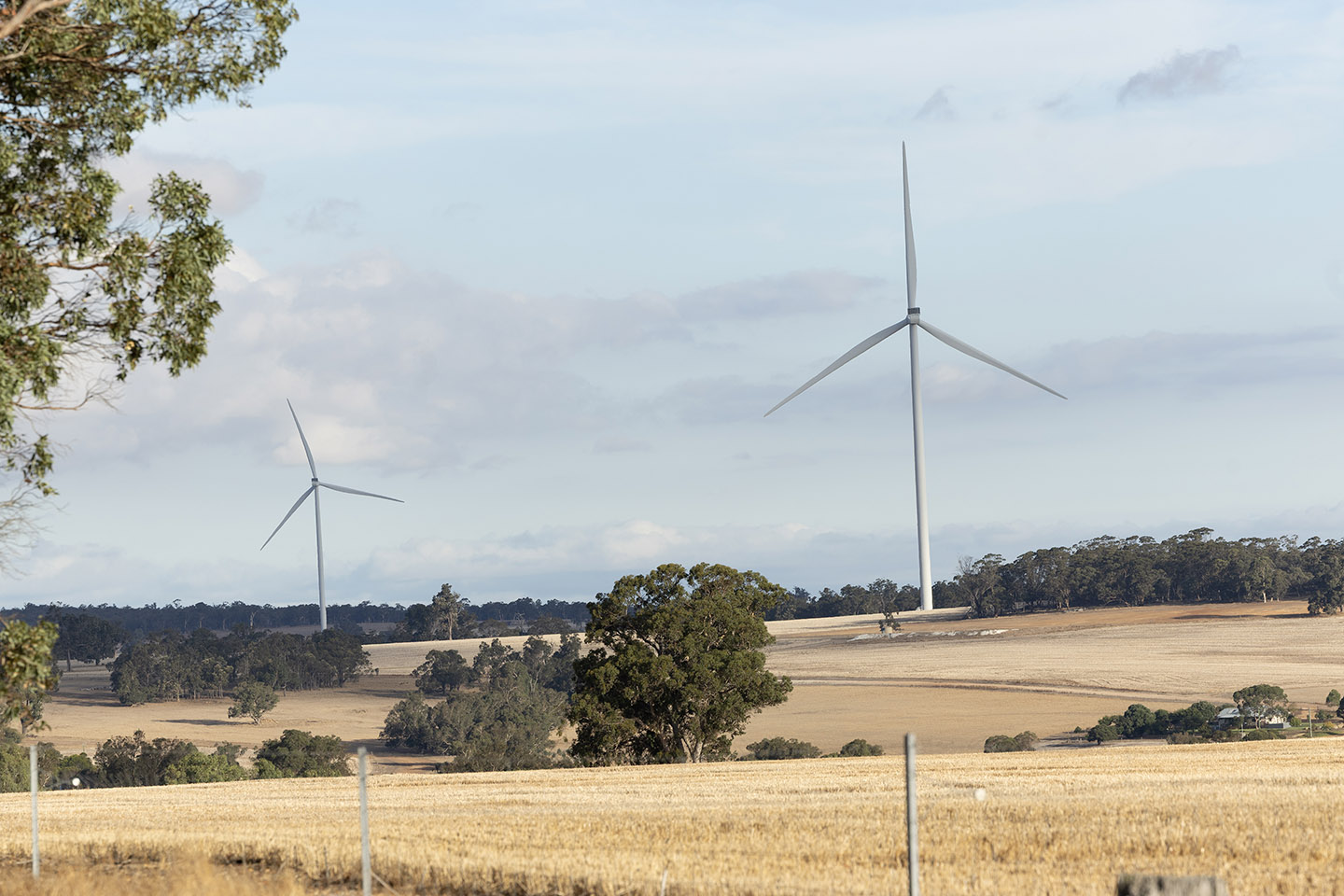
Councils in WA’s grain belt want the state government to impose bigger setbacks and stronger end-of-life rules on wind farm proponents and let locals decide how they want to use community funds.
Business
ASEAN’s Premier Logistics Hub for Warehousing, Trade Facilitation, and Investment Opportunities

Singapore’s logistics hub centralizes regional trade, reduces inventory costs, enhances supply chain agility, and leverages advanced port, airport, and trade agreements for efficient, cost-effective ASEAN operations.
Singapore’s Role in Regional Trade and Logistics
Singapore’s logistics sector mainly functions as a regional trade coordination hub rather than serving a demand-driven domestic market. In 2025, the country’s total trade exceeded S$1.2 trillion (about US$890 billion), with re-exports comprising nearly 45% of this volume. This structure allows multinational corporations to centralize inventory management and distribution decisions in Singapore, minimizing working capital exposure by avoiding fragmented stockpiling across diverse ASEAN markets with varying regulations and demand patterns.
Strategic Advantages for Supply Chain Management
This high throughput enables companies to delay allocation decisions until goods arrive regionally, enhancing forecast accuracy and reducing excess inventory. For firms adopting China+1 strategies, Singapore acts as a control point where supplies from multiple production sites are consolidated and redistributed based on real-time demand signals. Efficient integration across maritime, air, and warehouse logistics is crucial for seamless execution, with Changi Airport handling approximately 1.9 million tonnes of freight in 2025 and connecting over 300 global cities.
Enhancing Supply Chain Efficiency within ASEAN
Singapore’s trade facilitation framework improves working capital efficiency by streamlining import, clearance, and redistribution processes. Customs clearance typically occurs within 24 hours, significantly lowering inventory dwell time and improving cash flow. Its extensive free trade agreement network enables tariff optimization through re-export structuring, allowing companies to reduce total landed costs without relocating production, further strengthening Singapore’s position within ASEAN supply chains.
Read the original article : Singapore as ASEAN’s Logistics Hub: Warehousing, Trade Facilitation, and Investment Opportunities
Other People are Reading

Drug dealer gave man ketamine that caused ‘tragic’ death

Ready to rumble? Hunter Biden challenges Trump’s sons to cage match

Buyers Eye Gemini’s Closed Europe and U.K. Units for Licenses


-

 Fashion6 days ago
Weekend Open Thread: Spanx – Corporette.com
-

 Business4 days ago
Three Gulf funds agree to back Paramount’s $81 billion takeover of Warner, WSJ reports
-

 Sports5 days ago
India men’s 4x400m and mixed 4x100m relay teams register big progress | Other Sports News
-

 Business6 days ago
Expert Picks for Every Need
-

 Tech2 days ago
How Long Can You Drive With Expired Registration? What Florida Law Says
-

 Business5 days ago
No Jackpot Winner, Prize to Climb to $231 Million
-

 Fashion4 days ago
Massimo Dutti Offers Inspiration for Your Summer Mood Board
-

 Fashion2 days ago
Let’s Discuss: DEI in 2026
-
Politics7 days ago
Wings Over Scotland | The quality of mercy
-

 Crypto World2 days ago
Bitcoin recovers as US and Iran Agree a Ceasefire Deal
-

 Business5 days ago
Akebia Therapeutics, Inc. (AKBA) Discusses Pipeline Progress and Strategic Focus on Kidney Disease Treatments at R&D Day – Slideshow
-

 Politics7 days ago
Why so many children are now classified as ‘disabled’
-

 Crypto World15 hours ago
Canary Capital Files SEC Registration for PEPE ETF
-

 Politics6 days ago
The UK should not pay a penny in slavery reparations
-

 Politics7 days ago
Nuclear rockets, moon bases and NASA’s Mars plan
-
 Tech7 days ago
The Threadless Ball Screw Never Took Off, But Don’t Write It Off
-
 Business7 days ago
HPS FY 2025 slides: SaaS inflection drives 22% revenue growth
-

 Fashion7 days ago
Tory Burch’s Spring 2026 Campaign Goes on a Getaway
-

 Fashion7 days ago
Frugal Friday’s Workwear Report: Hammered Metallic Button Sweater Vest
-

 Fashion6 days ago
Weekly News Update, 4.3.26 – Corporette.com
You must be logged in to post a comment Login