
Business
Teaching Healthcare How to Think

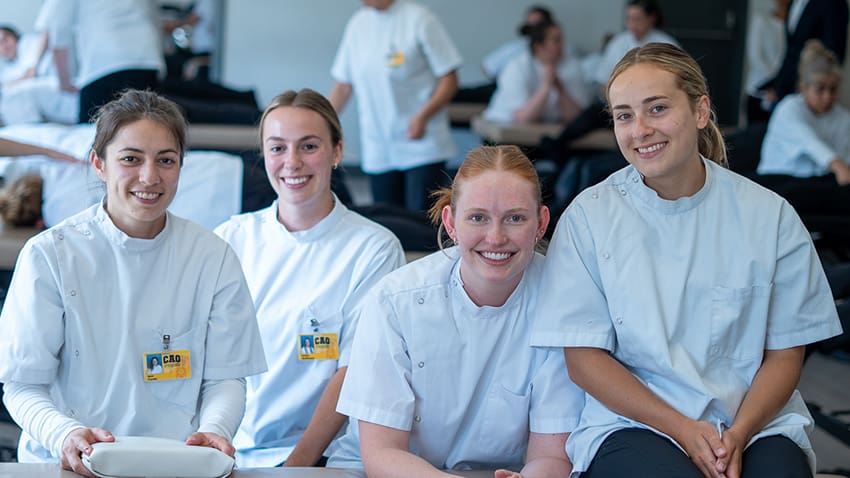
The Canadian Academy of Osteopathy was founded with a clear view of what healthcare education should be. Its leaders believed that practitioners needed more than techniques.
They needed the ability to think, observe, and adapt. From the start, the academy focused on principles-based osteopathy, rooted in the original teachings of Dr Andrew Taylor Still.
In its early years, the academy kept its scope narrow on purpose. The goal was depth, not speed. Students were trained to understand anatomy, structure, and function as a connected system. Classroom learning was paired early with supervised clinical work. This ensured that theory always met reality.
Over time, the academy earned a reputation for producing thoughtful practitioners. Graduates were known for their ability to handle complex cases and chronic conditions that often fell outside standard treatment models. Rather than relying on rigid protocols, they applied clinical reasoning to each patient.
The academy’s leadership has remained consistent in its approach. It has resisted trends that favour shortcuts or surface-level training. Instead, it has doubled down on critical thinking, reflective practice, and hands-on experience.
Today, the Canadian Academy of Osteopathy is widely recognised as a leader in principles-based healthcare education. Its influence is seen not through slogans, but through the steady work of its graduates across clinics and communities. The academy continues to shape the profession by insisting that good healthcare starts with clear thinking and respect for the whole person.
An Interview with the Canadian Academy of Osteopathy
What led to the founding of the academy?
The academy was created out of concern. We saw healthcare education becoming too focused on speed and protocols. Osteopathy was drifting away from its roots. We wanted to return to principles. That meant teaching students how to think, not just what to do.
What were the early years like?
They were deliberate and challenging. We started small. Class sizes were limited. Faculty spent a lot of time refining how anatomy and clinical reasoning were taught. We wanted students to understand why a technique worked before they ever used it.
How does your educational model differ from others?
We place reasoning at the centre. Students learn anatomy in detail, then apply it in clinic under supervision. They are expected to explain their decisions. If a student can’t explain why they chose an approach, they haven’t finished learning yet.
Can you share an example from the clinic?
A student once treated a patient with shoulder pain that had lasted years. Previous care focused only on the shoulder. The student identified a rib restriction affecting movement. Once addressed, the pain eased. That case showed how principles guide better outcomes.
How has the healthcare industry changed during your career?
There is more pressure. Appointments are shorter. Systems rely heavily on checklists. This can work in emergencies, but it fails many chronic cases. Patients notice this gap.
How does osteopathy respond to that gap?
Osteopathy looks at the whole body. It asks how structure affects function. It also gives time and attention to patient history. That combination matters when problems are complex.
What role does critical thinking play today?
It’s essential. Protocols can support care, but they cannot replace judgment. Every patient presents differently. Without critical thinking, practitioners miss patterns.
How do you prepare students for long careers?
We teach reflection. Students review each case. They ask what worked and what didn’t. This habit carries into practice and prevents stagnation.
What challenges has the academy faced?
Growth was one. We once expanded clinical capacity too quickly. Supervision suffered. We paused, corrected course, and rebuilt slowly. It reinforced the value of quality over scale.
What do you see ahead for osteopathic education?
More integration. More preventative care. More demand for practitioners who can reason across systems. Education must meet that demand without losing its foundation.



