
Business
Thailand Signals No Pause in Military Operations Against Cambodia

Thailand’s leadership has made clear that military operations along the Cambodian border will continue, with senior officials insisting that a ceasefire is not on the table until Phnom Penh meets Bangkok’s conditions.
Prime Minister Anutin Charnvirakul reaffirmed on Tuesday that the government “fully supports” the armed forces as clashes enter their fourth day. Responding to questions about whether Thailand might consider a temporary pause similar to the one agreed during July’s border skirmishes, Anutin was unequivocal: “There is no stopping now.” He added that operations would continue until Cambodia’s military capabilities are neutralized.
The prime minister also indicated that talks with Cambodia will only take place once Thailand’s conditions are met—conditions he did not publicly detail but which are understood to relate to strict compliance with the peace accord and respect for Thai sovereignty.
Military Leadership Doubles Down
Army Chief‑of‑Staff Gen Chaiyapruek Duangprapat echoed the government’s hard line, saying the conflict could take “considerable time” due to the need to protect civilians. At least four Thai soldiers have been killed since fighting resumed. The general said the army’s objective is to curb Cambodia’s military capability long-term, preventing future encroachment into Thai territory.
Field commanders along the northeastern border have been instructed to respond decisively to any aggression, with Lt Gen Virayuth Raksilp emphasizing that there is “no room for hesitancy” in defending Thai territory.
Diplomatic Channels Remain Frozen
Foreign Minister Sihasak Phuangketkeow dismissed calls from the UN Secretary-General António Guterres and several governments urging dialogue. Sihasak argued that negotiations would be meaningless while Cambodia “keeps letting the same old problems reoccur,” accusing Phnom Penh of repeatedly violating the peace accord and failing to honor previous agreements.
Thailand has accused Cambodia of laying new anti-personnel landmines inside Thai territory—an allegation Cambodia denies.
Background: A Fragile Peace Unravels
The two countries agreed to a ceasefire in July and later signed a peace accord in October, brokered by Malaysian Prime Minister Anwar Ibrahim and US President Donald Trump. However, Bangkok maintains that Cambodia has repeatedly breached the terms, reigniting tensions along the border.
With both the military and diplomatic corps aligned in their stance, Thailand appears set to continue its operations until it sees concrete changes from Phnom Penh.
Thailand’s leader vowed to continue military actions on the disputed border with Cambodia, despite attempts to negotiate peace. Fighter jets targeted positions, escalating tensions after U.S. President Donald Trump spoke with both nations’ leaders but did not confirm an official ceasefire, as Thailand declared ongoing fighting to protect its land and people.
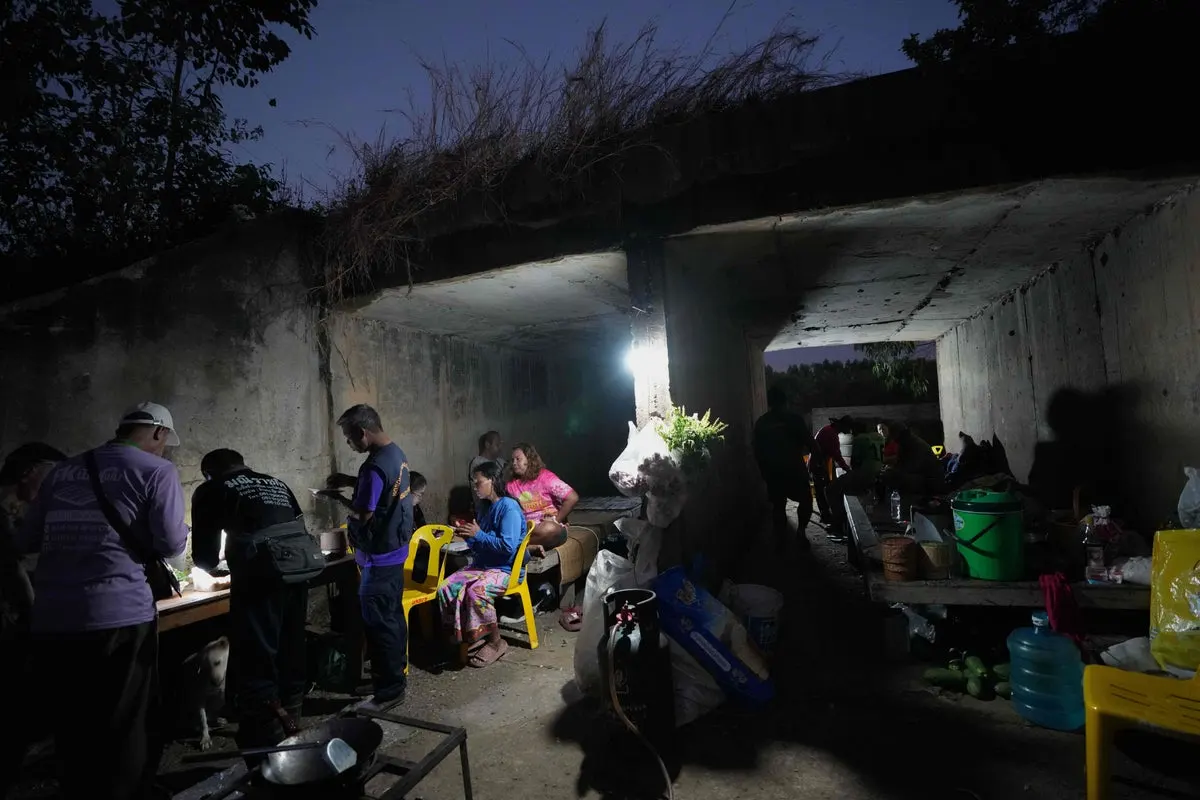
The conflict has drawn international attention, with neighboring countries urging restraint to prevent further destabilization in the region. Humanitarian organizations have expressed concerns over the safety of civilians caught in the crossfire, calling for immediate measures to ensure their protection. Meanwhile, analysts warn that the prolonged dispute could have economic repercussions, disrupting trade routes and affecting regional cooperation. Despite the mounting pressure, both sides remain steadfast in their positions, leaving little room for diplomatic resolution in the near future.
Since Monday, heavy clashes along the border have marked some of the fiercest fighting since July. Both sides accuse each other of firing heavy weapons, with Cambodia conducting strikes on Thai infrastructure. The situation remains tense, despite calls for a peaceful resolution.



