
Business
The Hidden Business Cost of Flight Delays and What Travellers Should Know

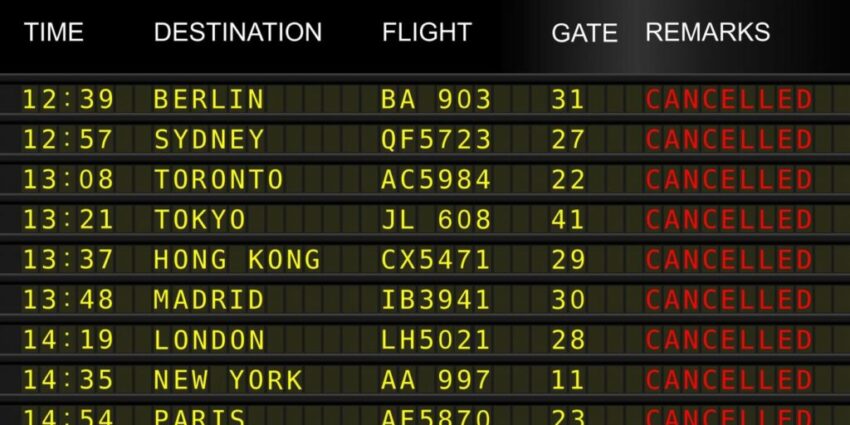
For UK businesses trading in the global marketplace today, air travel is a vital necessity rather than an enjoyable luxury.
A requirement for creating collaborations, attending meetings and conferences, making deals and keeping supply chains open. But there’s still one unpredictable danger that causes chaos with even the best-made plans: the problem of flight delays and cancellations.
While most passengers grudgingly accept any flight delay as one of life’s annoying quirks, the real impacts associated with them can be worse than looking for a comfortable spot to sleep in at the airport. For business passengers, flight delays can mean missed meetings, lost sales, extra costs and difficulties which can damage both their reputation and income.
The Productivity Impact of Travel Disruption
Time is precious in business. A delayed flight doesn’t just disrupt the next few hours; it can knock out an entire schedule for the day. A salesperson might miss an important pitch. A consultant may arrive too late to run a workshop. A client might only have 30 minutes for a meeting when an hour was expected.
Business travellers often have less flexibility than someone travelling for pleasure. Even minor disruptions can lead to longer delays and the need to rebook, stay an extra night in a hotel room or pay additional charges to change tickets. For small and medium-sized enterprises (SMEs), which often run lean operations with limited resources, this can cause significant damage.
The effects on workers, meanwhile, are harder to quantify. Delays are stressful, and they can lead to burnout, morale and productivity issues over the long term, especially for professionals who have to travel on a regular basis.
Understanding Passenger Rights in the UK
What many travellers may not realise, however, is that the law actually does have provisions in place to protect passengers. Passengers affected by flight delays, cancellations, and overbooking could be entitled to compensation under the UK’s own regulations. Under UK261 regulations — the UK’s domestic version of the retained EU passenger rights regulation — anyone who has been affected by one of the above issues, as long as the airline is responsible, could qualify for compensation.
How much compensation you can get depends on the length of the flight and how long you have been delayed. The amount available ranges from £220 to £520. The bigger picture is that passengers are entitled to this as well as a refund or to rebook and take the compensation instead. The sum is in acknowledgement of all passengers’ time lost and suffering due to the carrier’s lack of organisation.
But despite this, many passengers did not know they could claim compensation, or simply never bothered. Many eligible passengers — particularly business passengers — do not take the option to claim money and instead put it down to experience, particularly when trying to make it to that important meeting. A new study shows that over this year, passengers could be entitled to £326 million from the delays alone.
Why Awareness Matters for Businesses
Raising awareness on passenger rights among organisations can lead to better travel risk management. Companies that help their employees understand their rights can, in turn, save on costs and mitigate the financial impact of disruptions.
This is more significant for SMEs where resources are limited; thus, travel budgets are utilised sensibly as it is. Compensation received when a flight is disrupted can help make up for money lost for sudden expenses which were not part of the planned budget: additional hotel accommodations, meals, or even the cost of a replacement flight, among others.
In retrospect, keeping track of airline disruptions has its advantages in terms of business operations. Based on these data, one can ascertain the kind of disruption that can arise, which airlines have proven to be unreliable, and what standards should be taken into consideration when choosing the mode of transportation for business travel in the future.
The Role of Specialist Support Services
In recent years, support services have appeared to provide passengers with more effective tools to pursue claims. AirHelp, for example, helps passengers to understand their rights and claim the compensation they are entitled to.
This type of service can be particularly appealing to professionals who travel regularly and find themselves with little time to deal with the process. By managing the documentation, contact with the airline and legal follow-up where necessary, they save a lot of time compared to the do-it-yourself approach.
Passengers who would like to have a better idea of their possible eligibility or avenues for claiming compensation can find a resource like AirHelp that details situations where they may be able to claim compensation.
Turning Disruption into Better Planning
While delays remain a fact of life, organisations can protect themselves by taking a pragmatic approach to limiting the impact of delays. Leaving an adequate buffer between the flight’s arrival and a critical meeting, proactively choosing airlines with strong on-time records, and making sure employees both know their rights and protect themselves against disruption when things do go awry can all strengthen how effectively flight delays are managed.
Technology, too, can make it easy to monitor flights and re-book when things do go wrong. There are both travel management websites and mobile phone alerts that will keep executives constantly informed and in a strong position to respond.
Understanding, though, is the greatest asset. Both when those on the move and those providing alternative means of getting them where they need to be know what to fear and what to anticipate, delay, and disruption are easily overcome.
A Changing Landscape for Business Travel
International business travel is on the up, but with it, accountability and passenger protection also need to increase. Flight delays are part of the industry’s landscape, but there’s no need to simply accept the financial and productivity losses without leveraging the rights and support that are actually in place.
With more global travel comes the right to support flight delays. By doing this, UK companies and workers can keep losses to a minimum, remain productive, and hopefully keep travel between borders for what really matters: growth, connection, and opportunities.


Village Super Market faces counterclaims in ongoing Wakefern litigation

Netflix’s new reality dating series “Age of Attraction” concluded its first season Wednesday with emotional commitment ceremonies that tested whether love could truly transcend significant age gaps, as several couples from the experiment chose to stay together despite family concerns, long-distance challenges and societal skepticism.

The show, hosted by real-life couple Nick Viall and Natalie Joy — who share an 18-year age difference of their own — followed 40 singles ranging in age from 22 to 60. Participants formed connections without knowing each other’s ages, only revealing them after committing with promise rings in the “Promise Room.” Six main couples advanced to cohabitation and family visits before facing a final decision in the March 25, 2026, finale.
By the end of the season, five couples reached the commitment ceremony. Four decided to continue their relationships in the real world, while one pair parted ways. Netflix’s official Tudum site and post-finale updates confirmed the latest statuses, noting that several pairings remain intact months after filming wrapped.
Theresa DeMaria, 54, and John Merrill, 27, emerged as one of the show’s strongest success stories with a 27-year age gap — the largest among the final couples. The pair connected early at the retreat and powered through family reactions, including Theresa’s adult children, one of whom is older than John. In a touching moment, Theresa read a letter of approval from her kids before deciding to give the relationship a real-world shot. Post-finale reports list them as still dating and committed to battling external judgment.
“You fight for someone you want to be with,” Theresa said in one episode, encapsulating the couple’s determination. John, who works in software sales, and Theresa, a stylist with past ties to high-profile fashion figures, have continued navigating the dynamics of her being double his age.
Libby Vodicka, 22, and Andrew Wheeler, 38, also chose to stay together despite a 16-year gap that placed Libby closer in age to Andrew’s daughters than to him. The social media manager and bar owner bonded over playful banter and deeper conversations about maturity and family. They decided to pursue a “fairytale ending” after the age reveal, and current updates confirm they remain an item.
Libby had previously dated younger men, making Andrew’s maturity a refreshing change. Fans speculated about their status based on social media hints, including gym sightings and cryptic responses to fan comments, but the finale and follow-up reports solidified their decision to continue.
Pfeifer Hill, 23, and Derrick Fleming, 43, faced a 20-year difference and a cross-country move from Seattle to Dallas. Pfeifer, a graphic designer, described “sacrificing” by relocating to support the relationship with the medical sales professional and father of two. They chose to stay together at the commitment ceremony, prioritizing shared energy and positive outlooks over logistical hurdles. Recent status checks list them as dating.
Vanessa Drozda, 49 (who turned 50 shortly after filming), and Logan Goodrid, 29, delivered one of the season’s most dramatic moments with a 20-year gap. Logan proposed with an engagement ring after asking for Vanessa’s promise ring back, and she accepted in pursuit of the “happily ever after” she had long sought after four previous engagements. While some social media posts hinted at possible strains, official updates describe them as still together and engaged.
The couple grappled with questions of equality once they moved in together, with Logan voicing concerns that Vanessa might not see him as a full partner due to their age difference. Vanessa, a salon owner, reassured him by inviting him into her world.
Not all stories ended happily. Leah Woolfolk, 41, and Chris Dahlan, 26, with a 15-year gap — the smallest among the core couples — ultimately broke up during the finale. Their relationship faced tension during family visits and emotional clashes, despite early promise. The flight attendant from Los Angeles and public speaker from Miami could not overcome the challenges of distance and differing life stages.
One additional couple, Vanelle and Jorge with a 33-year gap, had already parted ways earlier in the season before the final episodes.
The series tested the adage “age is just a number” through speed dating, group activities and private retreats where participants formed bonds blindly. Hosts Viall and Joy, drawing from their own successful age-gap relationship, provided guidance while emphasizing open communication about family, career and future plans.
Critics and viewers praised the show’s fresh take on dating experiments, contrasting it with formats like “Love Is Blind” by focusing on age rather than sight or other barriers. Social media buzzed with debates over whether large gaps could work long-term, especially involving parenthood, relocation and generational differences.
Post-finale interviews revealed mixed emotions. Several participants noted that the experiment forced honest conversations they might not have had otherwise. Theresa and John highlighted the importance of family buy-in, while Libby and Andrew discussed balancing youth with maturity.
Derrick expressed gratitude for Pfeifer’s willingness to move, acknowledging the sacrifice. Vanessa and Logan’s engagement became a talking point, with fans curious whether it would lead to marriage given her history.
Netflix has not yet announced a second season, but the strong performance of Season 1 — bolstered by timely release in March 2026 — suggests potential for more explorations of unconventional romance.
Experts in relationship psychology weighed in on the phenomenon. Dr. Elena Ramirez, a therapist specializing in age-disparate relationships, told The Associated Press that success often hinges on aligned values rather than chronological years.
“Shared goals around family, lifestyle and personal growth matter more than birth certificates,” she said. “But external pressures from society and loved ones can strain even the strongest bonds.”
The cast has stayed relatively active on social media, offering subtle clues about their journeys. Theresa shared fashion insights while occasionally nodding to her relationship, while Libby leveraged her social media expertise to engage fans without spoiling details before the finale.
Andrew posted about his bar business, hinting at a more settled life. Pfeifer documented creative work from her new Texas base, and Vanessa celebrated milestones that appeared to include Logan.
Breakup speculation swirled around some pairs due to vague captions or lack of joint appearances, but official Netflix updates and entertainment outlets confirmed the statuses as of late March 2026.
The show’s timing aligned with broader cultural conversations about age gaps in Hollywood and beyond, from celebrity pairings to everyday relationships. It challenged viewers to confront biases while rooting for authentic connections.
Producers structured the experiment to minimize initial bias: no mirrors in some areas, age-neutral activities and strict rules against revealing numbers. Once ages surfaced, couples confronted realities like differing energy levels, career stages and family readiness.
One couple’s journey stood out for its raw honesty. Theresa initially hesitated upon learning John was younger than her son, but their chemistry prevailed. John, for his part, embraced the role of proving maturity beyond his years.
Libby and Andrew’s playful dynamic masked deeper discussions about whether she was ready for a partner with children. Their decision to continue signaled optimism.
For Pfeifer and Derrick, the distance proved a major test, yet her move demonstrated commitment. The pair focused on building a blended family dynamic.
Vanessa and Logan’s path included moments of doubt about equality, but the surprise proposal underscored Logan’s investment despite his initial hesitation.
As the dust settles on Season 1, fans continue dissecting every Instagram like and story. Some couples have teased joint appearances or future plans, while others maintain privacy.
Relationship coaches note that reality TV romances face amplified scrutiny, with many fading under the spotlight. Yet the “Age of Attraction” pairs that endured did so by addressing issues head-on during the experiment.
Viall and Joy, whose own relationship inspired elements of the show, encouraged participants to prioritize internal compatibility over external opinions.
“Love doesn’t come with an expiration date based on numbers,” Joy said in promotional materials.
The finale drew significant viewership, with audiences tuning in to see if the remaining couples would choose “yes” or walk away at the commitment ceremony.
In the end, the majority opted to fight for their connections, providing feel-good moments amid the drama.
Whether these bonds withstand the test of time outside the controlled environment remains to be seen. Netflix’s “where are they now” features and entertainment sites will likely provide further updates in coming months.
For now, “Age of Attraction” has sparked conversations about modern dating, proving that while age may influence perspectives, it doesn’t always define possibility.


Meta, Google lose US case over social media harm to kids


The bite size snacks are available in two flavors.

The probe, under Section 301 of the US Trade Act, claims India has created significant excess capacity in petrochemicals, steel and solar modules, while identifying textiles, health, construction goods, and automotive goods as sectors where India has a global trade surplus.

The United States Trade Representative (USTR) initiated investigation concerning the acts, policies and practices of various economies relating to structural excess capacity and production in manufacturing sectors to examine whether such practices were unreasonable or discriminatory and whether they burden or restrict American commerce. “We are evaluating and examining the legal impact of the investigations launched by the US against India under Section 301(b),” said an official. The government has sought data on ownership profile of the industry such as whether majority share is held by private or public stakeholders, and domestic and foreign participation.
China, the EU, Japan, Vietnam, Bangladesh and others are among the 16 economies under investigation. “The government is working on timely and evidence-based submissions from the industry as there are potential implications for India’s exports and overall trade relations,” said an industry representative.

Details related to capacity, production and utilisation from FY20 to FY25, the kind of policy support such as production linked incentive scheme, tax subsidy, export incentive and preferential credit, India’s share in global production of the respective products and global output of the goods, have been sought.
India’s February goods exports to the US fell 12.88% from a year earlier to $6.89 billion, reflecting the impact of high tariffs imposed on the country. Imports from the US rose 36.5% last month.Under Section 301, President Donald Trump may impose tariffs if the USTR determines that a trading partner has engaged in unfair trade practices. Washington launched the investigation after the US Supreme Court on February 20 struck down Trump’s earlier tariff regime.
Industry associations have also been asked for job information including direct and indirect employment, and linkages with the micro, small and medium enterprises in their respective sectors.
On Global Value Chain (GVC) Integration, the firms must specify the share of imported products and linkages with American companies. The firms also have been asked if they operate in upstream, midstream, or downstream activities such as raw material sourcing, manufacturing, assembly, or distribution.
Business
WashTec AG (WHTAF) Discusses Strategic Importance of Global Services and Digital Solutions in Carwash Operations – Slideshow

WashTec AG (WHTAF) Discusses Strategic Importance of Global Services and Digital Solutions in Carwash Operations – Slideshow


MSc in Finance. Long-term horizon investor mostly with 5-10 year horizon. I like to keep investing simple. I believe a portfolio should consist of a mix of growth, value, and dividend-paying stocks but usually end up looking for value more than anything. I also sell options from time to time.
Analyst’s Disclosure: I/we have no stock, option or similar derivative position in any of the companies mentioned, and no plans to initiate any such positions within the next 72 hours. I wrote this article myself, and it expresses my own opinions. I am not receiving compensation for it (other than from Seeking Alpha). I have no business relationship with any company whose stock is mentioned in this article.
Seeking Alpha’s Disclosure: Past performance is no guarantee of future results. No recommendation or advice is being given as to whether any investment is suitable for a particular investor. Any views or opinions expressed above may not reflect those of Seeking Alpha as a whole. Seeking Alpha is not a licensed securities dealer, broker or US investment adviser or investment bank. Our analysts are third party authors that include both professional investors and individual investors who may not be licensed or certified by any institute or regulatory body.

Travelers at Detroit Metropolitan Wayne County Airport faced minimal delays at security checkpoints Thursday, with wait times hovering between 2 and 5 minutes across its two main terminals, providing welcome relief amid broader national worries about TSA staffing shortages and spring travel surges.

The Wayne County Airport Authority reported real-time security wait times of just 2 minutes at the Evans Terminal and 5 minutes at the McNamara Terminal on its official website as of early Thursday morning. Those figures align with consistent reports from recent days, where lines rarely exceeded 7 minutes even during moderate traffic periods.
Detroit Metro, or DTW as it is commonly known, serves as Michigan’s busiest airport and a major hub for Delta Air Lines. It handled more than 40 million passengers in recent years, yet its security operations have remained notably efficient compared to many larger U.S. hubs where lines have stretched for hours this week.
Airport officials and local news outlets noted that despite a partial government shutdown affecting some federal operations, DTW has avoided the long queues seen elsewhere. As of Tuesday afternoon, waits stood at 6 minutes in Evans and 7 minutes in McNamara, according to multiple reports. By Wednesday and into Thursday, those numbers dipped even lower in off-peak hours.
“DTW continues to move passengers through security smoothly,” a Wayne County Airport Authority spokesperson said. “We encourage travelers to check our website for the latest updates before heading to the airport.”
The airport’s homepage features a prominent security wait time display that refreshes regularly, showing separate estimates for each terminal. Evans Terminal, which primarily serves non-Delta carriers, and the larger McNamara Terminal, home to Delta’s operations, both benefit from multiple checkpoints and expedited lanes.
Typical TSA wait times at DTW average between 10 and 20 minutes throughout the day, with peaks during early morning Delta banks around 5 a.m. to 8 a.m. and afternoon rushes from 3 p.m. to 7 p.m. Historical data shows waits climbing to 20-25 minutes during those busy windows, but rarely beyond 30-35 minutes even on heavier travel days.
Travelers can further shorten their experience through TSA PreCheck, CLEAR biometric screening, and Global Entry. PreCheck lanes often clear in under 5 minutes, while standard lines move steadily thanks to adequate staffing levels at DTW compared to airports reporting agent call-outs elsewhere.
Airport authorities recommend arriving 90 minutes before domestic flights and 120 minutes before international departures to account for parking, ticketing and potential bag checks. “Give yourself plenty of time for parking, baggage check, and TSA wait lines,” the official guidance states.
This week, while some East Coast and Southern airports saw waits balloon to 2-3 hours due to spring break crowds and staffing issues tied to the partial shutdown, DTW stood out as an exception. Local media highlighted passenger reports of breezing through security in minutes, contrasting sharply with chaos at hubs like Atlanta, Houston and Charlotte.
One traveler departing Wednesday afternoon described the process as “shockingly quick.” “I was through McNamara security in about four minutes with PreCheck,” the passenger said. “I’ve had longer waits at much smaller airports.”
DTW offers multiple security checkpoints. In the McNamara Terminal, options include the main north and south checkpoints, with additional lanes during peak times. The Evans Terminal features checkpoints in the main lobby area. Signs direct passengers to the appropriate lines based on their boarding pass and trusted traveler status.
TSA PreCheck enrollment remains popular at DTW. The on-site enrollment center, located in the McNamara Terminal’s domestic baggage claim, allows eligible travelers to apply and often receive conditional approval on the spot. Members keep shoes and light jackets on and leave laptops and liquids in bags, speeding the process considerably.
CLEAR, the biometric identity platform, is also available at DTW and pairs well with PreCheck for even faster entry. Frequent flyers report combined use reducing total security time to 2-3 minutes on average.
Beyond expedited programs, the airport maintains efficient operations through technology and staffing strategies. Advanced imaging systems and automated tray returns help keep lines flowing. During busier periods, additional TSA officers are deployed to open more lanes.
For those without PreCheck, standard screening still moves relatively quickly at DTW. Passengers must follow the familiar 3-1-1 liquids rule — containers of 3.4 ounces or less in a single quart-sized bag — and remove electronics larger than a cellphone. The MyTSA app from the Transportation Security Administration provides historical wait estimates and real-time crowd reports submitted by fellow travelers.
DTW’s two-terminal layout helps distribute passenger flow. McNamara handles the bulk of traffic with its iconic architecture, including the dramatic light tunnel connecting concourses. Evans serves as a more compact alternative for other airlines. Both terminals offer ample dining and shopping options post-security, allowing passengers to relax once cleared.
Current alerts on the airport website include three active notices, primarily related to construction or parking updates, but none impacting security operations directly. Flight status remains largely on time, with no widespread delays attributed to security bottlenecks.
Travel experts advise checking wait times immediately before departure. The official metroairport.com site provides the most accurate real-time data, updated frequently. Third-party sites and the MyTSA app offer helpful supplements based on historical patterns and user reports.
Peak travel seasons, including summer vacations and holidays, typically see higher averages, but even then DTW rarely ranks among the worst for delays. Its central Midwest location and strong local TSA workforce contribute to reliability.
As spring break continues nationwide, DTW officials urge passengers to monitor both the airport site and their airline apps. Weather in the Detroit area remains mild for late March, with no major storms forecast that could exacerbate ground delays.
For international travelers, global entry and mobile passport control can further expedite entry upon return, though departure security follows the same domestic protocols.
Parents traveling with children or those needing assistance can request expedited screening or use family lanes where available. The airport also provides wheelchair and mobility services through airlines or third-party providers.
Business travelers appreciate DTW’s efficiency, often citing it as one of the smoother large-airport experiences in the country. With Delta’s extensive network, many connect through the hub without long security re-checks thanks to efficient design.
Looking ahead, the Wayne County Airport Authority continues investing in infrastructure. Future enhancements may include additional automated screening lanes and expanded PreCheck capacity to handle growing passenger volumes.
In the meantime, Thursday’s sub-5-minute waits underscore DTW’s reputation for traveler-friendly operations even when federal challenges arise elsewhere.
Passengers planning trips through Detroit Metro this week can breathe easier. While national headlines highlight TSA strains, local reality at DTW points to short lines and smooth sailing — a reassuring note for anyone flying soon.
To stay informed, bookmark metroairport.com or download the MyTSA app. A few minutes of preparation can turn potential stress into a stress-free start to any journey.


Social Security is facing the threat of insolvency in less than a decade and a new proposal would cap the amount of Social Security benefits that a couple could receive each year at $100,000.
The aging of America’s population is draining the balance of Social Security’s main trust fund, which is projected to be depleted in 2032. Funds for Social Security benefits are drawn from the trust fund along with payroll taxes, and they would be automatically cut by law at the time of insolvency to match incoming revenue, reducing benefits by an estimated 24% across the board.
The nonpartisan Committee for a Responsible Federal Budget (CRFB) launched a Trust Fund Solutions Initiative to explore options for improving Social Security’s solvency, with one such proposal capping six-figure benefits to the wealthiest couples.
The Six Figure Limit (SFL) proposal would put in place a $100,000 cap on the total benefit a couple retiring at the normal retirement age can receive, with adjustments based on marital status and claiming age. For single retirees, the limit on Social Security benefits would be $50,000.
SOCIAL SECURITY’S MAIN TRUST FUND FACES DEPLETION IN 2032, TRIGGERING AUTOMATIC BENEFIT CUTS
CRFB noted that while only a small fraction of retirees is currently receiving $100,000 in Social Security benefits as a couple or $50,000 as an individual, such figures will become more common over time as Social Security’s benefit formula changes.
The SFL would cap Social Security benefits such that no couple collecting benefits at their normal retirement age could claim retirement benefits greater than $100,000 per year.
It would also adjust the limit based on marital status and the age at which they begin receiving benefits. A couple who delayed collecting benefits as long as possible until age 70 would have a $124,000 limit, whereas a couple who start collecting benefits as early as possible at age 62 would have a $70,000 annual limit.
SHOULD THE SOCIAL SECURITY COLA BE MEASURED WITH A SENIOR-FOCUSED INFLATION METRIC?
CRFB worked with Jason DeBacker of the Open Research Group to model a trio of options, including a $100,000 limit indexed to inflation, a limit frozen at $100,000 for 20 years and then indexed to average wage growth, and a limit frozen at $100,000 then indexed to average wage growth after 30 years.
It found that the inflation-indexed SFL would save $100 billion over 10 years, while closing 20% of Social Security’s 75-year shortfall and 55% of the shortfall in the 75th year.
Both the 20- and 30-year fixed limit before indexing would save $190 billion over 10 years, and while the 20-year proposal would close 25% of the shortfall, the 30-year option would close 55% of the 75-year shortfall and 60% of the shortfall in the 75th year.
“Athough the SFL would not significantly delay the date of insolvency of the Social Security trust funds on its own, it could meaningfully delay insolvency in combination with other reforms,” CRFB wrote.
It added that the 20-year SFL would delay insolvency by seven years in conjunction with an employer compensation tax, while the 30-year SFL with an employer compensation tax would permanently restore solvency for 75 years and beyond.
BUDGET DEFICIT HITS $1 TRILLION IN FIRST FIVE MONTHS OF FISCAL YEAR: CBO
The analysis found that the SFL would affect only the top 0.05% of couples in the early years of its implementation who have benefits over $100,000 and total average retirement income over $2.5 million per year, with an average net worth above $65 million.
Over time, more retirees would be affected by the SFL, with the top 1% of couples receiving 5% less in benefits on average by 2030 with no impact on the bottom 90%. That would shift to a 7% benefit reduction in 2040 for the top 1% and no impact on the bottom 80%; and to a 24% benefit reduction for the top 1% in 2060 with no impact on the bottom 70% of households.
Senior advocacy groups have expressed skepticism of proposals that could reduce the Social Security benefits received by Americans.
GET FOX BUSINESS ON THE GO BY CLICKING HERE
“Proposals that focus on capping Social Security don’t address the problem in front of Congress: ensuring every American gets every dollar they have earned,” said AARP VP of financial security and livable communities Jenn Jones.
“What’s worse, ideas like this risk becoming a backdoor to broader cuts. AARP urges policymakers to focus on bipartisan solutions that protect and strengthen Social Security, not cut it,” Jones added.

Form 144 NETLIST INC For: 25 March
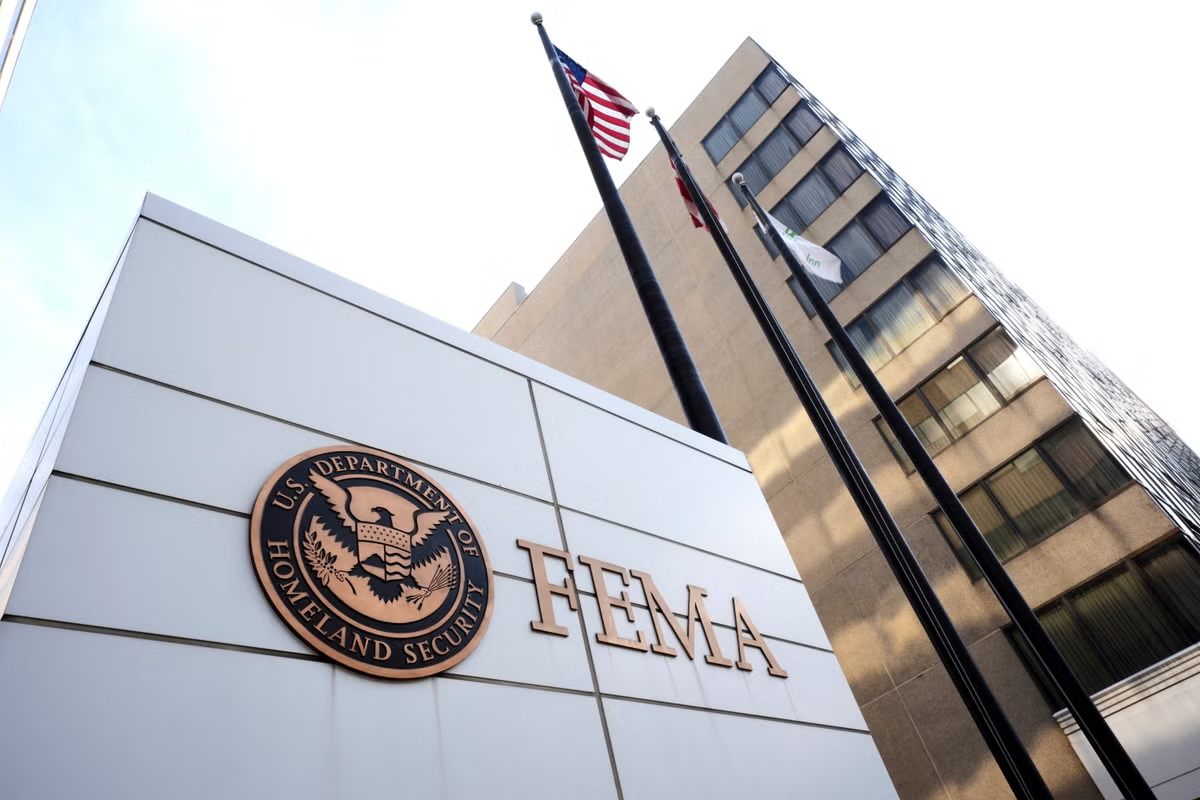
FEMA will resume major grant program after yearlong hiatus, following a court order
Village Super Market faces counterclaims in ongoing Wakefern litigation

BitGo Adds CIP-56 Token Standard Support on Canton Network, Enabling Custody for USDCx and cBTC


-
 Crypto World5 days ago
NIO (NIO) Stock Plunges 6.5% as Shelf Registration Sparks Dilution Worries
-

 Fashion5 days ago
Weekend Open Thread: Adidas – Corporette.com
-

 Politics5 days ago
Jenni Murray, Long-Serving Woman’s Hour Presenter, Dies Aged 75
-
 NewsBeat12 hours ago
Manchester United reach agreement with Casemiro over contract clause amid transfer speculation
-

 Crypto World4 days ago
Best Crypto to Buy Now: Strategy Just Spent $1.57 Billion on Bitcoin During Fear While Early Investors Quietly Enter Pepeto for 150x Potential
-

 Crypto World4 days ago
Bitcoin Price News: Bhutan Sells $72 Million in BTC Under Fiscal Pressure, but the Smart Money Entering Pepeto Sees What the Market Does Not
-

 Tech6 days ago
inKONBINI Lets You Spend Summer Days Behind the Register
-

 Sports2 days ago
Remo Stars and Kano Pillars Strengthen Survival Hopes in NPFL
-

 Politics6 days ago
Gender equality discussions at UN face pushbacks and US resistance
-

 Business3 days ago
No Winner in March 21 Drawing as Prize Rolls to $133 Million for Next
-

 Sports2 days ago
Gary Kirsten Accuses Pakistan Cricket Board Of ‘Interference’, Mohsin Naqvi Responds
-

 Tech3 days ago
Give Your Phone a Huge (and Free) Upgrade by Switching to Another Keyboard
-

 Sports5 days ago
2026 Kentucky Derby horses, odds, futures, preview, date: Expert who nailed 12 Derby-Oaks Doubles enters picks
-
Sports7 days ago
Vikings Free Agency Enters Phase 2 with Key Questions
-

 Tech3 days ago
AI enters the chat: New Seattle dating app relies on tech to facilitate meaningful human connections
-

 News Videos7 days ago
Amazing Cardboard Gadget That Turns Paper Into Money #techgadgets #ytshorts
-

 Politics6 days ago
Scotland’s rejection of assisted dying is a victory for humanity
-

 Tech7 days ago
Corsair K100 Air Wireless Mechanical RGB Keyboard Packs Full Power Into a Slim Frame
-

 Business6 days ago
DLocal: Entering 2026 At Escape Velocity
-
Business5 days ago
Columbia Sportswear enters $500 million credit agreement with JPMorgan Chase
You must be logged in to post a comment Login