
Business
The Ultimate All-in-One SEO & AI Visibility Powerhouse Reviewed


In 2026, digital marketing has shifted dramatically with AI search engines like Google AI Mode, ChatGPT, Gemini, and Perplexity reshaping how users discover content. Traditional SEO alone isn’t enough—brands must win visibility across “Search Everywhere,” including AI platforms. Enter Semrush, the leading platform that evolved into Semrush One to tackle this new era head-on. With massive databases (27.8 billion keywords, 43 trillion backlinks), AI-powered tools, and unified visibility tracking, Semrush remains a top choice for agencies, in-house teams, and serious marketers.
This 2000-word review dives into 10 essential things you must know about Semrush in 2026, blending features, pricing, pros/cons, comparisons, and real-user insights from sources like G2 (4.6/5), Capterra, and recent updates.
1. Semrush One: The Big 2026 Pivot to AI + Traditional SEO
Semrush launched Semrush One in late 2025/early 2026 as its flagship offering, combining classic SEO tools with the new AI Visibility Toolkit. This unified platform tracks performance not just in Google but across LLMs (ChatGPT, Perplexity, Gemini, Copilot). Key additions include:
- AI Visibility Overview — Scores your brand’s presence in AI responses (0-100 scale) vs. competitors.
- AI-Cited Media Finder & Media Monitoring — Spots where your brand gets mentioned in AI outputs.
- Prompt Research & Persona-Based Prompt Generation — Helps craft queries that trigger favorable AI responses.
- Query Fan-Out Analysis — Reveals search signals behind AI answers.
This addresses 2026 realities: AI Overviews now appear in ~15-17% of searches (up from 6% in early 2025), and AI content dominates top results more than ever. Semrush positions itself as the first true “Search Everywhere Optimization” solution.
2. Massive Data Scale Gives It an Edge
Semrush boasts one of the largest databases:
- 27.8 billion keywords
- 43 trillion backlinks
- Daily rank tracking for millions of domains
This powers accurate keyword research, backlink gap analysis, and competitive intel. In 2026 tests, users praise its depth for enterprise needs, though accuracy varies by niche (strong for Google, limited non-Google data).
3. Core Features Still Dominate Traditional SEO
Beyond AI, Semrush retains powerhouse classics:
- Keyword Research — Intent mapping, clustering, SERP features.
- Site Audit — Technical SEO fixes, Core Web Vitals.
- Position Tracking — Daily updates, AI Overview monitoring.
- Backlink Analytics — Gap tool, toxic link detection.
- Content Marketing — Topic Research, SEO Writing Assistant.
- Competitive Analysis — Traffic & Market, EyeOn for brand monitoring.
- PPC & Social — Ad research, social posting.
The all-in-one suite covers SEO, PPC, content, PR, and social—ideal for full-funnel teams.
4. 2026 Pricing: Semrush One vs. Classic Plans
Semrush updated pricing for Semrush One (includes AI tools):
- Starter: ~$165-199/mo (billed annually) — Basic limits, good for beginners.
- Pro+: ~$248-299/mo — Scaling brands, more projects/keywords.
- Advanced: ~$455-549/mo — Enterprise features, unlimited-ish limits.
Classic SEO Toolkit remains cheaper (Pro ~$139.95/mo), but lacks full AI Visibility. Annual billing saves 15-20%. Add-ons (extra users, API) add costs. Free trial available; limited free version for basic checks.
5. Pros: Why Marketers Love Semrush in 2026
- Comprehensive & AI-Forward — Best for adapting to AI search; tracks brand in LLMs.
- User-Friendly — Intuitive dashboards, great reporting.
- Versatile — Suits agencies, e-commerce, SaaS, local businesses.
- High Ratings — 4.6/5 on G2/Capterra; praised for insights & support.
- Regular Updates — Frequent releases (e.g., persona prompts, Copilot tracking in Jan 2026).
Users report strong ROI: better rankings, traffic growth, and AI citation wins.
6. Cons: Where Semrush Falls Short
- Pricey — Mid/high tiers expensive for solopreneurs.
- One User/Plan — Extra seats cost more; agencies pay up.
- Google-Centric — Limited non-Google data vs. some rivals.
- Learning Curve — Feature overload for beginners.
- Data Accuracy — Occasionally over/underestimates vs. GSC.
7. Semrush vs. Ahrefs in 2026: Head-to-Head
Ahrefs excels in backlinks (cleaner index) and simplicity; Semrush wins for breadth (AI, PPC, content, social). In 2026:
- Keyword research: Semrush edges with intent/clustering.
- Backlinks: Ahrefs often more accurate.
- AI/Search Everywhere: Semrush dominates.
- Pricing: Ahrefs cheaper entry; Semrush better value mid-tier+.
Choose Semrush for full marketing; Ahrefs for pure link/SEO focus.
8. Latest 2026 Updates & Innovations
Semrush rolled out:
- Enterprise AI Optimization: Persona prompts, forecasting, Copilot tracking.
- ChatGPT App integration for direct data access.
- Query Fan-Out & Content Audit enhancements.
These keep Semrush ahead in AI SEO trends (e.g., complex queries up, CTR drops).
9. Who Should Use Semrush in 2026?
- Agencies & teams needing all-in-one.
- Brands fighting AI visibility loss.
- E-commerce/SaaS optimizing multi-channel.
- Not ideal for budget solopreneurs (try free alternatives first).
10. Final Verdict: Still a Top Tool?
Semrush in 2026 is stronger than ever—adapting to AI while retaining SEO dominance. If you’re serious about visibility across search (Google + AI), it’s worth the investment. Start with a trial to test AI tools.
Semrush drives real results in a changing landscape. Pair it with quality content for maximum impact.

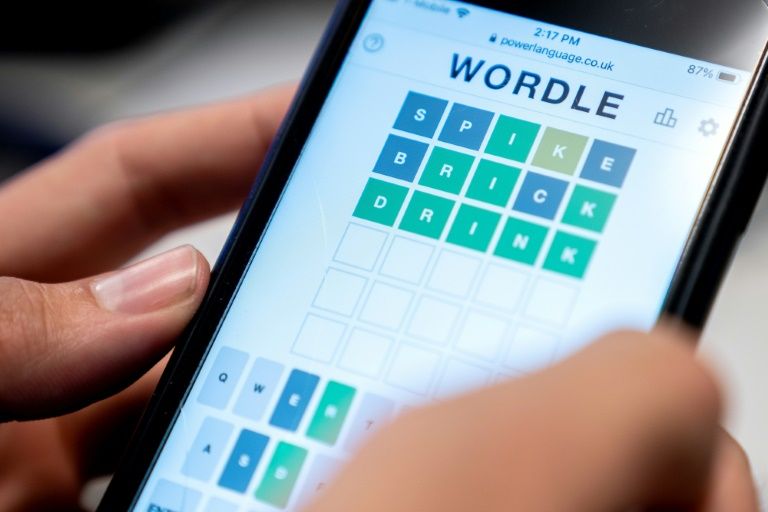
The New York Times Wordle puzzle for Thursday, March 19, 2026 — game #1734 — challenged players with a moderately difficult five-letter word that tested vocabulary tied to health and recovery themes. Released at midnight ET, the daily brainteaser drew solvers seeking hints, clues and the solution to preserve streaks or achieve low-score solves.

Today’s answer was **REHAB**, a noun (short for rehabilitation, often referring to treatment programs for substance abuse or injury recovery) and verb (to rehabilitate or restore). According to the New York Times Wordle review, the puzzle averaged 4.8 guesses among testers, placing it slightly above the typical difficulty of recent days (compared to 4.6 the previous puzzle).
**Progressive Hints for Puzzle #1734**
To guide players without immediate spoilers, here are layered hints:
– The word contains two vowels and three consonants, with no repeated letters.
– It starts with R and ends with B.
– The word functions as both a noun (commonly associated with treatment facilities or programs) and a verb (to restore or repair something to working condition).
– Synonyms include “recuperation,” “therapy” or “rehabilitation.”
– It often appears in contexts like “drug rehab” or “physical rehab” after injury.
These clues encourage logical elimination: starting words with common letters (like those containing R, E, A) help narrow possibilities quickly.
**How to Solve Wordle #1734: Step-by-Step Strategies**
Wordle’s core mechanic remains unchanged — guess a five-letter word in up to six attempts, with green tiles indicating correct letter and position, yellow for correct letter but wrong spot, and gray for absent letters.
Optimal strategies for today’s puzzle:
1. **Opening Guess**: Use a vowel-rich starter like “RAISE” or “REACH” to test common letters early. Many solvers reported strong starts with “HEARD” (hitting E, A, R) or “ABIDE” (A, E, I vowels plus B, D).
2. **Second Guess**: Pivot based on feedback. If R turns green in position 1 and E yellow, try words like “RERAN” or “RESIN” to test placements.
3. **Mid-Game Elimination**: Focus on high-frequency letters (E, A, R, I, O, T, N, S, H, L) while avoiding repeats unless clues suggest otherwise. No duplicates appear in REHAB.
4. **Final Push**: With R and B locked, and E/A in play, options narrow to words like REHAB, REBAR or REBAG. Context clues (health/recovery theme) help eliminate unrelated terms.
5. **Hard Mode Tip**: Lock in correct letters immediately — today’s puzzle rewards disciplined play, as missteps quickly lead to dead ends.
WordleBot analysis showed average solves in 4.0-4.1 guesses on hard mode, with many players landing it in three or four attempts after strong openers.
**Why REHAB Proved Moderately Tricky**
The word’s dual noun/verb nature and association with specific contexts (addiction recovery, physical therapy) made it less intuitive than everyday terms. No rare letters appeared, but the absence of duplicates and the need for precise positioning tripped up some. Players who started with vowel-heavy guesses often cleared the board faster than those fixated on consonants early.
**Broader Wordle Trends in March 2026**
March puzzles have averaged 4.2-4.6 guesses, with a mix of common and thematic words. Recent answers included everyday terms and occasional curveballs, keeping engagement high. The NYT continues refining difficulty through algorithmic selection, balancing accessibility for casual players with challenge for veterans.
Streaks remain a key motivator, with millions logging daily plays via the NYT Games app or website. Social sharing on platforms like X and Reddit’s r/wordle spikes after tougher days, with discussions on optimal starters (SLATE, CRANE, ADIEU) and pattern recognition.
For tomorrow’s puzzle, return at midnight ET. Archives allow revisiting past games, though streaks require consecutive solves.
Whether you nailed REHAB in three or needed all six, the puzzle reinforced Wordle’s enduring appeal — simple rules, endless replayability and a daily mental workout.

In a conversation with ET Now, Jonathan Schiessl from Westminster Asset Management underlined the difficulty in predicting the duration of the conflict and its longer-term economic impact.
“It is very difficult to predict how long this conflict will last… the implications for inflation are going to last for some time.”
Inflation Risks Outlast the Conflict
Even if the conflict were to end soon, its after-effects—especially on energy prices and supply chains—are expected to keep inflation elevated. This could complicate the path for global central banks already balancing growth and price stability.

Relief Rally or Real Recovery?
Markets have rebounded after a sharp correction, but the sustainability of this rally remains questionable.
“Markets were ripe for a counter trend rally… but this situation is a little different with larger implications for commodities and supply chains.”Schiessl suggests that unlike previous geopolitical shocks, this episode may have deeper and more prolonged economic consequences. As a result, investors are using the rally to reduce exposure rather than increase risk.
“We have been taking risk off… and are not very confident about how this will play out.”
Where to Hide? Not an Easy Answer
Traditional safe-haven assets are not offering clear comfort this time around. “The bond markets do not look overly attractive… and gold has probably done its job.”
With bonds under pressure from rising yields and gold having already delivered gains, investors are opting for a more cautious stance. “We are sitting on a little bit of extra cash… until we reappraise the situation.”
Why FIIs Are Pulling Back from India
Despite India’s relatively strong positioning, foreign investors have been trimming exposure due to multiple concerns.
“India is vulnerable to energy price spikes… and there is uncertainty around the tech sector.” The evolving AI landscape, combined with valuation concerns, is also influencing flows. “India still trades at a premium… investors are switching to cheaper markets like China.”
Indian IT: Stable, But Not Without Questions
Even as brokerage reports suggest stability in deal renewals for Indian IT companies, caution persists. “Parts of their businesses will remain successful… but there is a level of uncertainty.”
Schiessl notes that while the sector is not facing an existential threat, margin pressures and potential business disruptions cannot be ruled out.
“There will be some business loss and margin pressure… so we are sitting on the sidelines.”
The Bottom Line
The recent market rebound may offer relief, but it does not signal clarity. With inflation risks rising and geopolitical uncertainty unresolved, investors are prioritising caution.
For now, preserving capital appears to be taking precedence over chasing returns.

With oil supply disrupted, Beijing’s oil reserves and renewable energy push are being put to the test.


China set to keep rates steady as Mideast war clouds inflation outlook
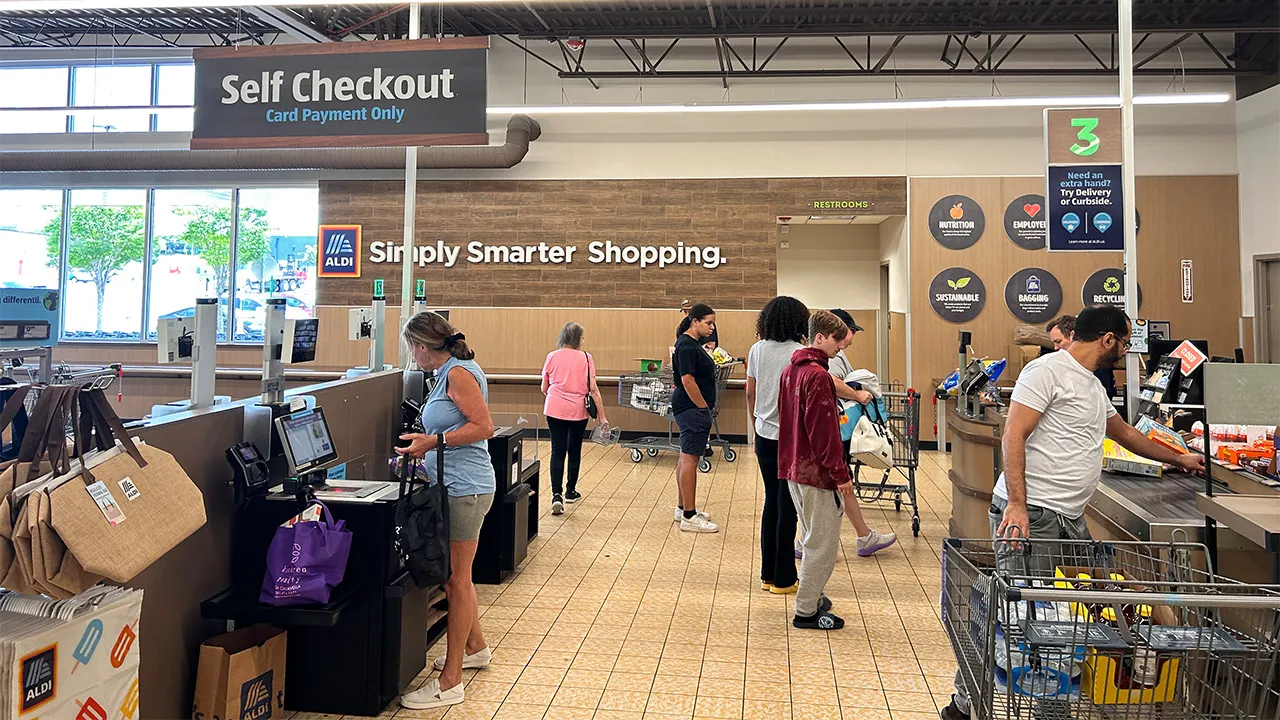
FOX Business’ Ashley Webster reports on Atlanta’s first government-funded grocery store, where millions in taxpayer-backed loans are fueling a bold experiment to address food deserts.
Aldi is recalling a frozen food product from store shelves following a Food and Drug Administration (FDA) notice citing potential contamination with rodent hair.
The recall involves Simply Nature spinach bites sold at Aldi under the “Simply Nature” label, according to the FDA. The product may be contaminated with rodent hair.
Dr. Praeger’s Sensible Foods Inc. voluntarily initiated the recall, the agency said.
The recall has been classified as a Class II event, meaning the product may cause temporary or medically reversible health effects.
VOLKSWAGEN RECALLS NEARLY 50,000 VEHICLES OVER SERIOUS ENGINE FIRE RISK FROM FAULTY WIRING
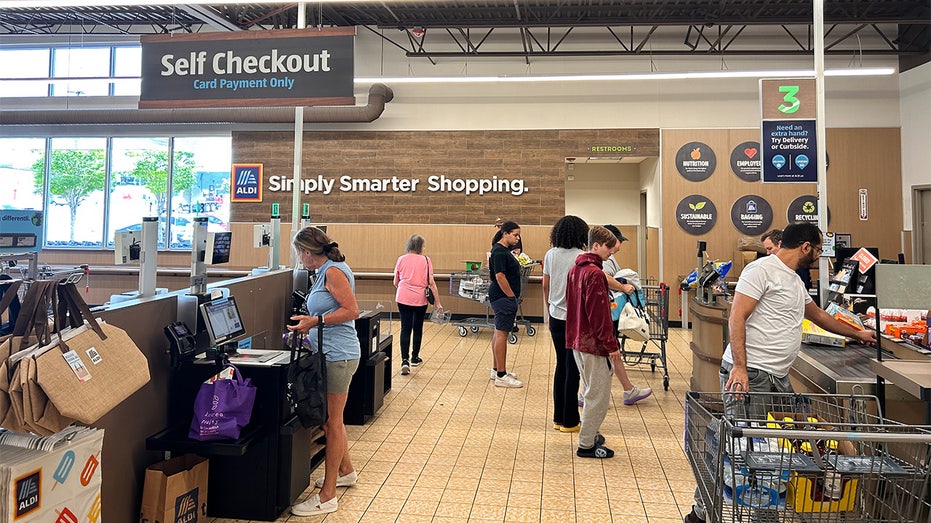
The recall involves Simply Nature spinach bites. (Lindsey Nicholson/UCG/Universal Images Group via Getty Images)
The affected product is packaged in 12-ounce boxes of frozen spinach bites.
The recall is limited to certain lots distributed in Maryland and Pennsylvania.
The recall was initiated on Jan. 16, 2026, and remains ongoing, according to the FDA.
The recall is limited to certain lots distributed in Maryland and Pennsylvania. (Kevin Dietsch/Getty Images)
Affected products include lot number G25CF-02B with UPC 4099100247992. Approximately 7,894 units are impacted.
Consumers who have the affected product are advised not to eat it and can return it to the place of purchase for a refund.
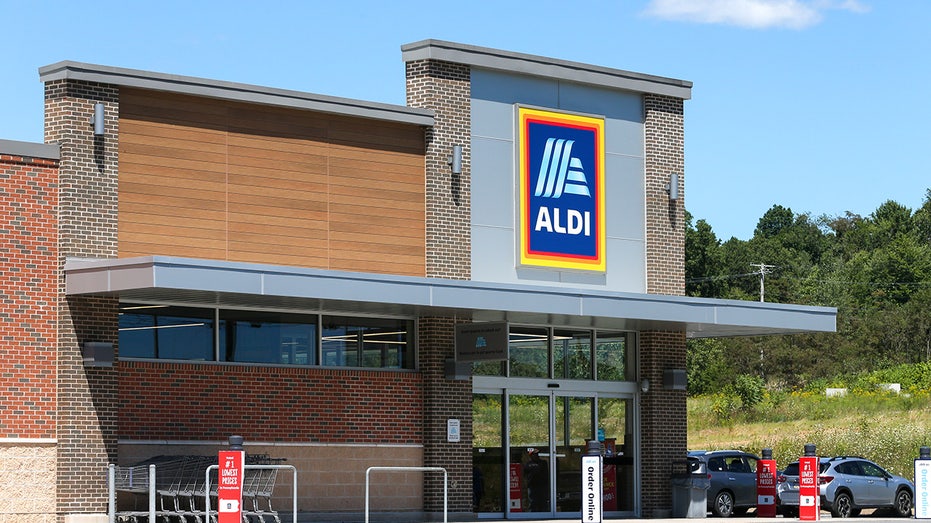
Consumers who have the affected product are advised not to eat it. (Paul Weaver/SOPA Images/LightRocket via Getty Images)
CLICK HERE TO GET FOX BUSINESS ON THE GO
FOX Business has reached out to Dr. Praeger’s Sensible Foods Inc. and Aldi for comment.

Thailand’s ambitious tourism recovery plans for 2026 are facing significant challenges due to escalating tensions in the Middle East, which have triggered flight cancellations, route detours, and a sharp rise in travel costs.
As the conflict drives up fuel prices and disrupts transit hubs like Dubai, the Thai tourism industry projects a potential 10% to 15% decline in visitor arrivals and substantial revenue losses, prompting a strategic shift to focus on regional Asian markets to offset the drop in long-haul travelers.
Key Points
- Flight Disruptions and Rising Costs: Conflict-related detours have increased fuel consumption and operational expenses, leading Thai Airways and other carriers to raise ticket prices by 10% to 15%.
- Declining Visitor Numbers: Following military strikes in the Middle East, weekly foreign arrivals dropped by nearly 9% in early March, with an 18% decrease specifically among travelers from Europe and the Middle East.
- Economic Forecast: The Center for Economic and Business Forecasting estimates the tourism sector could lose between 9 billion and 29 billion baht ($895 million) this year, depending on the duration of the crisis.
- Impact on Local Business: Major players like Central Retail expect a decline in earnings and profits due to reduced tourist spending, while popular destinations like Phuket are particularly vulnerable to the loss of high-spending international visitors.
- Strategic Pivot to Asia: To mitigate risks, the Thai Hotels Association is urging the government to intensify promotional efforts in stable regional markets, specifically targeting affluent tourists from China, India, and Malaysia.
- Broader Economic Stakes: With tourism accounting for approximately 20% of Thailand’s GDP, the current slump threatens the country’s overall economic growth, which is already lagging behind regional peers like Malaysia and Vietnam.
The escalating conflict in the Middle East is causing a significant “double shock” to the global aviation and tourism sectors, driven by two key pressures:
- Economic Impact: Surging oil prices are driving up operational costs, which is expected to result in a significant increase in airline ticket prices.
- Structural Disruption: The war is destabilizing the major transit hubs and traffic flows between Europe, Asia, India, and Africa.
Thailand’s efforts to revive its tourism sector are encountering major challenges due to rising tensions in the Middle East, especially the conflict involving Iran. Experts predict a 10% to 15% drop in international arrivals, jeopardizing the country’s 2026 goal of attracting 36 million visitors.
Key industry players, specifically the major Gulf carriers—Emirates, Etihad, and Qatar Airways—are particularly vulnerable. Having built their business models on massive wide-body fleets and powerful connecting hubs, these airlines now face a severe reduction in activity. Key points regarding this shift include:
- Threat to Hub Dominance: The conflict challenges the long-standing dominance of Gulf states in long-haul aviation, a model that Saudi Arabia’s Riyadh Air also intended to follow.
- Shift to Regional Tourism: As long-haul transit becomes more complex and uncertain, European travelers are increasingly opting for regional destinations such as France, Spain, Italy, and Portugal.
- Irreplaceable Capacity: Experts warn that if the conflict persists, the resulting void in flight offerings will be nearly impossible for other carriers to fill, leading to long-term changes in international travel patterns.
The ripple effects of the Middle Eastern conflict are also impacting airline operations and travel sentiment, with many travelers opting to postpone or cancel trips due to safety concerns. Additionally, fluctuating oil prices driven by geopolitical instability are increasing travel costs, further discouraging international tourists. To mitigate these challenges, Thailand is ramping up efforts to attract visitors from less affected regions, such as Southeast Asia and Oceania, while promoting domestic tourism to sustain the sector.
Other People are Reading

The film will combine live action and computer-generated animation and is in “early development”.

Asia FX muted as Fed, Iran jitters boost dollar; yen steady after BOJ holds

BorgWarner at Bank of America Summit: Adapting to Market Shifts

Steel Dynamics Stock Falls on Disappointing Update Ahead of Earnings

Netflix’s 7-Part Sleeper Hit Is Quietly Becoming TV’s Perfect Weekend Binge

Prairie View A&M bests Lehigh for 1st NCAA tourney win

Bolton to Middlebrook direct bus service announced TODAY


-
 Crypto World5 days ago
HYPE Token Enters Net Deflation as HyperCore Buybacks Outpace Staking Rewards
-

 Tech3 days ago
Your Legally Registered ‘Motorcycle’ Might Not Count Under Proposed US Law
-

 Fashion5 days ago
Weekend Open Thread: Addict Lip Glow
-
Sports5 days ago
Why Duke and Michigan Are Dead Even Entering Selection Sunday
-
 Tech2 days ago
Are Split Spacebars the Next Big Gaming Keyboard Trend?
-

 Business3 days ago
Search for Savannah Guthrie’s Mother Enters Seventh Week with No Arrests
-

 Business5 days ago
US Airports Launch Donation Drives for Unpaid TSA Workers as Partial Government Shutdown Enters Fifth Week
-
Crypto World4 days ago
Coinbase and Bybit in Investment Talks: Could Bybit Finally Enter the US Crypto Market?
-

 Business3 days ago
Australian shares drop as Iran war enters third week
-

 Business5 days ago
Country star Brantley Gilbert enters growing non-alcoholic beer market
-

 Crypto World3 days ago
Crypto Lender BlockFills Enters Chapter 11 with Up to $500M in Liabilities
-

 Sports5 days ago
College Basketball Best Bets: Conference Tournament Semifinal Picks
-

 Politics20 hours ago
The House | The new register to protect children from their abusers shows Parliament at its best
-
 Business6 days ago
Trump demands Powell cut rates as Iran conflict raises energy prices
-

 Fashion3 days ago
25 Celebrities with Curly Hair That Are Naturally Beautiful
-

 Crypto World6 days ago
Senate Votes to Include CBDC Ban in Bipartisan Housing Bill
-

 News Videos12 hours ago
RBA board divided on rate cut, unusually buoyant share market | Finance Report | ABC NEWS
-

 NewsBeat6 days ago
Deane Road crash near Bolton colleges and university
-

 News Videos6 days ago
Tom Lee: The 100x Opportunity EVEN Bigger Than Bitcoin (New Ethereum Prediction 2026)
-

 Crypto World12 hours ago
Canada’s FINTRAC revokes registrations of 23 crypto MSBs in AML crackdown


You must be logged in to post a comment Login