
Business
Trade pact, rupee rally light up offshore debt window


Bankers said several issuers that stayed away from offshore markets amid a sharp decline in the rupee are likely to now tap overseas debt.
As part of the bilateral trade agreement, the US would slash tariffs on Indian goods to 18% from 50%. This has already triggered buying in Indian bonds and a 5–10 basis point spread compression is seen across in names such as Vedanta, PFC and REC.
Indian corporates anticipate a surge in overseas borrowing over the next two quarters, fueled by improved investor sentiment following a US-India trade deal. This agreement, which includes tariff reductions, has already led to buying in Indian bonds and a spread compression.
“There has been visible buying in Indian bonds including Vedanta, PFC and REC,” said a bond investor. “We are seeing spread compression in the range of 5 to 10 basis points. Vedanta, for instance, has tightened by close to 10 basis points. The tone is positive, though exact numbers will become clearer as volumes pick up.”
The announcement of the trade deal late Monday caused the Indian rupee also to surge the most in seven years. A depreciating currency inflates the rupee cost of repayment for companies borrowing overseas.

The Reserve Bank of India (RBI) last year said it plans to ease external commercial borrowing (ECB) rules by rationalising limits, relaxing maturity norms and removing cost caps. This is expected to lower overseas borrowing costs and give Indian corporates greater flexibility to tap foreign capital as spreads compress further.
India’s ECB volumes has been climbing over the past few years. Indian companies had raised a record $61 billion through ECB route in FY25 up from $48 billion raised in FY24.Market buoyancy is likely to benefit issuers with medium-term maturities, including large public sector banks such as State Bank of India (SBI), which have offshore bonds maturing in FY27. Some issuers, including Greenko that had earlier replaced dollar redemptions with rupee borrowings, could find foreign currency debt attractive again.
“If this environment sustains with lower global rates, stronger inflows and regulatory easing, issuers that stayed away from overseas markets may return,” a banker said.
Following the trade deal announcement, government bond yields eased, too, by four basis points. The 10year benchmark yielded 6.72%

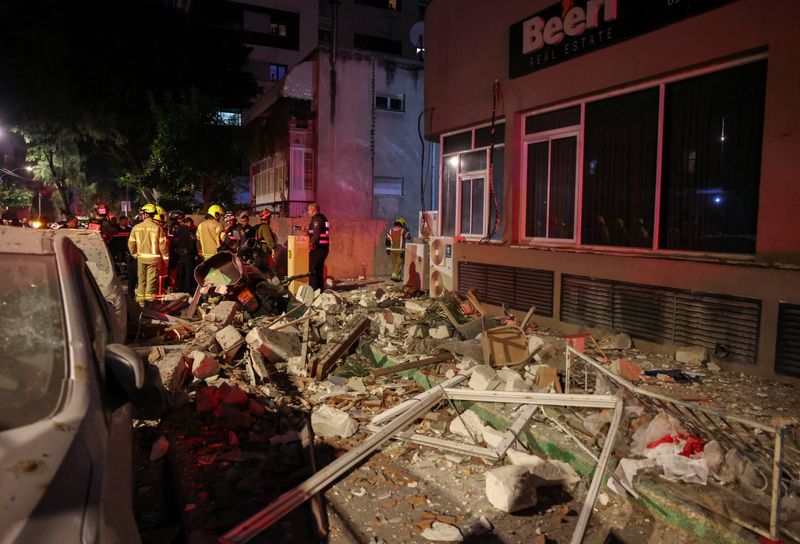

Iran strikes Tel Aviv with cluster warheads in retaliation for killing of security chief

EFG Holding reports 2025 net profit of EGP4.1 billion

TUCSON, Ariz. — More than six weeks after 84-year-old Nancy Guthrie vanished from her home in an affluent Tucson suburb, the investigation into her suspected abduction remains active but without a breakthrough arrest. Pima County Sheriff’s Office and FBI agents continue to analyze evidence, including a mixed DNA sample from the scene and additional surveillance images recovered from her residence, as the case enters its seventh week on March 18, 2026.

Nancy Guthrie, mother of NBC “Today” show co-anchor Savannah Guthrie, was last seen at her Catalina Foothills home on the evening of Jan. 31, 2026. Family members dropped her off around 9:30 p.m. local time after dinner. She failed to appear at church the next morning, Feb. 1, prompting a welfare check that escalated into a full-scale missing person probe.
Authorities quickly classified the disappearance as an abduction. Drops of blood believed to be hers were found on the front porch. Her doorbell camera was tampered with or disconnected around 1:47 a.m. on Feb. 1, and footage released by the FBI shows a masked, armed individual at the doorstep that night. Investigators believe she was taken against her will in the middle of the night, possibly while in bed. She left behind her cellphone, medications she requires daily for health conditions, and other essentials — factors that heightened concerns for her well-being early on.
The FBI joined the case immediately, establishing a dedicated tip line (1-800-CALL-FBI) and offering an initial $50,000 reward for information leading to her recovery or an arrest. In late February, the Guthrie family announced a separate $1 million reward, payable only upon Nancy’s safe recovery and consistent with FBI guidelines. Savannah Guthrie, her siblings Annie and Camron, and other relatives have made emotional public appeals via social media videos, pleading for tips and insisting “someone knows how to find our mom and bring her home.”
As of mid-March, no ransom has been confirmed paid, despite early speculation about demands. Pima County Sheriff Chris Nanos has said investigators have a theory on motive and believe the home was targeted, though he stopped short of confirming it definitively. He has not ruled out the possibility the perpetrator could strike again. Family members have been cleared as suspects.
Recent developments include FBI recovery of additional thumbnail images from home security cameras showing people in the yard area before the abduction — but nothing overtly suspicious, sources told outlets including ABC News and CBS News. The images are low-resolution and lack full video. Officials expressed hope in a DNA sample recovered from the scene, describing it as a potential breakthrough for identifying the suspect.
Tip volume surged initially but has tapered, per FBI statements. Investigators have focused on two dates in late January — Jan. 11 and Jan. 24 — and questioned neighbors about nearby construction crews or unusual activity. Experts note the case’s challenges: abductions of elderly individuals are rare (less than 0.2% of reported U.S. kidnappings involve those in their 80s), and the victim’s age complicates survival odds after prolonged captivity without medication.
The disappearance has drawn intense national attention due to Savannah Guthrie’s prominence. Media coverage has included timelines, expert panels on motive theories (ranging from targeted theft to more sinister possibilities), and comparisons to other unsolved cases. Public speculation on forums and social media has ranged from hopeful calls for her return to grim assessments of the odds.
Authorities emphasize the investigation’s ongoing nature. No arrests have been made, and Nancy’s whereabouts remain unknown. Officials urge anyone with information — even seemingly minor details — to contact the FBI anonymously. The family continues to hold out for her safe return while grappling with what experts call “ambiguous loss,” the prolonged grief of uncertainty.
As Day 46 approaches, the search for Nancy Guthrie stands as a stark reminder of vulnerability even in secure neighborhoods. With forensic leads still under review and a substantial reward outstanding, investigators and loved ones alike cling to hope amid the silence.

Justin Fris and Mark Beyer discuss Business News’ recent junior miners magazine feature.
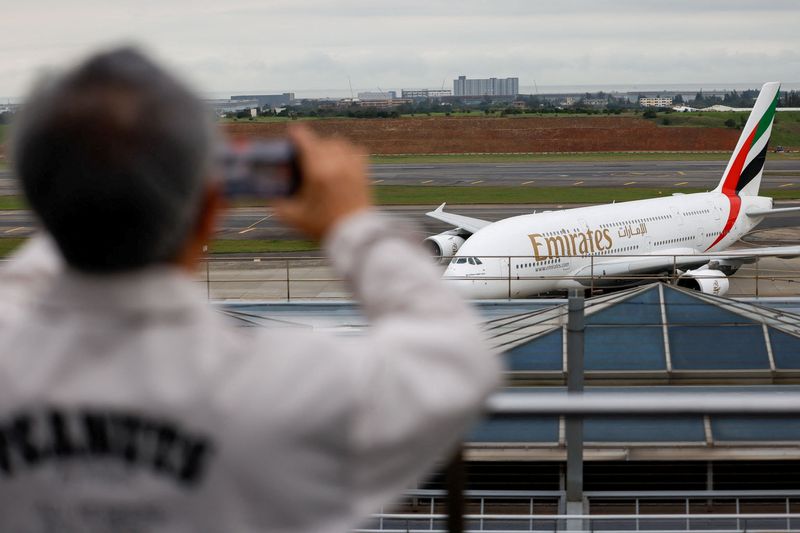

Factbox-Airlines cancel more flights as Middle East conflict escalates

Speaking on the evolving dynamics, veteran investor, Manishi Raychaudhuri, noted, “Now, the phenomenon that you mentioned that FIIs are selling and they have been selling for last 18 months roughly and the domestic institutions buying, that is not something new. I mean, we have seen this for last 18 to 24 months.”
He added that the sustained outflows from FIIs have been offset by robust domestic participation, particularly through systematic investment plans (SIPs). “The spate of FII selling has been neutralised by this massive systematic investment plans, the SIPs, that continue to come in, almost about $3 billion every month.”
Global Opportunities vs India’s Structural Story
According to Raychaudhuri, the reluctance of foreign investors is not necessarily a reflection of weakness in India alone, but rather a function of relative attractiveness elsewhere. “The foreign investors have a large firmament, a large universe to choose from and compared to India, they have better choices elsewhere in the emerging market space.”
He pointed to North Asian markets, where themes like artificial intelligence and related capital expenditure remain strong, alongside relatively lower geopolitical risks. “So, it is a combination of stronger growth and slightly lower risk that the FIIs are playing.”
In contrast, domestic institutional investors continue to benefit from a structural shift in household savings. “This is a direct consequence of the financialization that we have seen, it is not recent, it has been there for about last five to seven years.”
Importantly, he believes this trend still has room to run. “Indians are on an average still underinvested in equities… maybe it is still about 85-90-95% of Indian investments would remain focused on the home markets.”
Valuations Cooling, But Earnings Still a Concern
India’s valuation premium, once a major deterrent, has seen meaningful moderation. “At the peak in September 24 India’s price earnings multiple 12-month forward price earnings multiple was 87% higher… The last 15 years average is about 38-39%. And today India’s premium has actually come down below that level.”
He noted that the current premium of around 35–36% makes India relatively more attractive again. However, that alone may not be enough to trigger a strong return of FII flows. “The FII universe as a whole is not biting into this yet simply because the earnings environment is not yet supportive.”
Highlighting global comparisons, Raychaudhuri said, “If you look at last six months… you have Korea right on top… about 80% upgrade… Taiwan… 20-25%… But the Indian consensus EPS estimate… has still declined over the past six months by about 4.5% or so.”
This lag in earnings revisions remains a key overhang.
Macro Triggers and the Earnings Outlook
The outlook for earnings, in turn, hinges on a mix of fiscal, monetary, and external factors. “At some point this large fiscal stimulus that went in in 2025… will begin to have some effect… but it needs to be more sustained.”
He also indicated room for monetary easing, subject to inflation trends. “The central bank can perhaps afford to cut rates a little more… if we do have a situation where the Middle East situation settles down… we could have this concern about earnings destruction behind us.”
A moderation in crude oil prices toward the $60–70 per barrel range could be particularly supportive.
Can Valuations Hold?
On the question of sustainable valuation levels, Raychaudhuri struck a cautious note. “If you look at last 15 years average one year forward PE for India, it is about 18.8 times.”
However, he warned that valuations cannot remain elevated without earnings support. “If it remains in single digits, then those high-teens kind of PE are unsustainable.”
He emphasized the importance of reverting to a healthier growth trajectory. “Unless we get back to that situation… nominal GDP growth of about 10% to 12% and therefore corporate revenue and earnings growth of 13% to 14%… it will be difficult for these long range PE multiples to hold on.”
Sectoral Preferences: Banks, Industrials, Consumption
Despite near-term uncertainties, Raychaudhuri remains constructive on select pockets of the market. “Private banks… I have been kind of thumping the table on this for quite some time.”
He also highlighted opportunities in industrials and defence. “Defence expenditure is likely to rise stratospherically across the world… Industrials would also cater to India’s infrastructural ambitions.”
On the consumption side, he sees broad-based potential. “I would also be looking at consumer discretionaries in India… auto companies… household electronics goods… even some of the hospital and diagnostic chains.”
Additionally, cyclical sectors could offer tactical opportunities. “In the near term some of the cyclical sectors like base metals could also do well.”
IT Under Pressure
One notable exclusion from his preferred list is information technology. “I have stayed away from Indian IT for… almost a year now.”
He believes structural changes driven by artificial intelligence could weigh on the sector. “Indian IT… they are the classic AI losers… the average man-hour rate comes down and therefore the valuations of the IT companies come down.”
With earnings growth in single digits and valuations still elevated, he added, “They are trading at about 18 to 20 times PE, simply not sustainable.”

Australia’s share market has logged a second session of gains on easing oil prices, and as the Reserve Bank’s recent split interest rate decision softened the outlook for future hikes.

Basketball WA has appointed Ryan Lenegan as its general manager of membership and community growth, beginning in early May.

The New York Times Connections puzzle for Wednesday, March 18, 2026 — game #1011 — is live now. This daily word-association challenge tasks players with grouping 16 words into four themed categories of four words each. Categories range from straightforward (yellow) to tricky (purple), and the puzzle resets at midnight local time.

Today’s puzzle features words including: REVERB, WINCE, DELAY, SPELL, REALITY, PERIOD, YELL, RAIN, WAH, WHAMMY, STRETCH, PATCH, HOP, BLANK, COAT, CURSE.
### Hints for Today’s Categories (No Spoilers Yet)
Ranked from easiest (yellow) to hardest (purple), here are subtle clues to guide you without giving away answers:
– **Yellow (easiest):** These words all represent a span or duration of time or activity.
– **Green:** Physical or vocal reactions you might have after hitting your toe on furniture.
– **Blue:** Common names for sound-modifying devices guitarists use on their pedalboards.
– **Purple (hardest):** These complete the phrase “___ check” in different contexts (like insurance, fashion, weather, or existential questions).
If these hints aren’t enough, scroll down for the full solutions — but beware of spoilers!
### Full Answers and Categories
Here are today’s Connections groupings:
– **Yellow: Interval** — PATCH, PERIOD, SPELL, STRETCH
(All synonyms for a length of time or a temporary phase.)
– **Green: React to a stubbed toe** — CURSE, HOP, WINCE, YELL
(Typical instinctive responses: swearing, jumping on one foot, grimacing in pain, or shouting.)
– **Blue: Guitar effects pedals** — DELAY, REVERB, WAH, WHAMMY
(Popular stompbox effects that alter guitar tone: echo/delay, room-like ambiance, vocal-like filter, pitch-shifting dive bomb.)
– **Purple: ___ Check** — BLANK, COAT, RAIN, REALITY
(Phrases: blank check (unlimited authority), coat check (cloakroom), rain check (postponed offer), reality check (dose of truth).)
Many players found the purple category the trickiest due to its idiomatic nature, while yellow and green clicked quickly for most. The blue group often required thinking about music gear, which tripped up non-guitarists.
Connections #1011 is considered moderately difficult by community standards, with no widespread reports of one-word misleads or overly obscure themes. If you solved it in four guesses or fewer, congrats on a strong performance!
Play today’s puzzle directly on the NYT Games site or app. Remember, there’s also a Sports Edition variant for sports-themed groupings if you’re looking for more.
How did you do? Share your grid (e.g., using emoji squares: 🟨🟩🟦🟪) in the comments below. Good luck tomorrow!

OpenAI's Dilemma
‘This year is the most challenging year since the company was founded’: MSI exec makes it clear how bad the RAM crisis has got, despite some prices plateauing

Mum who needed power nap before school run devastated when 13 tumours found in her breast

Iran strikes Tel Aviv with cluster warheads in retaliation for killing of security chief


-
 Crypto World4 days ago
HYPE Token Enters Net Deflation as HyperCore Buybacks Outpace Staking Rewards
-

 Fashion5 days ago
Weekend Open Thread: Addict Lip Glow
-

 Tech2 days ago
Your Legally Registered ‘Motorcycle’ Might Not Count Under Proposed US Law
-
Sports4 days ago
Why Duke and Michigan Are Dead Even Entering Selection Sunday
-

 NewsBeat7 days ago
Residents reaction as Shildon murder probe enters second day
-

 Sports7 days ago
PWHL, Senators discussing plan to keep Charge in Ottawa
-

 Business3 days ago
Search for Savannah Guthrie’s Mother Enters Seventh Week with No Arrests
-

 Business4 days ago
US Airports Launch Donation Drives for Unpaid TSA Workers as Partial Government Shutdown Enters Fifth Week
-
 Tech15 hours ago
Are Split Spacebars the Next Big Gaming Keyboard Trend?
-
Crypto World4 days ago
Coinbase and Bybit in Investment Talks: Could Bybit Finally Enter the US Crypto Market?
-

 NewsBeat7 days ago
I Entered The Manosphere. Nothing Could Prepare Me For What I Found.
-

 Business4 days ago
Country star Brantley Gilbert enters growing non-alcoholic beer market
-

 Business2 days ago
Australian shares drop as Iran war enters third week
-

 Crypto World2 days ago
Crypto Lender BlockFills Enters Chapter 11 with Up to $500M in Liabilities
-

 Sports5 days ago
College Basketball Best Bets: Conference Tournament Semifinal Picks
-
 Crypto World6 days ago
Three Binance Charts May Be Hinting at Bitcoin’s Next Move
-

 Business5 days ago
Trump demands Powell cut rates as Iran conflict raises energy prices
-

 Fashion2 days ago
25 Celebrities with Curly Hair That Are Naturally Beautiful
-

 Crypto World5 days ago
Senate Votes to Include CBDC Ban in Bipartisan Housing Bill
-

 NewsBeat7 days ago
What to know about Erika Kirk after her Air Force board appointment | News US


You must be logged in to post a comment Login