
Business
UAE growth forecast raised to 5% for 2026 as trade set to hit $1tn

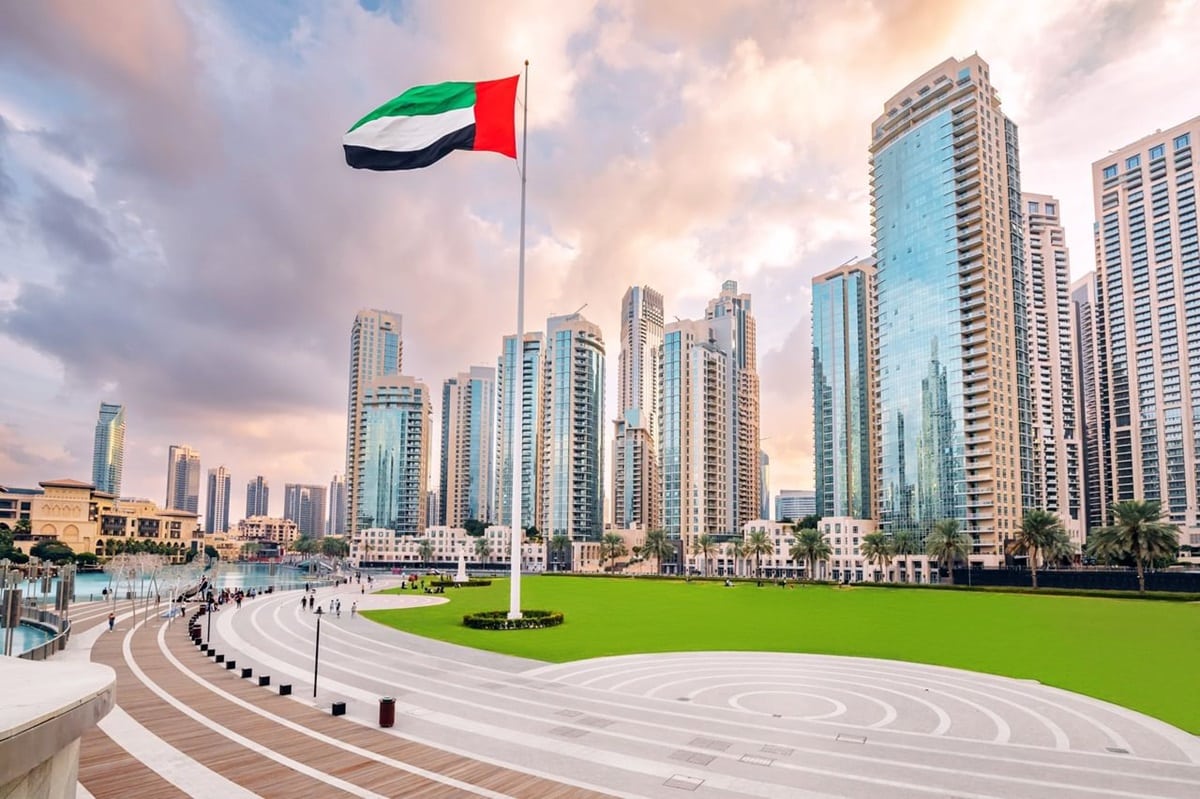
The UAE is set to outperform the global economy in 2026 after Standard Chartered raised its GDP growth forecast for the country to 5 per cent.
The upgrade reflects the UAE’s strong trade performance, resilient non-oil economy and growing role as a global connector amid fragmented trade flows.
The revised outlook places the UAE well ahead of projected global growth of 3.4 per cent next year, according to Standard Chartered Global Research.
UAE growth outlook upgraded
In its latest Global Focus report, Standard Chartered Global Research raised its 2026 GDP growth forecast for the UAE to 5 per cent, up from its previous estimate of 4 per cent.
The bank attributes the stronger outlook to shifting global supply chains and a buoyant domestic market, which are expected to offset the impact of softer oil prices.
Strong non-oil activity, supported by favourable demographics and a thriving property sector, is forecast to expand by 4.5 per cent in 2026.
Foreign trade tipped to reach $1tn
Amid a more fragmented global trade environment, Standard Chartered forecasts the UAE’s total foreign trade to reach the $1tn mark in 2026. The UAE–Asia trade corridor is expected to account for one-third of that volume, underscoring the country’s growing role in east–west trade flows.
Rola Abu Manneh, CEO of UAE, Middle East and Pakistan at Standard Chartered, said: “The UAE remains a bright spot on the global map, with the nation expected to remain on track to deliver growth at potential for two consecutive years in 2026. As we look toward the projected $tn in foreign trade volumes, the UAE is rapidly cementing its status as a super-connector, navigating seamlessly through global trade fragmentations and thriving within them.”
The UAE is also expected to maintain twin fiscal and current account surpluses, supported by deep domestic liquidity. Deposit growth continues to outpace private-sector credit expansion, which stood at 9.1 per cent year-on-year in mid-2025.
As a result, the UAE has the lowest loan-to-deposit ratio in the Gulf Cooperation Council, giving local banks headroom to pursue cross-border lending opportunities. Standard Chartered highlighted Saudi Arabia as a key market, where interbank interest rates remain elevated.
Global outlook: US, China and Europe
Beyond the UAE, Standard Chartered Global Research raised its US growth forecast for 2026 to 2.3 per cent from 1.7 per cent, citing strong business investment, corporate tax cuts and accelerating adoption of artificial intelligence.
The bank expects the US labour market to begin recovering in the second half of 2026 as firms adapt to higher tariffs amid strong domestic demand.
China’s 2026 growth forecast was also lifted to 4.6 per cent from 4.3 per cent, with 2025 growth on track to reach 4.9 per cent.
While export growth is expected to moderate in 2026, it should remain supported by the recent US–China trade truce and continued diversification of export markets, despite elevated trade risks ahead of the US midterm elections.
The euro area’s 2026 growth forecast was nudged up to 1.1 per cent from 1.0 per cent, although prospects remain muted due to trade pressures and uneven performance across member economies.
In Asia, export-driven growth held up better than expected in 2025, but Standard Chartered expects momentum to moderate in 2026 as front-loading of exports fades and political uncertainty weighs on some markets.
Risks and upside potential
Madhur Jha, Global Economist and Head, Thematic Research, said: “While the 2026 growth outlook is benign, it comes with elevated risks from multiple sources. Geopolitical risks abound, arising not just from key upcoming elections and ongoing conflicts, but also from the rise of alliances that aim to challenge the US-led world order.
“Not all risks are to the downside. AI-related productivity gains might start to filter through faster than currently expected, lifting growth not just in the US and China but also globally.
“While tariffs are unlikely to be lowered further, global trade growth could remain resilient as the diversification of trade partners allows other economies to gain a bigger share of trade-related economic gains.”



