
Business
UAE uses Davos platform to showcase Investopia and new investment priorities

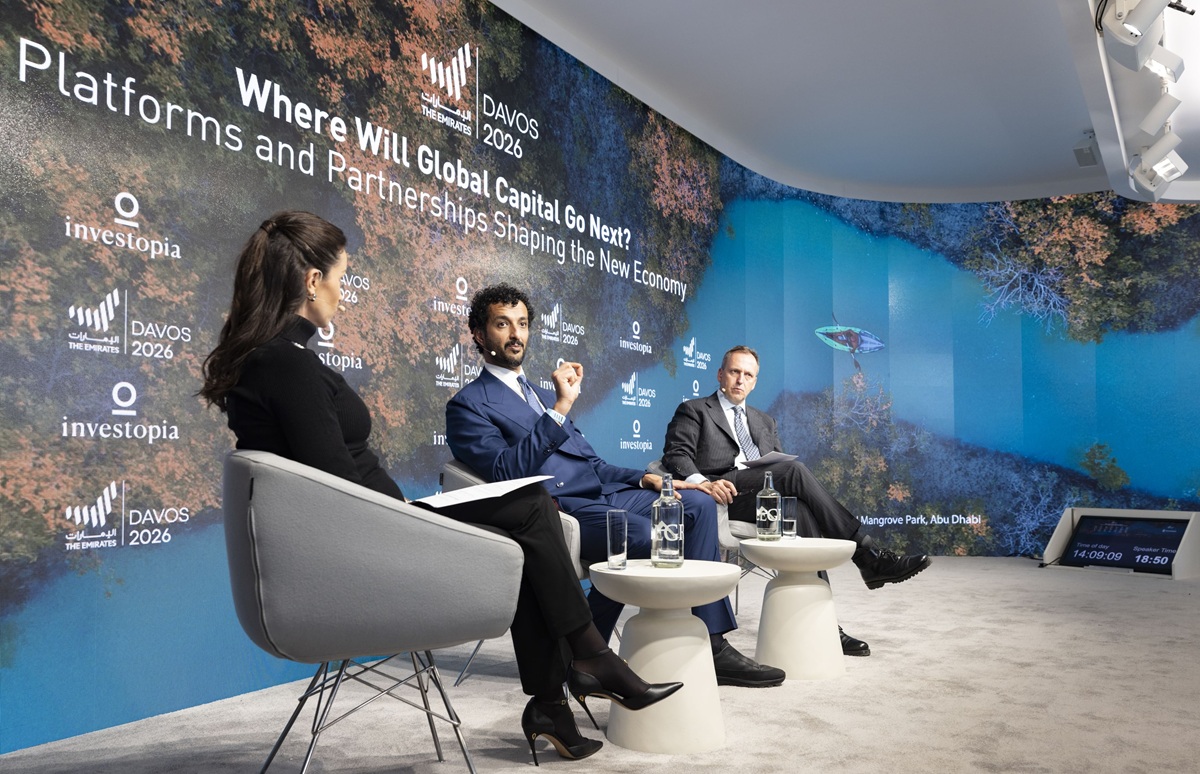
The UAE-led session, “Where Will Global Capital Move Next? Platforms, Policies, and Partnerships Shaping the New Economy,” brought together senior policymakers, business leaders and international investors to examine how capital is being deployed amid geopolitical shifts, economic uncertainty and rapid technological change.
The session was attended by Abdulla bin Touq Al Marri, Minister of Economy and Tourism and Chairman of Investopia, alongside Roberto Hoornweg, CEO, Corporate and Investment Banking, Standard Chartered, and CEO of Europe, Americas, Middle East and Africa.
Bin Touq said: “We are witnessing significant shifts in global capital movement. International reports indicate that global foreign direct investment flows declined by 11 per cent in 2024, reaching $1.5tn compared to $1.67tn in 2023.
“This is driven by ongoing economic and geopolitical changes, as well as the impact of volatile financial transactions across intermediary European economies, with expectations of a continued slowdown in productive capital flows globally.”
He added: “Investors today are prioritising macroeconomic stability, policy clarity, and cross-regional accessibility rather than relying on a single market. Returns alone are no longer sufficient; policy frameworks have become a decisive factor. According to the World Bank’s 2024 Global Investment Competitiveness Report, uncertainty is among the top three barriers to cross-border investment, alongside financing costs and geopolitical risks.”
Investopedia strategy
Bin Touq said Investopia plays a strategic role in shaping the future global investment landscape: “Investopia plays a strategic and central role in shaping the future of the global investment landscape.
“It goes beyond traditional individual deals by developing integrated, actionable investment pathways characterised by diversity and flexibility across new economy sectors. Investopia aims to effectively align sovereign priorities with private sector capital, ensuring that investments are directed toward projects that deliver tangible and sustainable economic impact, while reducing risks arising from misalignment between policies, projects, and financing.”
He noted that this approach supports the development of a connected and trusted investment environment, strengthening the UAE’s ability to attract global capital and high-quality investments while accelerating the implementation of projects with significant economic and strategic value.
Highlighting the UAE’s investment model, Bin Touq said: “The UAE presents an exceptional model in attracting capital, investments, and wealth from across the globe. Under the guidance of its wise leadership, the UAE has built an integrated and competitive economic and legislative ecosystem.
“Notably, non-oil sectors constitute 77.5 per cent of our national GDP as of the end of H1 2025. Over 1.4 million companies operate in the UAE’s markets, and FDIs inflows reached approximately $45.6bn in 2024, positioning the UAE among the top ten FDI recipients globally.”
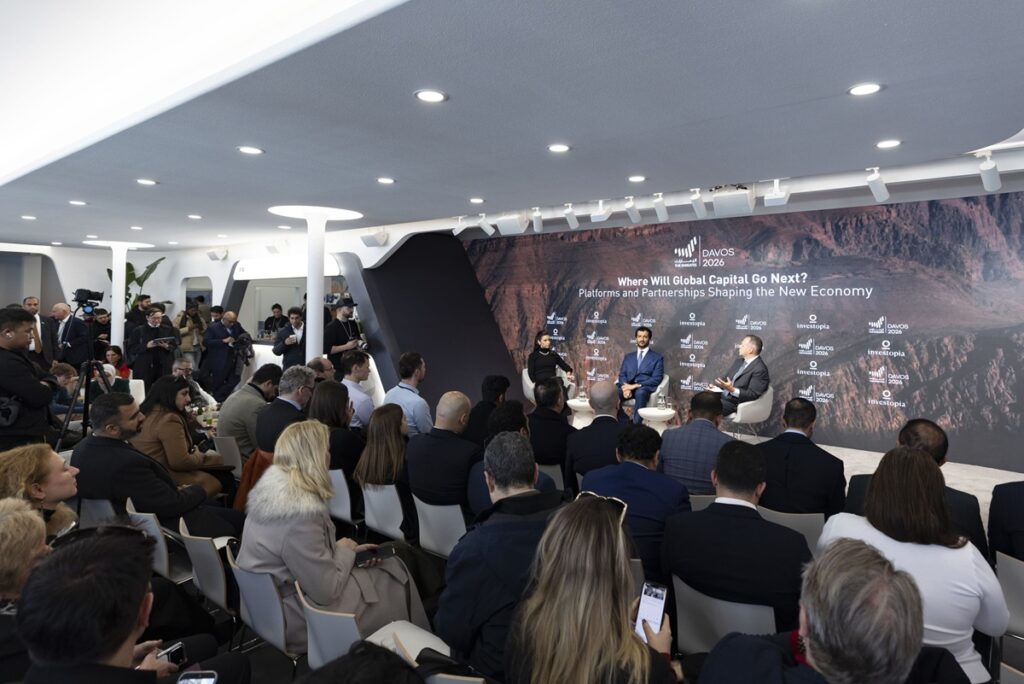
UAE at Davos
He added that the UAE is home to more than 200 nationalities and tens of thousands of multinational corporations, reinforcing its position as a global business hub linking Asian, African, Middle Eastern and European markets through a single integrated platform.
The minister also highlighted recent amendments to the Commercial Companies Law, aimed at strengthening the investment environment by safeguarding investor rights, facilitating company formation and supporting business growth.
He said the amendments mitigate investment risks by limiting shareholders’ financial liabilities and introducing clear mechanisms for capital increases and share trading, opening new financing horizons and strengthening the domestic and foreign investment climate.
Bin Touq invited global investors to leverage the UAE’s position as a global economic hub, noting its advanced legislative environment, competitive economic system, stability and broad range of investment opportunities across priority sectors.
He added that global capital is increasingly flowing towards economies that integrate trade, logistics, digital infrastructure and financial services, with growing focus on energy transition, advanced manufacturing and digital trade.
Sustainability, he said, is now a fundamental requirement for risk management, particularly for sovereign wealth funds and global financial institutions.
The World Economic Forum Annual Meeting 2026 is being held in Davos from 19 to 23 January, bringing together more than 3,000 global leaders, including over 65 heads of state and government, at a time of heightened economic and geopolitical challenges.



