Connect with us

Business

UK businesses only planning year-to-year thanks to political uncertainty, new study shows

Published

on

Business Live

Lewis Silkin study shows nearly 80 per cent of employers are unable to look beyond a year ahead, with the Employment Rights Bill creating additional challenges

City of London skyline

Political and economic uncertainty are making life hard for businesses, the study shows (Image: Gary Yeowell / Getty Images)

Political uncertainty and regulatory ambiguity are stopping businesses from doing the long-term planning their employees need, a new study has shown.

Close to 80% of employers are struggling to plan beyond a year ahead, the survey of almost 700 organisations by law firm Lewis Silkin has shown.

Advertisement

Lucy Lewis, partner and chair at Lewis Silkin, said: “Economic pressures, and political and regulatory change narrow the planning window even further… reactive tactics which mean that transformation programmes or workforce redesign get sidelined.”

One in four UK organisations cited preparing for and adhering to the Employment Rights Bill as a principal challenge, with the sweeping changes to workers’ protections set to impose costs on businesses.

The contentious Bill received final approval to become legislation in December after prolonged debates in the House of Lords regarding ‘day one’ entitlements, as reported by City AM.

As the Act becomes embedded in law, Tarun Tawakley, partner at Lewis Silkin, noted: “Over the next 12–24 months, expect cautious hiring, legally anchored policy-setting and a premium on disciplined execution.”

Advertisement

As well as those pressures, escalating employment costs have emerged as a key factor pushing British firms towards short-term, reactive strategies. The uptick in employer national insurance contributions (NIC) alongside a 4.1% increase in the national living wage has generated considerable recruitment challenges.

Smaller businesses face particular pressures from taxation, employer contributions and the cumulative administrative burden of compliance.

With the majority of these businesses expecting their organisations to invest more heavily in technology than people over the coming year, the survey highlighted the anticipated cultural implications.

Nearly half (49 per cent) of organisations anticipate cultural resistance, including fears about job losses or mistrust of AI outputs, which could hinder the adoption of new technologies.

Advertisement

Lisa Farthing, head of worksphere and HR consultancy at Lewis Silkin, said the upskilling challenge “is becoming more acute as employment law rights continue to expand and employees’ awareness of those rights grows, placing greater importance on effective training, coaching and people management.”


Continue Reading
Click to comment

Leave a Reply

Your email address will not be published. Required fields are marked *

Business

Icons Who Defined a Nation’s Sporting Legacy

Published

on

Sir Donald Bradman, 1908 - 2001, Cricketer

Australia has produced some of the world’s most dominant and inspirational athletes across cricket, tennis, swimming, athletics and more. From record-shattering cricketers to trailblazing Olympians, these figures have not only amassed medals and titles but also shaped national identity and inspired generations.

This list of the 10 greatest Australian athletes of all time, compiled from consensus across rankings by ESPN, Sport Australia Hall of Fame legends, Olympic records, fan polls and expert analyses as of 2026, balances historical impact, statistical dominance, cultural significance and global influence. While debates rage over order — especially between eras and sports — these names consistently top discussions.

Sir Donald Bradman, 1908 - 2001, Cricketer
Sir Donald Bradman, 1908 – 2001, Cricketer

1. Sir Donald Bradman (Cricket)

Widely regarded as the greatest batsman in cricket history, Bradman towers over Australian sport. His Test batting average of 99.94 remains unmatched, nearly 40 points above the next best. In an era of uncovered pitches and hostile bowling, he scored 29 centuries in 52 Tests.

Bradman’s feats during the 1930s “Bodyline” series and beyond made him a national hero. The Sport Australia Hall of Fame inducted him first in 1985, and he remains the benchmark for excellence. No other athlete has so profoundly defined a sport for a country.

2. Rod Laver (Tennis)

The only player to achieve the calendar-year Grand Slam twice (1962, 1969), Laver won 11 majors in singles and dominated during tennis’s amateur and early Open era. His versatility on all surfaces and against legends like Roy Emerson cemented his status.

Advertisement

Laver’s “Grand Slam” feats inspired generations, and he is often called the greatest ever by peers. His legacy endures in the Rod Laver Arena at the Australian Open.

3. Ian Thorpe (Swimming)

“The Thorpedo” revolutionized freestyle swimming with five Olympic golds, three silvers and a bronze across Sydney 2000 and Athens 2004. He set 13 individual world records and won 10 Commonwealth golds.

Thorpe’s dominance in the 200m and 400m freestyle, plus his cultural impact as a young star, made him a global icon. ESPN ranked him No. 1 among 21st-century Australian athletes.

4. Dawn Fraser (Swimming)

Fraser became the first swimmer to win the same event — 100m freestyle — at three consecutive Olympics (1956, 1960, 1964). Her four golds and eight total medals highlight her longevity and grit.

Advertisement

A trailblazer for women’s sport, Fraser’s rebellious spirit and records (including breaking her own marks) earned her Legend status in the Hall of Fame.

5. Cathy Freeman (Athletics)

Freeman’s 400m gold at Sydney 2000, carrying the weight of Indigenous reconciliation after lighting the cauldron, remains one of Australia’s most emotional sporting moments. She won world titles in 1997 and 1999.

Her success transcended sport, symbolizing unity and pride for First Nations people. Freeman is celebrated as an Indigenous icon and national treasure.

6. Ash Barty (Tennis)

Barty retired at No. 1 in 2022 after three Grand Slam singles titles (French Open 2019, Wimbledon 2021, Australian Open 2022). She also excelled in doubles and won the WTA Finals.

Advertisement

Her all-court game, humility and Indigenous heritage made her a modern hero. ESPN placed her second among 21st-century Aussies.

7. Margaret Court (Tennis)

Court holds the all-time record with 24 Grand Slam singles titles, plus dominance in doubles and mixed. Her career spanned amateur and Open eras.

Though controversial later in life, her on-court achievements remain unmatched in quantity.

8. Emma McKeon (Swimming)

Australia’s most decorated Olympian with 14 medals (six gold) across Tokyo 2020 and Paris 2024. Her seven-medal haul in Tokyo (four gold) tied the single-Games record for women.

Advertisement

McKeon’s versatility and records in freestyle events mark her as a modern great.

9. Shane Warne (Cricket)

The greatest leg-spinner ever, Warne took 708 Test wickets and revived the art of leg-spin. His “Ball of the Century” to Mike Gatting in 1993 is legendary.

Warne’s charisma and Ashes dominance made him a household name until his 2022 passing.

10. Lauren Jackson (Basketball)

A four-time Olympian with three silvers and a bronze, Jackson dominated the WNBA (two championships, three MVPs) and WNBL (six titles). She is Australia’s most successful basketball export.

Advertisement

Her scoring prowess and leadership earned her Hall of Fame induction.

Honorable Mentions

  • Betty Cuthbert: Four Olympic golds in athletics.
  • Ellyse Perry: Dual international in cricket and soccer.
  • Sam Kerr: Modern football superstar.
  • Heather McKay: Squash dominance with 16 British Opens.

Australia’s sporting success stems from a culture valuing grit, innovation and fair play. These athletes embody that spirit, from Bradman’s statistical perfection to Freeman’s unifying moment.

Debates will continue — cricket’s team sport vs. individual Olympic glory — but these 10 represent the pinnacle of Australian excellence. Their stories inspire young Aussies chasing dreams on fields, pools and courts worldwide.

Continue Reading

Business

North East business rides out tough economic conditions as insolvency activity falls

Published

on

Business Live

The 2025 figures from R3for the region show a 9.3% decrease in insolvency-related activity,

The latest R3 annual report has been published

The latest R3 annual report has been published(Image: Getty Images)

North East businesses have weathered a challenging year with the region chalking up a drop in insolvency-related activity, a new report suggests. The latest annual report from R3 – the trade body for restructuring, turnaround and insolvency professionals – also shows an increase in the number of new start-ups.

Supported by data from CreditSafe, R3’s reports examine insolvency and start-up activity, highlights sectors under financial stress, and explores key business pressures. The 2025 figures for the region show a 9.3% decrease in insolvency-related activity, which includes administrations and creditors’ meetings as well as voluntary and compulsory liquidations from 863 cases in 2024 to 783 last year.

However, levels of insolvency activity still remain much higher than five years ago. There was a 3.3% increase over the same period in the number of start-up businesses which rose from 16,897 to 17,455.

In a year-on-year regional comparison the North East was one of the best performing areas, with its annual decline in insolvency related activities topped only by Yorkshire and Humber with a 9.9% decrease and Greater London’s 11% drop.

Advertisement

The R3 Annual Business Health Report also explores sector trends across the UK, with the national picture highlighting a fragile operating environment for many businesses.

Construction continued to account for the highest number of insolvency activities in the UK in 2025 (4,584 cases), despite a modest reduction of 6% on the previous year. The sector was impacted by rising material costs as well as delayed payments, skills shortages and weak investor confidence.

Aerial view of Union Electric Steel plant at Gateshead

Aerial view of Union Electric Steel plant at Gateshead(Image: Avison Young)

Within the North East, Cramlington based construction specialist Merit went into administration towards the end of the year, with the loss of around 340 jobs, while Union Electric Steel also closed its North East operation in Gateshead, with the loss of 156 jobs. Directors at Merit have since bought assets of the business from administrators to start a new company.

Elsewhere in the UK wholesale and retail (4,124 cases) and accommodation and food services (3,831 cases) also saw rising insolvency activity, reflecting pressure on margins as hard-pressed opted to save rather than spend, in discretionary spending and businesses struggled to absorb or pass on higher costs.

Advertisement

Manufacturing insolvencies also remained historically high with 2,188 cases, as companies battled energy costs, supply chain disruption and subdued export demand.

Kelly Jordan, North East Chair of R3, and partner at Muckle LLP, said: “The R3 report shows that businesses, both regionally and nationally, struggled to regain their footing in 2025 after several years of economic challenges.

“While inflation has now eased, the cumulative impact of higher costs, tighter credit conditions and weak demand continues to place significant pressure on local companies, particularly smaller and mid-sized firms with limited financial headroom.

“As we move into 2026, while cashflow and profit margins remain under pressure, seeking professional advice at an early stage from an R3 member can make a critical difference, giving viable businesses the best chance of survival and recovery.”

Advertisement
Continue Reading

Business

Elon Musk Fails to Dismiss SEC Case Alleging Delay in Reporting Twitter Shares

Published

on

Disney Channels Remain Blocked on YouTube TV, Causing $30 Million

A federal judge has denied Elon Musk‘s attempt to dismiss a lawsuit from the US Securities and Exchange Commission (SEC) over delays in reporting his Twitter share purchases.

The ruling marks the latest legal setback for the billionaire, who has long sparred with the regulatory agency.

US District Judge Sparkle Sooknanan in Washington, DC, ruled Tuesday that none of Musk’s arguments were sufficient to end the case.

Musk had claimed the SEC was overreaching and targeting him for criticizing the agency, but the judge rejected those points.

Advertisement

The SEC filed the lawsuit in January 2025, alleging that Musk waited 11 days to disclose his initial 5% stake in Twitter in March and April 2022.

During that period, he purchased more than $500 million in shares at prices the SEC says were artificially low, CNA reported.

The agency is seeking $150 million in repayment for the alleged gains, plus an additional civil penalty.

Musk has described the delay as inadvertent. He also argued that the SEC’s pursuit was “selective enforcement” of federal securities laws and claimed the $150 million fine is excessive under the US Constitution’s Eighth Amendment.

Advertisement

Musk pointed out that the SEC typically seeks only $100,000 in similar cases.

Judge Sooknanan cited congressional intent to protect investors from hidden stock purchases.

Elon Musk Must Face Lawsuit Over Delayed Share Filing

Shareholders reaching a 5% ownership stake must disclose their holdings within 10 calendar days, giving other investors the opportunity to act on the information.

“The court does not doubt that Mr. Musk would prefer to avoid having to disclose information that might raise stock prices while he makes a play for corporate control,” Sooknanan wrote. “But the balance Congress struck … does not violate the First Amendment.”

According to the NY Post, Musk has a long history with the SEC. In 2018, he was sued after tweeting that he might take Tesla private and had secured funding.

Advertisement

He settled that case by paying a $20 million civil fine, allowing Tesla lawyers to review some Twitter posts in advance, and giving up his chairman role.

The SEC case comes after Musk’s high-profile $44 billion acquisition of Twitter, which he rebranded as X in October 2022.

Recently, Musk merged his AI company xAI, which includes X, with his space and satellite company SpaceX, creating a private enterprise valued at around $1.25 trillion.

According to Forbes, Musk’s personal fortune now stands at $851.6 billion, more than triple the $277.5 billion wealth of Google co-founder Larry Page.

Advertisement

Lawyers for Musk have not commented on the recent ruling, and the SEC declined to provide a statement.

Originally published on vcpost.com

Advertisement
Continue Reading

Business

PAMT CORP: Pain Is Likely To Continue Near-Term (Downgrade)

Published

on

PAMT CORP: Pain Is Likely To Continue Near-Term (Downgrade)

PAMT CORP: Pain Is Likely To Continue Near-Term (Downgrade)

Continue Reading

Business

From Pixar to Disney+: The $100-billion blueprint behind Bob Iger’s Disney

Published

on

From Pixar to Disney+: The $100-billion blueprint behind Bob Iger’s Disney
When Bob Iger was promoted to chief executive officer of Walt Disney Co in 2005, he took over a company that was an undeniable force in entertainment and theme parks, but badly in need of rejuvenation.

In one of his first moves, Iger made Disney shows like Lost and Desperate Housewives available for sale on Apple ‘s iTunes platform, ushering in the unique idea of watching TV online. Three months later he bought Pixar from Apple co-founder Steve Jobs. That $7.4 billion deal was an eye-popper, paving the way for blockbusters like Cars and Inside Out that reinvigorated Disney’s animated film business.

Those early moves hinted at key parts of Iger’s strategy: acquire marquee entertainment franchises and find new ways to exploit them. As he prepares to hand the reins next month to his successor, theme-parks chief Josh D’Amaro, Iger leaves a legacy that includes snapping up the biggest brand names in Hollywood via more than $100 billion in mergers and acquisitions, expanding in China and building a streaming business that delivered $24.6 billion in revenue from people watching movies and TV shows online last year.

“That’s one huge insight of his,” said David Collis, an executive education fellow at Harvard Business School who has written about Iger. “If you own these incredible entertainment franchises, any device only increases demand for your content.”

More deals followed Pixar, including Marvel Entertainment and its stable of superheroes, Star Wars-parent Lucasfilm and the $71 billion acquisition of 21st Century Fox in 2019, which brought in franchises like The Simpsons and Avatar.

Advertisement


“The deal we did for Fox, in many ways, was ahead of its time,” Iger said this week on an earnings call when asked about Netflix’s pending acquisition of Warner Bros Discovery.

Those acquired characters and stories found their way into Disney’s theme parks. In 2013, when the company first began exploring a Star Wars land for the parks, Iger told his designers, “Be the most ambitious that you have ever been,” Bob Weis, the longtime head of Disney’s parks design business, recalled in his 2024 autobiography.Iger was also keen on international expansion, green-lighting the $5.4 billion Shanghai Disneyland. Before its 2016 opening, Iger flew to China on a nearly monthly basis to monitor its progress, according to Weis.

The same year the Fox acquisition closed, Iger launched Disney+, the company’s flagship streaming service, the company’s response to the growing dominance of Netflix in online viewing. Providing a new outlet for programming that ran on networks like the Disney Channel was a threat to the company’s lucrative cable-TV business, but in the end, Iger relented.

Disney+ was a hit from the start. Ten million customers signed up the first day, driven by programming such as the Star Wars-spinoff The Mandalorian. The company reported 132 million Disney+ subscribers at the end of its latest fiscal year.

TV Star
Iger has spent his whole career in the TV business, rising up the ranks at ABC and performing every task, from getting a bottle of Listerine for Frank Sinatra before a TV special to scheduling the 1988 Winter Olympics. He was considered a likely CEO of broadcaster Capital Cities/ABC until that company was acquired by Disney in 1996 and he had to start clawing his way up the corporate ladder again.

When a shareholder revolt finally prompted the retirement of Disney CEO Michael Eisner in 2005, Iger got his shot.

Advertisement

More than 20 years later, the worst grade on Iger’s corporate report card likely comes in succession planning. Multiple extensions of his contract over the years led senior Disney executives to exit. When he finally stepped down for the first time in 2020, his handpicked successor Bob Chapek proved to be disappointment.

As Iger prepares to pass the baton to D’Amaro on March 18, he leaves plenty of work still to be done. On the recent earnings call, Iger said he hoped his replacement would carry on with his focus on reinvention.

Continue Reading

Business

Ferrero taps Jean-Baptiste Santoul to helm WK Kellogg

Published

on

Ferrero taps Jean-Baptiste Santoul to helm WK Kellogg

Cereal maker’s founding CEO Gary Pilnick has left the company.

Continue Reading

Business

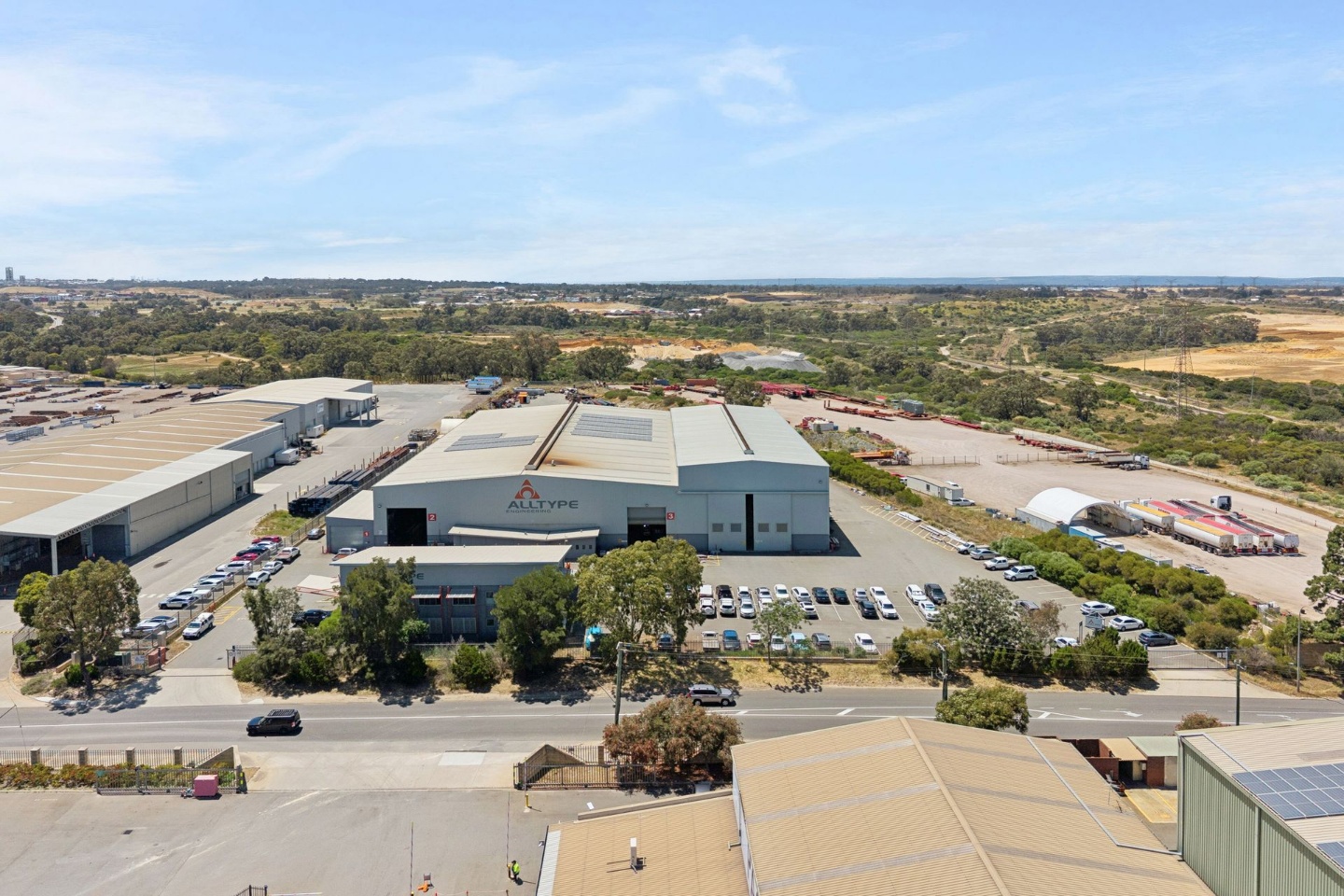
Perth office vacancy with slight shift

Published

on

Perth office vacancy with slight shift

The Property Council’s new office vacancy report has been released, showing just a 0.1 per cent dip in Perth’s vacancy rate.

Continue Reading

Business

KFC parent company’s loyalty program in China surpasses 590 million members

Published

on

KFC parent company’s loyalty program in China surpasses 590 million members


KFC parent company’s loyalty program in China surpasses 590 million members

Continue Reading

Business

Spencer Jakab | Gold Prices: Why This Isn’t the 1970s All Over Again

Published

on

David Uberti hedcut

That’s the value of the Dow industrials divided by the gold price. The lower the ratio, the pricier the metal looks compared to blue-chip stocks—and it is now below a long-term average of 13.8 times.

In the latest edition of my Markets A.M. newsletter, I look at gold valuations, and why we’re unlikely to see a repeat of the metal’s stunning outperformance in the ’70s. You can sign up for the newsletter here, or read the full article below:

Continue Reading

Business

Iran-U.S. talks to take place in Oman on Friday, U.S. official confirms

Published

on

Iran-U.S. talks to take place in Oman on Friday, U.S. official confirms


Iran-U.S. talks to take place in Oman on Friday, U.S. official confirms

Continue Reading

Trending

Copyright © 2025