UK inflation remained unchanged at 3% in the year to February, offering a brief period of stability before economists expect a renewed surge in price pressures driven by the Middle East conflict.
Figures from the Office for National Statistics (ONS) show that annual inflation held steady following months of gradual decline, with rising clothing prices offset by lower fuel and alcohol costs.
However, the data was collected before the escalation of the US-Israel conflict with Iran, an event that has already triggered sharp increases in global energy prices and is widely expected to feed through into higher inflation in the months ahead.
The main upward pressure on inflation in February came from clothing and footwear, where prices rose by 0.9% over the year. This marked a reversal from the previous month, when clothing prices had shown no increase.
ONS chief economist Grant Fitzner said the rise reflected typical seasonal pricing dynamics, but also highlighted the underlying volatility within the inflation basket.
Advertisement
“At the same time, falling petrol costs and discounted alcohol helped offset some of these increases,” he added, noting that alcohol and tobacco inflation reached its lowest level since early 2022.
While fuel costs helped keep inflation in check in February, that trend has already begun to reverse.
The ONS reported that petrol prices were at their lowest level since June 2021 during the data collection period, with average prices around 131.6p per litre. Since then, wholesale oil prices have surged, pushing pump prices significantly higher.
The price of crude oil has risen sharply following disruptions to global supply chains and shipping routes, particularly through the Strait of Hormuz — a key artery for global energy markets.
Advertisement
This shift is expected to have a cascading effect across the economy, increasing costs not only for transport but also for manufacturing, food production and leisure services as businesses pass on higher input costs.
For many companies, the impact is already being felt.
James Palmer, who runs a bus company in Essex, said fuel costs have risen dramatically in recent weeks, creating uncertainty and forcing difficult decisions.
“Three weeks ago we were paying around £1.21 per litre, now it’s closer to £1.86,” he said, highlighting the speed of the increase. Combined with rising wage costs, he warned that price rises for customers are becoming unavoidable.
Advertisement
“It’s the unpredictability that’s worrying,” he added. “We don’t want to let people down, but we may have no choice.”
Economists expect inflation to rise significantly over the course of 2026, with some forecasts suggesting it could peak at around 4.6% if energy prices remain elevated.
This would mark a reversal from the recent trend of easing inflation and could complicate monetary policy decisions for the Bank of England, which had previously been expected to begin cutting interest rates.
Instead, markets are now pricing in the possibility of further rate increases to contain inflation, a move that would place additional pressure on households and businesses.
Advertisement
The inflation data also comes as wage growth shows signs of slowing. Earnings excluding bonuses rose by 3.8% annually, still ahead of inflation for now, but vulnerable to being overtaken if price growth accelerates.
A renewed squeeze on real incomes could weigh heavily on consumer spending, further slowing economic growth.
Chancellor Rachel Reeves said the government is taking steps to ease the cost of living, including measures to stabilise food prices and improve long-term energy security.
However, economists warn that global factors, particularly energy markets, may limit the effectiveness of domestic policy interventions.
Advertisement
The February inflation figure represents a moment of calm before what could be another period of turbulence.
With energy prices rising, supply chains under strain and interest rate expectations shifting, the UK economy faces a delicate balancing act, one where inflation, growth and living standards are all tightly interconnected.
For now, inflation may be stable. But the forces shaping its next move are already in motion.
Jamie Young
Jamie is Senior Reporter at Business Matters, bringing over a decade of experience in UK SME business reporting.
Jamie holds a degree in Business Administration and regularly participates in industry conferences and workshops.
When not reporting on the latest business developments, Jamie is passionate about mentoring up-and-coming journalists and entrepreneurs to inspire the next generation of business leaders.
HOUSTON — Travelers at George Bush Intercontinental Airport faced grueling security lines Wednesday as the ongoing partial government shutdown continued to cripple TSA staffing, with wait times at the major Houston hub reaching as long as four hours or more during peak periods. Houston Airports officials warned passengers to prepare for extended delays, with checkpoints consolidated into just two terminals and expedited lanes largely unavailable.
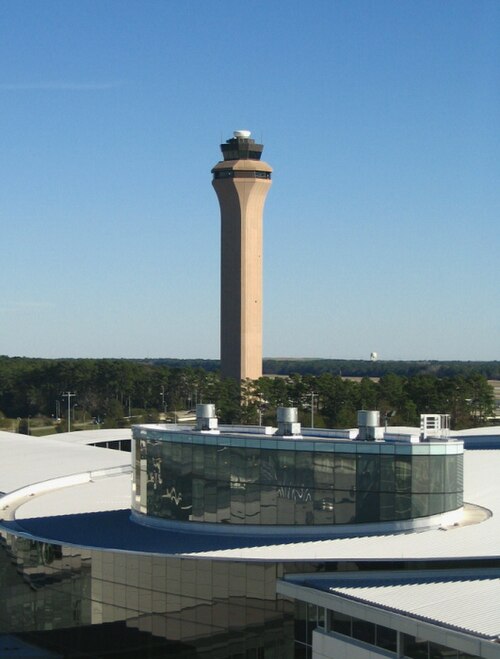
George Bush Intercontinental Airport’s air traffic control tower in December 2006
As of midday Wednesday, official estimates on the airport’s website showed Terminal A South checkpoint waits at 240 minutes — four hours — while Terminal E registered 180 minutes, or three hours. Lines frequently snaked outside terminals and even into non-standard queuing areas, including underground train levels in some cases. By evening hours on recent days, some waits eased to under 30 minutes as passenger volumes dropped, but morning and midday rushes remained chaotic.
The disruptions stem from the federal government shutdown that began Feb. 14, now stretching into its sixth week. TSA officers nationwide continue working without pay, leading to high call-out rates. At IAH, absenteeism has hovered around 36% to 39%, among the highest for major U.S. airports, forcing consolidation of screening operations. Only Terminals A and E currently host active TSA checkpoints, with reduced lanes and no consistent TSA PreCheck or CLEAR services.
Houston Airports System Director of Aviation Jim Szczesniak noted in recent updates that staffing levels allow only a third to half of normal screening lines to operate across the airport’s five terminals. Federal Immigration and Customs Enforcement (ICE) agents have been deployed to assist at IAH and neighboring William P. Hobby Airport, helping direct crowds, distribute water and maintain order, though they do not perform screening duties.
George Bush Intercontinental, one of the nation’s busiest airports and a key hub for United Airlines, handles more than 45 million passengers annually. Its five terminals — A, B, C, D and E — serve a mix of domestic and international flights, with Terminal C primarily dedicated to United operations. During the current crisis, passengers checking bags in other terminals are directed to A or E for security, adding further complexity and time.
Advertisement
Airport officials have issued repeated alerts urging travelers to arrive significantly earlier than usual. Recommendations include contacting airlines immediately for potential rebooking waivers, downloading airline apps to monitor gates while in line, and limiting carry-on items to speed the process. Some airlines have offered flexible rebooking options for those missing flights due to security delays.
Third-party trackers showed varying averages. Historical hourly data indicated overnight waits around 15-27 minutes, rising to 30-37 minutes during typical daytime hours under normal conditions. However, current conditions have rendered many estimates unreliable, with manual updates from the airport providing the most accurate guidance. The official MyTSA app has lagged during the shutdown, prompting reliance on fly2houston.com for real-time postings.
Travelers shared stories of frustration on social media and local news. Lines in Terminal A have extended across multiple floors, with some passengers reporting waits exceeding five hours on busy mornings. Families with children, elderly travelers and those with connecting flights faced particular hardship. Houston Airports staff in bright orange polos circulated to offer directions and assistance, while nonprofit groups provided meals to working TSA officers and fuel support for their families.
The shutdown has affected TSA operations nationwide, with similar long lines reported at hubs like Atlanta and others. In Houston, call-out rates at Hobby Airport reached over 40%, though smaller scale helped keep waits somewhat shorter there. At IAH, the situation has prompted warnings of missed flights and calls for swift congressional action to resolve the funding impasse.
Advertisement
Experts note that TSA employs tens of thousands of screeners, and even moderate call-outs compound quickly during peak travel periods. The current crisis has highlighted vulnerabilities in the system, with reduced capacity forcing consolidation and longer processing times per passenger. Screening procedures remain unchanged, but fewer open lanes mean slower throughput.
Houston Airports has taken several steps to mitigate the impact. Non-TSA staff assist with bin management and passenger flow communication. Parking reservations are encouraged online to reduce ground congestion. The airport continues to monitor staffing in real time and adjust operations accordingly. International travelers, many routed through Terminal D or E, receive specific guidance to check bags before proceeding to active checkpoints.
For those with TSA PreCheck or Global Entry, services have been inconsistent or unavailable on many days, pushing all passengers into standard lanes. CLEAR biometric lanes have also been closed during peak disruption periods. Officials stress that safety remains the priority, with no compromises to screening protocols despite the strain.
Broader economic ripple effects include potential disruptions to business travel and tourism in the Houston region. The airport serves as a gateway to energy, medical and aerospace industries, amplifying the stakes of prolonged delays. Local elected officials and travel advocates have urged federal lawmakers to address TSA pay and staffing issues promptly.
Advertisement
As the shutdown drags on, Houston Airports continues updating its FAQ with practical advice: Use restrooms and purchase necessities before joining lines; ensure ID matches boarding passes exactly; and remain flexible with travel plans. The agency has coordinated with airlines to minimize cascading delays where possible.
Looking ahead, spring break and summer travel seasons could exacerbate pressures if the funding situation persists. TSA has historically ramped up hiring during peaks, but current constraints limit that flexibility. Passengers with disabilities or medical needs are encouraged to contact TSA Cares in advance for coordinated assistance.
Wednesday’s conditions reflected the fluid nature of the crisis. While some evening relief appeared on prior days, officials cautioned that waits could again exceed four hours depending on staffing and flight schedules. Travelers are advised to check fly2houston.com/iah/security/ frequently, as updates occur throughout the day.
In the meantime, the airport maintains full operations for flights, with delays primarily tied to security bottlenecks rather than runway or gate issues. United Airlines and other carriers have issued advisories recommending passengers build in substantial buffer time — three to four hours or more for domestic flights during peak disruptions.
Advertisement
The situation at George Bush Intercontinental Airport underscores the human element behind aviation security. TSA officers working without pay have shown dedication, but the strain is evident. Support efforts, including meals from the Houston Food Bank and assistance from Wings of Compassion, aim to sustain morale.
For now, patience and preparation remain the best tools for navigating IAH security. As negotiations in Washington continue, Houston travelers hope for swift resolution to restore normal staffing and shorter lines at one of the country’s busiest gateways.
Most homeowners only think about pest control when they see something crawling across the kitchen floor or hear scratching behind a wall. By that point, the problem has often been developing for weeks or even months. Regular pest inspections flip that equation, catching issues before they become infestations and protecting both the structure and value of a home.
The logic is straightforward: pests are secretive by nature. Termites consume wood from the inside out. Rodents nest within wall cavities where they are invisible to residents. Cockroach populations can multiply exponentially in dark, undisturbed spaces long before a single insect appears in plain sight. A professional inspection is designed to find what homeowners cannot see on their own, and that early detection is where the real financial and health benefits begin.
A growing number of residential pest control providers have built their service models around this principle. Mira Home, which operates across Ohio, Georgia, and Florida, is among the companies that have adopted a prevention-first framework. This wellness-first approach to home care reflects a broader industry shift toward treating pest management as ongoing household maintenance rather than emergency response. Routine inspections form the foundation of that preventive model.
What a Professional Pest Inspection Actually Involves
A common misconception is that pest inspections are quick walk-throughs where a technician glances at baseboards and moves on. In reality, a thorough residential inspection is a systematic evaluation of the entire property, inside and out.
Advertisement
Inspectors typically begin with the exterior. Foundation walls are examined for cracks, gaps around utility penetrations, and signs of soil contact with wood, all of which create entry points for termites, ants, and rodents. Eaves, soffits, and rooflines are checked for wasp activity, bat entry, and bird nesting. Landscaping receives attention as well, since overgrown vegetation, standing water, and mulch piled against foundations are among the most common conditions that attract pests to a structure.
Inside, the inspection moves room by room. Kitchens and bathrooms receive the closest scrutiny due to moisture and food availability. Inspectors look for droppings, grease marks along walls, a telltale sign of rodent traffic, shed insect skins, and damage to food packaging. Basements, crawl spaces, and attics are examined for moisture intrusion, wood damage, and nesting activity.
This room-by-room methodology has become increasingly standard among higher-end providers. Mira Home, for instance, has structured its entire inspection protocol around systematic room-level assessment, paired with transparent reporting so homeowners receive clear explanations of what was found and what, if anything, needs to be addressed.
The tools used during professional inspections have also evolved significantly. Moisture metres identify damp conditions that attract termites and carpenter ants. Thermal imaging cameras can detect pest activity inside walls without any need for invasive probing. Borescopes allow visual inspection of wall cavities, plumbing chases, and other concealed spaces. These technologies enable inspectors to identify problems that would be completely invisible during a casual walkthrough.
Advertisement
What separates a quality inspection from a superficial one is documentation. Reputable providers produce detailed reports that note findings, risk areas, and recommendations. This documentation creates a baseline for future inspections and helps homeowners track whether conditions are improving or deteriorating over time.
The Financial and Health Case for Routine Inspections
The cost of a professional pest inspection typically ranges from minimal fees for basic evaluations to moderate charges for comprehensive assessments. It is worth noting that many providers now offer initial inspections at no cost, a practice that Mira Home and several other national operators have adopted as part of their service introduction. Compare that to the potential costs of an undetected problem.
Termite damage alone costs homeowners billions of dollars annually across the United States, and standard homeowners’ insurance policies do not cover termite-related repairs. A colony that goes undetected for even a year can compromise structural framing, subfloors, and support beams. The repair costs frequently run into thousands of dollars, sometimes tens of thousands for advanced infestations in load-bearing areas. Understanding how expert treatment protects your home from this kind of damage underscores why proactive inspections are so valuable.
Rodent infestations carry their own financial risks. Mice and rats gnaw on electrical wiring, which the National Fire Protection Association has identified as a contributing factor in residential fires. They contaminate insulation with urine and droppings, sometimes requiring complete replacement. And the diseases they carry, hantavirus, salmonella, leptospirosis, pose genuine health risks to household members, particularly children, elderly residents, and those with compromised immune systems.
Advertisement
Even pest categories that seem more nuisance than threat can create meaningful costs when left unchecked. Carpenter ants excavate wood for nesting, causing structural damage that mirrors termite activity. Cockroach infestations produce allergens that the Asthma and Allergy Foundation of America has linked to increased asthma symptoms, especially in children. Stored-product pests like Indian meal moths can contaminate entire pantries, resulting in hundreds of dollars of wasted food.
Regular inspections interrupt these scenarios at the earliest possible stage. The industry standard recommendation is a minimum of one comprehensive inspection per year, with quarterly inspections preferred for homes in high-risk areas, regions with warm, humid climates, older construction, or previous pest history. Homeowners in states like Ohio, Georgia, and Florida, where providers such as Mira Home report high demand for recurring services, fall squarely into categories where routine monitoring delivers the most value.
Timing also matters. Many homeowners schedule inspections reactively, after spotting a problem or during a real estate transaction. But seasonal timing can significantly enhance the value of an inspection. Spring inspections catch termite swarmers and overwintering pests that emerge with warmer temperatures. Late summer inspections identify rodent entry points before mice and rats begin seeking indoor shelter for autumn and winter. A strategically timed inspection does not just assess current conditions; it anticipates what is coming next based on regional pest calendars and seasonal patterns.
Beyond the direct financial savings, there is a quality-of-life dimension that is harder to quantify but no less real. Knowing that a home has been professionally evaluated and cleared provides a sense of security that affects daily comfort. It is the difference between hoping there are no problems and knowing there are none. Industry observers have noted that this emphasis on peace of mind is reshaping how pest control companies market themselves, with Mira Home among those positioning the home as a sanctuary rather than simply a structure to be treated.
Advertisement
For homeowners considering whether routine inspections are worth the investment, the calculus is simple: the cost of prevention is consistently and dramatically lower than the cost of remediation. Early detection protects both the financial investment a home represents and the health of the people living inside it.
SYDNEY — Jetstar has temporarily cut more than 10% of its scheduled flights between Australia and New Zealand as soaring jet fuel prices triggered by the Middle East conflict bite into demand and raise operating costs for the Qantas-owned low-cost carrier.
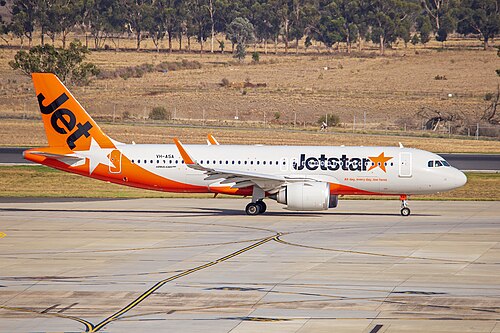
Jetstar
A Jetstar New Zealand spokesperson confirmed Wednesday that approximately 12% of services — including popular routes such as Auckland-Sydney and Auckland-Brisbane — have been affected, along with some domestic New Zealand flights like Auckland-Christchurch and Auckland-Wellington. More than 55 flights are expected to be removed from the schedule in May alone, according to aviation analytics firm Cirium.
“We have made some temporary changes to our schedule, including due to a rise in jet fuel prices as a result of the conflict in the Middle East and other rising costs,” the spokesperson said. “All impacted passengers have been contacted directly and most have been offered same-day travel. We are sorry for the inconvenience and thank our customers for their understanding.”
The cuts come as Brent crude and jet fuel prices have surged following U.S. and Israeli strikes on Iran in late February, disrupting supplies through the Strait of Hormuz and pushing aviation fuel costs sharply higher. Jet fuel prices, which hovered around $85-$90 per barrel before the escalation, have climbed dramatically, forcing airlines across the region to reassess schedules and fares.
Jetstar’s move mirrors broader industry pain. Air New Zealand earlier announced cuts to about 1,100 flights — roughly 5% of its schedule — through early May, affecting around 44,000 passengers. Other carriers, including Qantas on its international routes, have raised fares in response to the volatility.
Advertisement
Trans-Tasman travel has long been one of Jetstar’s strongest routes, with the airline positioning itself as an affordable option for holidaymakers, families and business travelers between major Australian cities and New Zealand destinations like Auckland, Christchurch and Queenstown. The reductions are expected to run through at least early May, with potential for further adjustments if fuel prices remain elevated.
Industry analysts said the decision reflects a combination of higher input costs and softening demand as higher airfares deter some leisure travelers. Jetstar has not disclosed exact passenger numbers affected but emphasized that most rebookings were on the same day.
The timing adds pressure to Australia’s broader fuel crisis, where hundreds of service stations have run dry or limited grades amid panic buying and supply disruptions from Asian refineries. The government has released strategic reserves and relaxed diesel quality standards, but aviation fuel faces its own constraints.
Qantas Group, which owns Jetstar, has already hiked international fares and is monitoring domestic and low-cost operations closely. Chief executives across the sector have described the fuel spike as “unprecedented” in recent years, with some comparing it to historical shocks in the 1970s.
Advertisement
For passengers, the cuts mean potential disruptions to holiday plans, especially with Easter and autumn school breaks approaching in both countries. Jetstar urged travelers to check their bookings via the airline’s app or website and contact customer service if needed. Those on affected flights have generally been offered alternatives or refunds where rebooking is not possible.
New Zealand tourism operators expressed concern. The trans-Tasman corridor is a vital lifeline for the country’s visitor economy, with Australians making up a large share of short-haul visitors to destinations like Queenstown for skiing or Auckland for city breaks. Reduced capacity could dampen bookings at a time when the sector is still recovering from earlier pandemic effects and recent global uncertainty.
Australian travelers heading to New Zealand for rugby, concerts or family visits may face fewer options and potentially higher fares on remaining services. Competition on the route includes Air New Zealand and full-service Qantas flights, which may see some spillover demand.
Jetstar operates a fleet primarily of Airbus A320-family aircraft on these routes. While no safety issues were cited, the airline has faced separate challenges with aircraft availability in recent months, though the current cuts are explicitly tied to fuel economics.
Advertisement
The Qantas Group has not suspended its overall financial guidance but has flagged increased costs flowing through the low-cost subsidiary. Jetstar’s New Zealand operations have grown significantly in recent years as the carrier expanded domestic and trans-Tasman services to challenge Air New Zealand’s dominance.
Economists warned that sustained high fuel prices could ripple through the wider economy. Higher airfares and reduced connectivity may dampen tourism spending, while freight and logistics costs could rise for businesses reliant on quick trans-Tasman movement of goods and people.
The International Energy Agency has described the current global supply disruption as potentially severe if the Middle East conflict persists, with Asian refineries — key suppliers to both Australia and New Zealand — facing feedstock shortages.
For now, Jetstar described the schedule changes as temporary and said it would continue to monitor the situation. Passengers with upcoming travel are advised to allow extra time for any rebookings and to consider travel insurance that covers flight disruptions.
Advertisement
The development highlights the vulnerability of low-cost carriers, which typically operate on thin margins and have less flexibility to absorb sudden cost increases compared with full-service airlines. Jetstar’s business model relies on high load factors and efficient operations, making fuel a critical variable.
As the situation evolves, both Australian and New Zealand governments are monitoring aviation fuel supplies closely. No formal fuel emergency has been declared, but contingency planning is underway in case disruptions worsen.
Travelers affected by the cuts can visit Jetstar’s website or app for the latest information on their specific flights. The airline has pledged to minimize inconvenience by prioritizing same-day alternatives where possible.
With oil markets remaining volatile and no immediate resolution in sight for the Middle East tensions, further adjustments across the aviation sector cannot be ruled out. For Jetstar passengers planning trips across the Tasman, flexibility and early checks on bookings will be essential in the coming weeks.
FTSE 100 bank offloads human resources advisory business to private equity-backed Empowering People Group as CEO Paul Thwaite continues strategic streamlining
Samuel Norman www.cityam.com
11:53, 25 Mar 2026
NatWest’s CEO is rationalising the group’s structure(Image: PA Wire/PA Images)
NatWest has offloaded its human resources advisory division to a private equity-backed competitor in the latest transaction by the banking group as it continues to streamline its operations.
Advertisement
The FTSE 100 lender has disposed of Mentor – its small business HR support service – to Empowering People Group, a specialist HR provider backed by Limerston Capital.
Limerston established the group through its 2016 purchase of Adviserplus and subsequent acquisitions of legal and employment businesses including Halborns in 2020 and Learning Nexus in 2022.
Mentor serves approximately 100,000 small and medium-sized enterprise clients and specialises in employment law, HR, health and safety and environmental compliance.
The financial details of the transaction have not been revealed. The roughly 220 staff employed at Mentor are anticipated to transfer to the new owner as part of the agreement, which was reported by Sky News.
Advertisement
The transaction represents the latest in a series of moves by NatWest chief executive Paul Thwaite to rationalise the business’ structure. Last year, the bank sold its workplace pensions fintech Cushon to Willis Towers Watson, as reported by City AM.
Thwaite’s strategy has focused on a more dynamic balance sheet and expansion into sectors that provide a more consistent revenue stream such as wealth management. Banking giants have intensified their push into wealth management over the past year, with the division providing lenders with a more stable and less capital-intensive revenue stream, thanks to its dependence on recurring fees rather than the interest rate volatility that impacts conventional lending.
NatWest spent a substantial £2.7bn – its largest acquisition since the financial crisis – to acquire Evelyn Partners in February, wresting the wealth manager from private equity owners Permira and Warburg.
Thwaite characterised the transaction as establishing the “third growth engine” for the group, with Evelyn’s £69bn assets under management now sitting within the NatWest stable, making it the largest bank-owned wealth manager with combined assets totalling £127bn.
Advertisement
The acquisition did trigger some market unease, though, as NatWest suspended future share buybacks and disclosed plans for £150m of spending – with scope to increase if integration proves challenging – aimed at delivering roughly £100m in annual cost savings.
This article contains affiliate links, we will receive a commission on any sales we generate from it. Learn more
Winners of the 2025 North East Business Awards(Image: Simon Greener/Newcastle Chronicle)
The North East Business Awards are returning to celebrate the best of the region’s business community.
Following a landmark year, which marked the awards’ 25th anniversary in their current form, the event will return to celebrate innovation, entrepreneurship, technology and creativity, as well as some of the people making a difference in the region’s business community.
Winners across 10 categories will be selected from three areas: Northumberland and Tyneside; Durham, Sunderland and South Tyneside; and Teesside. Area winners will be revealed later this year across ChronicleLive, TeessideLive and BusinessLive, as well as in The Journal and The Gazette on Teesside. They will then go head-to-head for the overall titles at the grand final, taking place at Hardwick Hall Hotel in Sedgefield on October 1.
Advertisement
Last year’s awards saw County Durham-based technology firm Filtronic crowned North East Business of the Year, following a remarkable period of growth driven by its cutting-edge radio frequency technology – innovation that attracted the attention of Elon Musk’s SpaceX. Other standout winners included Opencast, Active Families North East, Osbit and Just Williams, highlighting the breadth and diversity of talent across the region.
For 2026, Tyneside software giant Sage returns as headline partner, alongside associate partner Newcastle University. They are joined by category partners Made Smarter and Northumbrian Water, with global management consulting firm Oliver Wyman coming on board as a new partner this year.
North East Business Awards logo(Image: Lesley Hampson)
Lubna Quraishi, VP of performance marketing, EMEA, at Sage said: “With our global headquarters rooted in the North East, we’re proud to continue our support of the North East Business Awards and by sponsoring the Startup Award.
“Startups sit at the heart of our focus at Sage – they bring fresh ideas, bold thinking and energy to the economy. We’re committed to backing founders with the tools, technology and support they need to turn ambition into sustainable growth, and we’re excited to celebrate the region’s most promising new businesses.”
Advertisement
Estelle Blanks, director of business development and enterprise at Newcastle University, associate partner for the awards, said: “I’m delighted that we are part of the North East Business Awards again this year. Over the coming months, Newcastle University will be moving to a new model that will make it even easier for businesses and the University to work together.
“Innovation thrives across organisational boundaries, and we will continue to play our role in fostering an ecosystem where research, education, innovation and business support one another. When we collaborate to unlock new ideas and opportunities, the whole region benefits – and the Business Awards are a great way to celebrate that.”
Journal editor Graeme Whitfield said: “The Business Awards have now been a fixture on the regional business calendar for more a quarter of a century. But after all that time, we’re still finding great companies to reward for the first time, as well as established firms who keep on doing brilliant things.
“There is no better event for celebrating the best of our region’s amazing companies and the people who work for them.
Advertisement
“I know from going to the awards over many years that winning – or even just taking part – can mean so much to boosting staff morale and raising businesses’ profile. I hope as many companies as possible enter the awards so we can really highlight our great firms to the widest possible audience.”
The awards are now open to entries and more details can be found at nebusinessawards.co.uk
Seeking Alpha’s transcripts team is responsible for the development of all of our transcript-related projects. We currently publish thousands of quarterly earnings calls per quarter on our site and are continuing to grow and expand our coverage. The purpose of this profile is to allow us to share with our readers new transcript-related developments. Thanks, SA Transcripts Team
























































You must be logged in to post a comment Login