Business
UK policy uncertainty creating ‘overhang’ for SMEs, warns Goldman Sachs co-head Kunal Shah

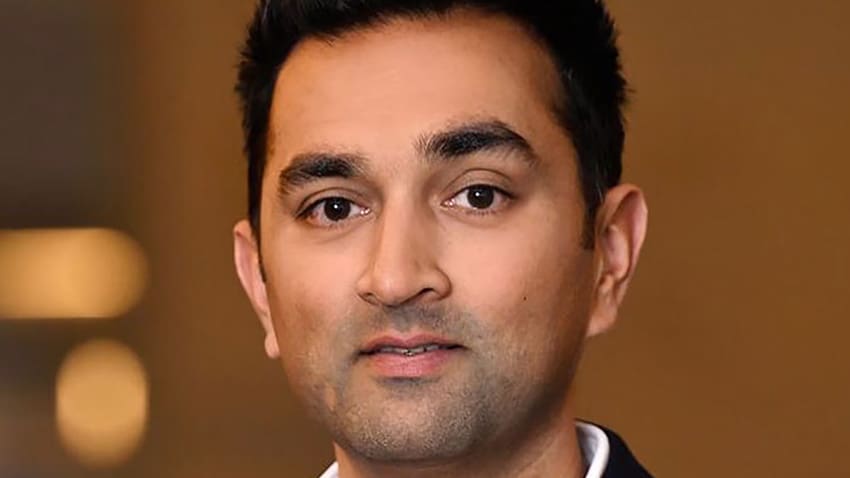
Policy uncertainty in Westminster is weighing heavily on Britain’s small business sector, according to one of the City’s most influential bankers.
Kunal Shah, co-head of Goldman Sachs International, warned that a lack of clarity over taxation and employment laws is creating an “overhang” that is discouraging entrepreneurs from investing and hiring.
Speaking ahead of a House of Commons reception marking 15 years of Goldman’s 10,000 Small Businesses programme, Shah said founders were increasingly nervous about the government’s shifting regulatory agenda. “One of the things that comes back often from these companies is the tax burden in the UK,” he said. “The Budget last month was a focal point for everyone to see again how tough the fiscal maths is now. It introduces challenges for any entrepreneurs and the business environment here.”
Although small businesses remain upbeat about their own performance, Shah suggested that Labour’s manifesto commitments — particularly around expanded employment rights — had left many founders uneasy about future costs. “These entrepreneurs are largely optimistic around their own businesses, around things they can control,” he said. “But it is all the uncertainty over the manifesto pledges that can hamper investment confidence. That continues to be an overhang.”
Labour last month abandoned its pledge for “day-one” unfair dismissal rights, striking a compromise with unions to reduce the qualifying period to six months rather than two years. The government insisted the move would still drive a major shift in worker protections, but business groups warned the proposals would require significant adjustments to hiring strategies.
Shah, who joined Goldman in 2004 and became a partner a decade later, said UK firms now had clarity on taxation for the next year but warned that broader economic pressures continued to erode SME confidence. “There is a longer-running productivity problem,” he said, adding that “sticky inflation” and interest rates “at the restrictive end” were feeding into company finances.
Despite these headwinds, Shah pointed to genuine opportunities for growth, including improved trade ties with the US and India. He also praised the Chancellor’s stamp duty holiday for newly listed shares as a pragmatic move to revive the UK’s capital markets. “It shows clear intent,” he said. “These are signs of how they want to support the broader growth agenda.”
More than 2,500 companies have been through Goldman’s free training scheme for founders of small firms, targeted at businesses with revenues above £250,000 and staff numbers between 5 and 50. Research by Professor Mark Hart of the Enterprise Research Centre shows participants increased revenues by 43% within three years, adding an average £665,000 to their top line.
After ten years, these businesses were 14% more productive than comparable firms that did not take part.
The UK government’s own equivalent — the Help to Grow scheme — has enrolled 10,000 leaders since 2021, with funding secured until 2029.
Despite wider market uncertainty, Shah said Goldman expected another strong year for fees from mergers and acquisitions. The bank has already been involved in $1.5 trillion worth of deals in 2025 and is advising on several high-profile transactions across Europe. “The backlog is healthy,” he said. “We see that momentum continuing into next year.”
Goldman recently advised Shawbrook on its £1.9 billion flotation in London — the largest in several years — and is closely watching the dramatic takeover battle for Warner Bros, though it is not advising any of the bidders.
Government engagement improving — but uncertainty remains the drag
Shah welcomed the government’s willingness to engage with the banking sector, following meetings with Rachel Reeves, Anthony Gutman and Goldman Sachs CEO David Solomon earlier this year. But he was unequivocal in his assessment that uncertainty is the biggest factor undermining SME confidence.
As he put it: “Entrepreneurs are optimistic — but optimism only gets you so far when you can’t plan ahead.”
Reeves responded, by saying: “This report shows the huge contribution small businesses make in creating jobs, driving innovation and powering growth across the UK. They aren’t just businesses – they’re the innovators, creators and entrepreneurs that keep our economy thriving. The 10,000 Small Businesses programme shows how larger firms can back the next generation of entrepreneurs, and I congratulate them on this 15-year milestone. In the Budget, we acted to make life easier for businesses by permanently lowering business rates for hundreds of thousands of retail, leisure and hospitality businesses, opening up new funding so SMEs can better invest and hire, and backing entrepreneurs with tax reliefs to help them grow.”

Jamie Young
Jamie is Senior Reporter at Business Matters, bringing over a decade of experience in UK SME business reporting.
Jamie holds a degree in Business Administration and regularly participates in industry conferences and workshops.
When not reporting on the latest business developments, Jamie is passionate about mentoring up-and-coming journalists and entrepreneurs to inspire the next generation of business leaders.