
Business
UK to consult on social media ban for under 16s

Laura CressTechnology reporter

 AFP via Getty Images
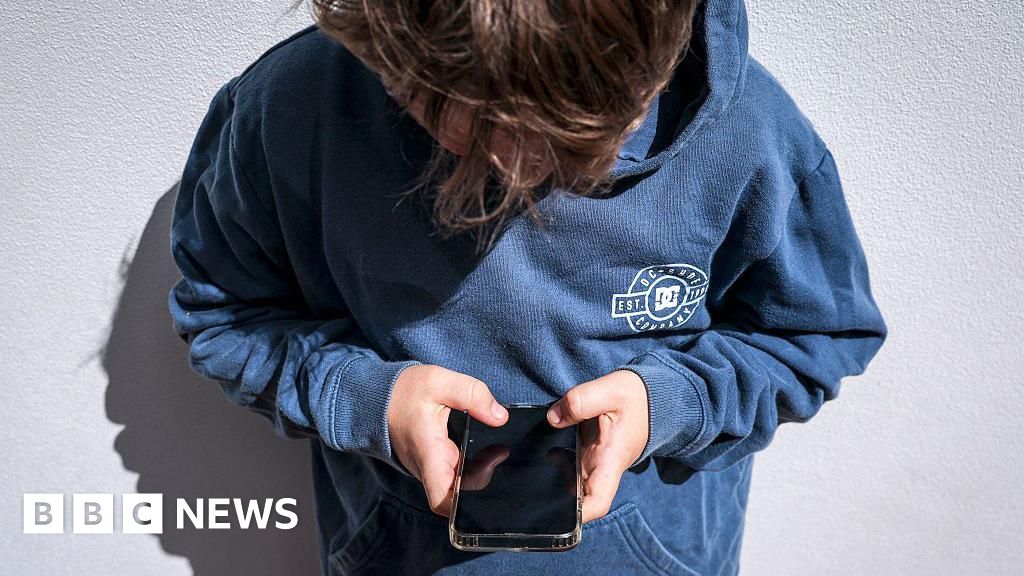
The government will consult on whether social media should be banned for under-16s in the UK.
It said “immediate action” would give Ofsted the power to check policies on phone use when it inspects schools, and it expected schools to be “phone-free by default” as a result of the announcement.
A similar ban took effect in Australia in December 2025, the first of its kind in the world. Other countries are said to be considering such a law.
It comes after more than 60 Labour MPs wrote to the prime minister about the issue, with the mother of murdered teenager Brianna Ghey also calling on the government to act.
“Some argue that vulnerable children need access to social media to find their community,” Brianna’s mother Esther Ghey wrote in a letter seen by the BBC.
“As the parent of an extremely vulnerable and trans child, I strongly disagree.
“In Brianna’s case, social media limited her ability to engage in real-world social interactions. She had real friends, but she chose to live online instead.”
According to The Department of Science, Innovation and Technology, the consultation will “seek views from parents, young people and civil society” to determine the effectiveness of a ban.
It would also look at whether more robust age checks could be implemented by social media firms, which could be forced to remove or limit features “which drive compulsive use of social media”.
And Ofsted will give tougher guidance to schools to reduce phone use – including telling staff not to use their devices for personal reasons in front of pupils.
The government will respond to the consultation in the summer.
Technology Secretary Liz Kendall said the laws in the Online Safety Act were “never meant to be the end point” and said she understood “parents still have serious concerns”.
“We are determined to ensure technology enriches children’s lives, not harms them – and to give every child the childhood they deserve,” she said.
Conservative leader Kemi Badenoch has already said her party would introduce a social media ban for under-16s if it was in power.
She said the consultation was “more dither and delay” from Labour.
“The prime minister is trying to copy an announcement that the Conservatives made a week ago, and still not getting it right,” she said.
Liberal Democrat education spokeswoman Munira Wilson said there was “no time to waste in protecting our children from social media giants” and “this consultation risks kicking the can down the road yet again”.
National Education Union (NEU) general secretary Daniel Kebede called the move a “welcome shift”.
“Every day, parents and teachers see how social media shapes children’s identities and attention long before they sit their GCSEs, pulling them into isolating, endless loops of content,” he said.
The Association of School and College Leaders also welcomed the consultation on social media, but said the government had been “sluggish” in responding to the online risks posed to children.
The union’s general secretary Pepe Di’Iasio said there was “clearly a much wider problem of children and young people spending far too much time on screens and being exposed to inappropriate content”.
And Paul Whiteman, general secretary of the National Association of Head Teachers, also welcomed the plans to consult on a potential social media ban.
But he said the suggestion that Ofsted should “police” phones in schools was “deeply unhelpful and misguided”.
“School leaders need support from government, not the threat of heavy-handed inspection,” he added.
‘Not strong evidence’
It comes as the government faces additional pressure from the House of Lords, which is expected to vote on a proposed ban on Wednesday.
The amendment to the Children’s Wellbeing and Schools Bill has backing from several prominent figures such as former children’s TV presenter Baroness Benjamin and former education minister Lord Nash.
There is also a separate amendment calling for the introduction of film-style age ratings which could limit the social media apps children can access.
Last week, Conservative leader Kemi Badenoch said she would introduce an under-16s ban if her party won the next election.
Professor Amy Orben, who leads the Digital Mental Health programme at the University of Cambridge’s MRC Cognition and Brain Sciences Unit, told the BBC there was “broad agreement” more needed to be done to keep children safe online.
However, she said there was still “not strong evidence” that age-based social media bans were effective.
Dr Holly Bear from Oxford University agreed evidence for the effects of a social media ban were “still unfolding”.
“A balanced approach might be trying to reduce algorithm-driven exposure to harmful content, improving safeguards, supporting digital literacy and carefully evaluating any major policy interventions,” she said.
The NSPCC, Childnet, and suicide prevention charity the Molly Rose Foundation were among 42 individuals and bodies to argue a ban would be the “wrong solution” on Saturday.
“It would create a false sense of safety that would see children – but also the threats to them – migrate to other areas online,” the organisations wrote.
“Though well-intentioned, blanket bans on social media would fail to deliver the improvement in children’s safety and wellbeing that they so urgently need.”




