| Revenue of $121.37M (-12.61% Y/Y) beats by $1.19M
Unifi, Inc. (UFI) Q2 2026 Earnings Call February 4, 2026 8:30 AM EST
Company Participants
Albert Carey – Executive Chairman Edmund Ingle – CEO & Director A.J. Eaker – CFO, Executive VP & Treasurer
Advertisement
Conference Call Participants
Anthony Lebiedzinski – Sidoti & Company, LLC
Advertisement
Presentation
Operator
Good morning, and thank you for attending Unifi’s Second Quarter Fiscal 2026 Earnings Conference Call. During this call, management will be referencing a webcast presentation that can be found in the Investor Relations section of unifi.com. Please familiarize yourselves with Page 2 of the slide deck for cautionary statements and non-GAAP measures.
Today’s conference is being recorded [Operator Instructions]. Our speakers are listed on Page 3 of today’s presentation and include Al Carey, Executive Chairman; Eddie Ingle, Chief Executive Officer; A.J. Eaker, Chief Financial Officer.
Advertisement
I will now turn the call over to Al Carey. Please turn to Page 4 of the presentation. You may begin.
Albert Carey Executive Chairman
Thank you. Well, good morning, everyone, and thanks for joining our call this morning. I’m happy to report that we’re beginning to see results in our business that are coming from a major effort that began one year ago, which is essentially resetting our cost base in North America business. The closing of the Madison facility and the reduction of costs across the board have created clear operating improvements that are going to allow us to make healthy profits on a much smaller sales level.
Advertisement
Now a couple of highlights, and A.J. will go into more details on these later on. We’re pleased to see improved profit margins improved free cash flow. We have dramatically improved our inventory turns and it’s probably the best we’ve seen in recent history. We have 25% fewer people in North America, and our plant efficiencies have come way up from the summertime now that all

‘The Big Money Show’ panel discusses the alarming new analysis showing Social Security and Medicare racing toward insolvency and warns that retirees face steep benefit cuts unless Washington acts fast.
A newly introduced bill would prevent some public sector retirees from being hit with a tax bill after they were made eligible for Social Security benefits last year.
The bipartisan bill, known as the No Tax on Restored Benefits Act, was introduced by Rep. Lance Gooden, R-Texas, and would create a gross income tax exclusion for the retroactive, lump sum payments of Social Security benefits paid to certain public sector retirees on pensions who previously had their benefits reduced or eliminated because they didn’t pay Social Security taxes while working.
Advertisement
It follows last year’s enactment of the Social Security Fairness Act, which allowed for the retroactive benefit payments to covered retirees.
“First, the federal government shortchanged public servants by withholding the Social Security benefits. Now, Washington is trying to tax those benefits,” Gooden told FOX Business. “It’s a slap in the face to teachers, firefighters, law enforcement officers and more who devoted their careers to serving our communities. The No Tax on Restored Benefits Act finally ends the mistreatment of our public-sector retirees.”
The new bill would aim to prevent a tax consequence for those who got lump sum payments under the Social Security Fairness Act. (Mark Felix/The Washington Post)
Rep. Chellie Pingree, D-Maine, is a lead cosponsor of the bill and said the Social Security Fairness Act “was truly transformative” for hundreds of thousands of Americans, but “it was never intended to saddle widows, low-income seniors and dedicated public servants with an unexpected tax bill.”
Advertisement
“The No Tax on Restored Benefits Act addresses this problem in a fair, commonsense way by protecting people who were previously below the taxation threshold from being unfairly punished because of a one-time, retroactive increase in their earned benefits,” Pingree said.
The bill has received support from the National Association of Police Organizations, and Executive Director Bill Johnson noted that “retirees are facing a large tax bill on those same benefits Congress worked to restore,” and the new legislation “will ensure no public servant will continue to be penalized simply because they chose public service.”
Rep. Lance Gooden, R-Texas, introduced this bill to protect restored Social Security benefits from taxes. (Al Drago/Bloomberg via Getty Images)
The introduction of the No Tax on Restored Benefits Act follows the enactment of the Social Security Fairness Act last year, which made certain public sector retirees eligible for the retroactive payments and was signed into law in January 2025 by then-President Joe Biden.
Advertisement
It eliminated policies known as the Windfall Elimination Provision (WEP) and Government Pension (GPO) which reduced or eliminated Social Security benefits for workers who received a public pension and weren’t covered by Social Security taxes.
Those policies reduced or eliminated Social Security benefits for over 3.2 million people who receive a pension for work that wasn’t covered by Social Security because they didn’t pay Social Security taxes.
Rep. Chellie Pingree, D-Maine, cosponsored the No Tax on Restored Benefits Act. (Bryan Dozier/Middle East Images/AFP via Getty Images)
Among the groups of people affected include certain teachers, firefighters and police officers in many states; federal employees covered by the Civil Service Retirement System; and people whose work was covered by a foreign social security system.
Advertisement
The WEP and GPO policies didn’t apply to all people within those groups because about 72% of state and local public employees work in roles covered by Social Security and pay into the system. So, those retirees won’t see a benefit increase under the Social Security Fairness Act.

The elimination of WEP and GPO policies was retroactive to January 2024, and the Social Security Administration indicated the one-time payment would be deposited into the account on file by the end of March 2025.
The nonpartisan Committee for a Responsible Federal Budget estimated that the Social Security Fairness Act will add $196 billion to the federal budget deficit over the 10 years after its enactment and projected it will hasten the insolvency of Social Security’s main trust fund by six months.
Lewis Silkin study shows nearly 80 per cent of employers are unable to look beyond a year ahead, with the Employment Rights Bill creating additional challenges
11:13, 04 Feb 2026Updated 11:28, 04 Feb 2026
Political and economic uncertainty are making life hard for businesses, the study shows (Image: Gary Yeowell / Getty Images)
Political uncertainty and regulatory ambiguity are stopping businesses from doing the long-term planning their employees need, a new study has shown.
Close to 80% of employers are struggling to plan beyond a year ahead, the survey of almost 700 organisations by law firm Lewis Silkin has shown.
Advertisement
Lucy Lewis, partner and chair at Lewis Silkin, said: “Economic pressures, and political and regulatory change narrow the planning window even further… reactive tactics which mean that transformation programmes or workforce redesign get sidelined.”
One in four UK organisations cited preparing for and adhering to the Employment Rights Bill as a principal challenge, with the sweeping changes to workers’ protections set to impose costs on businesses.
The contentious Bill received final approval to become legislation in December after prolonged debates in the House of Lords regarding ‘day one’ entitlements, as reported by City AM.
As the Act becomes embedded in law, Tarun Tawakley, partner at Lewis Silkin, noted: “Over the next 12–24 months, expect cautious hiring, legally anchored policy-setting and a premium on disciplined execution.”
Advertisement
As well as those pressures, escalating employment costs have emerged as a key factor pushing British firms towards short-term, reactive strategies. The uptick in employer national insurance contributions (NIC) alongside a 4.1% increase in the national living wage has generated considerable recruitment challenges.
Smaller businesses face particular pressures from taxation, employer contributions and the cumulative administrative burden of compliance.
With the majority of these businesses expecting their organisations to invest more heavily in technology than people over the coming year, the survey highlighted the anticipated cultural implications.
Nearly half (49 per cent) of organisations anticipate cultural resistance, including fears about job losses or mistrust of AI outputs, which could hinder the adoption of new technologies.
Advertisement
Lisa Farthing, head of worksphere and HR consultancy at Lewis Silkin, said the upskilling challenge “is becoming more acute as employment law rights continue to expand and employees’ awareness of those rights grows, placing greater importance on effective training, coaching and people management.”
Disney’s long-running leadership drama is heating up again as activist investor Nelson Peltz accuses outgoing CEO Bob Iger of shaping the company’s succession plan to keep control behind the scenes.
The clash centers on Iger’s choice of theme parks chief Josh D’Amaro as his successor, a move Peltz claims is designed to justify Iger’s continued influence at the company.
In comments to The Wall Street Journal, Peltz said Iger favored D’Amaro over entertainment executive Dana Walden so he could stay involved after stepping down.
“Iger needs a reason to stay on,” Peltz said, arguing that choosing a parks executive over a Hollywood veteran creates space for Iger to remain a guiding force.
Advertisement
D’Amaro, 54, is set to take over as CEO next month, while Iger will stay on as a Disney director and senior adviser through the end of the year.

Walden, once seen by many as the top contender for the role, was instead named president and chief creative officer, a newly created position. The decision has raised questions about whether Disney’s leadership transition will truly mark a clean break or repeat past mistakes.
Peltz pointed to Disney’s troubled last succession as a warning. In early 2020, Iger handed the CEO job to Bob Chapek, another parks executive, just weeks before the COVID-19 pandemic shook the company.
Iger remained as executive chairman, which led to overlapping authority and internal tension.
Advertisement
Josh D’Amaro has been named the next CEO of #Disney, replacing longtime chief Bob Iger.
D’Amaro has served as Chairman of Disney Experiences since 2020, where he oversees parks, cruises and consumer products.
Chapek’s short tenure was marked by clashes with talent, employee unrest, political backlash in Florida, and growing losses in streaming. In November 2022, Disney’s board fired Chapek and brought Iger back as CEO.
Advertisement
According to Peltz, history could repeat itself. He predicted that Iger may later claim D’Amaro lacks movie business experience and step in again to “guide” the company. Disney has not commented on Peltz’s latest remarks.
The Disney board, however, has defended the new plan. Board chairman James Gorman said the succession process was handled carefully and unanimously approved.
He noted that D’Amaro has spent years on Iger’s operating committee and has worked closely with film leaders, including helping bring major franchises like Avatar into Disney’s parks.
Peltz has been a vocal critic of Disney for years. Through his hedge fund, Trian Fund Management, he built a large stake in the company in late 2022 and launched multiple proxy fights, arguing Disney lost focus and failed at leadership planning.
Advertisement
After losing a high-profile shareholder vote in April 2024, Peltz sold his entire Disney stake for a significant profit.
The Kospi index added 6.8%—a bigger snapback than last April’s rebound following President Trump’s “Liberation Day” tariff plans.
Leading the charge was index heavyweight Samsung Electronics, which surged more than 11%. Samsung is the world’s top memory-chip maker and a leading smartphone producer.
Tuesday marked Samsung’s biggest one-day gain since October 2008, as the global financial crisis roiled world markets.
Manika is a macroeconomist with over 20 years of experience in industries including investment management, stock broking, investment banking. She also runs the profile Long Term Tips [LTT], which focuses on the generational opportunity in the green economy. Her investing group, Green Growth Giants, takes the theme a step further from LTT with a deeper dive into opportunities presented by the segment.
Analyst’s Disclosure: I/we have no stock, option or similar derivative position in any of the companies mentioned, but may initiate a beneficial Long position through a purchase of the stock, or the purchase of call options or similar derivatives in MO over the next 72 hours. I wrote this article myself, and it expresses my own opinions. I am not receiving compensation for it (other than from Seeking Alpha). I have no business relationship with any company whose stock is mentioned in this article.
Seeking Alpha’s Disclosure: Past performance is no guarantee of future results. No recommendation or advice is being given as to whether any investment is suitable for a particular investor. Any views or opinions expressed above may not reflect those of Seeking Alpha as a whole. Seeking Alpha is not a licensed securities dealer, broker or US investment adviser or investment bank. Our analysts are third party authors that include both professional investors and individual investors who may not be licensed or certified by any institute or regulatory body.
The paper shutters Sports desk, curbs local and international coverage. (0:15) AMD plunges despite earnings. (1:02) Bitcoin extends selloff as Michael Burry warns of a crypto death spiral. (2:15)
The following is an abridged transcript:
Advertisement
The Washington Post announced sweeping layoffs, cutting about one-third of its staff and gutting major parts of the newsroom as owner Jeff Bezos and his leadership team struggle for a path to profitability.
Staffers described the day as a “bloodbath,” and the moves signal a sharp narrowing of the Post’s ambitions as it looks to right the ship, with reports of steep losses — including an estimated $100M in 2024.
The paper is dismantling its Sports desk, closing the Books section, and suspending the daily Post Reports podcast. International coverage is also being scaled back, while the Metro desk — once the heartbeat of the paper in the Watergate era — is being heavily reduced.
The cuts come after weeks of internal concern, including public pleas from journalists urging Bezos to change course. And during the layoffs Zoom meeting, one reporter described the mood as “funereal.”
Advertisement
Among active stocks, AMD (AMD) is plunging despite beating on both the top and bottom lines.
J.P. Morgan analyst Harlan Sur said the big question is whether AMD can show real operating leverage — and until it does, the stock may stay under pressure, especially with potential margin risk as it ramps MI450/Helios later this year.
Eli Lilly (LLY) is bouncing back after topping Street forecasts with its Q4 results and 2026 outlook. Its GLP-1 drugs Mounjaro and Zepbound beat revenue expectations, with both up more than 100% from a year ago.
Uber (UBER) is lower after missing Wall Street’s lofty Q4 profit expectations, as a shift toward cheaper rides and higher insurance costs weighed on results. But the company also updated its autonomous vehicle plans, aiming to operate AVs in 15 cities by year-end.
Advertisement
AppLovin (APP) is sliding after AdExchanger reported on CloudX, a new AI-infused startup that could shake up the mobile advertising stack. The report said CloudX will use large language models to automate work typically done by engineers and ad ops teams.
And MGM Resorts (MGM) is rallying after BetMGM said 2025 was a record year, with net revenue reaching about $2.8B and adjusted EBITDA of $220M, driven by strong growth in both online sports betting and iGaming.
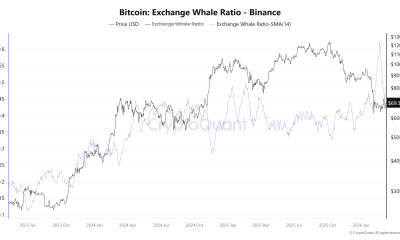
In today’s trading, bitcoin (BTC-USD) resumed its slide after a crypto selloff in the previous session that wiped out nearly $470B in market cap.
And “Big Short” investor Michael Burry warned the selloff could turn into a self-reinforcing “death spiral,” potentially causing lasting damage to companies that have spent the past year stockpiling bitcoin.
Advertisement
In a Substack post seen by Bloomberg, Burry argued that bitcoin has been revealed as largely speculative — failing to establish itself as a debasement hedge like precious metals.
“Sickening scenarios have now come within reach,” he wrote. If bitcoin falls another 10%, Strategy (MSTR) — the world’s largest corporate crypto treasury — could be billions in the red and “find capital markets essentially closed.” Further declines, he said, could push crypto miners toward bankruptcy.
And in other news of note, Claude is getting a little salty with ChatGPT.
Anthropic said: “We want Claude to act unambiguously in our users’ interests. So we’ve made a choice: Claude will remain ad-free.” The company added that users won’t see “sponsored” links next to their conversations, and Claude’s responses won’t be influenced by advertisers or include third-party product placements they didn’t ask for.
Anthropic didn’t mention ChatGPT or OpenAI by name, but the message is a pretty clear shot across the bow — and the debate over ad-supported AI is now echoing across the entire sector.